Le reti ottiche passive utilizzano fibre ottiche e splitter non alimentati per fornire Internet veloce e affidabile dai provider a più utenti in modo efficiente.
Scopri cos’è PCI Express (PCIe), come funziona e perché è importante. Esplora le versioni PCIe, le velocità di banda e il suo ruolo nelle GPU, negli SSD e nei data center.
Scopri cosa significa NVMe (Non-Volatile Memory Express), come si confronta con gli SSD SATA e perché offre maggiore velocità, minore latenza e migliore efficienza.
Scopri cos’è un SSD (Solid-State Drive), come funziona, i suoi vantaggi rispetto agli HDD e il suo ruolo nell’informatica moderna e nell’archiviazione aziendale.
Scopri le differenze tra HDD e SSD in termini di velocità, affidabilità e costo. Scopri quale unità di archiviazione soddisfa le tue esigenze ed esplora le soluzioni di connettività LINK-PP.
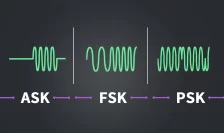
L’ASK è ideale per progetti semplici e a basso costo, mentre la FSK è adatta agli ambienti rumorosi e la PSK offre elevati tassi di trasferimento dati. Confronta qui ASK, FSK e PSK.
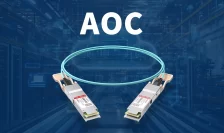
Il cavo ottico attivo offre elevate velocità, basso consumo energetico e connessioni affidabili. Scopri come l’AOC si integra nei data center, negli uffici e nelle configurazioni domestiche.
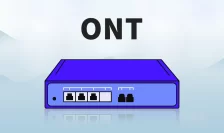
Un ONT collega la tua casa a Internet in fibra ottica convertendo i segnali luminosi in dati digitali per i tuoi dispositivi, consentendo un servizio veloce e affidabile.
Scopri cos’è una CPU (Unità centrale di elaborazione), come funziona e perché è fondamentale nell’informatica. Impara della sua architettura, delle sue funzioni e delle sue applicazioni industriali.
Il ritardo differenziale di modo nelle fibre ottiche multimodali limita la velocità e i tassi di trasferimento dati causando la dispersione dell’impulso, riducendo la chiarezza del segnale e le prestazioni della rete.
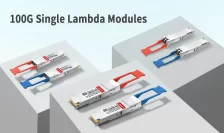
I moduli da 100 G con singolo lambda garantiscono velocità superiori, minore consumo energetico e aggiornamenti più semplici per data center e reti telecom.
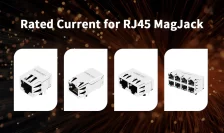
Scopri come i connettori RJ45 integrati supportano dati e alimentazione — coprendo gli standard IEEE PoE, la corrente nominale per contatto/coppia e le informazioni affidabili sui prodotti LINK-PP.
Scopri come i moduli SFP+ LINK-PP rispettano lo standard dell’interfaccia elettrica SFF-8431, garantendo l’integrità del segnale a 10 Gb/s, la compatibilità con l’host e le diagnosi in tempo reale
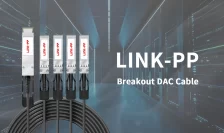
Un cavo DAC breakout collega una porta ad alta velocità a diverse porte a velocità inferiore, consentendo connessioni di rete rapide, economiche e affidabili su brevi distanze.
Un cavo AOC breakout suddivide una porta ad alta velocità in più porte, offrendo connessioni di rete rapide, flessibili ed energeticamente efficienti per i data center del 2025.
Lo standard GR-468-CORE Telcordia rappresenta il riferimento globale per l'affidabilità dei componenti ottici. Scopri come i moduli ottici LINK-PP soddisfano i requisiti GR-468.
Seleziona la migliore custodia per fibra ottica considerando compatibilità, densità di porte, gestione termica (opzioni di dissipatori di calore), integrazione di light pipe, schermatura EMI, ecc.
Cos’è UL94 V-0? Scopri la classificazione più rigorosa in materia di sicurezza antincendio, il suo reale valore per gli acquisti, gli scenari di conformità e soluzioni di rete certificate UL94 V-0 LINK-PP.
Scopri i test di saldabilità J-STD-002 e come le soluzioni integrate LINK-PP — RJ45, trasformatori LAN, prese modulari e custodie per fibra ottica — soddisfano questo standard.
What Frame Check Sequence (FCS) means, how CRC-32 detects corrupted Ethernet frames, and why FCS errors are commonly associated with cable faults, fiber issues, or optical transceiver problems.
Discover how optical cross‑connect (OXC) enables all‑optical switching in DWDM/OTN networks, with LINK‑PP SFP modules ensuring seamless integration and superior performance.
Learn what Dispersion Compensation Fiber (DCF) is, how it reduces chromatic dispersion, where it is used, and why it matters in modern optical networks.
Learn what OEO means in optical communication, how optical-electrical-optical regeneration works, and when it is used in DWDM networks and optical links. Keywords:
Discover the LQ‑SW40‑SR4C 40GBASE‑SR module: high-speed, low-power, QSFP+ optics for multimode fibre networks. Perfect for data centres and network upgrades.
Learn what hyperconverged infrastructure HCI is, how it compares with virtualization and dHCI, and when Nutanix, Sangfor, or SFP-based designs fit best.