Understand the differences between FTTH and FTTB. Learn how LINK-PP’s optical transceivers support both fiber access architectures for reliable connectivity.
Scopri cosa significa larghezza di banda dati, come influisce sui dispositivi e perché è fondamentale nelle comunicazioni digitali. Scopri come LINK-PP supporta il trasferimento dati ad alta velocità.
La modulazione ottica modifica le proprietà della luce per codificare i dati, consentendo trasmissioni ad alta velocità e affidabili nei sistemi di comunicazione in fibra ottica.
Saldatura a onda vs. saldatura a riflusso: confronta processi, applicazioni, costi e migliori utilizzi per l’assemblaggio di PCB per scegliere il metodo più adatto al tuo progetto.
Esplora approfondimenti dettagliati sulle implementazioni FTTx, inclusi FTTH, FTTB, FTTC e altro ancora. Scopri come i moduli ottici LINK-PP supportano reti in fibra affidabili.
Il tasso di errore su bit (BER) misura gli errori nei dati trasmessi sulle reti. Un BER elevato provoca riduzione della velocità, perdita di file e scarsa qualità delle chiamate. Scopri come il BER influisce sulle prestazioni.
I collegamenti backhaul 5G connettono le stazioni radio alle reti core, abilitando servizi 5G ad alta velocità e bassa latenza. Un backhaul solido è fondamentale per la crescita dei dati e dei dispositivi nel 2025.
La saldatura a rifusione con montaggio a foro passante consente la saldatura simultanea di componenti a foro passante e a montaggio superficiale in un unico processo di rifusione efficiente.
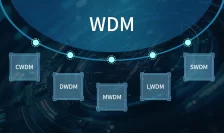
CWDM vs DWDM vs MWDM vs LWDM vs SWDM: confronta spaziatura dei canali, distanza, costo e migliori casi d’uso per scegliere il WDM più adatto alle proprie esigenze di rete.
Il modulo QSFP+ 40G LR4 abilita il trasferimento dati ad alta velocità e a lunga distanza per data center, aziende e operatori di telecomunicazioni, supportando una crescita affidabile delle reti 40G nel 2025.
Il transceiver QSFP+ 40G SR4 offre prestazioni affidabili a 40 Gbps, connettività a corto raggio e una forte compatibilità per data center e reti aziendali.
Scopri IEEE 802.3ae: la base dell’Ethernet da 10 Gigabit. Impara gli standard, i livelli fisici e come i moduli SFP+ da 10G LINK-PP garantiscono la conformità.
Learn the differences between LAN PHY and WAN PHY in 10 Gigabit Ethernet. Explore how LINK-PP 10G optical modules, like 10GBASE-LR SFP+, support both PHY types for reliable networking.
SDM vs WDM explained: Compare space and wavelength multiplexing to choose the best optical communication method for your network’s capacity and upgrade needs.
Discover how Multicore Fiber (MCF) and Space-Division Multiplexing (SDM) are solving the bandwidth crisis. Learn about MCF applications and how LINK-PP's optical transceivers harness its power.
Discover how microcontroller units (MCUs) support optical transceivers by enabling real-time monitoring, diagnostics-enabled modules (DOM), and precise laser control. Explore their essential role in LINK-PP modules for improved reliability.
What Frame Check Sequence (FCS) means, how CRC-32 detects corrupted Ethernet frames, and why FCS errors are commonly associated with cable faults, fiber issues, or optical transceiver problems.
Discover how optical cross‑connect (OXC) enables all‑optical switching in DWDM/OTN networks, with LINK‑PP SFP modules ensuring seamless integration and superior performance.
Learn what Dispersion Compensation Fiber (DCF) is, how it reduces chromatic dispersion, where it is used, and why it matters in modern optical networks.
Learn what OEO means in optical communication, how optical-electrical-optical regeneration works, and when it is used in DWDM networks and optical links. Keywords:
Discover the LQ‑SW40‑SR4C 40GBASE‑SR module: high-speed, low-power, QSFP+ optics for multimode fibre networks. Perfect for data centres and network upgrades.
Learn what hyperconverged infrastructure HCI is, how it compares with virtualization and dHCI, and when Nutanix, Sangfor, or SFP-based designs fit best.
Understand SFP+ 40km (10GBASE-ER) modules, including specs, SMF compatibility, and how to choose the right extended-reach optical transceiver for your network.