What are SFP ports on a switch? Learn how SFP ports support fiber and Ethernet connections, how they compare with RJ45 and SFP+, and which module you need.
What Frame Check Sequence (FCS) means, how CRC-32 detects corrupted Ethernet frames, and why FCS errors are commonly associated with cable faults, fiber issues, or optical transceiver problems.
Discover the LQ‑SW40‑SR4C 40GBASE‑SR module: high-speed, low-power, QSFP+ optics for multimode fibre networks. Perfect for data centres and network upgrades.
Discover how optical cross‑connect (OXC) enables all‑optical switching in DWDM/OTN networks, with LINK‑PP SFP modules ensuring seamless integration and superior performance.
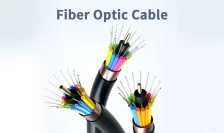
Un cavo in fibra ottica utilizza sottili fibre di vetro o plastica per trasmettere dati sotto forma di impulsi luminosi, consentendo comunicazioni veloci, chiare e affidabili su lunghe distanze.
Long-haul transmission uses fiber optic cables to send data quickly and securely over long distances, connecting cities and countries for fast communication.
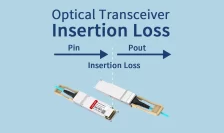
Learn what optical transceiver insertion loss is, how it affects link budgets, BER, and FEC. Includes LC/MPO numbers, control tips, and LINK-PP insights.
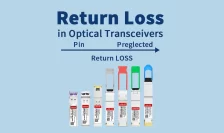
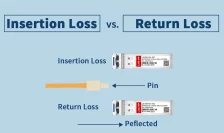
Learn the difference between insertion loss and return loss in optical transceivers, their impact on performance, measurement methods, and LINK-PP product guidance.
Discover what CMIS is and why it’s vital for managing modern optical modules (QSFP-DD, OSFP, etc.). Learn how LINK-PP’s future-ready modules comply with CMIS .
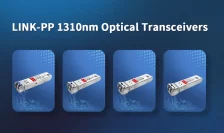
Looking for 1310nm optical transceivers? Learn key buying tips, explore LINK-PP’s SFP, SFP28, and QSFP28 modules, and get reliable performance with warranty coverage.
Scopri l’equalizzatore con feedback decisionale (DFE), la tecnica non lineare essenziale per ridurre al minimo l’ISI. Impara come il DFE migliora il BER dei bit nei transceiver ottici e nei collegamenti dati a lunga distanza.
Scopri cos’è l’FFE (equalizzatore feed-forward), come funziona l’equalizzazione in trasmissione e perché l’FFE è essenziale per i moduli ottici ad alta velocità e per l’integrità del segnale SerDes.
Scopri come l’equalizzatore lineare in tempo continuo (CTLE) migliora in modo significativo l’integrità del segnale nei moduli SFP, contrastando efficacemente la perdita di canale e massimizzando le prestazioni del collegamento.
FTP su SSL (FTPS) protegge i trasferimenti di file crittografando i dati con SSL/TLS, salvaguardando le informazioni sensibili dall’accesso non autorizzato durante il transito.
HTTP su SSL crittografa i tuoi dati, garantendo comunicazioni sicure e private e proteggendo le informazioni sensibili dagli hacker durante la navigazione web.
Comprendi TDCEQ, il metrica critica della qualità del trasmettitore PAM4 ottico per i moderni moduli ottici. Apprendi come tdecq misura la chiusura verticale dell'occhio e influisce sulla prestazione e sulla conformità dei moduli 50/100/400g.
SCP (Secure Copy) consente trasferimenti di file sicuri e crittografati tra computer tramite SSH. Scopri come utilizzare SCP, le sue funzionalità e le migliori pratiche.
L’SVI nelle reti ti consente di assegnare indirizzi IP alle VLAN, abilitando il routing inter-VLAN e una gestione efficiente del livello 3 nei commutatori della tua rete.
esplorare la migrazione al cloud e i suoi vantaggi, le strategie e le migliori pratiche, oltre a esaminare l’hardware essenziale, come i moduli ottici, che ne rendono possibile l’attuazione.
Comprendi le differenze tra SFP 850 nm e 1310 nm in termini di tipo di fibra, distanza, costo e casi d’uso. Scopri quale modulo SFP è adatto alla tua rete.
Scopri lo SFP in rame da 2,5 G (2,5GBASE-T), la compatibilità, il supporto per cavi Cat5e/Cat6, la portata di 100 m e perché rappresenta un ponte tra gli aggiornamenti Ethernet da 1 G e da 10 G.
Guida completa al modulo SFP GLC-SX-MMD 1000BASE-SX: specifiche tecniche, confronto tra MMF e SMF, funzionalità DOM, compatibilità e migliori alternative per un’implementazione conveniente.
Scopri cos’è un modulo SFP da 2,5 Gbps, come funziona e la sua compatibilità con le porte SFP+. Esplora informazioni sulle prestazioni, gli standard e i consigli per l’acquisto.
Scopri come funzionano i transceiver compatibili e come garantire la compatibilità con lo switch. Evita errori SFP, blocchi del fornitore e scegli il modulo giusto con sicurezza.
Scopri cos’è un modulo SFP per fibra multimodale (MMF), come si differenzia dai moduli per fibra monomodale (SMF), come identificarlo e come evitare errori di compatibilità nelle implementazioni reali.
Scopri cos’è lo Small Form-factor Pluggable Plus (SFP+), come funziona, le regole di compatibilità, gli utilizzi più comuni e come scegliere il modulo più adatto.
Scopri come funziona un modulo transceiver SFP 1000BASE-T con cavo in rame di categoria 5, inclusi i limiti di compatibilità, i problemi termici e suggerimenti pratici per il deployment.
Impara lo standard SFP28, comprese le sue capacità 25G, le differenze tra SFP28 e SFP+, le opzioni in fibra e rame, e come scegliere la soluzione 25G più adatta.
Subscribe to LINK-PP
newsletter
Don’t miss anything. Get all the latest posts delivered straight to your inbox.