What are SFP ports on a switch? Learn how SFP ports support fiber and Ethernet connections, how they compare with RJ45 and SFP+, and which module you need.
What Frame Check Sequence (FCS) means, how CRC-32 detects corrupted Ethernet frames, and why FCS errors are commonly associated with cable faults, fiber issues, or optical transceiver problems.
Discover the LQ‑SW40‑SR4C 40GBASE‑SR module: high-speed, low-power, QSFP+ optics for multimode fibre networks. Perfect for data centres and network upgrades.
Discover how optical cross‑connect (OXC) enables all‑optical switching in DWDM/OTN networks, with LINK‑PP SFP modules ensuring seamless integration and superior performance.
Scopri cosa è uno switch MoR (Middle-of-Rack), come lo MoR si confronta con ToR/EoR, e quali moduli SFP+/SFP28/QSFP funzionano meglio — una guida pratica per la progettazione dei data center.
Scopri cos’è uno switch ToR (Top-of-Rack), come funziona l’architettura ToR e perché è il modello di rete preferito nei moderni data center. Include vantaggi, casi d’uso e soluzioni compatibili di transceiver ottici da LINK-PP.
WLAN comprende tutte le reti locali wireless, mentre Wi-Fi è un tipo specifico di WLAN che utilizza standard definiti per connessioni veloci e affidabili.
HTTP vs HTTPS: HTTPS crittografa i dati per una trasmissione sicura, mentre HTTP lascia le informazioni esposte. Scegli HTTPS per privacy, fiducia e conformità.
Scopri cos’è un backplane, come i canali backplane supportano Ethernet ad alta velocità da 40G/100G, gli standard chiave e le sfide progettuali. Scopri come i connettori LINK-PP RJ45 migliorano le prestazioni del backplane.
Impara lo standard IEEE 802.3bj per Ethernet da 100G su backplane e interconnessioni in cavo di rame. Esplora PAM4, FEC e i PHY KP4/KR4/CR4, e come i moduli LINK-PP supportano reti ad alta velocità.
Scopri il ruolo del Gearbox nei moderni transceiver ottici. Impara come consente l’allineamento dei canali, la conversione di velocità e il breakout per reti da 50G, 100G e 200G.
Scopri cosa definisce IEEE 802.3cd per Ethernet 50G, 100G e 200G. Esplora la tecnologia PAM4, i principali PMD, gli scenari di impiego e i transceiver ottici LINK-PP adatti.
Power Over Ethernet (PoE) combines power and data delivery via a single cable, simplifying installations for devices like IP cameras, VoIP phones, and IoT systems.
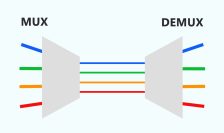
Wavelength Division Multiplexing (WDM) uses optical transceiver modules to send multiple data streams through a single fiber, boosting bandwidth and efficiency.
Il Sottoinsieme Ottico Ricevente (ROSA) è un componente optoelettronico critico nei transceiver ottici, responsabile della conversione dei segnali ottici in ingresso in
DDM/DOM in optical transceivers provides real-time monitoring of key parameters like temperature and power, ensuring network reliability and early issue detection.
Scopri i connettori RJ45 verticali LINK-PP. Risparmia spazio sulla scheda con design a inserimento superiore che offrono magnetics integrati, schermatura e prestazioni Ethernet affidabili.
Un transceiver 100G LR4 consente il trasferimento dati a 100 Gbps fino a 10 km utilizzando fibra monomodale, ideale per connessioni di rete ad alta velocità e lunga distanza.
Esplora il transceiver ottico SFP+ LINK-PP LS-MM8510-S3C a 850 nm 10GBASE-SR. Portata fino a 300 m su fibra multimodale (MMF) con basso consumo energetico e piena compatibilità.
Esplora i moduli ottici hot-pluggable: come funziona lo scambio a caldo, il suo valore ingegneristico, gli standard coinvolti e le considerazioni per la distribuzione.
Scopri il transceiver QSFP28 100G SR4 LINK-PP LQ-M85100-SR4C, ideale per collegamenti Ethernet 100G a breve distanza su fibra multimodale (MMF). Compatibile con Cisco, Arista, FS, Dell e altri.
La modulazione ottica modifica le proprietà della luce per codificare i dati, consentendo trasmissioni ad alta velocità e affidabili nei sistemi di comunicazione in fibra ottica.
Scopri cosa significa larghezza di banda dati, come influisce sui dispositivi e perché è fondamentale nelle comunicazioni digitali. Scopri come LINK-PP supporta il trasferimento dati ad alta velocità.
Il connettore RJ45 LPJG0926HENL con magnetics integrati offre supporto PoE+, efficienza nello spazio e conformità per applicazioni Ethernet ad alte prestazioni.
Subscribe to LINK-PP
newsletter
Don’t miss anything. Get all the latest posts delivered straight to your inbox.