
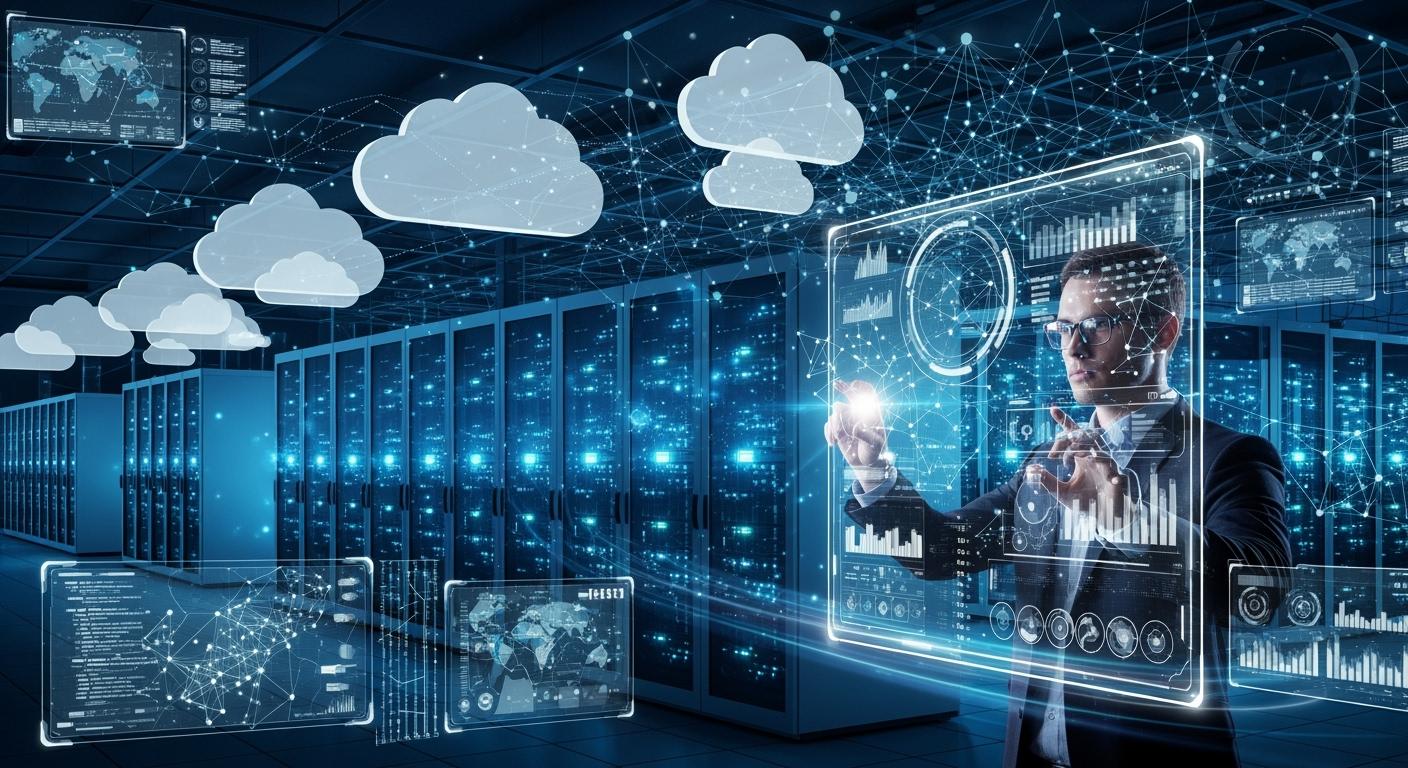
Modern data centers are no longer static repositories of IT equipment; they are the dynamic, pulsating hearts of the digital economy. As demands for compute power, storage, and low-latency connectivity explode—driven by AI, IoT, and real-time analytics—traditional architectures are hitting their limits. The answer lies in embracing advanced cloud solutions that offer agility, intelligence, and unparalleled scalability. This evolution is critical for businesses seeking a competitive edge through optimized cloud data center solutions.
➤ Key Takeaways
Advanced cloud solutions make your datacenter more flexible and safe. You can control your data better.
Cloud managed services help you grow fast. You can add resources easily. You do not need new hardware. This helps you save money.
Strong security in cloud solutions keeps your data safe from threats. It also helps you follow safety rules.
➤ The Pillars of a Modern, Cloud-Optimized Data Center
Transitioning to a future-proof infrastructure rests on several key technological pillars. These are not isolated upgrades but interconnected components of a cohesive strategy.
Hybrid & Multi-Cloud Architecture: The “one-size-fits-all” cloud approach is fading. Modern strategies leverage a blend of private cloud security, public cloud scalability, and on-premises control. This hybrid multi-cloud strategy allows workloads to be placed in the optimal environment based on cost, compliance, and performance needs, avoiding vendor lock-in and enhancing resilience.
AI-Ops and Intelligent Management: Managing complex, distributed environments manually is impossible. AI for cloud optimization and Machine Learning are now essential. AI-Ops platforms analyze telemetry data to predict failures, automate resource allocation, optimize cooling, and enhance security, transforming operations from reactive to proactive and predictive.
Hyperconverged Infrastructure (HCI): HCI simplifies the data center by integrating compute, storage, and networking into a single, software-defined system. It’s a cornerstone for building scalable private cloud solutions and is ideal for edge deployments, offering a cloud-like experience on-premises that is easy to manage and scale.
Software-Defined Everything (SDx): Decoupling hardware from control software through Software-Defined Networking (SDN) and Software-Defined Storage (SDS) provides ultimate flexibility. Networks and storage can be provisioned and managed programmatically, aligning perfectly with DevOps and CI/CD pipelines for agile service delivery.
➤ The Networking Backbone: Why High-Speed Optical Modules are Critical
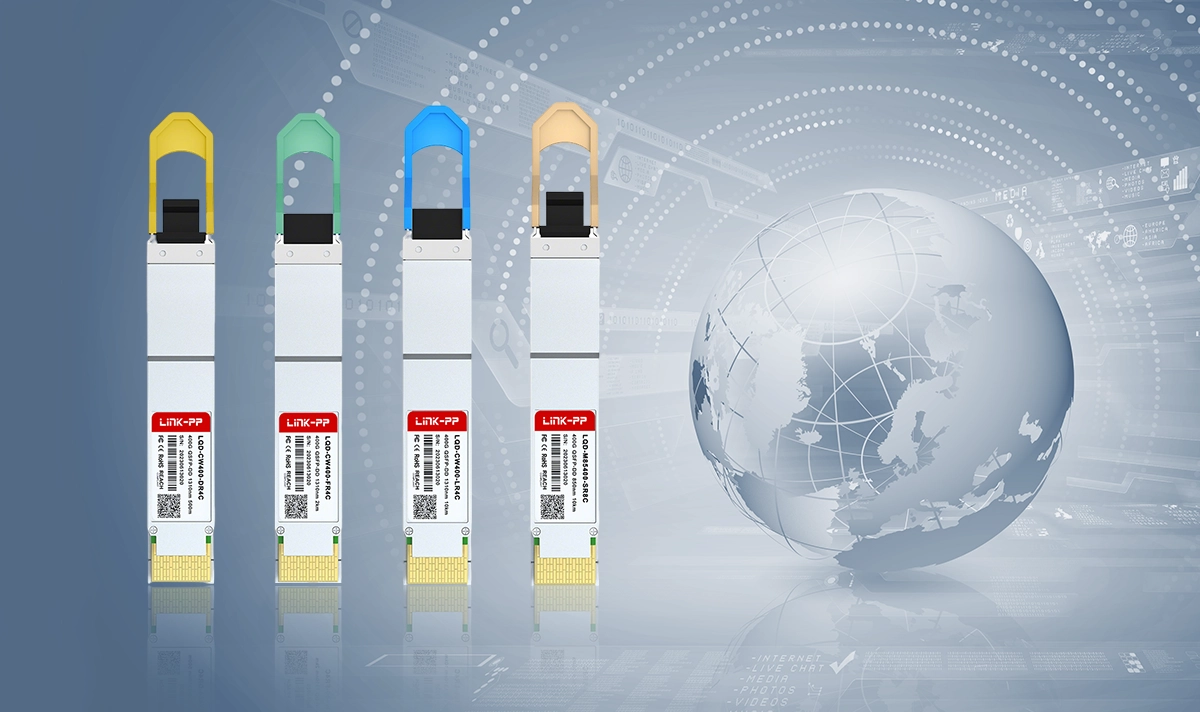
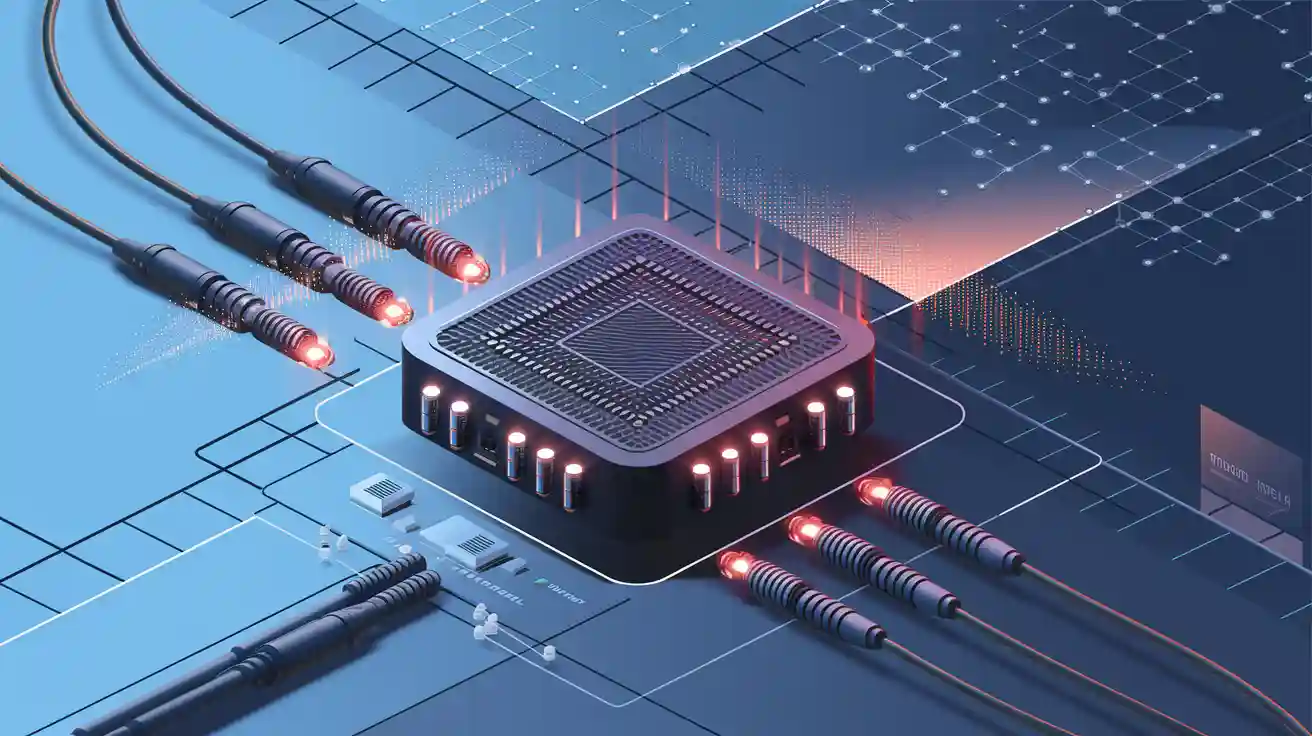
All these advanced solutions generate staggering amounts of east-west (within the data center) and north-south (to/from the data center) traffic. The network fabric connecting servers, storage arrays, and cloud gateways must be extraordinarily high-bandwidth and low-latency. This is where the optical transceiver module, the unsung hero of the data center, becomes the critical enabler.
As we move from 100G/400G to 800G and beyond, the role of high-performance, reliable optical modules cannot be overstated. They are the essential components that convert electrical signals to light and back, enabling high-speed data transmission over fiber. Choosing the right module affects power consumption, port density, reach, and total cost of ownership.
Spotlight on 800G OSFP DR8: Powering the AI and Cloud Frontier
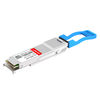
For hyperscale cloud infrastructure and AI cluster networks, the move to 800G is accelerating. A standout solution in this space is the 800G OSFP DR8 optical transceiver. This module is engineered for the most demanding environments, offering:
High Density & Scalability: Enables 800G connectivity in a single port, doubling the bandwidth of previous generations and maximizing switch faceplate efficiency—crucial for hyperscale data center growth.
Optimized for AI/ML Workloads: Its high throughput and low latency are perfectly suited for the intense, parallel communication patterns of AI training clusters and distributed cloud applications.
Power Efficiency: Designed with advanced DSP and optics to deliver superior performance-per-watt, a key consideration for sustainable data center modernization.
Proven Interoperability: The 800G DR8 is rigorously tested for compatibility with major switch and router platforms, ensuring seamless deployment and reliable performance in multi-vendor environments.
Integrating such cutting-edge optics is a non-negotiable step for any organization implementing high-performance computing solutions in the cloud.
➤ Comparing Modern Cloud Data Center Approaches
The following table outlines the key characteristics of different cloud-optimized data center models:
Model | Key Characteristics | Ideal For | Primary Benefit |
|---|---|---|---|
Hyperscale Public Cloud (e.g., AWS, Azure, GCP) | Massive scale, limitless on-demand services, global reach. | Startups, variable workloads, SaaS applications, global services. | Speed of innovation & operational overhead reduction. |
Private / Hybrid Cloud | Dedicated, secure infrastructure, often with HCI. Combines private control with public cloud burstability. | Regulated industries (finance, healthcare), legacy applications, data sovereignty needs. | Security, control, and regulatory compliance. |
Multi-Cloud | Uses services from two or more public cloud providers strategically. | Avoiding vendor lock-in, leveraging best-in-class services, enhancing redundancy. | Strategic flexibility and risk mitigation. |
Edge Cloud | Decentralized micro-data centers located close to data sources. | IoT, real-time processing (autonomous vehicles, smart cities), low-latency content delivery. | Ultra-low latency and bandwidth optimization. |
➤ The Road Ahead: Sustainability and Edge Integration
The future of modern data center solutions is not just about power, but also about wisdom and green efficiency. Sustainable data center design—using renewable energy, advanced liquid cooling, and AI-driven power optimization—is becoming a business imperative.
Simultaneously, the rise of the edge computing paradigm is creating a distributed “cloud continuum,” from the core data center to the cell tower and factory floor. Advanced cloud solutions provide the management layer to seamlessly orchestrate workloads across this continuum, ensuring consistent policies and security from core to edge.
➤ Conclusion: Building on a Foundation of Intelligence and Light
Modernizing your data center with advanced cloud solutions is a strategic journey. It involves adopting intelligent, software-defined architectures, making informed choices between hybrid and multi-cloud models, and investing in the high-speed networking backbone that makes it all possible.
This backbone, powered by next-generation optics like the LINK-PP 800G DR8, ensures that your infrastructure doesn't just keep up but leads the way. By embracing these technologies, businesses can build a resilient, efficient, and agile foundation ready for the AI-driven, data-intensive future. Start your data center transformation journey today by evaluating your workload needs and the robust solutions that can meet them tomorrow.
➤ FAQ
What is a cloud managed data center?
A cloud managed data center uses cloud tools and services. You can control your data, apps, and systems from anywhere. You get stronger security. You have more flexibility. You get help when you need it.
How does cloud help with data center security?
Cloud services keep your data safe with strong security tools. You use firewalls and encryption. You can watch your systems with monitoring. These tools protect your data from threats. You follow safety rules to keep data safe.
Can you scale your data center with cloud solutions?
You can make your data center bigger with cloud. You add storage, servers, and network power when you need more. You only pay for what you use.
Tip: Cloud helps your data center grow and use new technology.
Cloud helps you run and protect your data center.
You use cloud to save money and work faster.
Cloud services give you expert help and easy upgrades.
Cloud Benefit | What You Get |
|---|---|
Flexibility | Change your setup anytime |
Security | Protect your data |
Cost Savings | Pay for what you use |
Easy Management | Control from anywhere |