
In the vast and intricate world of fiber optic communications, the spotlight often falls on transceivers and high-speed cables. But what about the components that quietly, efficiently manage the flow of light itself? Enter the Fiber Optic Coupler – a fundamental, yet often overlooked, passive device that is crucial for splitting, combining, or distributing optical signals.
Whether you're designing a complex data center network or a simple monitoring system, understanding this component is key to building a robust and efficient infrastructure. This guide will illuminate everything you need to know about fiber optic couplers.
➤ Key Takeaways
A fiber optic coupler splits or joins light signals. It helps you control how data moves in optical networks.
Pick the right coupler for your needs. Think about how many ports you need. Check the splitting ratio to make your network work better.
Know the difference between passive and active couplers. Passive couplers do not use power. Active couplers can make signals stronger.
There are different couplers, like fused and planar. Each type has its own job. Choose one that fits your fiber for the best results.
Fiber optic couplers are used in many areas. They help in telecommunications and sensing. These couplers make systems smarter and more connected.
➤ What is a Fiber Optic Coupler?
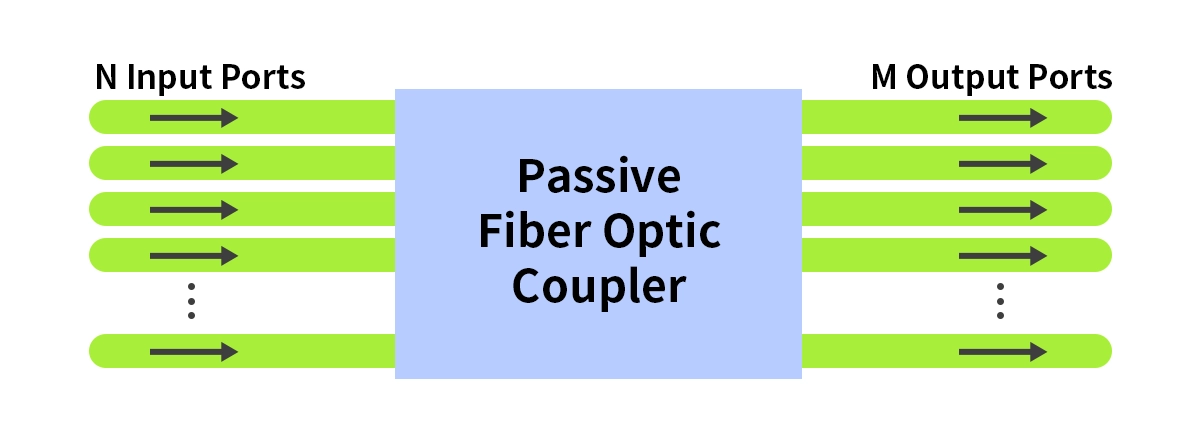
A fiber optic coupler is a passive optical device that connects three or more fiber ends, dividing one input optical signal into two or more outputs, or combining multiple signals into one. Unlike active devices like switches or transceivers, couplers require no electrical power to function. Their primary role is to manipulate light paths, enabling network functionalities like signal monitoring, redundancy, and bidirectional communication.
➤ How Does It Work? The Science of Light Coupling
The core principle is "optical fusion." In the most common type, the Fused Biconical Taper (FBT) coupler, two or more optical fibers are twisted together, heated, and stretched. This process fuses the fibers' cores, creating a coupling region where light propagating in one fiber can "couple" into the adjacent ones.
The specific ratio of light distributed from the input to the output ports is determined by the length of the fused region and the wavelength of the light. This makes couplers versatile but also wavelength-sensitive.
➤ Main Types of Fiber Optic Couplers
Fiber optic couplers are categorized based on their functionality and construction. The table below outlines the most common types:
Coupler Type | Basic Function | Common Configurations | Typical Applications |
|---|---|---|---|
Fused Biconical Taper (FBT) | Splits or combines optical signals. | 1x2, 2x2 (e.g., 50/50, 90/10 split) | Passive Optical Networks (PON), CATV, power monitoring. |
Planar Lightwave Circuit (PLC) | Splits one input into multiple outputs with high uniformity. | 1x4, 1x8, 1x16, 1x32 | Fiber-to-the-Home (FTTH) networks, large-scale data distribution. |
Beam Splitter (Cube Type) | Uses a small prism to split light beams. | 1x2 | Laboratory testing, instrumentation where polarization maintenance is key. |
Star Coupler | Distributes signals from multiple inputs to multiple outputs. | N x M | Optical network broadcasting and data centers. |
FBT vs. PLC: A Quick Comparison
While both are prevalent, PLC couplers offer better uniformity across output ports and are more stable over a wider temperature range, making them ideal for high-split-ratio applications like FTTH. FBT couplers are more cost-effective for lower-channel counts and are a popular choice for achieving reliable fiber optic network reliability.
➤ Key Applications: Where Are Couplers Used?
The ability to manage light paths makes couplers indispensable:
Telecommunications & FTTH: The backbone of PON architectures, where a single fiber from an ISP is split to serve multiple homes or businesses.
Data Centers: Used for network monitoring taps, allowing a copy of the data traffic to be sent to analysis tools without interrupting the main link.
CATV Systems: To split a broadcast signal to numerous subscribers.
Sensing Systems: In fiber optic sensors for strain, temperature, and chemical sensing, where precise light interaction is critical.
➤ The Critical Link: Couplers and Optical Transceivers
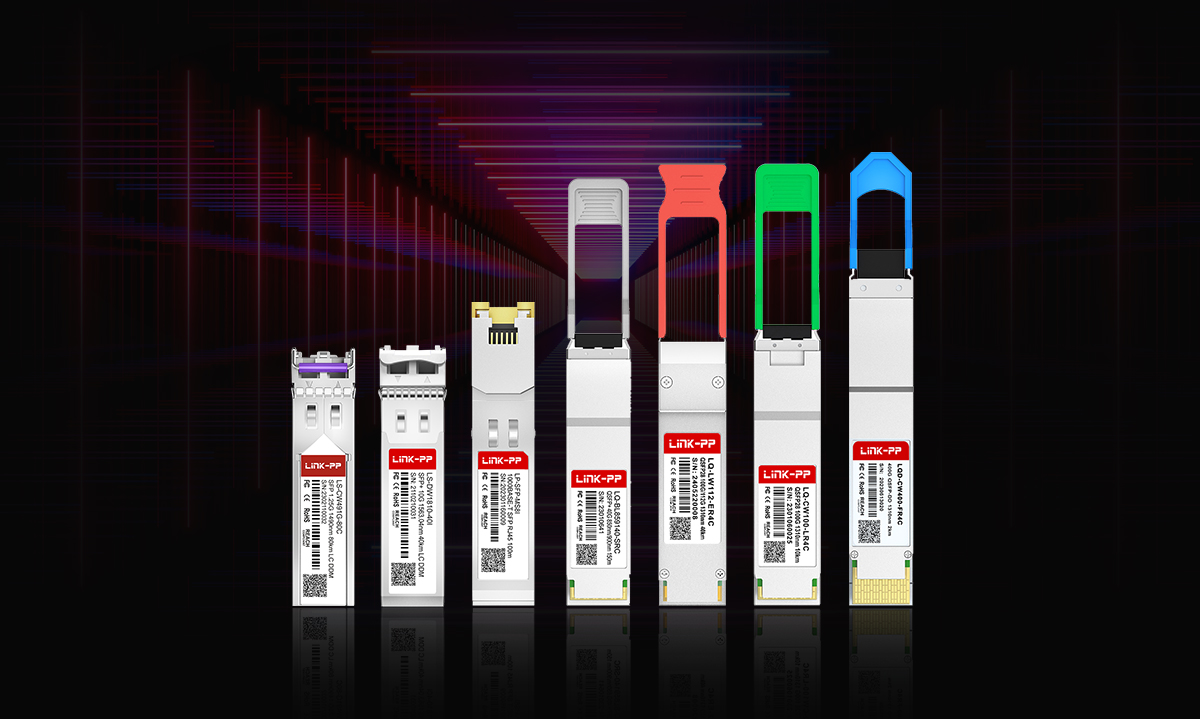
This is where the network's passive and active components converge. An optical transceiver is the active device that converts electrical signals to light and vice versa. It's the starting and ending point of an optical link.
Now, imagine you need to monitor the traffic flowing through a critical link powered by a 100G QSFP28 transceiver. You can't just unplug it. This is where a fiber optic coupler shines. A low-ratio tap coupler (e.g., 99/1) can be inserted inline. It passes 99% of the signal power to the destination, while diverting a 1% copy to a monitoring port connected to a protocol analyzer.
This setup is vital for ensuring network performance and troubleshooting without causing downtime. The performance of the entire chain—from the transceiver to the coupler and into the fiber—dictates the link's integrity. Using high-quality, compatible components is non-negotiable.
For instance, pairing a high-precision PLC splitter with a reliable transceiver like the LINK-PP QSFP28-100G-SR4 ensures optimal performance for short-reach multi-mode data center links. The low insertion loss of a quality coupler preserves the power budget of the LINK-PP transceiver, guaranteeing a stable and error-free connection.
➤ Choosing the Right Coupler: A Quick Guide
Selecting a coupler isn't one-size-fits-all. Consider these factors:
Split Ratio: What percentage of light do you need at each output? (e.g., 50/50, 80/20).
Number of Ports: Do you need a simple 1x2 split or a larger 1x32 distribution?
Wavelength: Is it for 1310nm, 1550nm, or a dual-window application?
Insertion Loss: The total signal loss introduced by the coupler. Lower is better.
Uniformity: (For PLCs) How consistent is the loss across all output ports?
➤ Conclusion
The fiber optic coupler is a masterpiece of passive optical engineering, a humble component that empowers the complex, high-speed networks we rely on daily. From delivering broadband to your home to ensuring the health of massive data centers, its role in splitting and managing light is fundamental.
By understanding their operation, types, and applications—and how they interact with active components like LINK-PP optical transceivers—you can make informed decisions to build more resilient, efficient, and high-performing network infrastructures for your specific needs.
➤ FAQ
What does a fiber optic coupler do?
A fiber optic coupler can split or join light signals in fiber cables. You use it to share data with other devices. It also helps you collect signals from different places.
What types of fiber optic couplers can you find?
You can find fused, planar, and micro-optic couplers. Each type is good for certain jobs. Fused couplers are best for simple splits. Planar couplers work well in big networks. Micro-optic couplers are used for special tasks.
What is the difference between single mode and multimode couplers?
Single mode couplers work with thin fibers for long distances. Multimode couplers use thick fibers for short links. You choose the type that fits your network.
What should you check before choosing a coupler?
You should look at the number of ports, fiber type, splitting ratio, and connector style. These things help you pick the right coupler for your system.
What are common uses for fiber optic couplers?
Telecommunications
Data centers
Sensing systems
Industrial controls
You use couplers to control signals in many areas.