

In today's fast-paced digital landscape, a reliable and agile network is no longer a luxury—it's a necessity. Businesses are constantly seeking ways to simplify operations, enhance security, and scale effortlessly. Enter the cloud managed network, a revolutionary approach that is transforming how organizations manage their IT infrastructure.
But what exactly does this term mean, and why is it becoming the gold standard for modern businesses? This guide will demystify cloud managed networking, explore its core components, and highlight its undeniable advantages.
📑 Key Takeaways
A Cloud Managed Network lets you control network devices online from any place, using one web dashboard.
You can add or remove devices easily, with no manual setup. This saves time and lowers costs.
Automatic security updates happen often to keep your network safe. You do not need to watch for patches yourself.
The dashboard shows your network in real time. This helps you find and fix problems fast.
Think about risks like vendor lock-in and compliance issues before picking a cloud managed network.
📑 Understanding the Core Concept
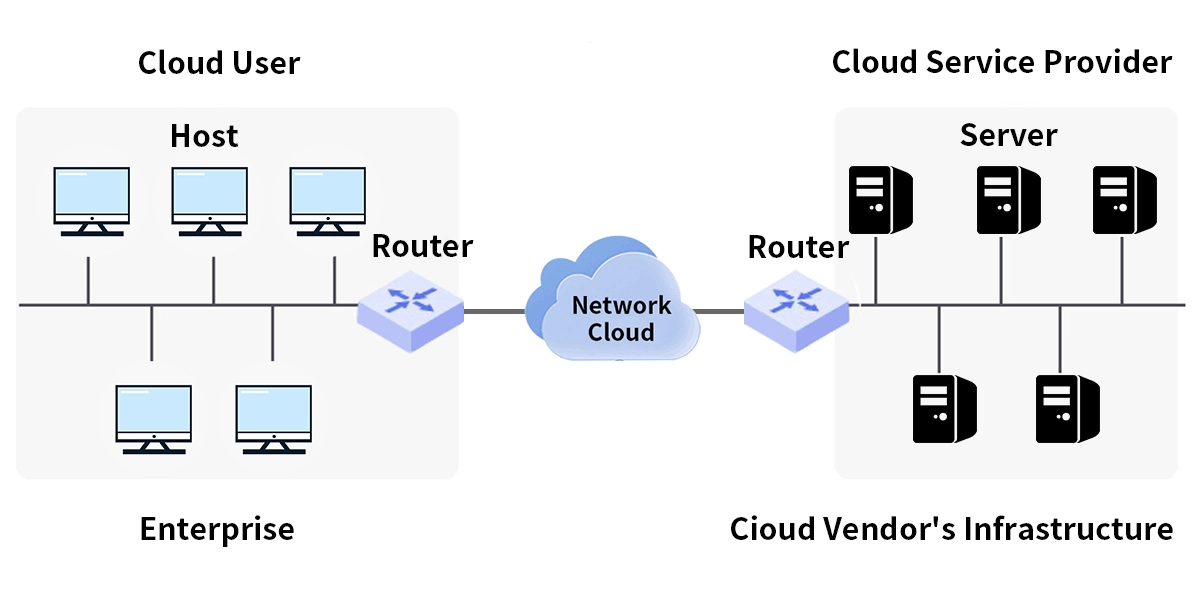
A Cloud Managed Network is a networking model where the day-to-day administration, monitoring, and maintenance of network hardware (like switches, routers, and Wi-Fi access points) are handled through a centralized, web-based platform hosted in the cloud.
Instead of managing each device individually via a command-line interface (CLI) on-site, IT administrators can control an entire network from a single dashboard, accessible from anywhere with an internet connection. This outsources the complexity of network management to a cloud-based software, often following a Software-as-a-Service (SaaS) model.
💡 In essence, it’s like having a remote control for your entire network infrastructure.
📑 How Does a Cloud Managed Network Work?
The architecture is elegantly simple and highly effective. Here's a breakdown of the key players:
On-Premises Hardware: These are the physical devices at your business locations—Wi-Fi access points, security gateways, and network switches.
The Cloud Management Platform: This is the brain of the operation. It's a software application running in a secure data center, provided by a service vendor.
The Secure Connection: Each on-premises device establishes an encrypted, outbound connection (often using TLS/SSL) to the cloud platform. This connection allows for seamless communication and management.
The entire lifecycle—from initial setup and configuration to real-time monitoring, security updates, and troubleshooting—is handled through the intuitive cloud dashboard.
📑 Top Benefits of Adopting a Cloud Managed Network
Why are businesses of all sizes making the switch? The benefits are compelling and directly address common IT pain points.
Feature | Traditional Network | Cloud Managed Network |
|---|---|---|
Management & Control | On-site, device-by-device via CLI. Complex and time-consuming. | Centralized cloud dashboard. Simple and unified. |
Scalability | Difficult and expensive; requires new hardware and manual config. | Effortless; easily add new devices or sites with a few clicks. |
Cost | High CapEx (hardware) and OpEx (skilled IT staff). | Predictable subscription model (OpEx); lower total cost of ownership. |
Expertise Required | Requires highly certified network engineers. | Simplified interface reduces the need for deep specialized knowledge. |
Security & Updates | Manual patching, often delayed, leaving vulnerabilities. | Automated, centralized firmware and security policy updates. |
Reliability & Uptime | Reactive troubleshooting; downtime can be prolonged. | Proactive monitoring, alerts, and often includes built-in high availability. |
For companies looking to implement a robust cloud network management strategy, partnering with a provider that offers integrated hardware and software, like LINK-PP, can streamline the entire deployment process. Their solutions are designed to answer the common business question: "how to improve network scalability and security" without a massive upfront investment.
📑 The Critical Role of Optical Transceivers in Your Network
When discussing network hardware, especially in high-performance or data center environments, the role of optical transceivers cannot be overstated. Often called "the heart of a fiber optic network," these small, hot-pluggable optical modules are what convert electrical signals from switches into optical light signals that travel over fiber cabling.
Why does this matter for a cloud managed network?
Performance & Scalability: As your business grows and demands more bandwidth, high-quality optics ensure that your physical layer can handle the load, providing the reliable, high-speed backbone that your cloud-managed services depend on.
Compatibility and Reliability: Using certified, high-quality modules is crucial for network stability. Generic or low-quality optics can lead to intermittent connectivity, data errors, and even damage to expensive switch ports.
For optimal performance in a LINK-PP cloud managed solution, it is essential to use compatible, high-grade transceivers. A reliable and high-performance choice is the LINK-PP SFP28-25G-SR optical module. This module is ideal for connecting switches within a rack or between adjacent racks in a data center, supporting 25 Gigabit Ethernet over multimode fiber, which is perfect for aggregating traffic from multiple access points or servers in a high-density environment.
Integrating components like the LINK-PP LS-MM8525-S3C ensures that the physical infrastructure supporting your cloud-managed system is just as robust and future-proof as the software managing it.
📑 Ideal Use Cases and Industries
Cloud managed networking is versatile, but it shines particularly bright in certain scenarios:
Distributed Enterprises & Retail Chains: Manage Wi-Fi and security for hundreds of stores from one central location.
Small to Medium-Sized Businesses (SMBs): Gain enterprise-grade network capabilities without an enterprise-sized IT team.
Remote Work & Branch Offices (ROBO): Ensure consistent security policies and network performance across all remote locations.
Education and Hospitality: Easily manage guest Wi-Fi, access controls, and bandwidth allocation across large campuses or hotels.
📑 Conclusion: Is a Cloud Managed Network Right for You?
The shift towards cloud managed networking is a clear indicator of where the future of business IT is headed. It offers unparalleled simplicity, scalability, and security, freeing up valuable IT resources to focus on strategic initiatives rather than routine maintenance.
For any organization aiming to enhance agility and reduce operational overhead, the question is no longer if but when to adopt this model. By choosing a comprehensive solution from a trusted provider like LINK-PP, which encompasses both the cloud management platform and reliable hardware components like their performance-driven optical transceivers, you are not just building a network—you are building a competitive advantage.
Ready to simplify your network management? Explore how a cloud-based approach can transform your business connectivity today.
📑 FAQ
What is a cloud managed network?
A cloud managed network is a system you control online. You use a web dashboard to manage devices like switches and routers. You do not need to be near the equipment.
What devices can you manage with a cloud platform?
You can manage switches, routers, and wireless access points. Some platforms also let you control firewalls and cameras.
Tip: Always check your vendor’s list of supported devices.
What happens if the internet goes down?
Your devices keep working with their last settings. You cannot make changes or see updates until the internet comes back.
What makes cloud managed networks secure?
Vendors send regular security updates. The system installs these updates for you. You also get alerts about threats. You do not need to track patches yourself.