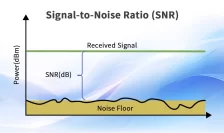
SNR, or signal-to-noise ratio, measures signal strength versus noise. High SNR means clearer audio, images, and data for better overall signal quality.
Ensure reliable optical transceiver performance with regular tests for metrics like BER, extinction ratio, and receiver sensitivity to avoid network disruptions.
Understand optical transceiver terminology like SR, LR, ER, and ZR to choose the right module for your network's speed, distance, and compatibility needs.
Learn how to clean an SFP transceiver properly to prevent signal loss, reduce errors, and extend module lifespan using industry-approved tools and methods.
Signal integrity and low latency in data center transceivers ensure reliable, error-free data transmission and optimal performance for real-time applications.
Bandwidth vs Throughput explains the difference between maximum data capacity and actual data speed, helping you diagnose and improve network performance.
What Frame Check Sequence (FCS) means, how CRC-32 detects corrupted Ethernet frames, and why FCS errors are commonly associated with cable faults, fiber issues, or optical transceiver problems.
Understand what a Digital Communication Analyzer (DCA) is, how it works, and why it is essential for optical module testing, eye diagrams, and signal integrity.
Discover the Decision Feedback Equalizer (DFE), the nonlinear technique essential for minimizing ISI. Learn how DFE improves bit BER in optics transceivers and long-haul data links.
Learn how the Continuous-Time Linear Equalizer (CTLE) dramatically improves signal integrity in SFP modules, effectively combating channel loss and maximizing link performance.
Learn what the PCS (Physical Coding Sublayer) is, how it enables reliable Ethernet transmission, and why it matters for high-speed optical transceivers and network design.
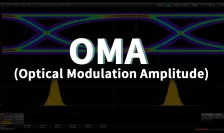
Learn what OMA (Optical Modulation Amplitude) means in optical communications, how to calculate it from P₁/P₀ and extinction ratio, and why it’s critical in transceiver specs like LINK-PP SFP modules.
Complete guide to long distance transceivers covering 10km to 120km optics, 1310nm vs 1550nm, ER/ZR modules, link budget calculation, and deployment best practices.
Understand optical transceiver terminology like SR, LR, ER, and ZR to choose the right module for your network's speed, distance, and compatibility needs.
Subscribe to LINK-PP
newsletter
Don’t miss anything. Get all the latest posts delivered straight to your inbox.