Showing results for: "modulation"

Topics
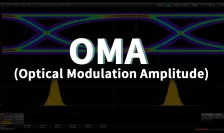
Learn what OMA (Optical Modulation Amplitude) means in optical communications, how to calculate it from P₁/P₀ and extinction ratio, and why it’s critical in transceiver specs like LINK-PP SFP modules.
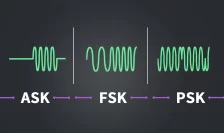
ASK is ideal for simple, low-cost projects, while FSK suits noisy environments and PSK offers high data rates. Compare ASK, FSK, and PSK here.
FSK Modulation transmits digital data by shifting signal frequency for each bit, offering reliable communication even in noisy environments.
ASK Modulation transmits digital data by varying a carrier wave's amplitude, offering a simple, cost-effective solution for basic digital communication systems.
QAM modulation boosts data transmission by varying amplitude and phase, enabling faster, more efficient communication in Wi-Fi, cable TV, and broadband.

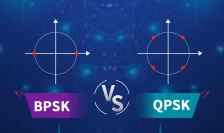
Compare BPSK Modulation and QPSK to choose the right scheme for noise immunity, data rate, and bandwidth efficiency.
QPSK modulation transmits two bits per symbol, boosting data rates and reliability in wireless, satellite, and digital communication systems.
BPSK Modulation uses two phase states to transmit digital data reliably, offering strong noise resistance and simple system design.
PAM4 is a four-level pulse amplitude modulation method that transmits two bits per symbol, doubling data rates for high-speed networks.
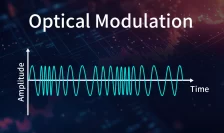
Optical modulation changes light properties to encode data, enabling high-speed, reliable transmission in fiber optic communication systems.
ASK is ideal for simple, low-cost projects, while FSK suits noisy environments and PSK offers high data rates. Compare ASK, FSK, and PSK here.
QPSK modulation transmits two bits per symbol, boosting data rates and reliability in wireless, satellite, and digital communication systems.
BPSK Modulation uses two phase states to transmit digital data reliably, offering strong noise resistance and simple system design.
Compare BPSK Modulation and QPSK to choose the right scheme for noise immunity, data rate, and bandwidth efficiency.
Learn what OMA (Optical Modulation Amplitude) means in optical communications, how to calculate it from P₁/P₀ and extinction ratio, and why it’s critical in transceiver specs like LINK-PP SFP modules.
FSK Modulation transmits digital data by shifting signal frequency for each bit, offering reliable communication even in noisy environments.
ASK Modulation transmits digital data by varying a carrier wave's amplitude, offering a simple, cost-effective solution for basic digital communication systems.
QAM modulation boosts data transmission by varying amplitude and phase, enabling faster, more efficient communication in Wi-Fi, cable TV, and broadband.

PAM4 is a four-level pulse amplitude modulation method that transmits two bits per symbol, doubling data rates for high-speed networks.
Optical modulation changes light properties to encode data, enabling high-speed, reliable transmission in fiber optic communication systems.

Add Your Heading Text Here