Discover how 1310 nm optical modules serve essential roles in data centers, metro networks, and enterprise links. Learn use cases and explore LINK-PP’s reliable modules.
Explore the difference between DDMI (interface) and DDM (diagnostics) in optical transceivers. Learn how each supports real-time monitoring and how LINK-PP products leverage them.
Remote Direct Memory Access steigert die Datenübertragungsgeschwindigkeit, senkt die Latenz und reduziert die CPU-Auslastung für Hochleistungsrechnen und Cloud-Anwendungen.
Metro-Ethernet verbindet mehrere Geschäftsstandorte innerhalb einer Stadt und bietet schnelle, zuverlässige und skalierbare Netzwerklösungen für Daten, Sprache und Video.
Der QSFP28-100G-ZR4-Transceiver ermöglicht die 100G-Datenübertragung über bis zu 80 km mittels Single-Mode-Glasfaser und eignet sich ideal für langstreckige, hochgeschwindigkeitsfähige Netzwerkverbindungen.
Die LS-MM8532-S1C SFP28-Transceiver bieten Geschwindigkeiten von 25 G/32 G, breite Kompatibilität, geringen Stromverbrauch und Kosteneinsparungen – ideal, um Ihr Rechenzentrum zukunftssicher zu machen.
Führen Sie die Fehlersuche bei optischen Transceivern effizient mit digitaler Diagnoseüberwachung durch. Überwachen Sie Echtzeitdaten, um Fehler frühzeitig zu erkennen und die Netzwerkzuverlässigkeit zu gewährleisten.
Erfahren Sie, wie DDMI—das Digital Diagnostic Monitoring Interface—Echtzeit-Einblicke in optische Transceiver bietet. Lernen Sie seine wichtigsten Metriken, Vorteile und wie LINK-PP-Module es unterstützen.
Ein Storage Area Network verbindet Server mit gemeinsam genutztem Speicher und bietet schnellen, zuverlässigen und zentralisierten Datenzugriff für Unternehmen mit großen Datenvolumina.
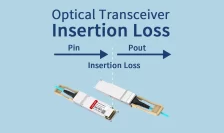
Learn what optical transceiver insertion loss is, how it affects link budgets, BER, and FEC. Includes LC/MPO numbers, control tips, and LINK-PP insights.
Optical modules enable high-speed, low-latency links across 5G fronthaul, midhaul, and backhaul. Learn how transceiver types, standards, and deployment needs shape modern telecom networks.
Clear, practical guide to SFF-8431 — the SFP+ 10G electrical interface standard. Learn the key requirements, design considerations, and how LINK-PP 10G SFP modules comply.
Erfahren Sie, wie RJ45-Magjack-Anschlusslösungen von LINK-PP die Telekommunikationsinfrastruktur verbessern – durch erhöhte Zuverlässigkeit, bessere PoE-Unterstützung und nahtlose Integration für zukunftsfähige Netzwerke.
Explore what a telecom network is, how it works, and its role in 5G. Learn opportunities, challenges, and how LINK‑PP solutions support next-gen networks.
Erfahren Sie, was der SFP28-MSA (Small Form-factor Pluggable 28 Multi-Source Agreement) definiert, warum er für 25G-Ethernet von Bedeutung ist und wie er die Interoperabilität von Modulen sicherstellt.
VRF vs. VLAN erläutert die wichtigsten Unterschiede, Einsatzgebiete und Sicherheitsvorteile jeder Netzwerksegmentierungsmethode, um Ihnen bei der Auswahl der richtigen Lösung zu helfen.
Maschinelles Lernen (ML) ermöglicht es Computern, aus Daten zu lernen, Muster zu erkennen und Vorhersagen zu treffen – und treibt damit Anwendungen wie Sprachassistenten und Empfehlungssysteme an.
Erfahren Sie, wie optische Transceiver intelligente Industrie-4.0-Netzwerke antreiben – sie ermöglichen Hochgeschwindigkeits-, Niedriglatenz- und zuverlässige Konnektivität in modernen Fabriken mit 1-G-, 10-G- und 25-G-Modulen, die für den industriellen Einsatz zertifiziert sind.
SSH vs. SSL: SSH sichert Fernzugriff und Dateiübertragungen, während SSL die Webkommunikation schützt. Wählen Sie das richtige Protokoll für Ihre Sicherheitsanforderungen.
Technical hurdles of 1.6T optical transceivers include signal integrity, power, and cooling, driving a connector revolution for reliable high-speed networks.
What Frame Check Sequence (FCS) means, how CRC-32 detects corrupted Ethernet frames, and why FCS errors are commonly associated with cable faults, fiber issues, or optical transceiver problems.
Discover how optical cross‑connect (OXC) enables all‑optical switching in DWDM/OTN networks, with LINK‑PP SFP modules ensuring seamless integration and superior performance.
Learn what Dispersion Compensation Fiber (DCF) is, how it reduces chromatic dispersion, where it is used, and why it matters in modern optical networks.
Learn what OEO means in optical communication, how optical-electrical-optical regeneration works, and when it is used in DWDM networks and optical links. Keywords:
Discover the LQ‑SW40‑SR4C 40GBASE‑SR module: high-speed, low-power, QSFP+ optics for multimode fibre networks. Perfect for data centres and network upgrades.
Learn what hyperconverged infrastructure HCI is, how it compares with virtualization and dHCI, and when Nutanix, Sangfor, or SFP-based designs fit best.
Understand SFP+ 40km (10GBASE-ER) modules, including specs, SMF compatibility, and how to choose the right extended-reach optical transceiver for your network.