















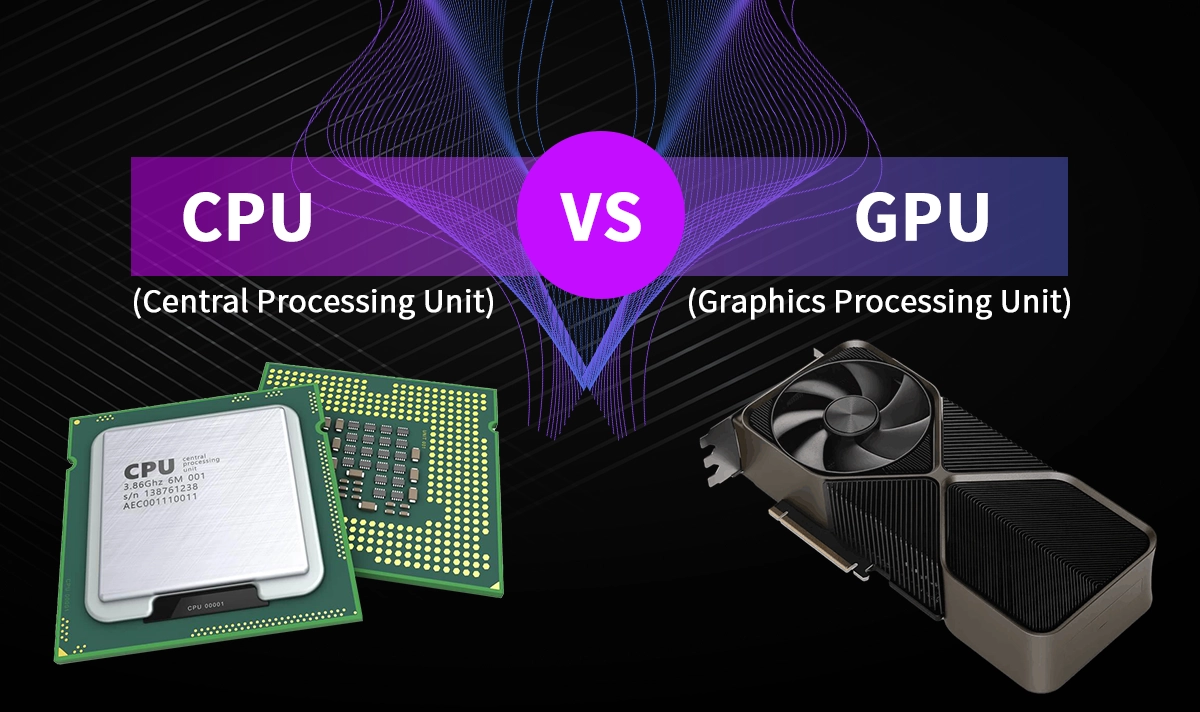
🖥️ Introduction
In the realm of computing, understanding the distinctions between a Graphics Processing Unit (GPU) and a Central Processing Unit (CPU) is crucial for selecting the appropriate hardware for specific tasks. While both are essential components of modern computing systems, they serve different purposes and excel in different areas.
🖥️ What Is a CPU?
The Central Processing Unit (CPU) is often referred to as the “brain” of a computer. It handles a wide range of tasks, including executing instructions, performing calculations, and managing data flow within the system. CPUs are designed for sequential processing, making them ideal for tasks that require complex decision-making and low-latency responses.
Key Characteristics of CPUs:
Core Count: Typically ranges from 4 to 16 cores.
Clock Speed: High clock speeds (measured in GHz) for fast processing.
Cache Memory: Large cache sizes to store frequently accessed data.
Instruction Set: Supports a wide range of instructions for various tasks.
🖥️ What Is a GPU?
The Graphics Processing Unit (GPU) is specialized hardware designed to accelerate the rendering of images and videos. Over time, GPUs have evolved to handle parallel processing tasks, making them highly efficient for specific computational workloads. Modern GPUs are integral to applications such as gaming, artificial intelligence (AI), and high-performance computing (HPC).
Key Characteristics of GPUs:
Core Count: Comprises thousands of smaller cores optimized for parallel processing.
Memory: Equipped with high-bandwidth memory (e.g., GDDR6) to handle large data sets.
Processing Model: Excels in executing the same operation across multiple data points simultaneously.
Applications: Ideal for tasks like graphics rendering, AI model training, and scientific simulations.
🖥️ CPU vs GPU: Architectural Differences
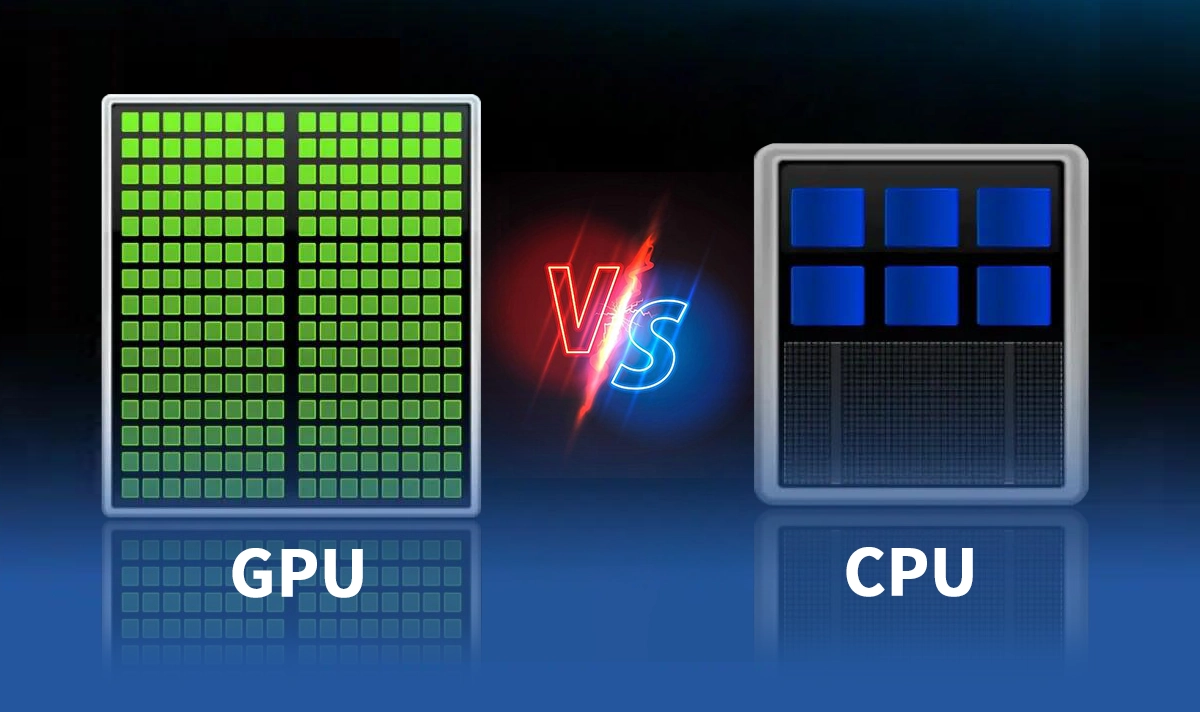
Feature | CPU | GPU |
|---|---|---|
Core Count | 4–16 cores | 1,000–10,000+ cores |
Processing Type | Sequential | Parallel |
Clock Speed | High (2–5 GHz) | Lower (1–2 GHz) |
Cache Size | Large (MBs) | Smaller (KBs) |
Adatto al compito | Calcolo generale | Compiti specializzati |
🖥️ Benchmark di prestazione
I recenti benchmark evidenziano le disparità di prestazione tra i processori e i GPU in vari applicazioni:
Trasformazione di apprendimento: I GPU possono superare i processori di circa 76% durante il tempo di trasformazione, soprattutto con batch più grandi.
Attività di inferenza: Per le attività di inferenza, i GPU riducono i tempi di elaborazione di circa 68% rispetto ai processori.
Prestazione dei giochi: Nelle situazioni di gioco, i GPU offrono tassi di frame significativamente più alti e capacità di rendering grafica superiori rispetto ai processori.
🖥️ Scegliere il giusto processore per le tue esigenze
Selezionare tra un processore e un GPU dipende dalle specifiche esigenze dei tuoi compiti:
Per il calcolo generale: I processori sono adatti per attività quotidiane come il web browsing, l'applicazione del lavoro e la gestione del sistema.
Per il rendering grafico: I GPU sono essenziali per attività che richiedono rendering 3D, l'editing video e il gioco.
Per l'AI e l'HPC: I GPU sono preferiti per la formazione di modelli AI, il funzionamento di simulazioni e il processamento di grandi dataset a causa delle loro capacità di elaborazione parallela.
🖥️ Conclusione
Comprendere le differenze tra i processori e i GPU è essenziale per ottimizzare la prestazione computazionale. Mentre i processori sono versatile e gestiscono un ampio range di attività efficientemente, i GPU eccellono in scenari che richiedono elaborazione parallela e alta throughput computazionale. Valutare le tue esigenze specifiche ti guiderà a scegliere il giusto processore per ottenere la prestazione ottimale.



