
➡️ What Is an EoR (End-of-Row) Switch?
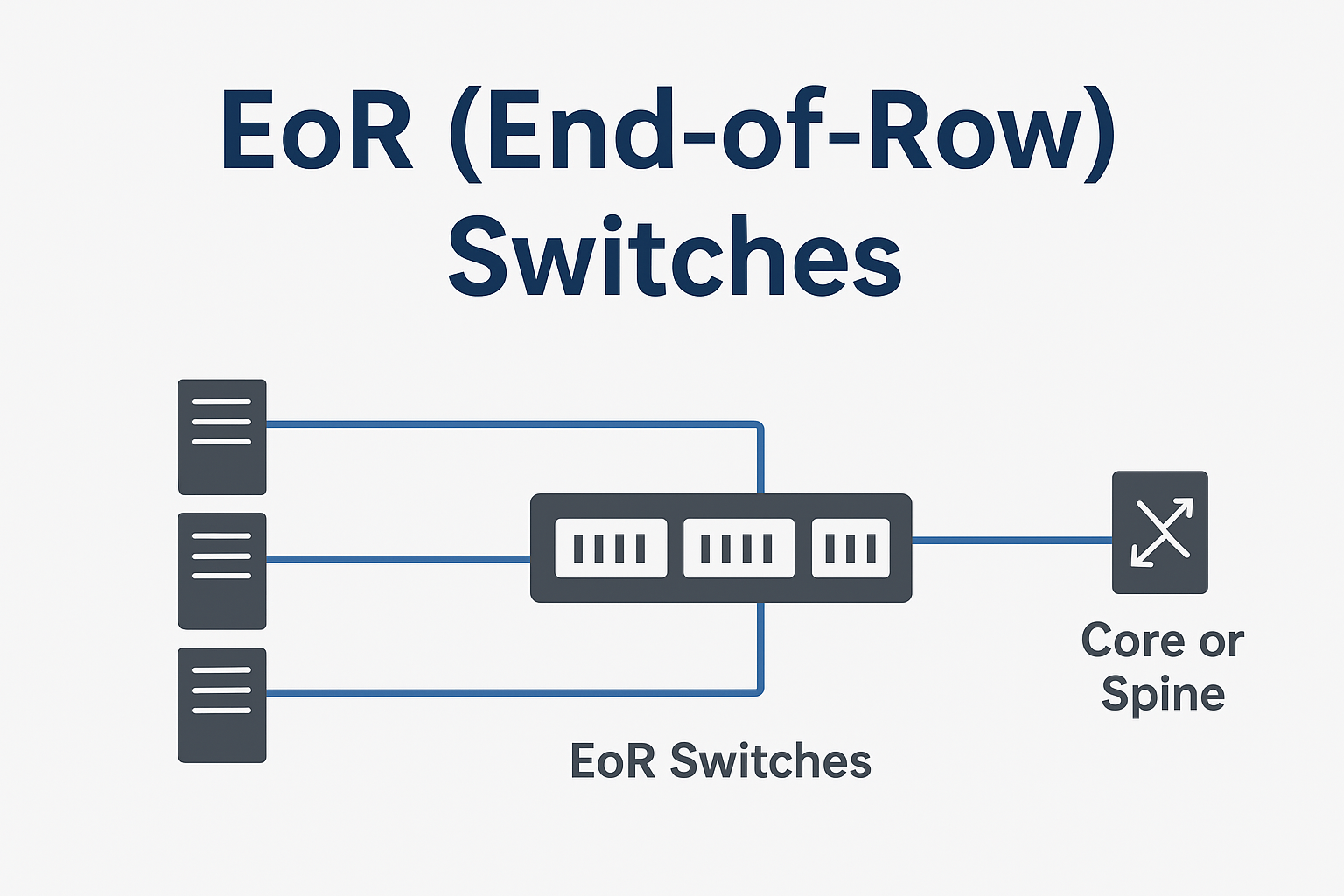
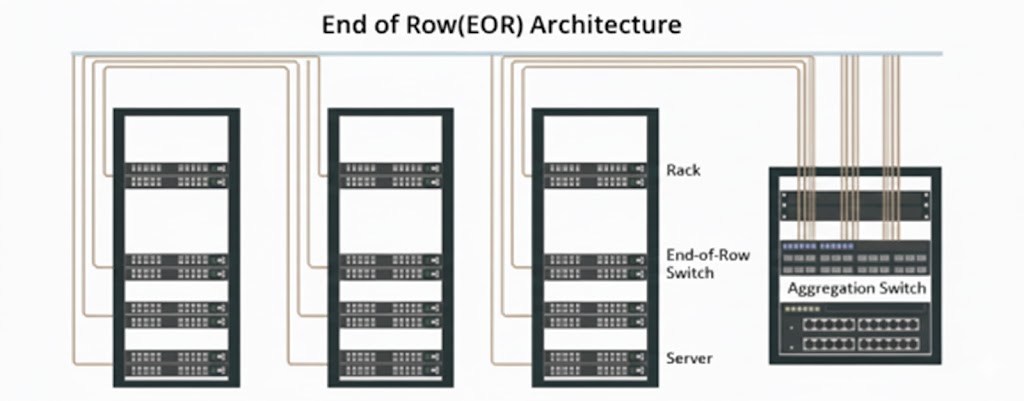
An EoR (End-of-Row) switch is a network switch placed at the end of a data-center rack row, aggregating connections from multiple server racks into a centralized switching point. All servers in the row connect to the EoR switch using structured horizontal cabling, typically copper (Cat6A) or fiber.
This architecture reduces the number of switches required and centralizes management, making it a popular design for large-scale data centers, enterprise facilities, and environments emphasizing cable organization and simplified operations.
➡️ How the End-of-Row Architecture Works
The End-of-Row architecture follows a centralized aggregation design:
Each server rack uses patch panels for horizontal cabling.
Cables from individual racks run to the row’s end.
A set of high-density EoR switches aggregates all server links.
The EoR switches uplink to core or spine switches using higher-speed optical interfaces such as 40G, 100G, or 400G.
Key Characteristics of EoR Architecture
Centralized switch placement → fewer switches, easier control
High-density aggregation ports → commonly 10G, 25G, 40G, 100G
Structured cabling → improves airflow and cable management
Consistency across racks → easy for standardized deployments
➡️ Advantages of EoR (End-of-Row) Switching
▷ Operational Benefits
Simplified management: All switches for the row are in one location, reducing time for maintenance and configuration.
Lower switch count: Unlike ToR (Top-of-Rack), which places a switch on every rack, EoR consolidates the number of devices.
Better organization: Less clutter inside each rack and cleaner cable routing.
Reduced power consumption per rack: No need to install a switch in every cabinet.
▷ Cost Benefits
Lower CAPEX: Fewer ToR switches to purchase and maintain.
Reduced spare parts inventory: Single model per row, easy hardware standardization.
➡️ Disadvantages of EoR Switching
Technical Limitations
Longer horizontal cabling: Cable costs increase compared to ToR.
Less flexibility: Adding new servers requires extended cable runs.
Potential congestion: High server density demands high-capacity EoR switches.
Environmental Considerations
Requires more structured cabling trays and pathways.
Cable bulk may limit future scalability without proper planning.
➡️ EoR vs ToR: What’s the Difference?
1. ToR (Top-of-Rack) Overview
Switch is installed inside each rack.
Short server-to-switch cables (≤3m DAC).
More switches required across the data center.
2. Major Differences
Feature | EoR (End-of-Row) | |
|---|---|---|
Switch location | End of each row | Inside each rack |
Number of switches | Fewer | Many |
Cabling length | Longer | Very short |
Cable cost | Higher | Lower |
Scalability | Moderate | Very high |
Management | Centralized | Distributed |
Best for | Large structured cabling environments | High-density modern data centers |
3. Summary
EoR = fewer switches, more cabling
ToR = more switches, less cabling, faster scaling
➡️ When Does EoR Architecture Make Sense?
EoR is ideal for environments that need:
Centralized switch management
Long-term structured cabling
Fewer network devices to maintain
Lower per-rack power consumption
Typical Deployment Scenarios
Medium to large enterprise data centers
Government, finance, and manufacturing facilities
Co-location data centers with predictable rack layouts
Data halls using high-density horizontal cabling systems
➡️ How to Deploy an EoR Switch Architecture
♦ Step-by-Step Deployment Framework
1. Define bandwidth requirements
Server access speed: 1G / 10G / 25G
Uplink aggregation: 40G / 100G / 400G
2. Select high-density EoR switches
Focus on:
48×10G/25G ports
6–8×40G/100G uplinks
Support for MLAG/VPC, BGP, VXLAN, EVPN
3. Plan structured cabling
Fiber for long runs
Cat6A for ≤100m
Use horizontal pathways and trunk cabling
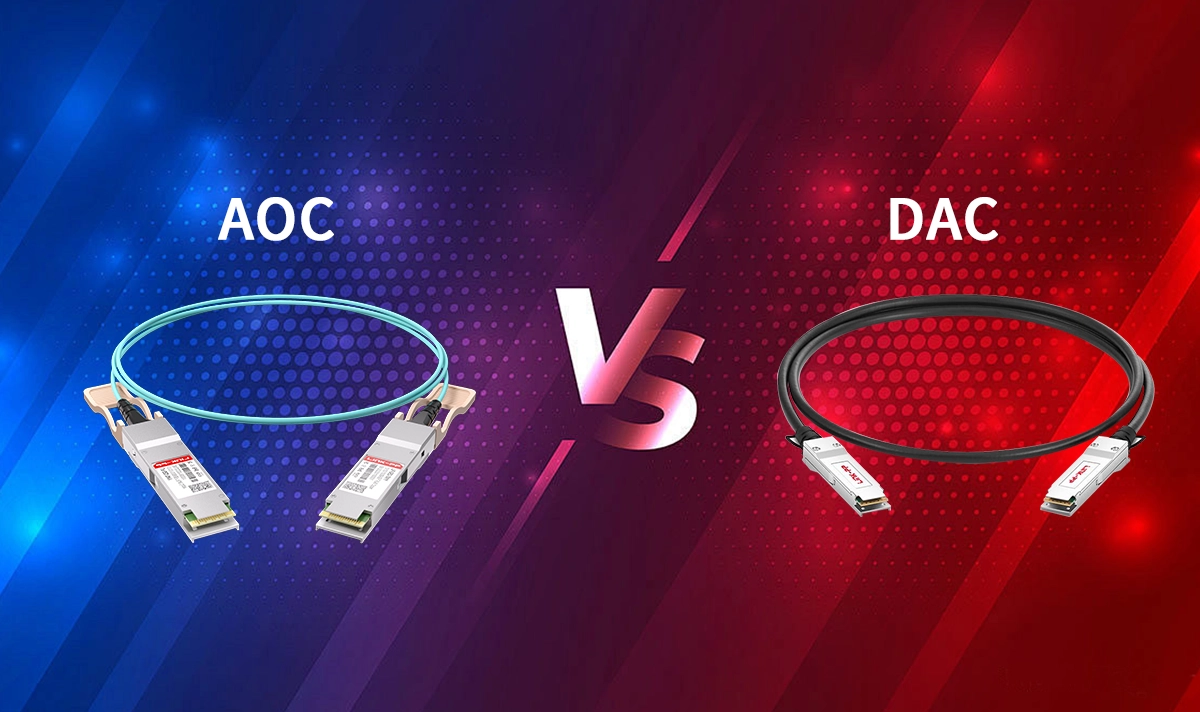
4. Choose compatible optical transceivers and DAC/AOC cables
(Recommended below)
5. Implement redundancy
Dual EoR switch pairs
Active-active uplinks
6. Test latency, throughput, and failover
♦ Recommended Optical Transceivers and Cables for EoR
LINK-PP provides cost-effective and fully compatible optical transceivers for mainstream vendors.
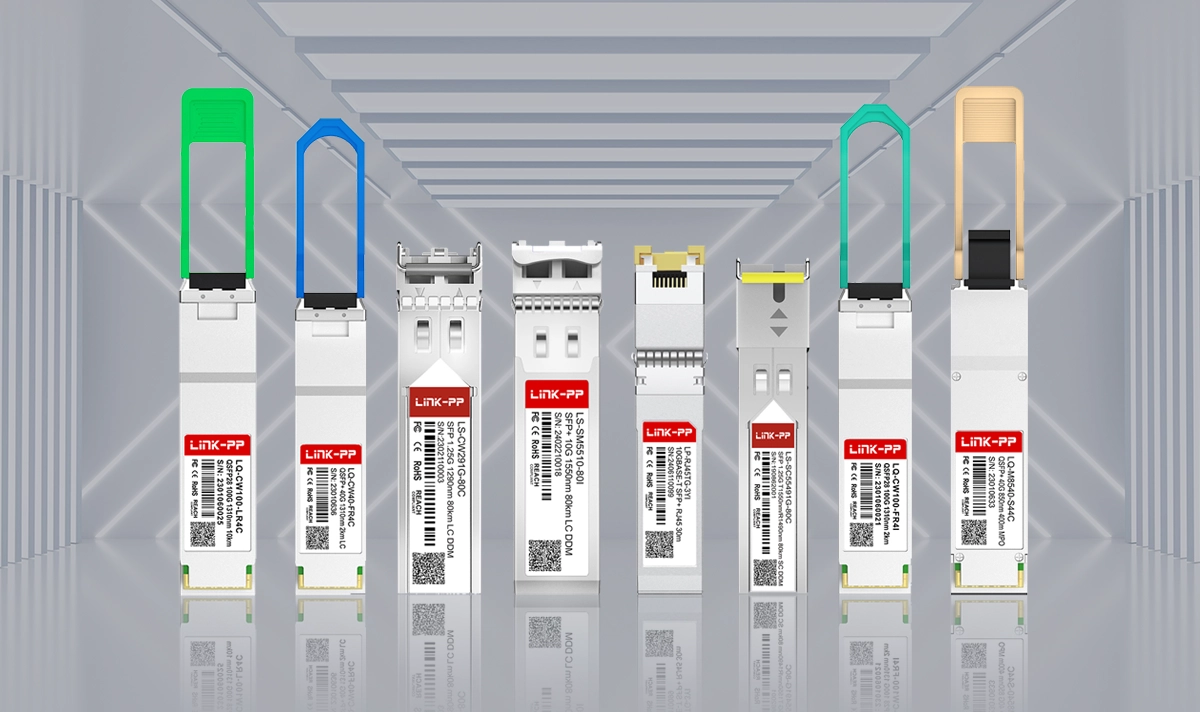
1. Recommended 10G Modules for EoR Access Layer
10GBASE-SR SFP+ (850nm, 300m)
10GBASE-LR SFP+ (1310nm, 10km)
10GBASE-ER SFP+ (1550nm, 40km)
2. Recommended 25G Modules
3. Recommended Uplink Modules (40G / 100G)
H3. Recommended Cables
DAC (Direct Attach Cable)
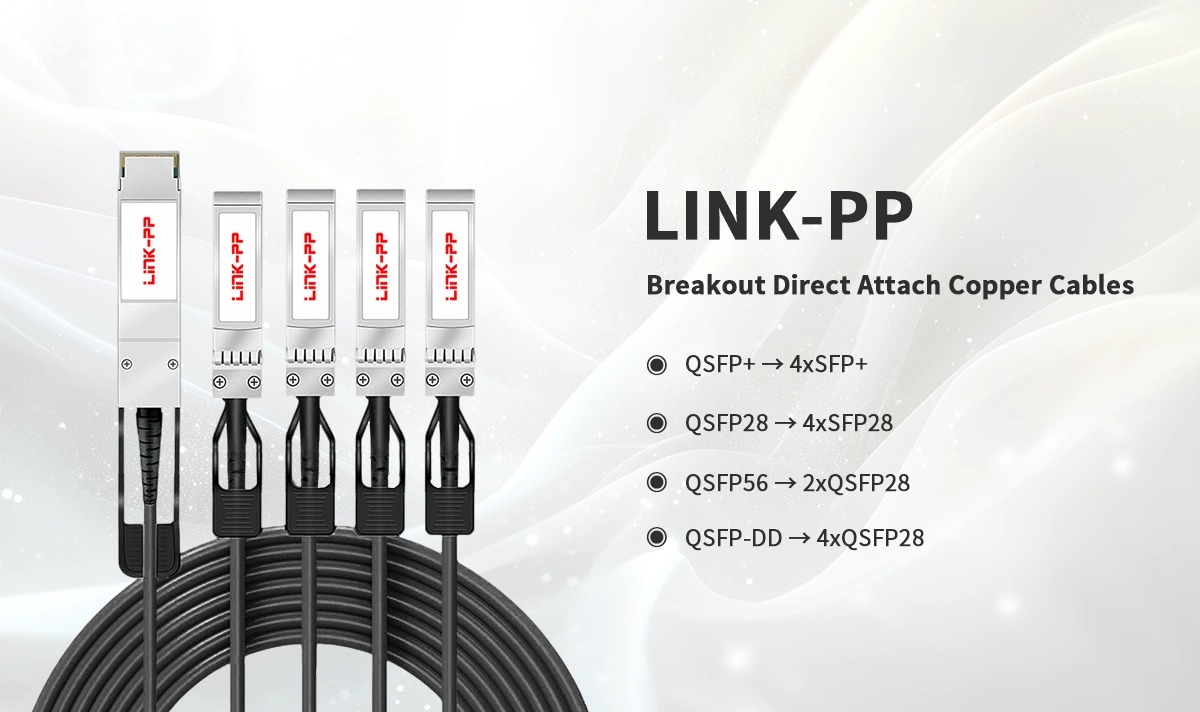
Best for ToR/EoR short runs (≤5m)
AOC (Active Optical Cable)
Ideal for 5–30m aggregation or uplinks
All products are OEM-compatible, tested, and suitable for Cisco / HPE / Juniper / Dell / Arista.
➡️ Conclusion
EoR (End-of-Row) switching remains a powerful and cost-effective architecture for organizations seeking simplified operations, reduced switch count, and centralized management. While ToR is more flexible, EoR offers significant advantages in medium-to-large data centers with well-planned structured cabling.
When implementing EoR, selecting the right optical transceivers, DAC/AOC cables, and aggregation uplinks is essential for achieving performance, reliability, and scalability—areas where LINK-PP provides high-quality, cost-effective solutions.