
🌐 What Is a ToR (Top-of-Rack) Switch?
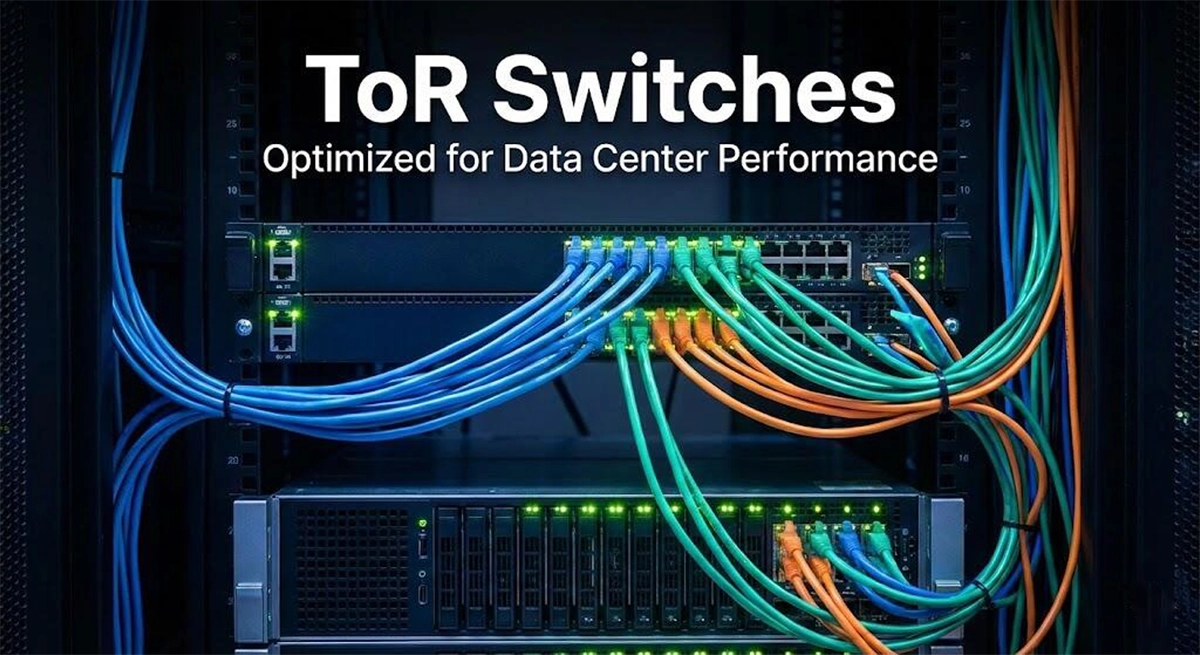
A ToR switch (Top-of-Rack switch) is a network switch installed at the top or upper section of a server rack. It connects all servers within the rack using short copper or optical cables and aggregates their traffic before sending it upstream to aggregation or core switches.
ToR architecture has become the dominant network design in cloud data centers, hyperscale environments, and enterprise computing due to its simplicity, scalability, and low-latency performance.
🌐 How ToR Architecture Works
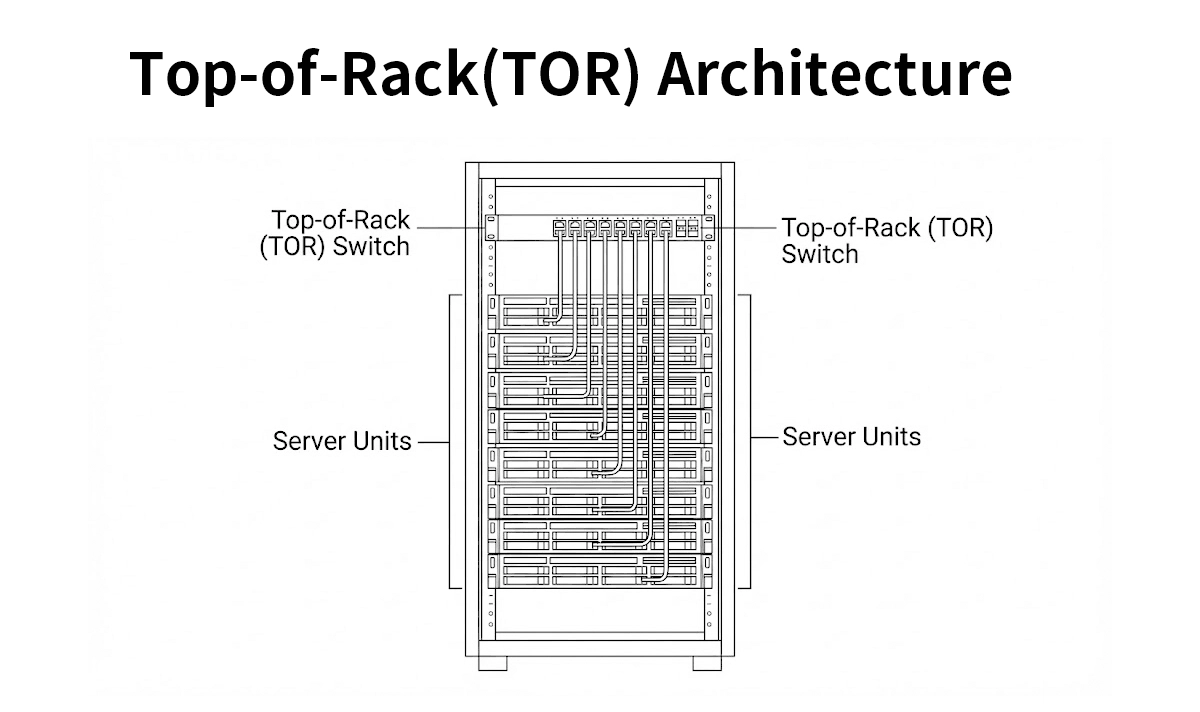
In a standard ToR setup:
Each server in the rack connects to the ToR switch using SFP+, SFP28, QSFP+, or QSFP28 ports.
The ToR switch aggregates east–west (server-to-server) and north–south (server-to-network) traffic.
High-speed uplinks (40G/100G/200G/400G) connect the ToR switch to the aggregation or spine layer.
This architecture significantly reduces cabling complexity and improves overall network manageability.
🌐 Key Advantages of ToR Switches
1. Simplified Cabling
Servers only need short DAC/AOC cables to reach the ToR switch.
No long horizontal cable bundles across the room.
2. Lower Latency
Shorter cable distances and predictable hop counts improve network performance—critical for virtualization, storage traffic, and cloud workloads.
3. Modular Scalability
Each rack operates as an independent unit.
Adding more compute capacity means adding another rack with its own ToR switch.
4. Better Airflow and Cable Management
Rack design remains neat and can be optimized for cooling, especially in high-density environments.
5. Ideal for High-Bandwidth Applications
ToR switches typically support:
10G / 25G server access
40G / 100G uplinks
200G / 400G fabric links
making them suitable for AI clusters, HPC, and cloud-native infrastructures.
🌐 ToR vs MoR vs EoR: Architecture Comparison
Architecture | Meaning | Notes |
|---|---|---|
ToR (Top-of-Rack) | The switch is placed on top of each rack | Best for large-scale DCs; highest performance |
MoR (Middle-of-Rack) | The switch is placed in the rack’s middle | Balanced cabling is used in some enterprise racks |
EoR (End-of-Row) | One switch per row of racks | Lower cost, but more complex cabling |
ToR remains the preferred design for modern data centers due to its flexibility and operational efficiency.
🌐 Common ToR Switch Port Types & Recommended Transceivers
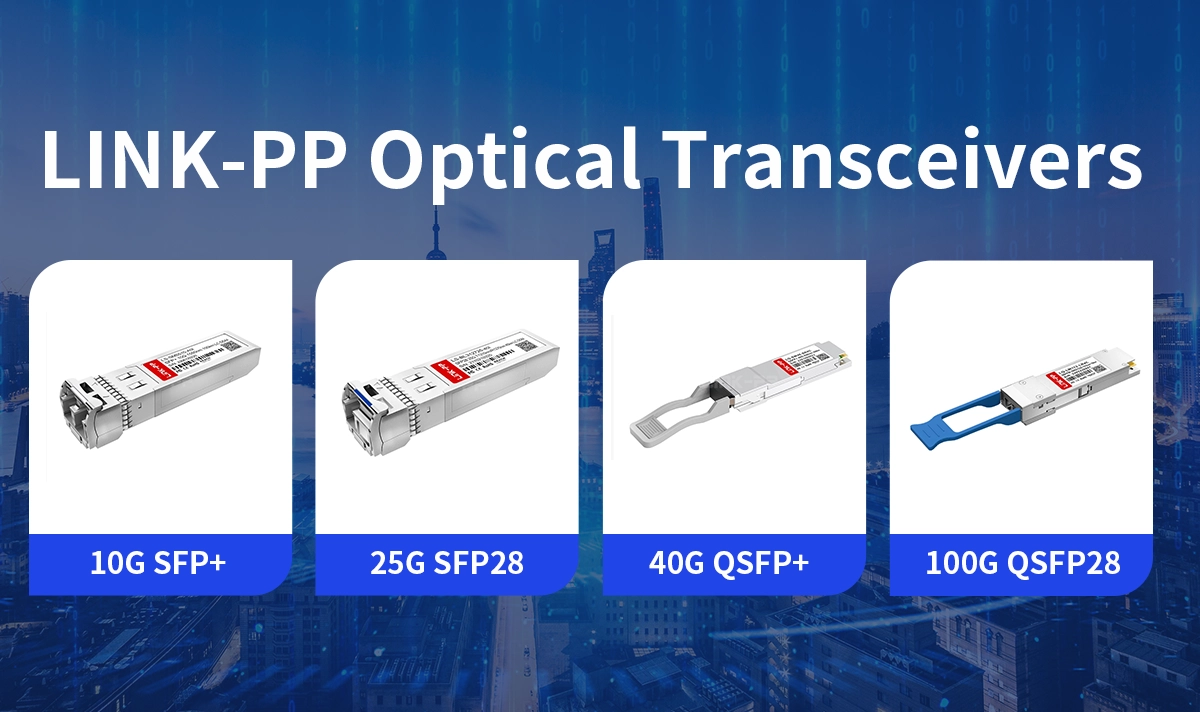
ToR switches commonly support these interface types:
Port Type | Speed | Typical LINK-PP Products |
|---|---|---|
10G | 10GBASE-SR/LR, DAC, AOC | |
25G | 25G SR, LR, CWDM modules | |
40G | 40G SR4/CSR4/PLR4 | |
100G | 100G SR4, LR4, CWDM4 | |
200G / 400G | High-speed DAC/AOC cables |
These modules enable reliable uplinks and server connections in ToR deployments.
🌐 Where ToR Switches Are Used
✔ Hyperscale data centers
AWS, Azure, and Google Cloud all rely heavily on ToR architecture.
✔ AI & HPC clusters
High-bandwidth, low-latency east–west traffic requires predictable, high-speed ToR performance.
✔ Virtualized and cloud-native environments
VMware, Kubernetes, and OpenStack workloads benefit from deterministic network behavior.
✔ Storage networks (NVMe-oF, Ceph, vSAN)
Fast access paths demand optimized ToR switching.
🌐 Why ToR Architecture Works Well With LINK-PP Optical Products
ToR switches typically require dense, short-run, and high-bandwidth connections—exactly the scenarios where LINK-PP optical transceivers, DACs, and AOCs excel.
Our solutions provide:
OEM-compatible transceivers (Cisco / Arista / HPE / Juniper compatible)
Low-latency DAC/AOC cables for server access
High-performance LR4/CWDM4 modules for uplinks
Industrial-grade options for edge and telecom
This makes LINK-PP a strong fit for enterprises upgrading or expanding their ToR topologies.
🌐 FAQ: ToR Switches
1. Are ToR switches only installed at the top of the rack?
They can also be mounted in the upper-middle position—what matters is short in-rack cabling.
2. What is the typical distance between servers and a ToR switch?
Usually 1–3 meters, making DAC cables the most cost-efficient option.
3. Do ToR switches require specific optical modules?
No, but they usually use:
10G SFP+
25G SFP28
40G / 100G QSFP
400G QSFP-DD
LINK-PP provides full compatibility with these standards.
4. What is the difference between ToR and EoR?
EoR reduces switch count but increases cabling complexity and latency. ToR offers better performance and manageability.
🌐 Conclusion
A ToR switch is the foundation of modern data center architecture, delivering simplified cabling, predictable performance, and scalable network design. With increasing demand for AI workloads and cloud infrastructure, ToR deployments are becoming even more essential.
LINK-PP provides a comprehensive portfolio of SFP+, SFP28, QSFP+, QSFP28, and QSFP-DD optical transceivers, DAC/AOC cables, and connectivity solutions ideal for ToR access and uplink scenarios.