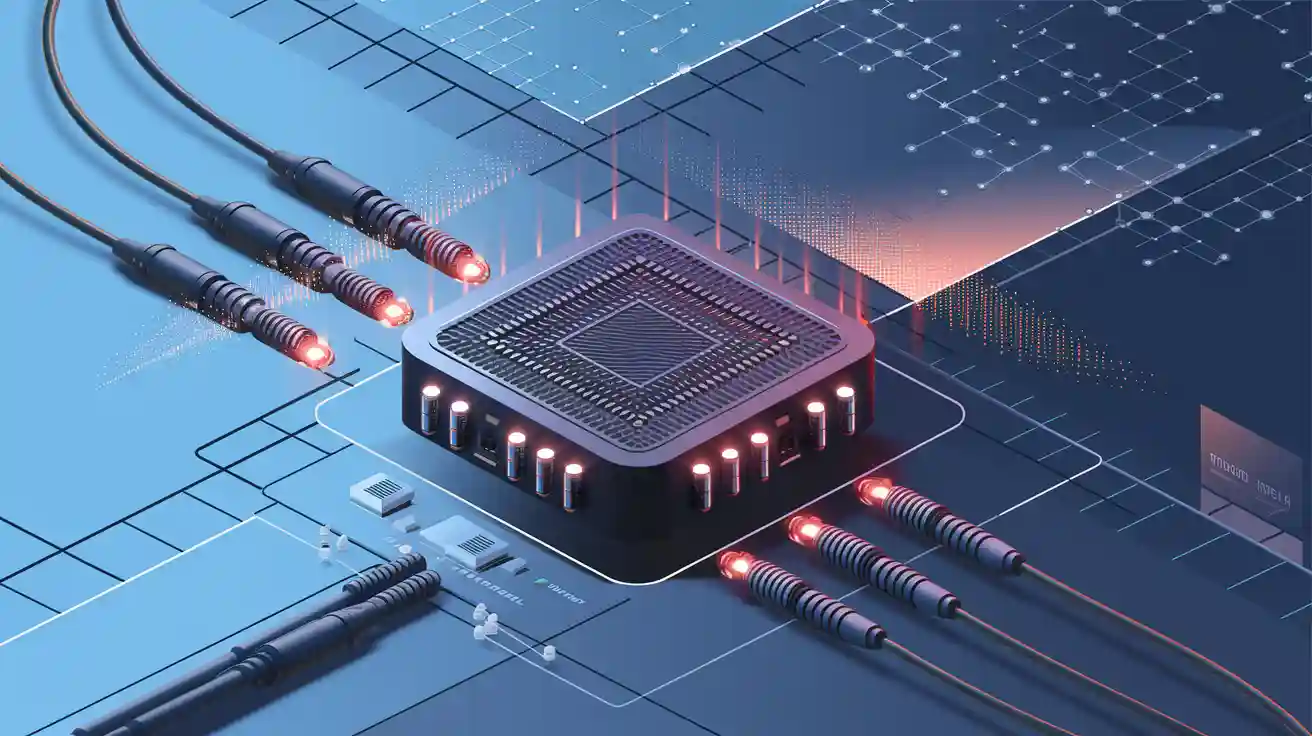

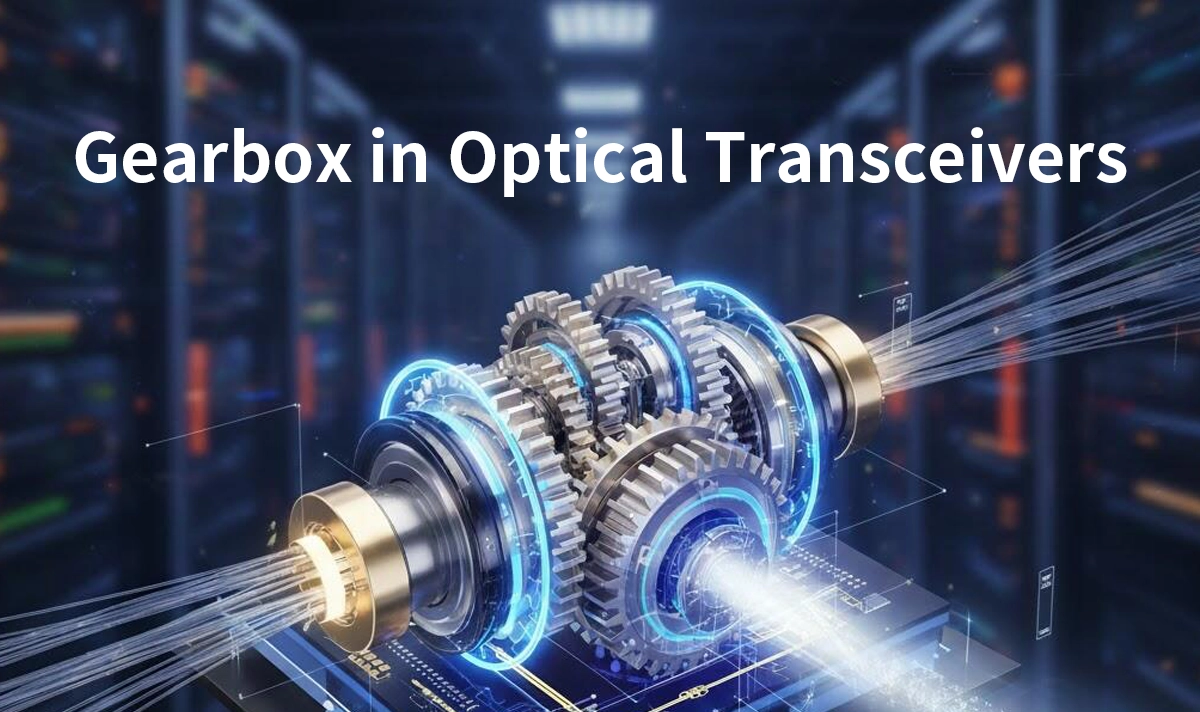
Modern data centers rely on 50G, 100G, and 200G optical transceivers to deliver high-bandwidth connectivity. A key enabler in these modules is the Gearbox, sometimes called a rate-matching or lane-mapping device. Gearbox technology ensures that optical transceivers can efficiently convert between internal electrical signals and optical interfaces while supporting lane breakout and multi-rate applications.
🔁 What Is a Gearbox in Optical Modules?
A Gearbox is an internal module component that performs channel mapping and rate conversion between the module’s electrical interface (host side) and its optical interface (fiber side). Its primary purpose is to align different numbers of lanes or data rates, enabling seamless interoperability with switches, routers, and servers.
For example:
50G/100G modules: Convert 2×50G internal lanes to 100G optical output.
200G modules: Split 200G QSFP-DD into 4×50G lanes for breakout applications.
Breakout configurations: Enable a single high-speed port to serve multiple lower-speed connections.
🔁 Key Functions of Gearbox
1. Rate Conversion
Gearboxes allow optical modules to handle mismatched data rates between electrical and optical interfaces. Examples:
2×50G electrical lanes → 100G optical lane
4×25G electrical lanes → 100G optical lane
This ensures that the module can communicate with host ASICs operating at different speeds while maintaining standard-compliant PAM4 or NRZ modulation.
2. Lane Mapping and Alignment
In multi-lane optical modules, Gearbox performs lane-by-lane mapping, ensuring data flows correctly through each channel:
Aggregates multiple lower-speed lanes into a single higher-speed lane
Splits a high-speed lane into multiple lower-speed lanes for breakout
Maintains correct lane order for QSFP28, QSFP56, and QSFP-DD modules
3. Breakout and Multi-Rate Support
Gearbox enables flexible breakout options, such as:
200G QSFP-DD → 4×50G SFP56
100G QSFP28 → 2×50G SFP56
This flexibility is essential for modern leaf-spine data center architectures, allowing a single high-speed port to serve multiple servers or aggregation links.
🔁 Why Gearbox Is Critical for High-Speed Optical Networks
Without a Gearbox, optical transceivers would be limited in:
Interoperability: Electrical and optical interfaces might be incompatible.
Flexibility: Breakout functionality would be impossible, limiting network design.
Scalability: Migrating from 50G → 100G → 200G networks would require redesigning the entire module.
By handling rate conversion and lane mapping internally, Gearbox enables:
Smooth migration from 25G and 50G to 100G/200G networks
Compliance with IEEE 802.3cd and other high-speed Ethernet standards
Reliable PAM4 or NRZ signal transmission with minimal BER impact
🔁 Gearbox in LINK-PP Optical Transceivers
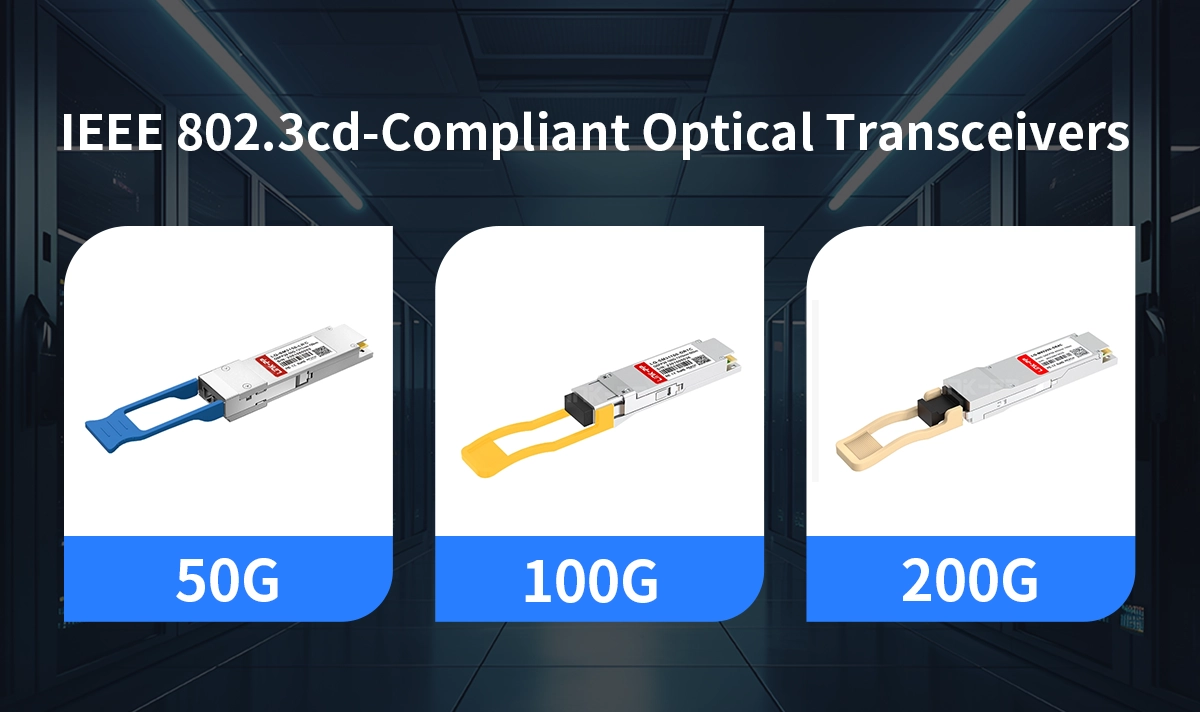
LINK-PP offers a range of IEEE 802.3cd-compliant optical modules featuring integrated Gearbox functionality:
🔗 50G SFP56 / QSFP28: Single-lane 50GBASE-SR/FR/LR with rate conversion support
🔗 100G QSFP28 / SFP-DD: 2×50G uplinks and flexible breakout options
🔗 200G QSFP-DD / QSFP56: 4×50G leaf-spine fabrics with lane mapping and breakout
Integrated Gearbox technology ensures these modules support multi-rate networks and maintain low BER, strong FEC performance, and PAM4 signal integrity.
🔁 Conclusion
The Gearbox is a fundamental component in modern high-speed optical transceivers. By providing rate conversion, lane mapping, and breakout support, it enables seamless communication between electrical interfaces and optical fibers, supports flexible network topologies, and ensures compliance with IEEE 802.3cd standards.
For data centers and hyperscale networks, Gearbox-enabled modules like LINK-PP’s 50G, 100G, and 200G optical transceivers are essential for scalable, reliable, and high-performance Ethernet deployments.
🔁 FAQ: Gearbox in Optical Transceivers
1. What is a Gearbox in optical modules?
A Gearbox is an internal component that performs lane mapping and rate conversion between the module’s electrical interface and optical interface. It ensures proper alignment, breakout support, and multi-rate interoperability.
2. Why is Gearbox important for high-speed Ethernet?
Gearbox enables flexible network designs by allowing a single high-speed port to support multiple lanes, breakout configurations, and different data rates. It ensures PAM4 or NRZ signals transmit reliably with minimal BER.
3. Can Gearbox support breakout configurations?
Yes. Gearbox allows modules like 200G QSFP-DD to be split into 4×50G lanes or 100G QSFP28 into 2×50G lanes, enabling server or aggregation connections from a single port.
4. Does Gearbox work with both PAM4 and NRZ?
Yes. Modern Gearboxes are designed to handle both PAM4 and NRZ signals, converting lane rates and aligning data channels while preserving signal integrity.
5. Which LINK-PP optical transceivers use Gearbox?
LINK-PP Gearbox-enabled modules include: