

The digital transformation era is fueled by agility, cost-efficiency, and flexibility. In the quest for these goals, two powerful concepts have emerged in the data center and networking world: Open Source and Open Networking. While often used interchangeably, they represent distinct, yet complementary, philosophies. Understanding this distinction is crucial for IT leaders making strategic decisions about their network infrastructure.
This deep dive will demystify these terms, explore their synergy, and highlight why your choice of components, like optical transceivers, matters more than ever.
📝 The Core Concepts: A Tale of Two "Opens"
At its heart, the difference is one of layer and focus.
🤖 Open Source: It's All About the Software
Open Source refers to software whose source code is made publicly available. Anyone can inspect, modify, and enhance it. In the networking context, this means the operating systems and control planes that manage the network hardware.
Examples: Linux-based Network Operating Systems (NOS) like Cumulus Linux (now NVIDIA), SONiC, and FRR (a routing daemon).
Key Benefit: Freedom from vendor-locked software, fostering innovation, rapid feature development, and extensive community support.
🖥️ Open Networking: It's About the Hardware & Ecosystem
Open Networking is a hardware-driven model. It advocates for disaggregation—separating the network hardware (the "white box" switches) from the software (the NOS). This allows you to purchase generic, cost-effective hardware and install the NOS of your choice.
Examples: White box switches from manufacturers like Edgecore, Delta, and UfiSpace.
Key Benefit: Freedom from proprietary, bundled hardware-software solutions, leading to significant cost savings and unparalleled flexibility in building your network.
📝 The Perfect Union: How They Work Together
Open Source and Open Networking are two halves of a whole. Open Networking provides the blank canvas (the hardware), while Open Source provides the paints and brushes (the software).
You can't run an open source NOS without hardware that supports it, and the value of a disaggregated switch is fully realized only when you can load it with your preferred, flexible software. This powerful combination is what truly breaks the chains of vendor lock-in.
Feature | Open Networking (Hardware) | |
|---|---|---|
Primary Focus | Code, Protocols, Applications | Switches, Chassis, Physical Ports |
Key Driver | Community & Collaboration | Disaggregation & Standardization |
What You Customize | Network OS, Features, Automation Scripts | Hardware choice, NOS selection, Component sourcing |
Business Value | Innovation, Agility, Transparency | Cost Reduction, Vendor Independence, Flexibility |
📝 The Unsung Hero: Optical Transceivers in an Open Ecosystem
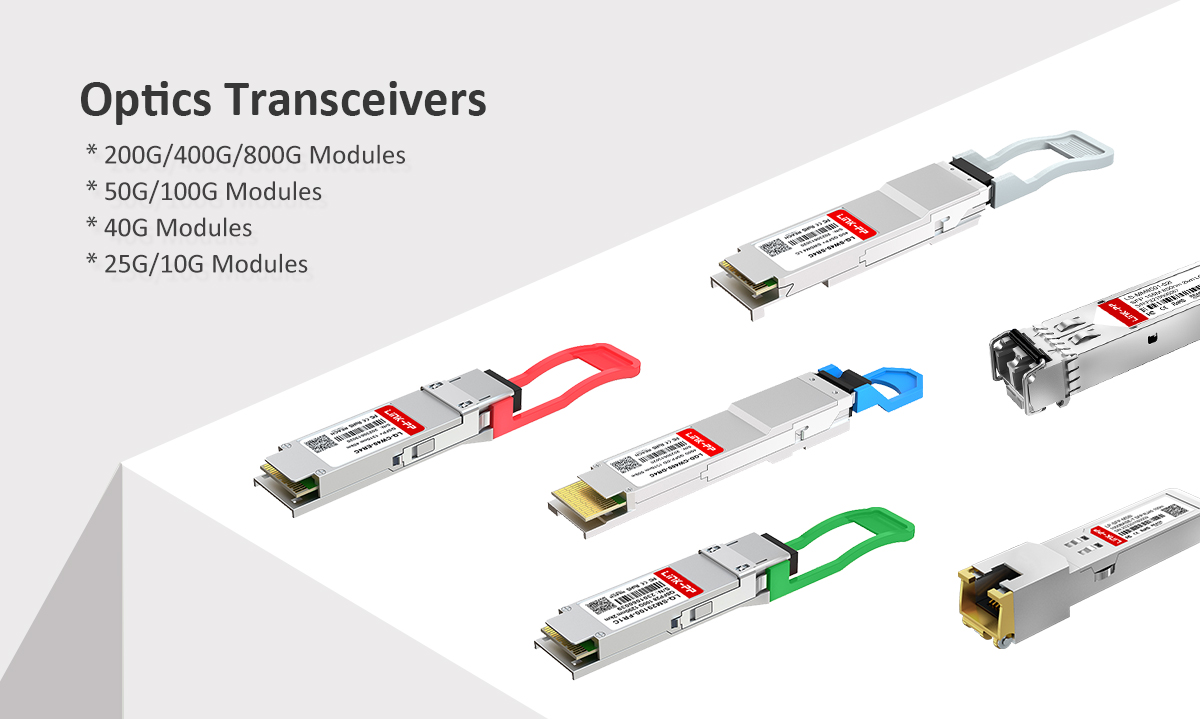
No discussion of open infrastructure is complete without mentioning the critical role of optical transceivers. These are the components that convert electrical signals from switches into light pulses for transmission over fiber optic cables. In a traditional, closed network, vendors often enforce compatibility locks, forcing you to buy astronomically priced, branded transceivers.
An open ecosystem shatters this model. By using high-quality, compatible optics from third-party manufacturers, you can achieve the same performance and reliability at a fraction of the cost. This is a cornerstone of data center cost optimization and a true test of your network's openness.
When selecting transceivers for your open network, ensure they are compliant with multi-source agreements (MSAs) and are fully compatible with your chosen white box switch and NOS. For instance, a LINK-PP 100G QSFP28 LR4 transceiver is engineered to offer seamless interoperability with a wide range of open networking hardware, delivering high-performance connectivity for long-reach data center interconnects (DCI) without the proprietary markup.
📝 Open Source vs. Open Networking: Choosing Your Strategy
So, which one is right for you? The answer is often both, but your starting point depends on your primary goal.
Consideration | Choose OPEN SOURCE if... | Choose OPEN NETWORKING if... |
|---|---|---|
Primary Goal | You need to customize network behavior, automate with specific tools, or innovate on the software layer. | Your main objective is to drastically reduce capital expenditure (CapEx) on hardware and avoid vendor lock-in. |
Team Skillset | You have strong Linux and software engineering expertise in-house. | Your team is proficient in hardware integration and multi-vendor support. |
Control Focus | You want control over the routing protocols, feature rollouts, and security policies. | You want control over your hardware refresh cycles, supplier choice, and component-level sourcing. |
For most modern organizations pursuing a future-proof network architecture, the winning strategy is to leverage Open Networking for its cost-effective, flexible hardware foundation and then harness Open Source software to create a tailored, automated, and agile network environment.
📝 Conclusion: Building a Smarter, More Open Future
The journey from proprietary silos to open, composable infrastructure is no longer a niche trend—it's a business imperative. By understanding and leveraging the symbiotic relationship between Open Source and Open Networking, companies can build networks that are not only more cost-effective but also more resilient and adaptable to future challenges.
Whether you're deploying a new leaf-spine fabric or simply looking to reduce network operational costs, remember that true freedom comes from choice at every layer. And that includes the freedom to choose high-performance, reliable components like LINK-PP's 400G DR4 transceivers for your next-generation spine switches, ensuring your open network is built on a foundation of both quality and value.
Embrace the open model. Your network—and your budget—will thank you.
📝 FAQ
What is the main difference between open source and open networking?
Open source lets you see software code. You can change it and share it with others. Open networking means you can pick hardware and software from many companies. You do not have to use only open source software when you use open networking.
Can you use open source software in open networking?
Yes, you can use open source software with open networking. Many open networking devices work with open source operating systems. You can also use proprietary software if you want.
Does open networking always mean lower costs than traditional networking?
Not every time. Open networking can help you save money because you can pick the best parts. Sometimes, you might pay for support or extra features. You should look at all costs before you choose.
Which is better for avoiding vendor lock-in: open source or open networking?
Both help you stay away from vendor lock-in. Open source gives you control over your software. Open networking lets you mix hardware and software from different brands. You get more options with both.
Can you combine open source and open networking in one network?
Yes, you can do that. Many groups use open source software on open networking hardware. This gives you more control and flexibility. You can make a network that works for you.