

In the intricate world of networking, where data speeds and interfaces constantly evolve, ensuring seamless compatibility between different devices is a perpetual challenge. One critical component that bridges this gap, especially in enterprise and carrier environments, is the SGMII SFP transceiver. This guide delves deep into what these transceivers are, how they work, their key applications, and why choosing the right one, such as those from LINK-PP, is crucial for network reliability and performance.
📜 Key Takeaways
SGMII SFP Transceivers link switches and routers to cables. They help move data quickly and safely.
These transceivers work with Fast Ethernet at 100 Mbps. They also work with Gigabit Ethernet at 1 Gbps. You can pick the speed you need.
SGMII SFP Transceivers fit many devices from different brands. This makes it simple to upgrade your network. You do not need to buy all new equipment.
SGMII SFP Transceivers are small and save space. They are easy to put in and upgrade.
Always check if your device works with SGMII SFP Transceivers. This helps your network run well and stops problems.
📜 Understanding the Acronyms: SGMII and SFP
Before exploring the combined technology, let's break down the two core elements.
SFP (Small Form-factor Pluggable): This is a compact, hot-swappable optical module standard used for both telecommunication and data communications applications. It interfaces a network device (like a switch, router, or network card) to a fiber optic or copper cable. SFP modules are beloved for their flexibility, allowing network engineers to easily change physical media (e.g., from multimode to single-mode fiber) without replacing the entire hardware unit.
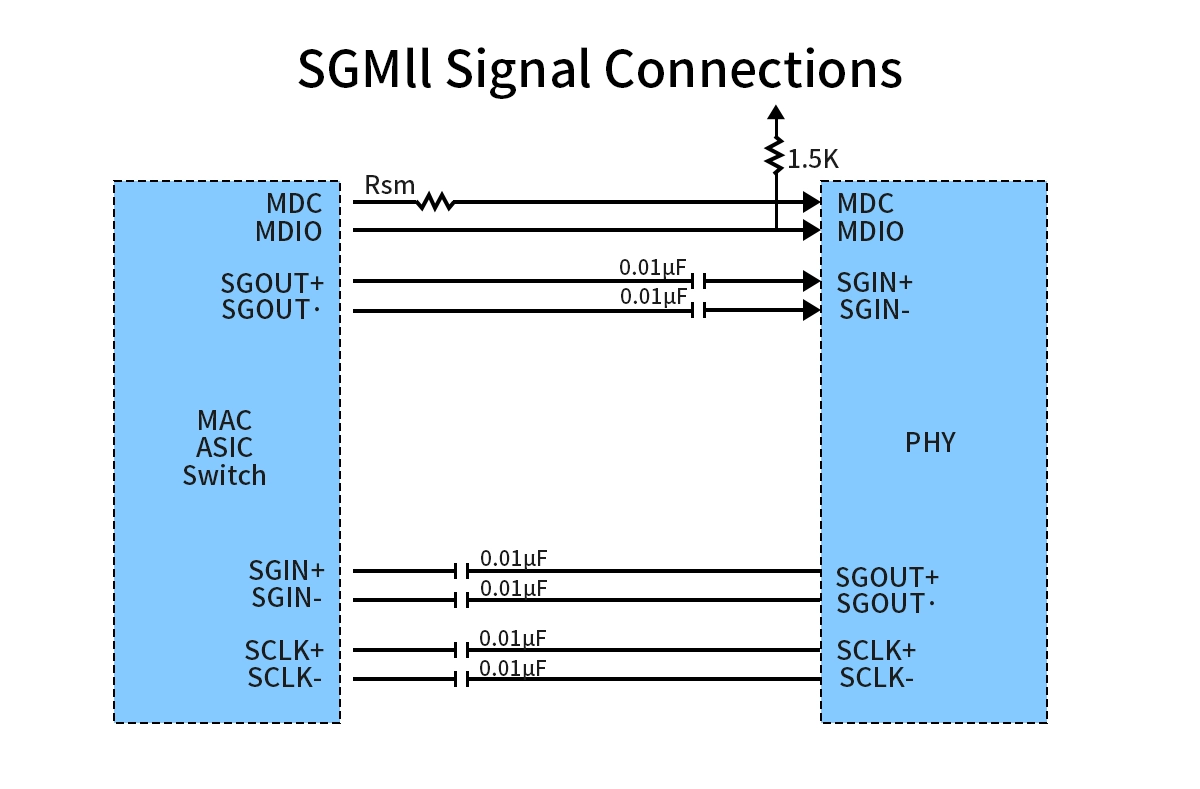
SGMII (Serial Gigabit Media Independent Interface): This is an Ethernet interface standard defined by the IEEE. It's a serial, point-to-point connection that carries Gigabit Ethernet signals. The "Media Independent" part is key—it means the electrical interface is separated from the physical media (copper or fiber). SGMII acts as the crucial translator between the physical layer (PHY) of a device and the link layer (MAC). It's widely used to connect MACs to PHYs, PHYs to switches, or within Field-Programmable Gate Arrays (FPGAs) for network processing.
📜 What is an SGMII SFP Transceiver?
An SGMII SFP transceiver is a specialized optical or copper module that integrates an SGMII-compliant electrical interface within the standard SFP form factor and connector.
In simpler terms: It's an SFP module specifically designed to connect to equipment that uses the SGMII electrical signaling protocol on its SFP cage. It takes the SGMII electrical signals from the host device, converts them to optical signals (or electrical for copper), and transmits them over the network cable.
Why is this specific type needed?
Not all SFP ports are created equal. While the physical cage is standardized, the electrical interface behind it can vary (e.g., SerDes, XAUI, GMII, RGMII, SGMII). Using a standard 1G SFP in a port designed for SGMII signaling can lead to incompatibility and link failure. Therefore, an SGMII SFP module is essential for devices whose SFP ports are electrically wired for the SGMII standard.
📜 Key Applications and Use Cases
SGMII SFP transceivers are indispensable in several networking scenarios:
Connecting Network Processors & FPGAs to Optical Networks: Many custom networking hardware designs, based on FPGAs or specialized ASICs, use SGMII as their primary high-speed interface. SGMII SFP modules provide the perfect bridge to connect these boards to standard fiber optic network backbones.
Industrial Networking & IoT Gateways: Ruggedized equipment in industrial automation often utilizes SGMII interfaces for reliable, real-time communication. The right transceiver ensures stable links in harsh environments.
Legacy and Specialized Network Equipment: Certain routers, switches, and media converters from various manufacturers have historically used SGMII interfaces in their SFP slots.
Enabling Gigabit Ethernet Connectivity over Fiber: They are a fundamental tool for achieving long-distance, high-bandwidth 1.25Gbps data transmission using the familiar SFP form factor.
📜 SGMII SFP vs. Standard SFP: A Quick Comparison
Feature | SGMII SFP Transceiver | Standard Gigabit SFP Transceiver |
|---|---|---|
Electrical Interface | Designed specifically for SGMII signaling (1.25 Gbaud). | Typically designed for SerDes or other common PHY interfaces. |
Primary Use Case | Connecting to host devices with SGMII electrical ports (FPGAs, certain switches, custom hardware). | Connecting to standard commercial switches, routers, and NICs. |
Compatibility | Not universally interchangeable. Must match the host's electrical interface. | High interchangeability within standard commercial gear. |
Key Consideration | Interface protocol matching is critical. | Distance (via fiber type) and wavelength are primary concerns. |
📜 The Optical Module: Heart of the Transceiver
At the core of any SFP transceiver lies the optical sub-assembly. For an SGMII SFP, this component performs the essential electro-optical conversion.
Transmit Side: The laser driver takes the incoming SGMII electrical signal, modulates a laser diode (e.g., 850nm VCSEL for multimode, 1310nm/1550nm DFB for single-mode), and launches the light into the fiber.
Receive Side: A photodiode detects the incoming optical signal, converts it back into a weak electrical signal, which is then amplified and reshaped by a transimpedance amplifier (TIA) to output a clean SGMII electrical signal to the host.
The quality of these optical components directly determines the module's performance, reach, and reliability. This is where choosing a trusted manufacturer like LINK-PP makes a significant difference. LINK-PP optical transceivers use high-grade, tested components to ensure optimal performance and longevity, reducing the risk of network downtime—a critical factor for high-availability data centers and enterprise networks.
📜 Choosing the Right SGMII SFP Module: A Practical Guide
Selecting the correct module involves more than just matching the interface. Consider these factors:
Confirm Host Interface: This is the first and most crucial step. Always consult your device's datasheet or manufacturer to verify it requires an SGMII SFP.
Fiber Type & Distance:
Multimode (MMF): For short distances (up to 550m). Commonly uses 850nm wavelength (SX).
Single-mode (SMF): For long-haul distances (up to 160km). Uses 1310nm (LX/EX), 1550nm (ZX), or CWDM/DWDM wavelengths.
Data Rate: SGMII is predominantly for 1.25Gbps (Gigabit Ethernet) applications. Ensure the module is rated for 1.25G.
Digital Diagnostics Monitoring (DDM/DOM): Opt for modules with this feature. It allows real-time monitoring of temperature, voltage, optical power (Tx and Rx), enabling predictive maintenance and easier troubleshooting—a valuable asset for network infrastructure management.
Brand Quality & Compatibility: While third-party modules like those from LINK-PP offer excellent value and full MSA-compliance, ensure they are rigorously tested for compatibility with your specific equipment. LINK-PP is renowned for its extensive compatibility list and reliable performance, often providing a cost-effective alternative to OEM modules without sacrificing quality.
📜 Spotlight on a Reliable Solution: LINK-PP SGMII SFP Modules
For network engineers seeking robust and compatible SGMII SFP transceivers, LINK-PP offers a proven range of solutions. A prime example is their:
LINK-PP LP-SFP-TMRI
This module is SGMII 10/100/1000BASE-T Copper SFP Transceiver, up to 100 meters reach over twisted-pair category 5 cable
Interface: SGMII
Data Rate: 1000Mbps
Max Distance: Up to 100 meters
Applications: Ideal for connecting SGMII-based equipment within data centers, enterprise wiring closets, or for inter-rack connectivity.
By opting for a specialized module like this, you guarantee a stable link, eliminating the guesswork and compatibility issues associated with using generic SFPs in SGMII-specific applications.
📜 Conclusion
The SGMII SFP transceiver is a specialized yet vital cog in the networking machine, enabling flexible and reliable connectivity for a wide array of equipment that utilizes the SGMII interface standard. Understanding the distinction between interface protocols and physical form factors is key to successful deployment.
When sourcing these components, prioritizing technical specifications, compatibility, and manufacturer reliability is non-negotiable. Partnering with established providers like LINK-PP, known for their high-quality, MSA-compliant optical transceivers, ensures your network infrastructure is built on a foundation of performance and durability, ready to meet the demands of modern Gigabit and multi-gigabit network environments.
📜 FAQ
What does SGMII stand for?
SGMII means Serial Gigabit Media Independent Interface. It helps send Ethernet signals between devices. You need fewer wires, and data moves faster.
What types of cables can you use with an SGMII SFP transceiver?
You can use copper cables for short links. You can use fiber optic cables for long links. The transceiver works with both, so you can pick what you need.
What devices use SGMII SFP transceivers?
Switches, routers, and servers use SGMII SFP transceivers. Many brands support these modules. You can make your network bigger or better without trouble.
What speeds does an SGMII SFP transceiver support?
You can get Fast Ethernet at 100 Mbps. You can also get Gigabit Ethernet at 1 Gbps. The transceiver can change speeds to fit your network.
What is the maximum distance for data transmission?
You can send data up to 20 kilometers with single-mode fiber. Copper cables work for short distances, usually up to 100 meters.