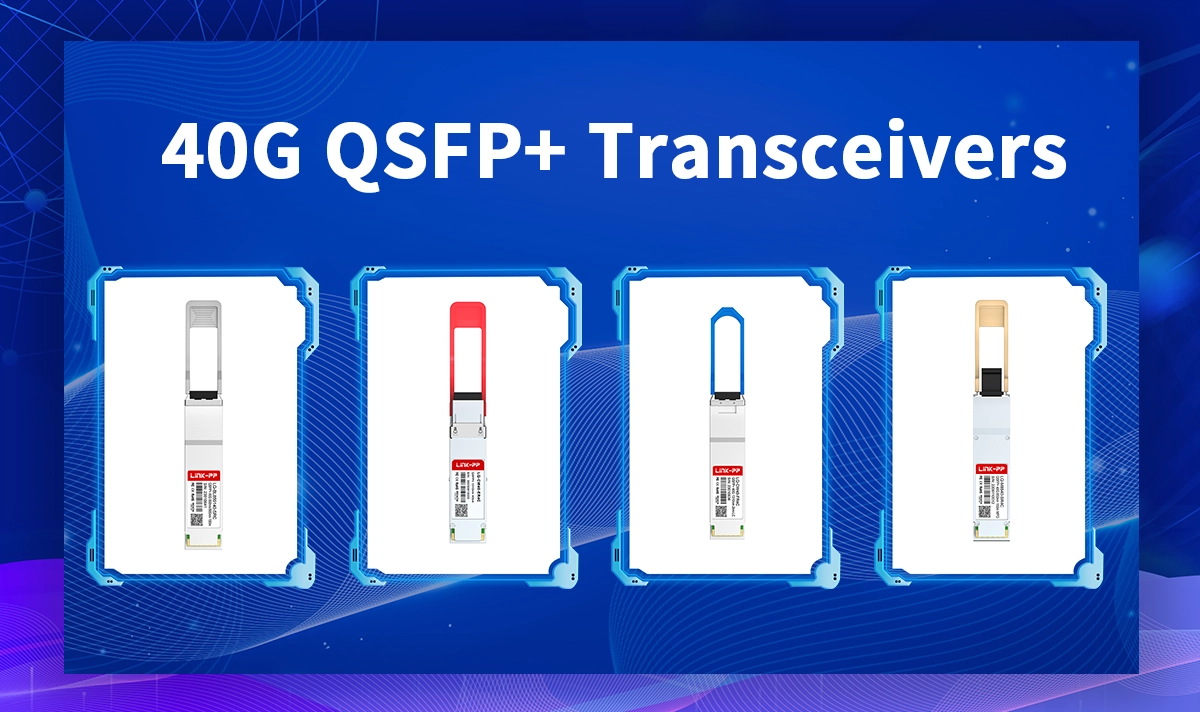

As global data traffic continues to grow—driven by cloud computing, AI workloads, hyperscale data centers, and high-performance computing—the demand for faster and more efficient Ethernet standards has never been greater. IEEE 802.3bm is one of the key milestones in this evolution. Completed in 2015, the standard defines a new set of physical layer (PHY) specifications that enable more scalable 40-Gigabit Ethernet (40GbE) and 100-Gigabit Ethernet (100GbE) deployments across modern data center and enterprise infrastructures.
This article explains what IEEE 802.3bm is, why it matters, and how it shapes today’s high-speed optical module ecosystem.
🔹 Overview: What Is IEEE 802.3bm?
IEEE 802.3bm is an amendment to the IEEE 802.3 Ethernet standard that introduces enhanced PHY definitions for 40G and 100G Ethernet links.
It primarily focuses on:
New optical interface specifications
More efficient electrical signaling
Support for multi-lane architectures using 25 Gbps SerDes
Compatibility with next-generation QSFP28 and related form factors
In short, IEEE 802.3bm bridges the gap between earlier 40G/100G solutions and the modern Ethernet ecosystem, which is built on 25G-based technologies.
🔹 Key Technical Highlights of IEEE 802.3bm
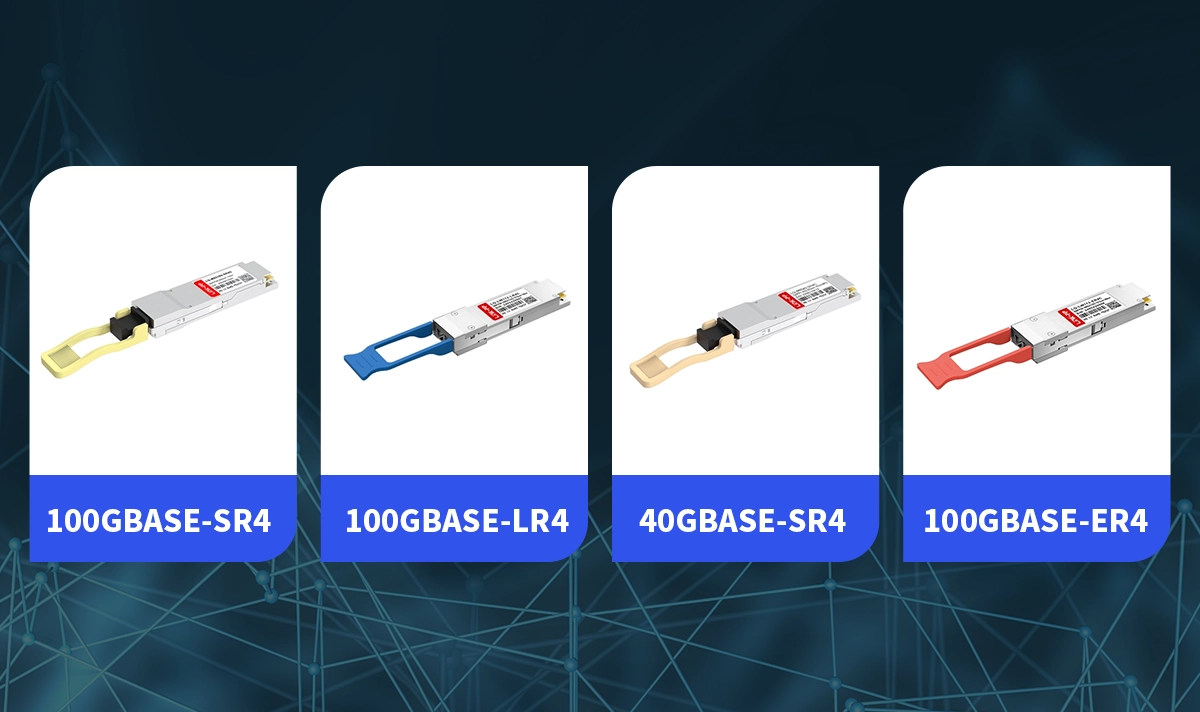
1. Multi-Lane 4×25Gbps Architecture
One of the most important innovations is the move from 10×10Gbps to 4×25Gbps signaling for 100G links. This improvement brings:
Lower power consumption
Higher density
Better signal integrity
Compatibility with future 25G/50G/200G/400G standards
This architectural shift is foundational to today’s QSFP28, SFP28, and QSFP56 product families.
2. New PHY Types for MMF and SMF
IEEE 802.3bm introduces several new PHY interface standards supporting various media types:
PHY Type | Description | Fiber Type |
|---|---|---|
100G over 4×25G parallel channels | MMF (OM3/OM4) | |
QSFP28 Dual Rate up to 10 km | SMF | |
100GBASE-CR4 | 100G over 4×25G twinax copper | DAC |
40G over 4×10G MMF lanes | MMF | |
Long-reach variant (up to 40 km) | SMF |
These interfaces form the basis of widely adopted QSFP28 modules used in data centers today.
3. Reduced Latency and Improved Signal Encoding
The standard optimizes encoding mechanisms and electrical specifications, resulting in:
Lower latency on high-bandwidth links
Higher overall transmission efficiency
Better support for dense switch architectures
4. Backward Compatibility With Existing Ethernet Layers
Even with major improvements, 802.3bm maintains compatibility with:
Existing network protocols
Legacy 10G/40G deployments (where applicable)
This ensures a seamless migration path for network operators.
🔹 Why IEEE 802.3bm Matters Today
Although newer standards such as IEEE 802.3bs (200G/400G) and IEEE 802.3cd (50/100/200G PAM4) have emerged, IEEE 802.3bm remains essential because:
✓ It forms the foundation of the global 100G Ethernet ecosystem
Most QSFP28 SR4 / LR4 / CWDM4 / PSM4 modules originate from 802.3bm PHY definitions.
✓ It enables high-density Top-of-Rack and Spine/Leaf networks
Modern cloud data centers still rely heavily on 100G Ethernet switches based on this standard.
✓ It supports cost-effective migration from 10G/40G to 100G
Many enterprises choose 100G QSFP28 solutions because they remain affordable and widely compatible.
🔹 Typical Applications of IEEE 802.3bm
Data center spine–leaf interconnects
Cloud service providers (AWS, Google Cloud, Azure)
High-performance computing (HPC) clusters
Metro and access network aggregation
AI training clusters requiring high-bandwidth fabrics
From short-reach multi-mode SR4 links to long-reach LR4 deployments, 802.3bm covers the full range of 100G optical connectivity needs.
🔹 How IEEE 802.3bm Influences Future Ethernet Standards
The shift to 25G electrical lanes in 802.3bm directly enabled:
IEEE 802.3bs (200G/400G Ethernet)
IEEE 802.3cd (50G/100G/200G PAM4)
The universal adoption of SerDes lane scaling (25G → 50G → 100G)
In other words, 802.3bm created the building blocks for all subsequent generations of Ethernet speeds.
🔹 Conclusion
IEEE 802.3bm is more than an incremental standard—it is the architectural foundation of modern high-speed Ethernet. By defining 4×25Gbps signaling, multi-lane fiber interfaces, and high-efficiency electrical specifications, it enabled cost-effective and scalable 40G/100G deployments across global data centers.
Whether you are selecting 40G QSFP+ and QSFP28 modules, planning a 100G spine-leaf upgrade, or designing next-generation switching platforms, understanding IEEE 802.3bm provides essential insight into how today’s optical networks operate.