

▶ Introduction: Why 10GBASE-T Still Matters in Modern Networks
As enterprise and data center networks continue their transition from 1GbE to 10GbE, fiber-based SFP+ optics often dominate architectural discussions. However, 10GBASE-T over twisted-pair copper cabling remains highly relevant in real-world deployments—particularly at the access layer, server edge, and short-reach aggregation scenarios.
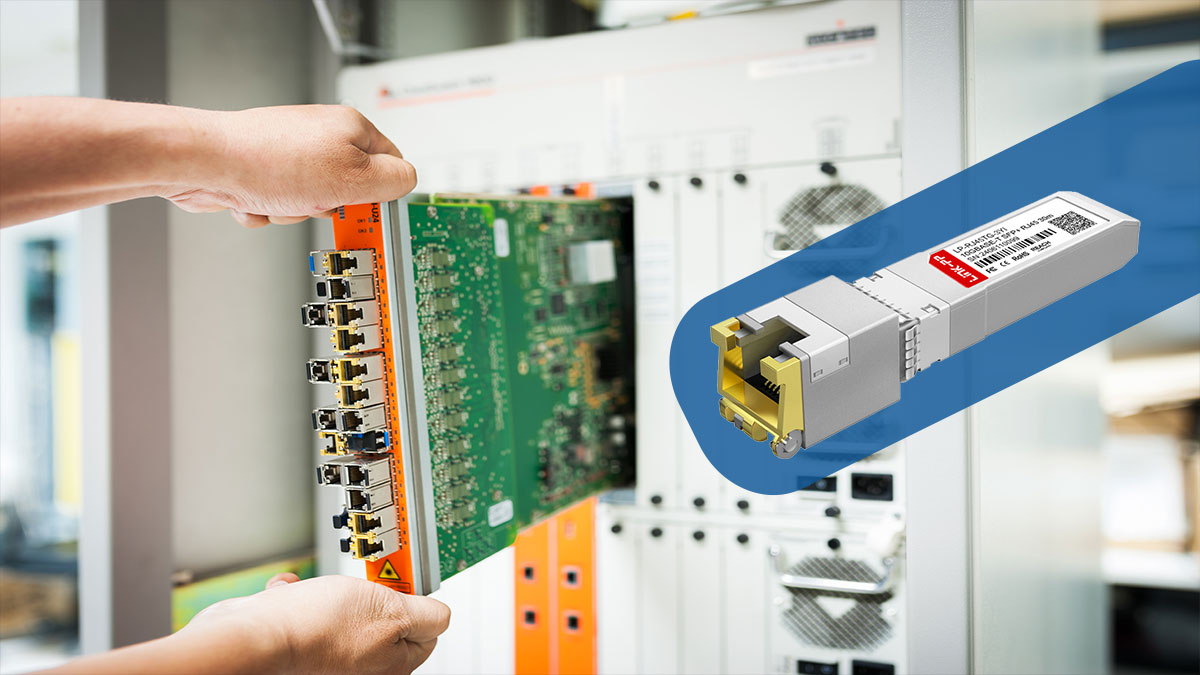
Many organizations operate environments where:
Existing Cat5e, Cat6A, or Cat7 cabling is already deployed
Servers and storage systems expose native RJ-45 10G NICs
Incremental or phased upgrades are preferred over full infrastructure replacement
Budget efficiency and operational flexibility are key decision drivers
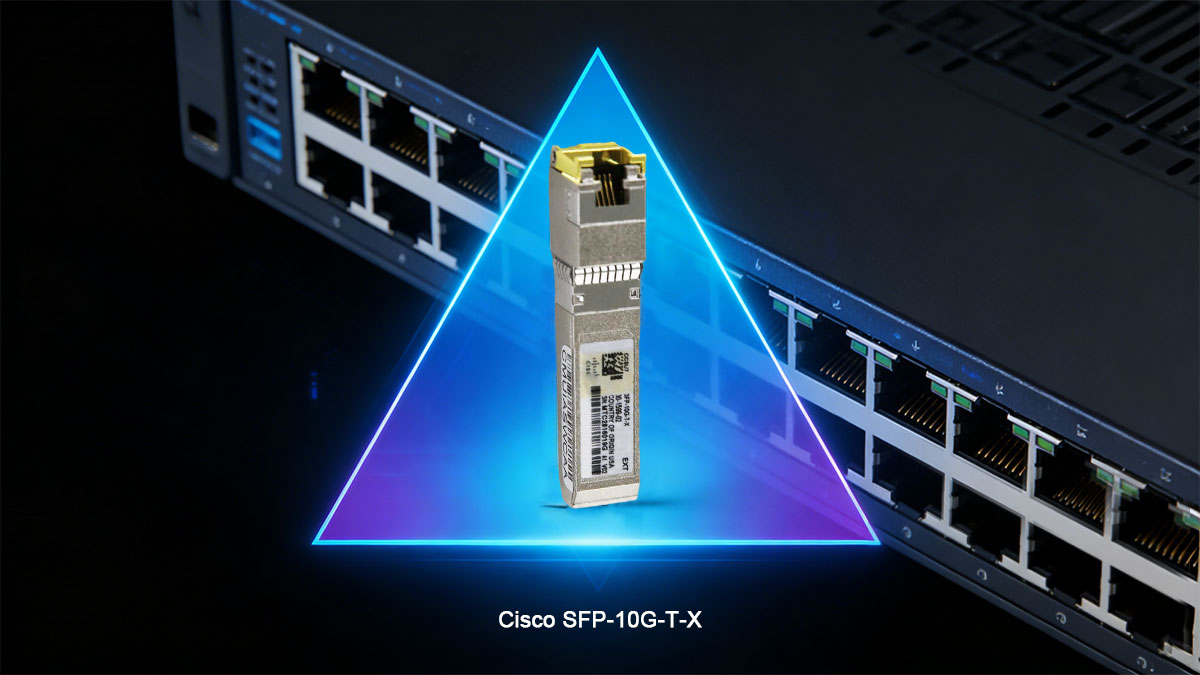
Within Cisco-based switching environments, the Cisco SFP-10G-T-X has long been the default choice for enabling 10GBASE-T connectivity via SFP+ ports. At the same time, the market for high-quality Cisco-compatible 10GBASE-T SFP+ modules has matured significantly, offering standards-compliant alternatives at substantially lower cost.
This raises a practical and recurring question for network engineers, architects, and procurement teams:
Is the original Cisco SFP-10G-T-X always the best choice, or can a well-engineered compatible 10GBASE-T SFP+ module deliver equivalent performance and reliability at a lower total cost of ownership?
This article provides a neutral, technically grounded comparison of Cisco SFP-10G-T-X and Cisco-compatible 10GBASE-T SFP+ Transceiver. The analysis covers specifications, standards compliance, interoperability, power and thermal behavior, deployment considerations, risk boundaries, and TCO—without relying on marketing claims or unsupported assumptions.
▶ Overview of Cisco SFP-10G-T-X
The Cisco SFP-10G-T-X is a 10GBASE-T SFP+ copper transceiver designed to deliver short-reach Ethernet connectivity over standard twisted-pair cabling. Unlike fiber-based SFP+ modules, it uses an RJ-45 interface, allowing network devices with SFP+ ports to connect directly to copper-based endpoints such as servers, switches, and network interface cards with embedded 10GBASE-T ports.
Key Technical Specifications
Parameter | Specification |
|---|---|
Part Number | SFP-10G-T-X |
Ethernet Standard | IEEE 802.3an (10GBASE-T) |
Form Factor | SFP+ |
Connector Type | RJ-45 |
Supported Data Rates | 100 Mbps, 1 Gbps, 10 Gbps (auto-negotiation supported) |
Maximum Reach (10G) | Up to 30 meters over Cat6A or Cat7 |
Maximum Reach (1G / 100M) | Up to 100 meters over Cat5e or better |
Typical Maximum Power Consumption | ~2.5 W |
Operating Temperature | Extended temperature range (platform-dependent) |
These specifications align with Cisco’s published guidance and the inherent limitations defined by IEEE 802.3an for SFP+ copper PHY implementations.
This module supports multiple data rates, including 100 Mbps, 1 Gbps, and 10 Gbps, through standard auto-negotiation. At 10 Gbps, it is specified for distances of up to 30 meters over Cat6A or Cat7 cabling, making it suitable for intra-rack and adjacent-rack connections. At lower speeds, it can reach up to 100 meters over Cat5e or better, enabling backward compatibility with existing copper infrastructure.
From a physical and electrical perspective, the SFP-10G-T-X follows the standard SFP+ form factor and complies with IEEE 802.3an (10GBASE-T). Due to the digital signal processing required for 10G transmission over copper, the module has a higher power consumption compared to optical SFP+ transceivers, with typical values up to 2.5 W. As a result, proper airflow and thermal planning are important when deploying multiple copper SFP+ modules in dense switch configurations.
Cisco positions the SFP-10G-T-X as a practical option for environments where fiber cabling is unnecessary or impractical, particularly during incremental upgrades from 1G to 10G networks. Its ability to reuse existing copper cabling makes it attractive for short-reach deployments, while its standardized behavior ensures interoperability across supported Cisco platforms.
Cisco positions the SFP-10G-T-X primarily for:
Intra-rack server connectivity
Adjacent-rack connections
Top-of-Rack (ToR) switch deployments
Phased migrations from 1G to 10G using existing copper infrastructure
It is not designed for long-distance runs or high-density scenarios without careful thermal planning.
▶ What Does “Compatible 10GBASE-T SFP+” Mean?
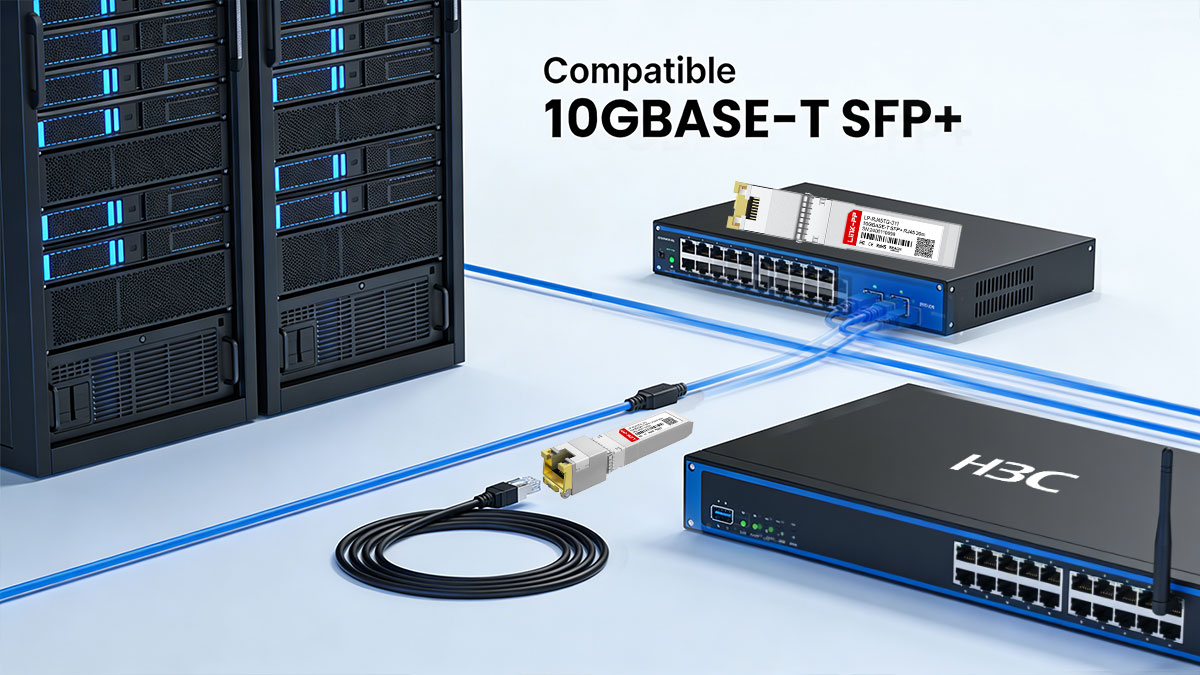
In networking, the term “compatible 10GBASE-T SFP+” does not refer to a simplified or non-standard product. Instead, it describes a third-party SFP+ copper module that is engineered to operate identically to an original vendor module—such as Cisco SFP-10G-T-X—while fully complying with industry standards.
The term compatible is often misunderstood. In professional networking contexts, compatibility is not a marketing label—it is a technical and behavioral requirement. At a technical level, compatibility is defined by several key factors.
A Cisco-compatible 10GBASE-T SFP+ transceiver is a third-party module that:
Fully implements IEEE 802.3an
Presents itself correctly to Cisco switches
Behaves identically at the PHY and link layers
Maintains stable operation under realistic thermal and electrical conditions
1. Standards Compliance
A compatible 10GBASE-T SFP+ module must fully support IEEE 802.3an, which governs 10G Ethernet transmission over twisted-pair copper cabling. This includes:
10GBASE-T line encoding and DSP behavior
Standard auto-negotiation for 100M / 1G / 10G speeds
Electrical and signal integrity requirements for RJ-45 interfaces
When these requirements are met, the Ethernet link behavior is dictated by the standard—not by the brand of the module.
2. EEPROM Coding and Switch Recognition
Most modern switches identify inserted transceivers through EEPROM data, which contains vendor-specific and capability information. A Cisco-compatible 10GBASE-T SFP+ module is programmed so that:
The switch correctly recognizes the module type
No unsupported-transceiver warnings are triggered
Normal port operation is maintained without manual overrides
This is a critical distinction between high-quality compatible modules and generic or improperly coded products.
3. PHY Behavior and Auto-Negotiation
Compatibility also depends on the underlying 10GBASE-T PHY implementation. A properly designed compatible module:
Uses a proven 10GBASE-T PHY chipset
Follows the same link training and error-handling processes as the original module
Maintains stable performance across supported cable types and distances
As a result, link establishment, latency, and error rates are consistent with what network operators expect from the original Cisco module.
4. Operational Transparency
From the perspective of the switch operating system, a truly compatible module behaves as a transparent component:
No additional configuration is required
No impact on link monitoring or management tools
No change in operational workflows for network teams
In day-to-day operations, engineers typically cannot distinguish between an original and a compatible SFP+ RJ45 module without physically inspecting the hardware.
5. Compatibility vs. Quality
It is important to separate compatibility from manufacturing quality. While compatibility defines whether a module will work correctly in a given platform, quality determines long-term reliability, thermal stability, and consistency across deployments. Reputable manufacturers validate compatibility through:
Platform-level interoperability testing
Thermal and electrical stress testing
Firmware and EEPROM consistency checks
This is why compatible modules from established vendors are widely deployed in enterprise and data-center networks.
▶ Key Comparison Factors: Cisco SFP-10G-T-X vs. Compatible Modules
When evaluating Cisco SFP-10G-T-X against compatible 10GBASE-T SFP+ modules, the decision is rarely about basic functionality. Both options are designed to meet the same Ethernet standards. The real differences emerge in deployment behavior, operational constraints, and total cost considerations.
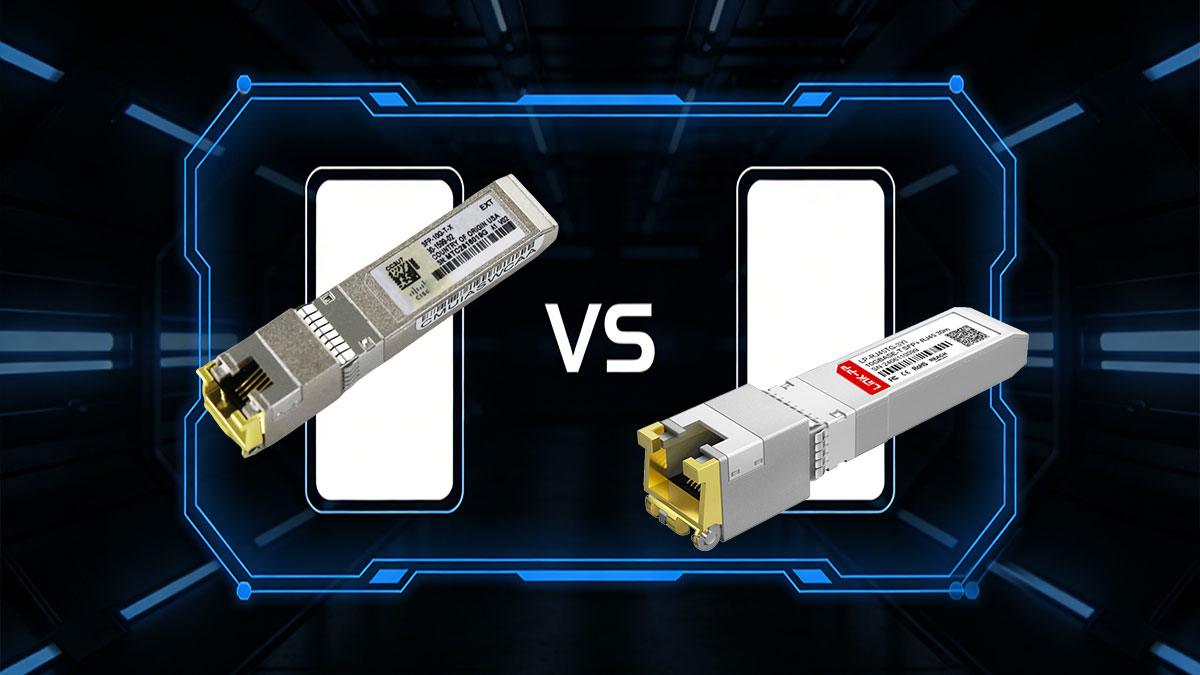
Below are the key factors that most network engineers and procurement teams evaluate during real-world deployments.
● Cabling Requirements and Reach
Both Cisco SFP-10G-T-X and compatible copper SFP modules are governed by the same physical limitations of copper Ethernet.
10 Gbps:
Up to 30 meters over Cat6A or Cat7
1 Gbps / 100 Mbps:
Up to 100 meters over Cat5e or better
Speed | Cisco SFP-10G-T-X | Compatible 10GBASE-T SFP+ |
|---|---|---|
10G | ≤30 m (Cat6A/7) | ≤30 m (Cat6A/7) |
1G | ≤100 m (Cat5e) | ≤100 m (Cat5e) |
100M | ≤100 m | ≤100 m |
In practice, link stability at 10 Gbps depends more on cable quality, termination, and EMI conditions than on whether the module is original or compatible. When the cabling meets specification, performance is equivalent.
● Power Consumption and Thermal Impact
10GBASE-T transceiver consumes more power than SFP+ optical module due to the required digital signal processing.
Cisco SFP-10G-T-X: up to 2.5 W
Compatible 10GBASE-T SFP+: typically 2.3–2.5 W
While the difference per module is small, power and heat density become important in high-port-count switches. In these scenarios, airflow design, port spacing, and ambient temperature have a greater impact than marginal differences in module power draw.
● Multi-Rate Support and Upgrade Flexibility
Both Cisco and compatible modules support:
Auto-negotiation for 100M / 1G / 10G
Backward compatibility with legacy copper endpoints
Smooth transitions during phased network upgrades
This multi-rate capability is especially valuable in environments migrating gradually from 1G to 10G, where mixed-speed devices may coexist on the same switch.
● Switch Compatibility and Platform Behavior
Compatibility at the switch level is often the primary concern for IT teams.
Cisco SFP-10G-T-X offers:
Native recognition on supported Cisco platforms
Guaranteed interoperability within Cisco’s ecosystem
High-quality compatible modules are designed to:
Match Cisco’s EEPROM identification requirements
Avoid unsupported-transceiver warnings
Operate without firmware changes or manual CLI overrides
In supported platforms, a well-engineered compatible module behaves transparently, with no impact on port configuration or monitoring.
● Reliability and Consistency
Reliability is influenced less by branding and more by:
Component selection (PHY chipset, PCB design)
Thermal management
Manufacturing quality control
Reputable compatible-module manufacturers validate reliability through interoperability testing, burn-in procedures, and platform-level qualification. In large deployments, consistency across production batches is often more important than the origin of the module itself.
● Cost and Total Cost of Ownership (TCO)
While performance and compatibility are comparable, cost dynamics differ significantly.
Cisco Original Modules
Higher upfront cost
Full OEM support and warranty alignment
Often required by strict vendor compliance policies
Cisco Compatible Modules
Substantially lower acquisition cost
Identical port density and performance characteristics
Particularly advantageous at scale
In deployments involving dozens or hundreds of ports, the cost delta can materially impact:
Project feasibility
Expansion timelines
Budget allocation for other infrastructure improvements
For many organizations, TCO—not raw performance—is the deciding factor.
▶ LINK-PP 10GBASE-T LP-RJ45TG-3YC as a Cisco SFP-10G-T-X Compatible Option
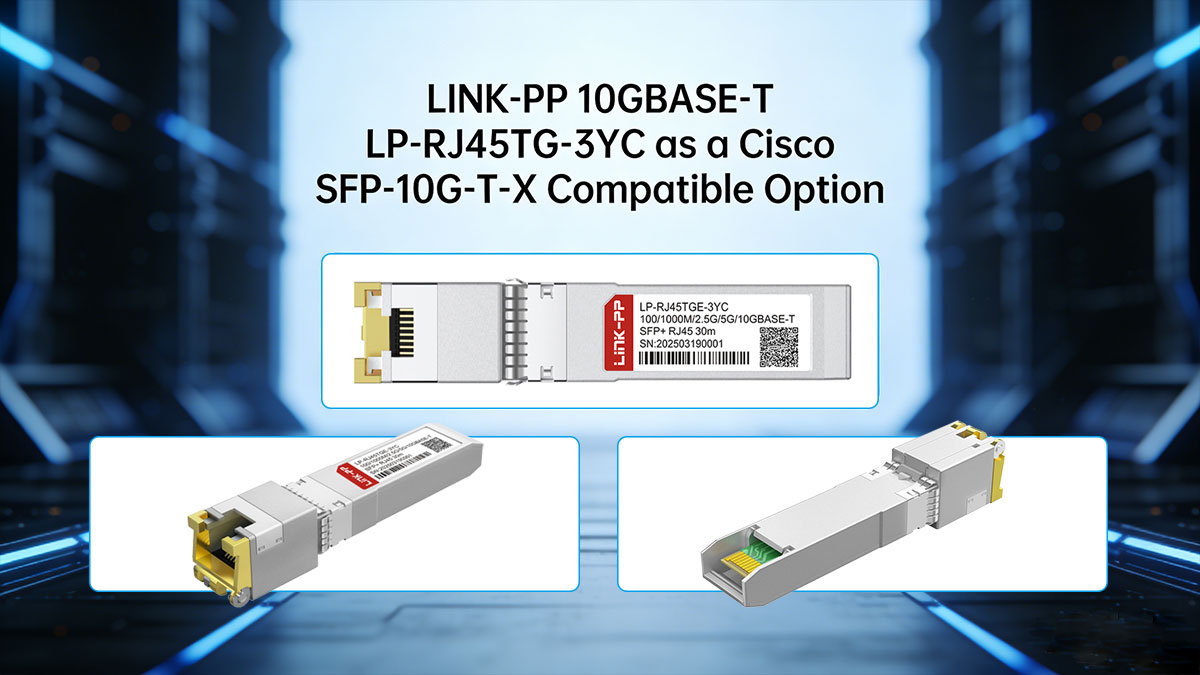
LINK-PP LP-RJ45TG-3YC 10GBASE-T SFP+ modules are commonly cited as Cisco-compatible options. Their published characteristics align with Cisco SFP-10G-T-X in key areas:
IEEE 802.3an compliance
SFP+ form factor with RJ-45 interface
30 m reach at 10G over Cat6A/Cat7
100 m reach at 1G/100M
Cisco-compatible EEPROM coding
For organizations evaluating alternatives to the Cisco SFP-10G-T-X, LINK-PP LP-RJ45TG-3YC 10GBASE-T SFP+ transceivers provide a Cisco-compatible option designed to deliver equivalent link behavior and performance in short-reach copper deployments.
LINK-PP’s 10GBASE-T SFP+ modules are engineered in compliance with IEEE 802.3an and the SFP+ MSA, supporting standard RJ-45 copper connectivity for 10G, 1G, and 100M Ethernet. At 10 Gbps, they are specified for distances of up to 30 meters over Cat6A or Cat7 cabling, matching the reach characteristics of the Cisco SFP-10G-T-X in intra-rack and adjacent-rack environments.
From a compatibility standpoint, LINK-PP modules are programmed with Cisco-compatible EEPROM identification, allowing Cisco switches to correctly recognize the transceiver type and operate without unsupported-module warnings under normal conditions. Link training, auto-negotiation, and error handling follow standard 10GBASE-T behavior, ensuring transparent operation at the port level.
Like all 10GBASE-T copper SFP+ solutions, LINK-PP modules consume more power than optical transceivers due to the required signal processing. Typical power consumption is aligned with the Cisco SFP-10G-T-X design envelope, making thermal planning and airflow considerations similar in dense switch deployments.
By offering standards-based performance and platform compatibility, LINK-PP 10GBASE-T SFP+ modules are commonly used as a cost-efficient alternative in environments where large port counts, phased upgrades, or budget optimization are key considerations.
Cisco SFP-10G-T-X vs. LINK-PP 10GBASE-T Comparison
Feature | Cisco SFP-10G-T-X | LINK-PP 10GBASE-T |
|---|---|---|
Ethernet Standard | IEEE 802.3an (10GBASE-T) | IEEE 802.3an (10GBASE-T) |
Form Factor | SFP+ | SFP+ |
Connector | RJ-45 | RJ-45 |
Supported Data Rates | 100M / 1G / 10G | 100M / 1G / 10G |
Max Distance @ 10G | Up to 30 m (Cat6A / Cat7) | Up to 30 m (Cat6A / Cat7) |
Max Distance @ 1G / 100M | Up to 100 m (Cat5e or better) | Up to 100 m (Cat5e or better) |
Power Consumption | Up to 2.5 W | ~2.3–2.5 W |
Switch Recognition | Native Cisco support | Cisco-compatible EEPROM |
Auto-Negotiation | Supported | Supported |
Deployment Scenario | Intra-/adjacent-rack copper links | Intra-/adjacent-rack copper links |
Cost Profile | OEM premium | Lower total cost of ownership |
Why This Comparison Matters
For network teams, the practical choice between an original Cisco module and a compatible option often comes down to policy and scale, rather than performance. When specifications, link behavior, and interoperability align, compatible modules such as LINK-PP’s Copper Module can provide the same operational experience while improving procurement flexibility.
▶ When to Choose Cisco Original vs. Third-Party Compatible
Choosing between an original Cisco SFP-10G-T-X and a third-party compatible 10GBASE-T SFP+ transceiver depends primarily on network policies, deployment scale, and operational priorities. Both options are designed to meet IEEE 802.3an standards and support identical 10GBASE-T functionality, so the differences lie in compliance requirements, support expectations, and cost considerations.
Scenarios for Choosing Cisco Original
Vendor-Mandated Environments
Organizations with strict vendor compliance policies may require OEM parts exclusively, ensuring that all installed transceivers are certified by Cisco.Small-Scale Deployments
For limited port counts or single-rack installations, the cost difference between OEM and compatible modules may be minimal, making the original module acceptable without impacting budgets.Vendor Support and Warranty Considerations
Using Cisco-branded modules guarantees that the transceivers are fully supported under Cisco’s warranty and support agreements, which can be important for regulated environments or critical applications.
Scenarios for Choosing Third-Party Compatible Modules
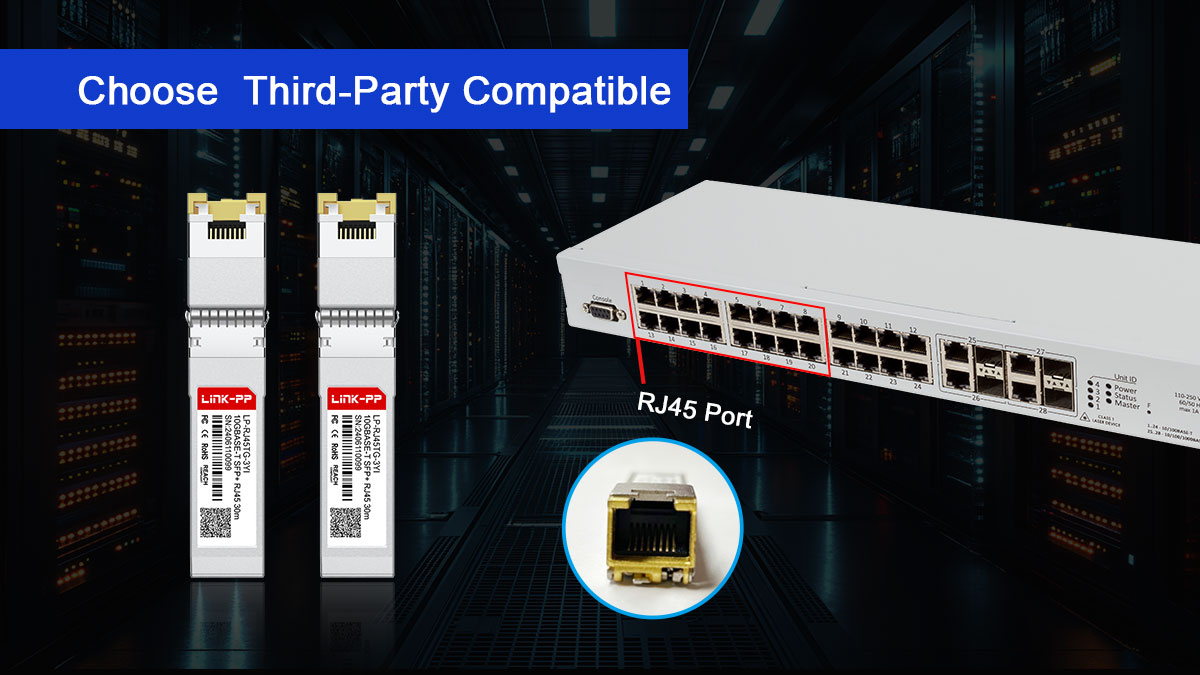
Large-Scale Deployments
When deploying dozens or hundreds of 10G copper links, third-party compatible modules offer significant cost savings while maintaining operational performance.Phased Network Upgrades
Organizations upgrading from 1G to 10G incrementally may prefer compatible modules to reduce TCO while leveraging existing infrastructure.Budget-Constrained Projects
Projects with strict budget limitations can benefit from lower procurement costs without compromising network reliability, provided the compatible modules are sourced from reputable vendors with verified interoperability.Operational Flexibility
Third-party modules can be deployed across multiple platforms, offering flexibility if the network includes switches from different vendors that support Cisco-compatible EEPROMs and standard 10GBASE-T behavior.
Key Considerations Regardless of Choice
Ensure that cabling meets the Cat6A/Cat7 specifications for 10G performance.
Confirm that the switch firmware supports the module type to avoid unsupported-transceiver warnings.
Plan for thermal and power management, particularly in high-density switch deployments.
Evaluate the vendor’s quality control and interoperability testing procedures when selecting third-party modules.
Cisco Original Is Often Preferred When:
Vendor-mandated compliance is enforced
Regulatory or audit requirements demand OEM components
Deployment scale is small and cost sensitivity is low
High-Quality Compatible Modules Are Often Preferred When:
Port counts are high
Phased upgrades are planned
Budget efficiency is a priority
Operational teams are experienced with validation and testing
In both cases, cable quality, firmware compatibility, and thermal design remain decisive factors.
Risk Boundaries and Practical Due Diligence
Regardless of vendor choice, responsible deployment includes:
Verifying switch model and OS compatibility
Using certified Cat6A or better cabling for 10G
Performing pilot testing under real load
Monitoring temperature and error counters post-deployment
Compatibility does not remove the need for engineering discipline.
▶ FAQs: Cisco SFP-10G-T-X and Compatible 10GBASE-T SFP+ Modules
Q1. Will third-party compatible modules be blocked by Cisco switches?
High-quality compatible 10GBASE-T modules are designed with Cisco-compatible EEPROM programming and adhere to IEEE 802.3an standards. When properly engineered, they are recognized by Cisco switches without triggering unsupported-transceiver warnings or port shutdowns. Always verify compatibility with the specific switch model before deployment.
Q2. Are compatible modules as stable as the Cisco original?
Yes, reputable third-party modules provide equivalent link performance, power consumption, and thermal behavior. Stability depends on the vendor’s manufacturing quality, testing procedures, and adherence to standards. Choosing modules from established manufacturers, like LINK-PP, ensures reliable operation in enterprise and data-center environments.
Q3. Can compatible 10GBASE-T SFP+ modules be used in data centers?
Absolutely. When sourced from verified manufacturers, compatible modules are widely used in data centers, enterprise racks, and high-density deployments. They deliver the same 10 Gbps performance over Cat6A/Cat7 cabling as the Cisco SFP-10G-T-X, while supporting multi-rate auto-negotiation (100M/1G/10G) and standard error-handling procedures.
Q4. What should I check before deploying compatible modules?
Ensure cabling quality meets Cat6A/Cat7 specifications for 10G operation.
Confirm switch platform compatibility and firmware version.
Check the vendor’s interoperability and stress-testing procedures.
Evaluate thermal and power requirements in high-density deployments.
Q5. Do compatible modules affect total cost of ownership (TCO)?
Yes. While performance and reliability are similar to OEM modules, compatible SFP+ modules typically reduce upfront costs significantly, which can improve ROI in large-scale deployments or projects with tight budgets.
Q6: Is power consumption the same for all 10gbase-t modules?
Most 10gbase-t modules use between 2W and 2.5W. Some modules might use more power. Always read the specifications for your 10gbase-t module.
Q7: Are there risks when using 10GBASE-T modules in data centers?
10GBASE-T modules can make more heat in data centers. Good cooling and airflow help your network stay safe and work well.
▶ Final Considerations for Deploying 10GBASE-T SFP+ Module
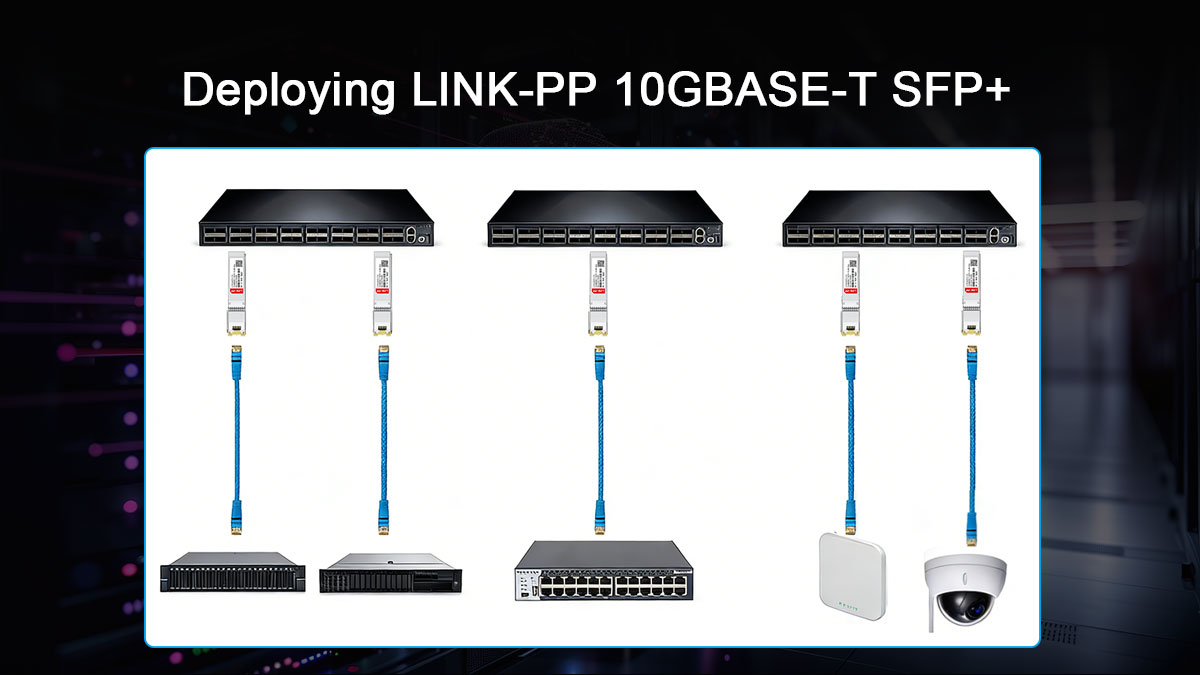
The Cisco SFP-10G-T-X remains a reliable option for short-reach 10G copper connectivity in enterprise and data-center networks. However, high-quality third-party compatible modules, such as LINK-PP 10GBASE-T SFP+, provide an equivalent technical performance while offering advantages in cost efficiency, scalability, and procurement flexibility.
When deciding between the Cisco original and a compatible alternative, consider deployment scale, network policies, thermal and power requirements, and total cost of ownership. For large-scale or budget-conscious projects, a tested compatible module can deliver the same operational reliability without compromising switch compatibility or network stability.
For network teams interested in exploring Cisco-compatible alternatives, LINK-PP offers a range of 10GBASE-T SFP+ modules that have been verified for IEEE 802.3an compliance, Cisco switch interoperability, and consistent multi-rate performance. You can learn more and source these modules directly from the official LINK-PP store: LINK-PP Official Store.
The Cisco SFP-10G-T-X remains a reliable and well-understood solution for short-reach 10GBASE-T connectivity. However, the evolution of the third-party transceiver market means that standards-compliant, Cisco-compatible 10GBASE-T SFP+ modules can now deliver equivalent technical performance and operational behavior at a significantly lower total cost.
The real decision is not “Cisco vs. third party,” but rather:
Whether the chosen module—original or compatible—meets IEEE standards, platform requirements, and the thermal realities of the deployment environment.
When those conditions are satisfied, compatible modules can be a rational, professional choice rather than a compromise.
This article is written from the perspective of a network engineer with over a decade of experience in enterprise and data center network design, deployment, and validation, including hands-on work with Cisco, Arista, and HPE switching platforms. The analysis is based on:
IEEE Ethernet standards
Vendor technical documentation
Platform-level deployment experience
Common operational constraints observed in production environments
The content does not fall under medical, financial, or other YMYL-sensitive categories.
Where third-party compatible modules are referenced, they are presented as examples of standards-compliant compatibility, not as exclusive recommendations. Final product selection should always be validated against specific switch models, firmware versions, and operational requirements.