

In modern Ethernet networks, selecting the right optical transceiver is essential for achieving reliable performance and efficient infrastructure design. Among the most widely used solutions for short-distance fiber connections is the Short Range SFP Module, a compact optical transceiver designed for high-speed communication over multimode fiber.
Short-range SFP modules are commonly deployed in environments where network devices are located relatively close to each other, such as data centers, enterprise switching environments, and rack-to-rack connections. These modules typically operate at an 850 nm wavelength and transmit data over multimode fiber types like OM3 or OM4, supporting distances from tens of meters up to several hundred meters depending on the Ethernet standard.
Because of their cost efficiency, low power consumption, and high port density, short-range SFP modules are often preferred for internal network links where long-distance transmission is unnecessary. Network engineers frequently use them for switch uplinks, server-to-switch connections, and high-bandwidth aggregation links inside data center infrastructure.
However, many users still have practical questions when choosing or deploying these modules, such as:
What is the typical distance supported by a Short Range SFP Module?
What fiber type should be used with SR transceivers?
When should you choose SR SFP instead of LR SFP or DAC cables?
What are the key differences between short-haul and long-haul optical modules?
This guide explains the definition, transmission distance, applications, and selection criteria of Short Range SFP Modules, helping network engineers, IT professionals, and procurement specialists understand how to choose the right optical transceiver for short-distance network connections.
▶️ What Is a Short Range SFP Module?
A Short Range SFP module is a type of optical transceiver designed to transmit Ethernet data over relatively short distances using multimode fiber (MMF). These modules are commonly used in enterprise networks and data centers where devices such as switches, routers, and servers are located within the same room, rack row, or building floor.
Most short-range SFP modules operate at an 850 nm wavelength and use VCSEL (Vertical-Cavity Surface-Emitting Laser) technology. This design allows efficient data transmission over multimode fiber types such as OM2, OM3, or OM4, typically supporting distances ranging from 100 meters to around 400 meters, depending on the Ethernet standard.

Short-range SFP modules are widely deployed because they provide several advantages:
Cost-effective optical connectivity compared with long-range transceivers
Low power consumption suitable for high-density switch ports
High reliability in short-distance network environments
Flexible hot-pluggable installation in switches, routers, and network interface cards
Typical examples include 1000BASE-SX SFP modules for Gigabit Ethernet and 10GBASE-SR SFP+ modules for 10-Gigabit networks. Both are optimized for high-speed communication within data center and enterprise network infrastructures.
What Does SR Mean in SFP?
In optical networking terminology, SR stands for “Short Range.”
An SR SFP module refers to an optical transceiver designed specifically for short-distance fiber communication, usually over multimode fiber. These modules typically operate at 850 nm and are commonly used for Ethernet standards such as:
1000BASE-SX (1 Gbps)
10GBASE-SR (10 Gbps)
25GBASE-SR (25 Gbps)
The “SR” designation distinguishes these modules from other optical transceivers such as:
Type | Meaning | Typical Distance |
|---|---|---|
SR | Short Range | up to ~300–400 m |
LR | Long Range | up to ~10 km |
ER | Extended Range | up to ~40 km |
Because SR modules use multimode fiber, they are typically less expensive and easier to deploy than long-range optical modules that require single-mode fiber.
What Is a Short Range Transceiver?
A short range transceiver is an optical communication module designed for short-distance data transmission within local network environments, such as inside data centers or enterprise buildings.
These transceivers convert electrical signals from network equipment into optical signals that travel through fiber cables, and then convert them back to electrical signals at the receiving end.
Short-range transceivers are commonly used for:
switch-to-switch connections
server-to-switch links
data center aggregation networks
high-density rack deployments
Compared with long-range transceivers, short-range models typically feature:
lower optical output power
shorter transmission distance
lower cost and power consumption
This makes them ideal for high-speed internal network connections where devices are located relatively close to each other.
What Is SFP Short For?
SFP stands for “Small Form-factor Pluggable.”
It is a compact, hot-swappable transceiver interface used in networking equipment such as Ethernet switches, routers, and network interface cards. The SFP standard allows network devices to support different types of media—such as fiber optic cables or copper connections—by inserting the appropriate module into the SFP port.
Key characteristics of SFP modules include:
Small physical size, enabling high-port-density network equipment
Hot-pluggable design, allowing replacement without powering down devices
Media flexibility, supporting both optical fiber and copper connections
Wide compatibility across networking vendors and Ethernet standards
Because of these advantages, SFP modules have become one of the most widely used transceiver formats in modern Ethernet and optical networking infrastructure.
▶️ What Is the Range of a Short Range SFP?
The transmission range of a Short Range SFP module depends on several factors, including the Ethernet standard, fiber type, and optical technology used in the transceiver. In most Ethernet networks, short-range optical modules are designed for multimode fiber connections within data centers, enterprise networks, and campus environments.
Short-range SFP modules typically operate at an 850 nm wavelength over multimode fiber (MMF) such as OM2, OM3, or OM4. Because multimode fiber supports high bandwidth over relatively short distances, these modules are ideal for switch-to-switch links, rack-to-rack connections, and high-speed internal network infrastructure.
Depending on the Ethernet standard and fiber quality, the transmission range of short-range SFP modules usually falls between 100 meters and 550 meters.
Typical Distance of SR SFP Modules
In practical network deployments, SR (Short Range) SFP modules are optimized for distances within the same data center or building. Their range is typically limited compared with long-range optical modules but provides sufficient coverage for most internal network links.
Most SR modules support:
100 m – 400 m in modern high-speed data center environments
up to ~550 m for some Gigabit Ethernet multimode implementations
shorter distances when lower-grade fiber types are used
Because of this range, SR SFP modules are commonly used for:
data center switch interconnects
server-to-switch connections
rack-to-rack optical links
aggregation layer uplinks
These deployments benefit from the low cost and low power consumption of multimode short-range optics.
1000BASE-SX vs. 10GBASE-SR Distance
Different Ethernet standards define different transmission ranges for short-range optical modules. Two of the most widely used standards are 1000BASE-SX (Gigabit Ethernet) and 10GBASE-SR (10-Gigabit Ethernet).
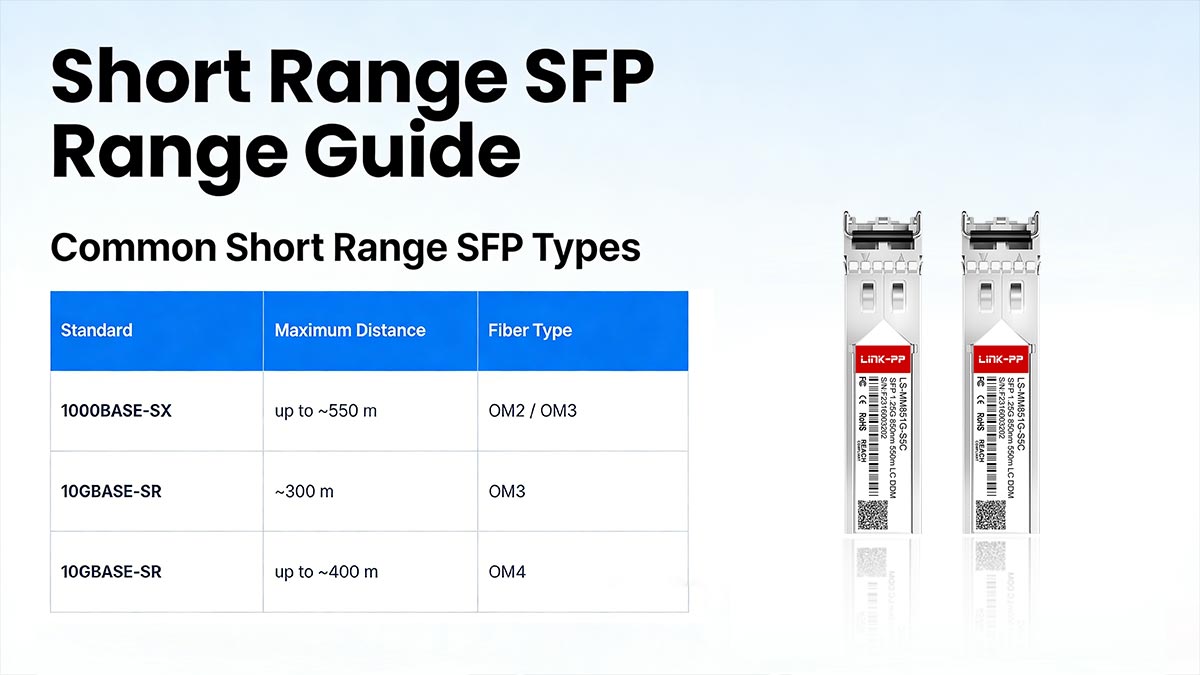
The typical ranges are shown below:
Standard | Maximum Distance | Fiber Type |
|---|---|---|
1000BASE-SX | up to ~550 m | OM2 / OM3 |
10GBASE-SR | ~300 m | OM3 |
10GBASE-SR | up to ~400 m | OM4 |
Although 10GBASE-SR operates at higher data rates, its maximum distance is usually shorter than Gigabit SX because higher bandwidth signals experience more dispersion in multimode fiber.
As a result, newer multimode fiber types such as OM3 and OM4 are commonly used in modern data centers to support higher-speed Ethernet links.
How Fiber Type Affects SR SFP Distance
The type and quality of multimode fiber play a significant role in determining the maximum transmission distance of an SR SFP module.
Multimode fibers are categorized into several performance classes:
Fiber Type | Typical Bandwidth | Common Distance Support |
|---|---|---|
OM2 | older multimode fiber | shorter SR distances |
OM3 | laser-optimized MMF | up to ~300 m for 10G |
OM4 | high-performance MMF | up to ~400 m for 10G |
Higher-grade fibers such as OM3 and OM4 are designed to support laser-optimized 850 nm transmission, which reduces signal dispersion and allows higher data rates over longer distances.
Short-range SFP modules typically use 850 nm VCSEL (Vertical-Cavity Surface-Emitting Laser) technology combined with LC duplex connectors, making them well suited for high-density optical networking environments where efficient short-distance communication is required.
▶️ What SFP Is Required for a Short-Distance Connection?
For short-distance network links, the most commonly used solution is an SR (Short Range) SFP or SFP+ module, typically paired with multimode fiber cables. These optical modules are designed specifically for high-speed communication within relatively short distances, making them ideal for data centers, enterprise networks, and campus infrastructure.
However, SR SFP modules are not the only option for short links. Network engineers often consider other connection technologies such as DAC (Direct Attach Copper) cables and AOC (Active Optical Cables). The best choice depends on factors like distance, cost, power consumption, and deployment flexibility.
Understanding the differences between these solutions helps ensure the most efficient and reliable network design.
SR SFP vs. DAC vs. AOC
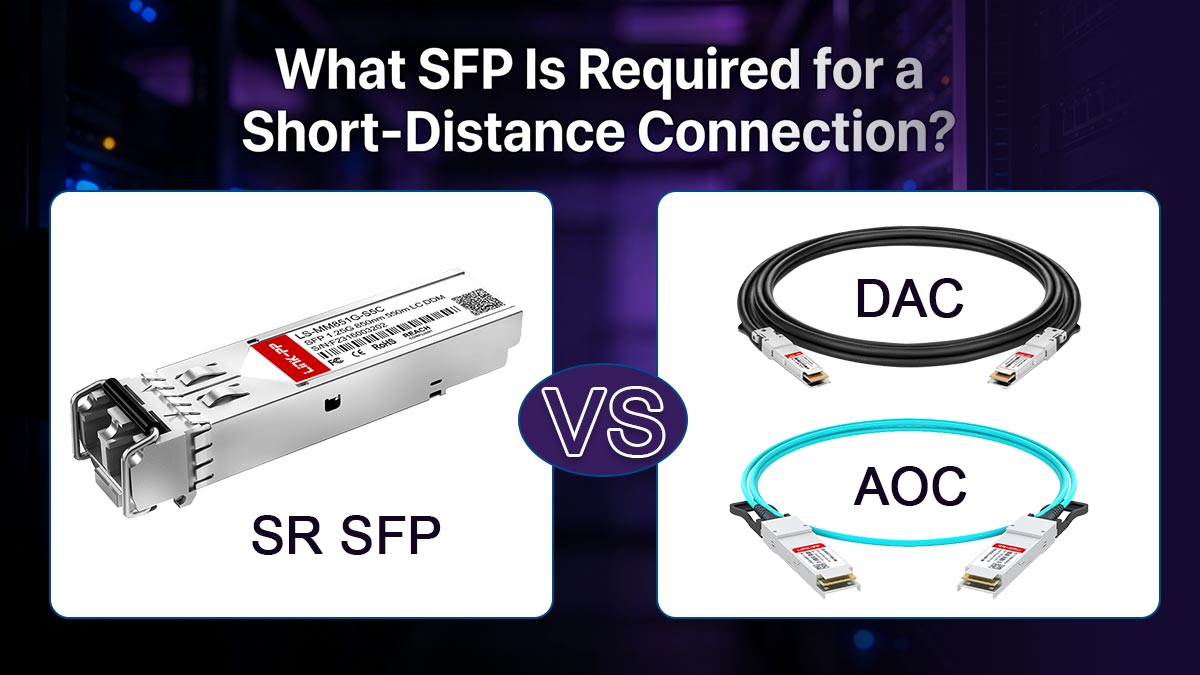
Three common technologies are used for short-distance connections in modern Ethernet networks: SR optical modules, DAC cables, and AOC cables.
Technology | Medium | Typical Distance | Advantages |
|---|---|---|---|
SR SFP / SFP+ | Multimode fiber | up to ~300–400 m | Flexible fiber cabling, scalable |
DAC (Direct Attach Copper) | Twinax copper cable | ~1–7 m | Low cost, very low latency |
AOC (Active Optical Cable) | Integrated optical cable | up to ~100 m | Lightweight, easy installation |
DAC cables are commonly used for very short connections within the same rack, such as switch-to-server links. They are cost-effective and consume very little power.
AOC cables are pre-terminated optical cables with built-in transceivers, often used when distances exceed the limits of DAC but still remain within short-range networking environments.
SR SFP modules, on the other hand, offer greater flexibility because the transceiver and fiber cable are separate components, allowing network engineers to choose different cable lengths or replace modules independently.
Multimode Fiber vs. Single-Mode Fiber
Another important factor when selecting an SFP module for short-distance connections is the type of fiber optic cable used in the network.
Multimode fiber (MMF) is typically used with short-range SFP modules because it is designed for high-bandwidth communication over shorter distances.
Fiber Type | Typical Use | Distance Capability |
|---|---|---|
Multimode Fiber (OM3 / OM4) | Short-range SR modules | up to ~300–400 m |
Single-Mode Fiber (SMF) | Long-range LR modules | up to ~10 km or more |
Multimode fiber is generally less expensive and easier to install than single-mode fiber, making it the preferred choice for data center and enterprise internal connections.
Single-mode fiber is usually reserved for long-distance transmission, such as campus backbone links, metro networks, or telecommunications infrastructure.
When to Use SR SFP Modules
SR SFP modules are best suited for short-distance optical links where high bandwidth and cost efficiency are both important. Because they operate over multimode fiber and require less optical power than long-range modules, they are commonly deployed in high-density networking environments.
Typical deployment scenarios include:
data center switch interconnects
rack-to-rack fiber links
enterprise access layer uplinks
campus network connections
In these environments, SR modules provide a reliable and scalable solution for short-distance optical communication, delivering high-speed Ethernet connectivity without the higher cost associated with long-range single-mode transceivers.
▶️ Short Range vs. Long Range SFP Modules
In optical networking, SFP modules are typically categorized based on their transmission distance and fiber type. The two most common categories are Short Range (SR) and Long Range (LR) optical transceivers, each designed for different network deployment scenarios.
Short-range modules are optimized for high-speed communication over multimode fiber within data centers or enterprise networks, while long-range modules are built for long-distance transmission over single-mode fiber, such as campus backbones, metropolitan networks, or telecom infrastructure.
Understanding the differences between these module types helps network engineers choose the most appropriate solution for their distance requirements, fiber infrastructure, and cost constraints.
SR vs. LR Optical Transceivers
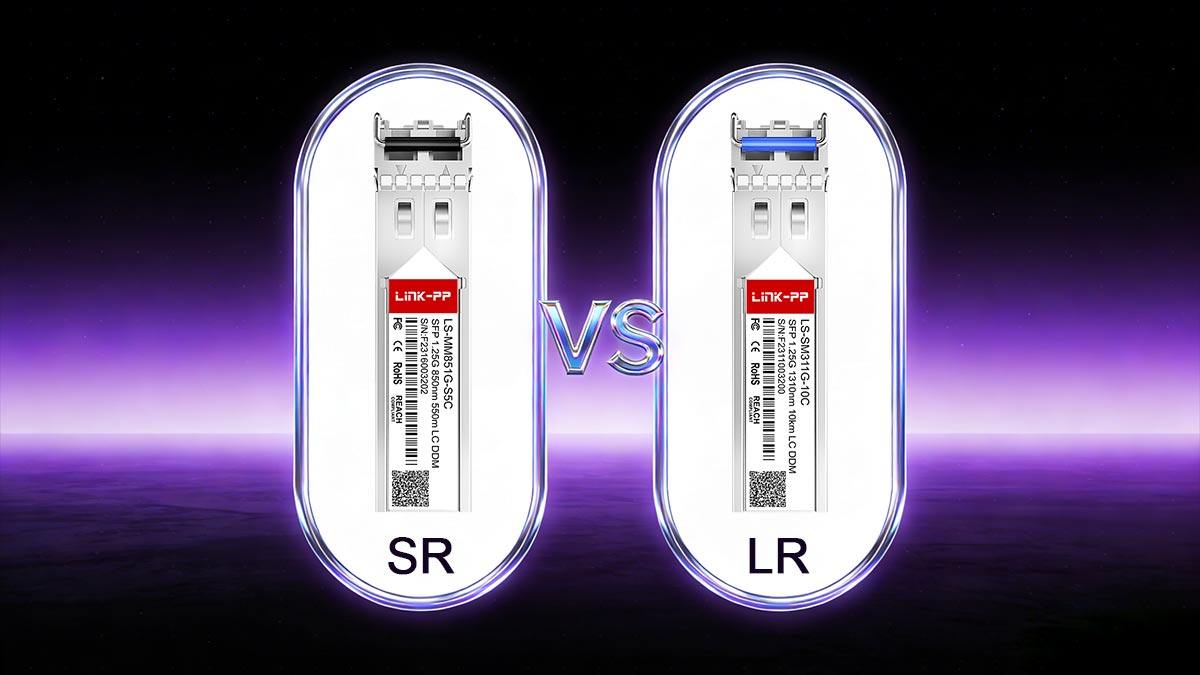
The primary difference between SR (Short Range) and LR (Long Range) optical transceivers lies in their supported fiber type, transmission distance, and optical technology.
Type | Fiber Type | Typical Distance |
|---|---|---|
SR (Short Range) | Multimode fiber | 100–400 m |
LR (Long Range) | Single-mode fiber | up to 10 km |
Single-mode fiber | 40–80 km |
SR optical modules operate at 850 nm and use multimode fiber such as OM3 or OM4. They are designed for short-distance links inside data centers and enterprise buildings, where devices are relatively close together.
LR modules, on the other hand, typically operate at 1310 nm and use single-mode fiber to support much longer distances—often up to 10 kilometers for standard Ethernet applications.
Because LR modules require more powerful optical transmitters and single-mode fiber infrastructure, they are generally more expensive and consume more power than SR modules.
Short Haul vs. Long Haul SFP
The terms short haul and long haul are commonly used in networking to describe the distance category of optical links.
Short-haul SFP modules refer to optical transceivers designed for short-distance transmission within buildings or data centers. These typically include SR, SX, and other multimode-based modules.
Long-haul SFP modules are designed for long-distance fiber communication, often using single-mode fiber and higher optical power levels. These include LR, ER, and ZR transceivers used in telecom and wide-area networks.
In general, short-range optics offer several advantages for internal network connections:
lower module cost
lower power consumption
simplified fiber infrastructure
optimized performance for high-density environments
For these reasons, SR modules are widely used for short-distance optical networking, while LR and other long-range modules are reserved for backbone or wide-area network links where longer transmission distances are required.
▶️ Common Applications of Short Range SFP Modules
Because of their short transmission distance, high bandwidth capability, and cost efficiency, Short Range SFP modules are widely used in modern Ethernet network infrastructure. They are particularly suitable for environments where network equipment is deployed within the same building, data hall, or rack row.
Short-range optical modules enable high-speed fiber connectivity between switches, servers, and aggregation devices, making them a common solution in data centers and enterprise networks that require reliable internal communication.

Typical applications include:
leaf–spine data center networks
switch uplinks
server-to-switch connections
These modules support high-density switching environments with low latency and efficient power usage, making them ideal for scalable network architectures.
Data Center Network Interconnects
One of the most common uses of short-range SFP modules is in data center network interconnects. Modern data centers often rely on leaf–spine network architectures, where multiple switches are interconnected to ensure high bandwidth and low-latency communication.
In these environments, SR SFP modules are used for:
leaf switch to spine switch connections
top-of-rack (ToR) switch uplinks
high-speed aggregation links
Because the physical distance between switches in a data center is typically less than a few hundred meters, short-range multimode optics provide an efficient and cost-effective solution.
Enterprise Network Switching
Short-range SFP modules are also widely deployed in enterprise network switching environments. Large office buildings, campuses, and enterprise IT infrastructures often require reliable fiber links between network switches located in different rooms or equipment closets.
Common enterprise use cases include:
distribution switch to access switch links
building floor network connections
uplinks from access switches to core switches
By using multimode fiber with SR modules, organizations can build stable high-speed connections without the higher costs associated with long-range optical transceivers.
High-Density Rack Deployments
Another important application of short-range SFP modules is in high-density rack deployments, where multiple servers and network devices are installed within the same rack or rack row.
In these scenarios, SR SFP modules are commonly used for:
server-to-switch optical connections
rack-to-rack fiber links
high-bandwidth storage networking
Because SR modules offer compact form factors, low power consumption, and reliable optical performance, they are well suited for dense networking environments where many ports are deployed within limited physical space.
▶️ Frequently Asked Questions About Short Range SFP
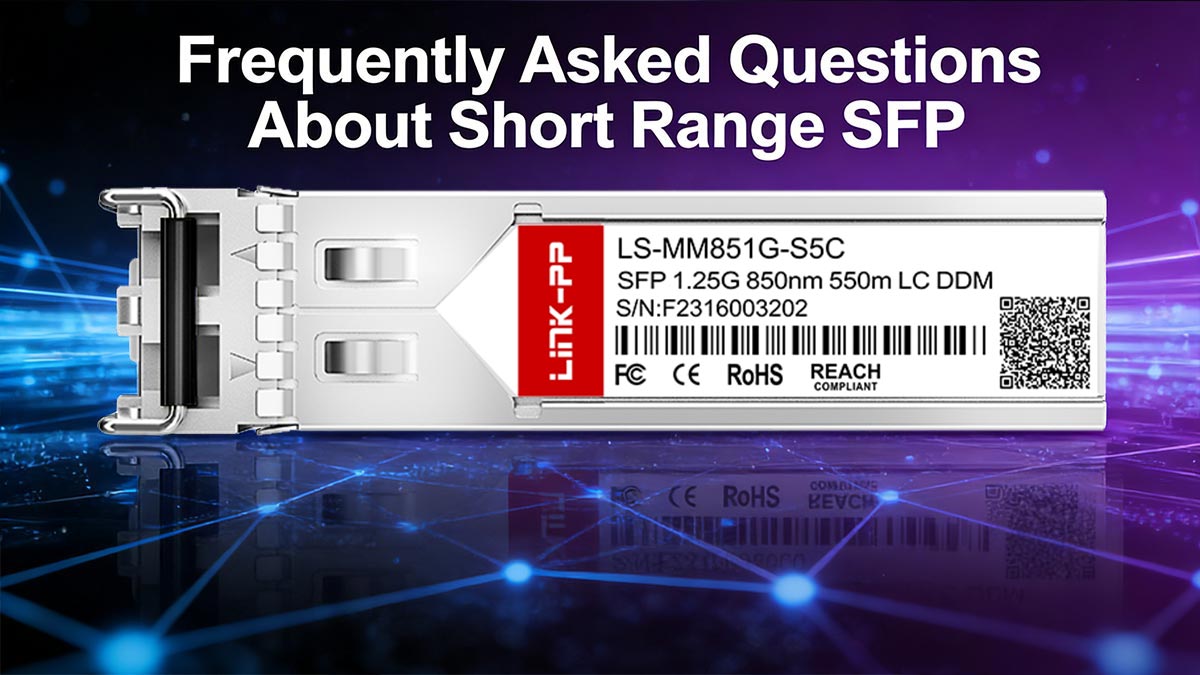
Below are some of the most common questions network engineers, IT professionals, and buyers ask about Short Range SFP modules. These answers address practical deployment concerns and help clarify key technical concepts used in modern optical networking.
What is the range of a short range SFP?
Short range SFP modules typically support transmission distances between 100 meters and 400 meters, depending on the Ethernet standard and the type of multimode fiber used.
For example:
10GBASE-SR supports approximately 300 m over OM3 fiber
10GBASE-SR can reach up to 400 m when using OM4 fiber
Lower-speed standards such as 1000BASE-SX may support even longer distances on multimode fiber, sometimes reaching up to about 550 meters under optimal conditions.
What is a short range transceiver?
A short range transceiver is an optical communication module designed for short-distance fiber transmission, typically within the same data center, building, or campus network.
These transceivers usually operate at 850 nm wavelength and transmit signals over multimode fiber cables, making them ideal for high-speed internal network connections such as switch uplinks and server links.
What SFP is required for a short-distance connection?
Most short-distance fiber links use SR (Short Range) SFP or SFP+ modules paired with multimode fiber cables, commonly OM3 or OM4.
SR modules are designed specifically for short-distance communication and provide an efficient balance of performance, cost, and power consumption, which is why they are widely used in data centers and enterprise networks.
What is SFP short for?
SFP stands for Small Form-factor Pluggable, a compact hot-swappable transceiver interface used in networking equipment such as Ethernet switches, routers, and network interface cards (NICs).
The SFP standard allows network devices to support different types of connectivity by inserting various modules, including fiber optic transceivers or copper-based modules, depending on the required network media.
What is the difference between short haul and long haul SFP?
The main difference between short-haul and long-haul SFP modules is the transmission distance and fiber type they support.
Short-haul SFP modules use multimode fiber and typically support distances under a few hundred meters, making them suitable for internal network connections.
Long-haul SFP modules use single-mode fiber and are designed for long-distance communication, often reaching several kilometers or more.
Because short-haul modules require lower optical power and simpler fiber infrastructure, they are generally more cost-effective and energy-efficient for short-distance deployments.
▶️ Choosing the Right Short Range SFP Module for Your Network
Selecting the appropriate Short Range SFP module is essential for building reliable and cost-efficient fiber connections in modern Ethernet networks. As discussed in this guide, SR SFP modules are specifically designed for short-distance communication over multimode fiber, typically supporting links from tens of meters up to several hundred meters depending on the Ethernet standard and fiber type.
Because of their low cost, low power consumption, and high port density, short-range optical transceivers are widely used in data centers, enterprise switching environments, and campus networks. When paired with the right multimode fiber—such as OM3 or OM4—they provide stable high-speed connectivity for common applications like switch uplinks, server connections, and rack-to-rack links.
Real-World Network Engineer Discussions About Short Range SFP
In practice, many network engineers share their experiences with short-range SFP modules in technical communities and forums.
For example, engineers in networking forums have discussed whether a 300-meter rated SR SFP module can be used with a very short cable such as 2 meters. Experienced professionals generally confirm that this is normal and widely used in real deployments, especially inside data centers where devices may be located very close to each other.
Another commonly discussed topic is whether optical modules require a minimum transmission distance. In most Ethernet optical standards, there is no strict minimum distance requirement, which means short fiber links usually work reliably without needing optical attenuation.
These real-world discussions often focus on practical engineering questions, including:
minimum distance considerations for optical modules
choosing between SR optics and DAC cables for short links
compatibility between different networking vendors
Understanding these real deployment experiences can help network designers make more informed decisions when selecting optical modules for short-distance connections.
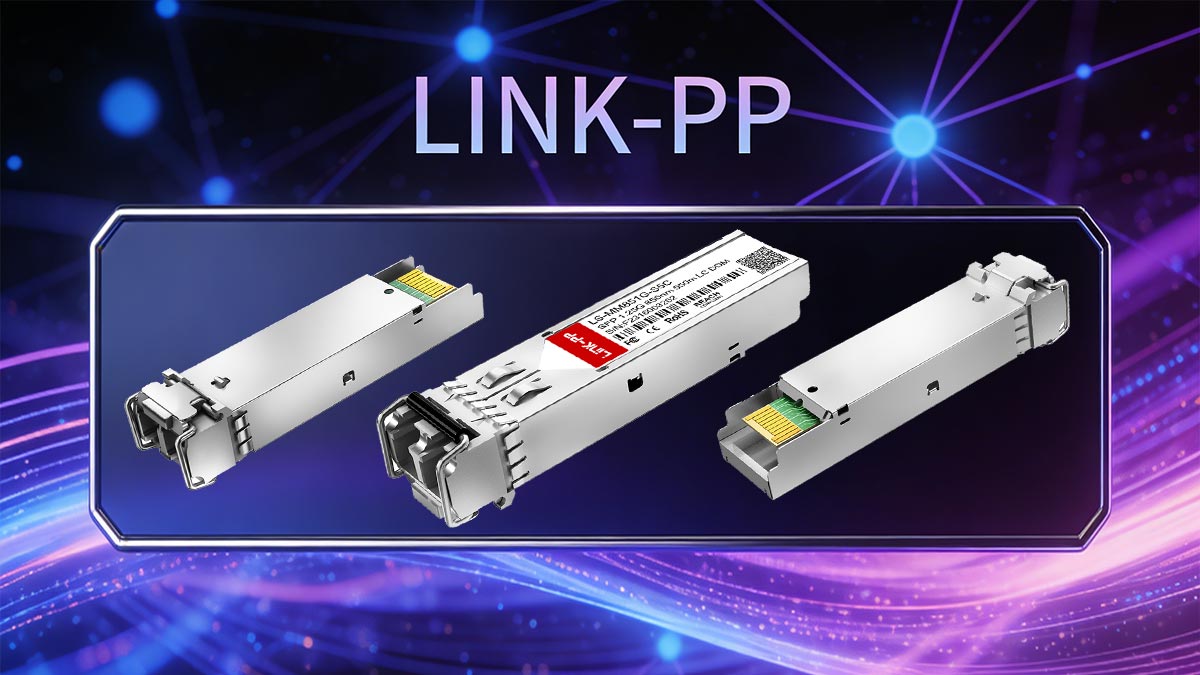
Explore Short Range SFP Modules at LINK-PP Official Store
If you are planning to deploy short-range optical connections in data centers, enterprise networks, or high-density switching environments, choosing high-quality transceivers is critical for long-term network reliability.
At the LINK-PP, you can explore a range of reliable SFP and SFP+ transceiver modules designed for modern Ethernet networks. These modules are engineered to support stable short-distance fiber communication, strong compatibility with major networking platforms, and consistent performance in demanding environments.
Visit the LINK-PP Official Store to learn more about available Short Range SFP modules, specifications, and compatibility options, and find the right solution for your next network deployment.