

In modern fiber-optic networks, cost-efficient scalability and vendor interoperability have become critical factors in infrastructure design. As organizations deploy more 10 GbE, 25 GbE, and higher-speed optical links, the demand for affordable and flexible transceiver solutions continues to grow. This is why Third-Party SFP —also called compatible optical modules—have become widely used in enterprise networks, data centers, and telecom infrastructure.
A Third-Party SFP is an optical transceiver manufactured by an independent vendor rather than the original network equipment manufacturer (OEM). These modules are typically designed to comply with Multi-Source Agreement (MSA) standards, allowing them to operate in switches and routers from major networking vendors such as Cisco Systems, Juniper Networks, and Arista Networks. When properly coded and tested, compatible optics can provide functionality equivalent to OEM modules while significantly reducing procurement costs.
Because optical transceivers are often among the most expensive components in large-scale network deployments, many IT teams and network engineers actively evaluate third-party alternatives. Community discussions in professional forums such as Reddit networking communities frequently highlight the potential cost savings, supply flexibility, and interoperability benefits of compatible optics, while also raising questions about compatibility checks, firmware restrictions, and vendor support policies.
However, despite their growing adoption, many engineers still ask important questions:
Are third-party SFP modules fully compatible with enterprise switches?
Can using compatible optics affect equipment warranties or support contracts?
How can network administrators identify reliable third-party SFP vendors?
What technical factors—such as EEPROM coding or vendor lock mechanisms— determine interoperability?
This guide provides a technical and practical overview of Third-Party SFPs, including how they work, how they compare with OEM optics, and how to evaluate compatibility with major network platforms.
By the end of this article, you will understand:
What Third-Party SFP transceivers are and how they differ from OEM modules
The cost advantages and potential risks of compatible optics
How EEPROM coding and MSA standards influence interoperability
Best practices for choosing reliable third-party SFP vendors
For network engineers, system integrators, and procurement specialists, understanding these factors is essential to building scalable, cost-effective fiber-optic networks without compromising reliability or performance.
⏩ What Is a Third-Party SFP Transceiver?
A Third-Party SFP is an optical module produced by a vendor other than the original equipment manufacturer (OEM) of the networking device. These transceivers are designed to be plug-and-play compatible with major switches and routers while providing a more cost-effective alternative to OEM modules. Unlike proprietary OEM SFP Transceivers, third-party modules focus on standards compliance and interoperability, enabling network operators to deploy high-speed optical connections without the premium price tag.
Difference Between OEM Optics and Compatible Optics
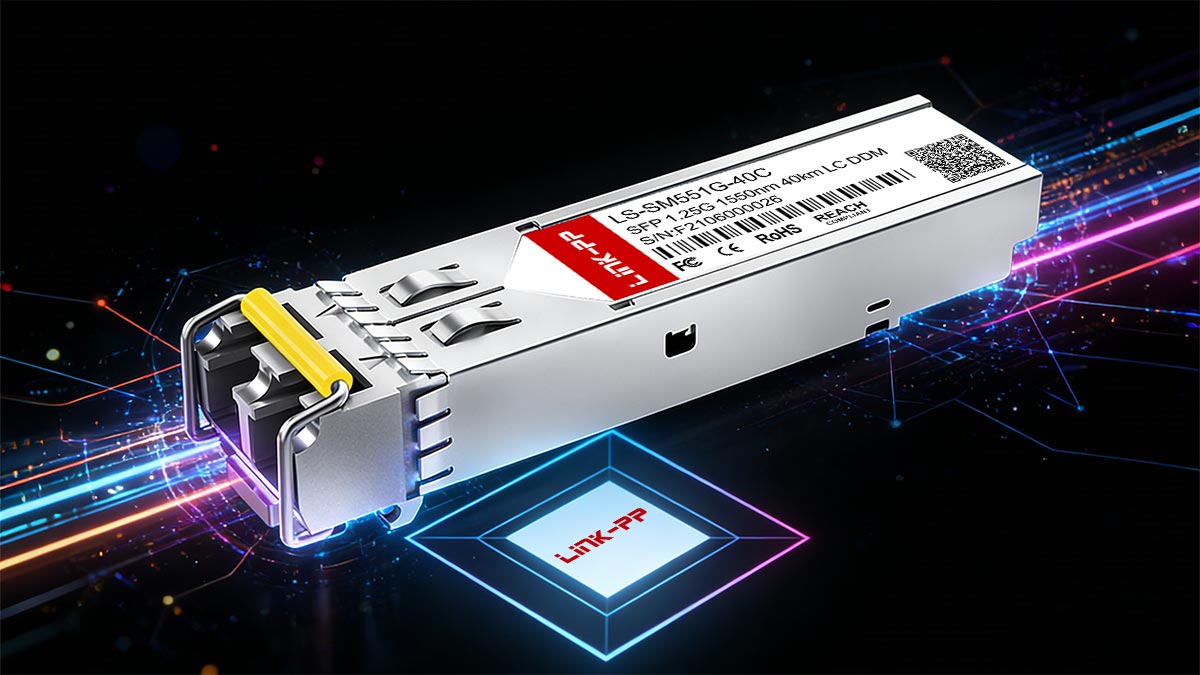
OEM SFPs are developed by the same vendor that produces the networking switch or router. They often include proprietary firmware, vendor-specific EEPROM coding, and full support under the OEM’s service and warranty contracts. While they ensure guaranteed interoperability, OEM modules are typically more expensive and less flexible in terms of vendor choice.
Third-Party SFPs, on the other hand, are manufactured independently. They aim to replicate the performance and form factor of OEM modules while complying with MSA (Multi-Source Agreement) standards. These modules provide the same data rates, wavelengths, and interface types as OEM optics but at a fraction of the cost. Some advanced third-party vendors also perform extensive compatibility testing to ensure that their modules function reliably across multiple platforms.
MSA Standards
The Multi-Source Agreement (MSA) is a set of industry standards that defines the physical form factors, electrical interfaces, and optical performance of optical transceivers. Compliance with MSA standards ensures that third-party SFPs can interoperate with a wide range of networking equipment from different vendors. Key MSA-compliant specifications include:
SFP, SFP+, and QSFP form factors
Data rates (1G, 10G, 25G, 40G, and beyond)
Wavelengths and optical power ranges
Electrical interface requirements
By adhering to MSA, third-party transceivers minimize compatibility risks and provide a standardized platform for network expansion and multi-vendor deployment.
How Third-Party Optics Are Manufactured
Third-party SFP Modules are typically produced in specialized optical component factories that source high-quality lasers, photodiodes, and PCBs. The manufacturing process focuses on replicating the OEM form factor while ensuring electrical and optical performance meets MSA standards. Key steps in the production process include:
Component sourcing — Selecting certified lasers, detectors, and optical subassemblies.
PCB assembly and soldering — Integrating transmitter and receiver circuits with high-precision surface-mount technology.
EEPROM programming — Encoding vendor and platform information to emulate OEM module signatures for device recognition.
Testing and validation — Performing optical power, wavelength, bit-error-rate (BER), and interoperability testing across multiple switch and router models.
High-quality third-party vendors often maintain rigorous quality control and testing protocols to ensure reliability comparable to OEM modules. This ensures that network engineers can confidently deploy these modules in enterprise networks, data centers, and telecom infrastructure without sacrificing performance.
⏩ OEM vs. Third-Party SFP: Key Differences in Cost and Support
When selecting optical transceivers for enterprise networks, one of the most critical decisions is whether to use OEM SFPs or third-party SFP modules. Understanding the differences in cost, support, and reliability is essential for IT teams, network engineers, and procurement specialists.
Cost Comparison
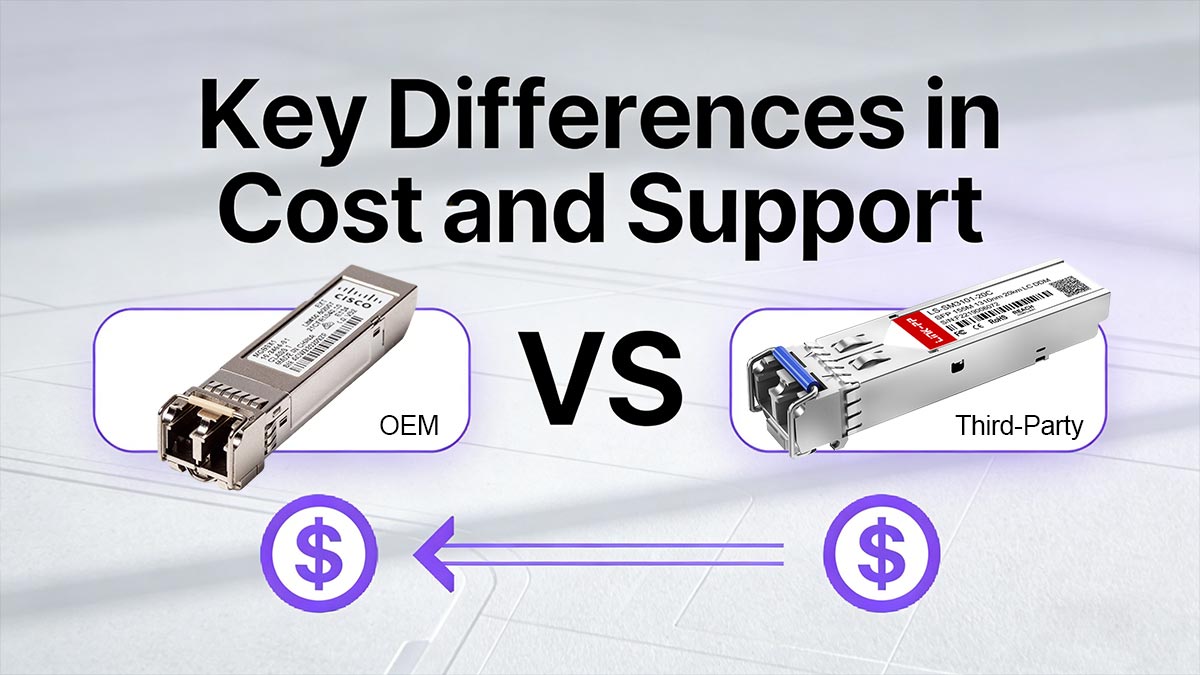
OEM SFPs are typically priced at a premium due to brand licensing, proprietary firmware, and guaranteed vendor support. For high-volume deployments, these costs can quickly escalate, especially in data centers with hundreds or thousands of ports.
Third-party SFPs, in contrast, offer substantial cost savings, often ranging from 30% to 70% cheaper than equivalent OEM modules. This price advantage makes them attractive for budget-conscious organizations or environments where multi-vendor network deployments are common. By leveraging third-party modules, businesses can reduce capital expenditure without significantly compromising network performance.
Vendor Support and Warranty
OEM SFPs come with full vendor support, including troubleshooting, firmware updates, and coverage under equipment warranties. Using OEM optics ensures compliance with support contracts and minimizes operational risk.
3rd-party SFP Modules may not be officially supported by the switch or router vendor. While many modules operate flawlessly, some vendors may refuse support if network issues are traced to non-OEM optics. Therefore, organizations must evaluate their risk tolerance, especially in mission-critical environments, and consider vendors that provide their own warranty and quality assurances for compatible optics.
Reliability and SFP Interoperability Testing
High-quality third-party SFPs undergo rigorous interoperability testing to replicate OEM performance. These tests often include:
Bit-error-rate (BER) testing
Optical power and wavelength verification
Temperature and environmental stress testing
Multi-vendor switch and router compatibility validation
While many third-party modules achieve performance parity with OEM optics, lower-quality modules may exhibit inconsistent operation or early failure, particularly under high-traffic or harsh environmental conditions.
Summary: When to Choose OEM or 3rd-Party
Factor | ||
|---|---|---|
Cost | High | Low to moderate |
Vendor Support | Full | Limited / Vendor-specific |
Warranty | Covered by OEM | Typically provided by third-party vendor |
Reliability | Guaranteed | Dependent on vendor quality & testing |
Flexibility | Limited to OEM | Multi-vendor interoperability possible |
Recommendation:
For mission-critical deployments where support and warranty are top priorities, OEM optics are preferred. For cost-sensitive projects, lab environments, or large-scale multi-vendor networks, high-quality third-party SFPs offer a reliable and economical alternative, provided that compatibility and quality are carefully verified.
⏩ Third-Party SFP Compatibility With Major Network Vendors
One of the most frequent concerns among network engineers is whether Third-Party transceivers will function reliably with enterprise switches and routers from major vendors. While MSA-compliant optics ensure basic interoperability, real-world deployment requires attention to EEPROM coding, firmware checks, and vendor-specific protocols.
Cisco Switch Compatibility
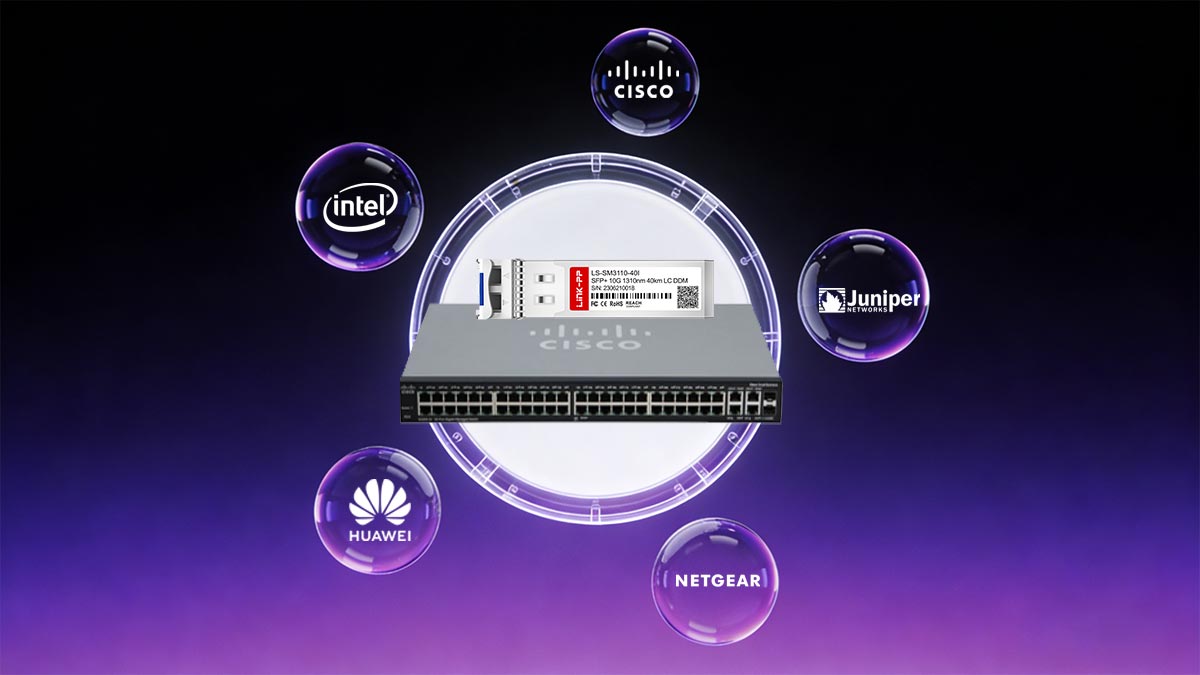
Cisco switches are widely used in enterprise and data center networks, making compatibility a key consideration. High-quality third-party SFPs often work seamlessly, but some Cisco devices validate vendor codes via the module EEPROM. If the coding is non-recognized, the switch may issue warnings or disable the port.
Best practices for Cisco deployments:
Confirm the third-party module is Cisco-compatible or tested with Cisco switches
Check EEPROM vendor ID and platform ID to match OEM signatures
Test modules on a non-production environment before large-scale rollout
Consider vendors providing Cisco-validated modules to reduce risk
Community insights highlight that many engineers successfully use third-party SFPs in Cisco environments, but always stress pre-deployment testing and keeping a small OEM backup for critical links.
Juniper Network Devices
Juniper switches and routers are known for robust network features and automation capabilities. Third-party SFP compatibility is generally high, especially for MSA-compliant 1G, 10G, and 25G modules. However, Juniper devices may log warnings for unsupported optics, which can impact network monitoring dashboards.
Recommendations for Juniper networks:
Verify Juniper-supported optics list when possible
Monitor link status and error logs during initial deployment
Use third-party vendors that provide Juniper-specific testing reports
Real-world reports from network engineers indicate that Juniper devices tolerate third-party SFPs better than Cisco in most cases, but full validation is crucial for production environments.
Arista and Other Data Center Switches
Arista switches, often deployed in high-density data centers, may include vendor lock mechanisms or require specific unlock codes for non-Arista optics. Some third-party vendors offer pre-coded Arista-compatible modules to bypass these restrictions.
Key points for Arista deployments:
Ensure modules are explicitly tested on Arista platforms
Check firmware version compatibility
Use reputable vendors who publish interoperability reports
Community emphasize that, while many Arista-compatible third-party SFPs work flawlessly, minor firmware updates or platform-specific checks can cause issues if not verified beforehand.
Role of EEPROM Coding in Optical Modules
EEPROM coding is the digital fingerprint of an SFP module. It defines:
High-quality third-party SFP programs EEPROM to emulate OEM signatures for proper recognition. Misconfigured EEPROM data is the most common reason for compatibility failures. Network engineers should:
Confirm vendor documentation includes EEPROM mapping
Run compatibility tests on the actual switch model
Keep OEM modules on standby for critical links
Third-party SFP Compatibility Notes:
With proper attention to EEPROM coding, MSA standards, and pre-deployment testing, 3d-party SFPs can reliably operate across Cisco, Juniper, Arista, and other vendor platforms. The key is to choose tested modules from reputable vendors, perform real-world compatibility tests, and maintain a small inventory of OEM optics as a fallback.
⏩ Advantages of Using Third-Party Optical Transceivers
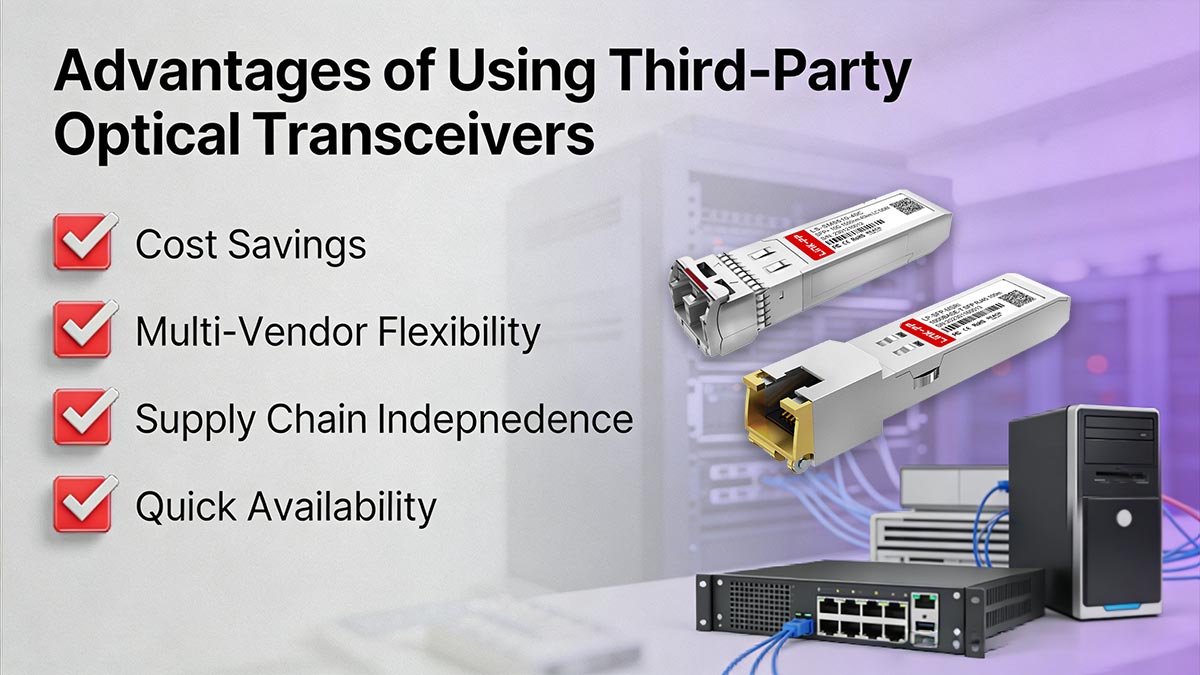
Deploying Third-Party SFP transceivers offers several strategic advantages for enterprises, data centers, and service providers. These benefits extend beyond cost reduction, providing flexibility, supply chain resilience, and faster deployment cycles.
Cost Savings
One of the most compelling reasons to adopt third-party SFPs is significant cost reduction. OEM optical modules can be priced substantially higher due to brand licensing, proprietary components, and bundled support contracts. High-quality third-party modules typically cost 30–70% less while delivering comparable performance and compliance with MSA standards.
For large-scale network deployments, these savings can translate into tens of thousands of dollars in capital expenditure reductions, particularly in enterprise campus networks, data centers, and telecom infrastructure where hundreds of transceivers are required.
Multi-Vendor Flexibility
Third-party SFPs provide multi-vendor interoperability, allowing network operators to mix and match modules across Cisco, Juniper, Arista, and other switch platforms. This flexibility enables:
Network standardization without being locked into a single OEM
Simplified inventory management by using compatible modules across multiple platforms
Ease of future upgrades when adding new switch models or technologies
By decoupling the optics from the switch vendor, IT teams gain freedom to optimize both cost and performance without sacrificing compatibility.
Supply Chain Independence
Global supply chain disruptions have highlighted the risks of relying solely on OEM modules. Third-party SFP Modules enhance supply chain resilience by providing:
Alternative sourcing options if OEM stock is limited or delayed
Reduced lead times for urgent deployments
Ability to purchase smaller quantities without minimum order restrictions
This independence is especially valuable for organizations deploying networks in emerging markets or geographically dispersed locations where OEM availability may be inconsistent.
Quick Availability
High-quality third-party transceivers are often stocked and shipped quickly compared to OEM modules, which may have longer procurement cycles due to manufacturing schedules or licensing restrictions. Rapid availability is critical for:
Emergency replacements of failed modules
Network expansion projects with tight deadlines
Testing and lab environments where quick iteration is required
By maintaining a small inventory of tested third-party SFPs, network administrators can reduce downtime and accelerate deployment, ensuring business continuity.
In summary, the advantages of using third-party SFP transceivers include:
Substantial cost savings compared to OEM modules
Flexibility across multiple network vendors
Supply chain resilience in global and distributed networks
Faster availability for deployment or replacement
When combined with proper compatibility verification and quality testing, third-party SFPs provide a reliable, cost-effective, and flexible solution for modern optical networks.
⏩ Risks and Limitations of Third-Party SFP Modules
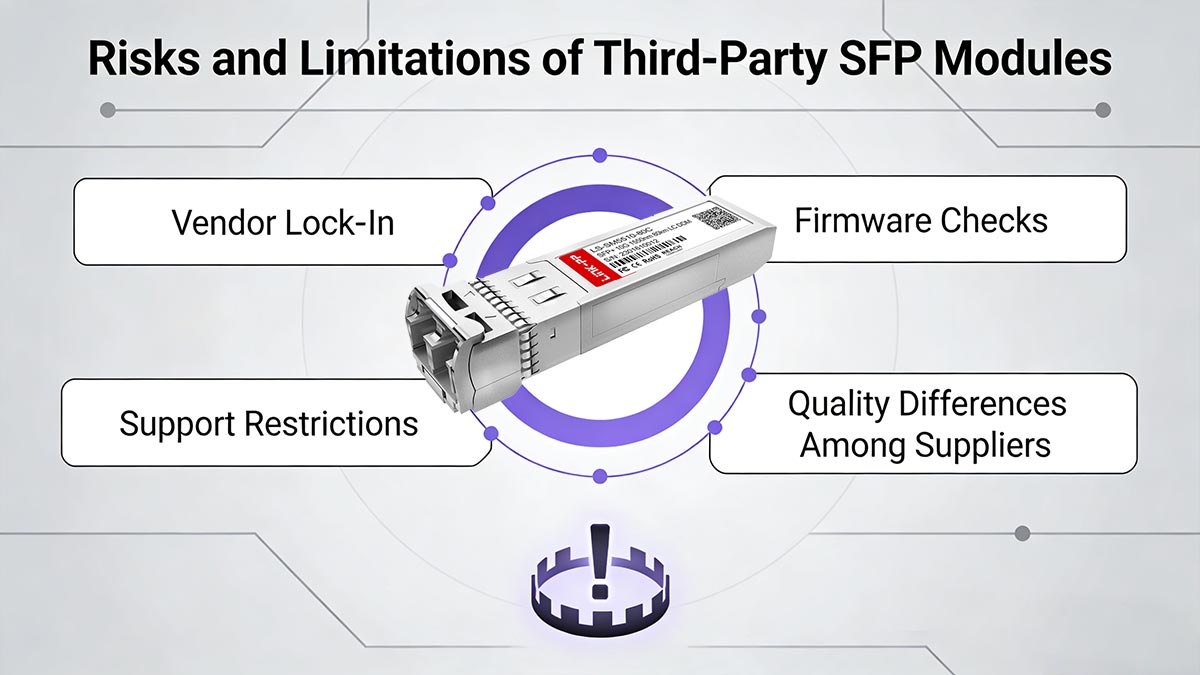
While Third-Party transceivers provide substantial cost and flexibility advantages, network engineers must be aware of potential risks and limitations before deployment. Understanding these factors is critical for maintaining network reliability, vendor compliance, and operational continuity.
Vendor Lock-In
Some OEM networking devices implement vendor lock mechanisms that prevent unapproved transceivers from operating fully. These mechanisms may include EEPROM verification, firmware signature checks, or platform-specific authentication.
Cisco, Juniper, and Arista are known to log warnings or disable ports when non-OEM optics are detected.
Low-quality third-party modules may fail these checks entirely, preventing link activation.
Mitigation: Use reputable third-party vendors that provide platform-tested and EEPROM-encoded modules, and perform pre-deployment verification on non-critical links.
Firmware Checks
Many modern switches conduct firmware-level checks for optical modules, verifying compliance with specifications such as MSA standards, wavelength, and power output.
Modules that fail these checks may trigger link errors or degraded performance.
Firmware updates from the OEM can change validation rules, potentially affecting previously working third-party optics.
Mitigation: Regularly review vendor firmware release notes and maintain a small stock of OEM modules as fallback for critical links.
Support Restrictions
OEM warranties and support contracts are typically limited to approved modules. Using third-party SFP may:
Exclude the link from vendor troubleshooting or replacement coverage
Require additional effort to diagnose compatibility issues independently
Lead to limited or delayed vendor support in mission-critical environments
Mitigation: Confirm third-party vendor warranty coverage, and ensure internal documentation tracks which modules are deployed.
Quality Differences Among Suppliers
Not all third-party SFP vendors maintain the same quality and testing standards. Risks include:
Early module failure under high traffic or extreme environmental conditions
Variations in optical power output or wavelength affecting link stability
Inconsistent EEPROM coding leading to device recognition failures
Mitigation: Choose vendors with transparent testing reports, interoperability certifications, and positive community feedback from professional forums such as Reddit.
3rd-party SFP Tips:
Third-party SFPs are cost-effective and flexible, but engineers must account for:
Vendor lock-in mechanisms that may prevent operation
Firmware checks that could impact module recognition
Limited OEM support for non-approved modules
Quality variations between suppliers
By understanding these risks and implementing rigorous testing, vendor selection, and fallback strategies, network administrators can leverage the benefits of third-party optics while minimizing operational hazards.
⏩ How to Choose Reliable Third-Party SFP Vendors
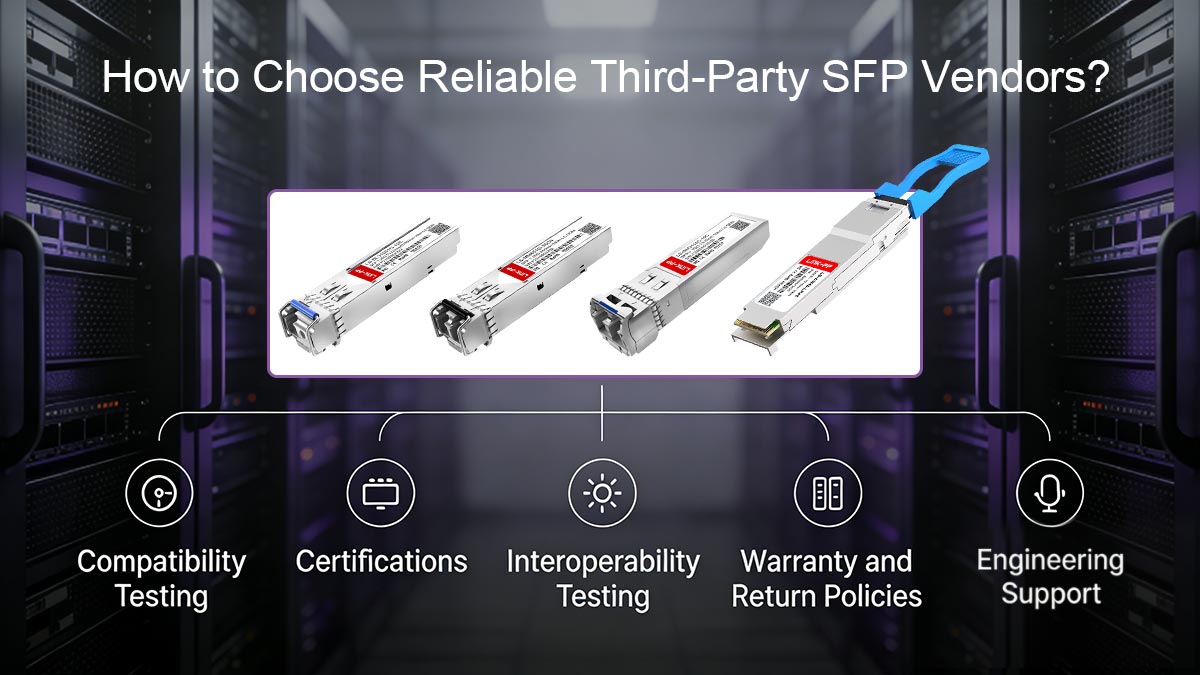
Selecting a reputable third-party SFP vendor is crucial for ensuring network reliability, compatibility, and long-term cost savings. Not all vendors provide the same quality standards, testing, or support, so network engineers and procurement teams must carefully evaluate potential suppliers. Using LINK-PP optical modules as an example, this section highlights the key factors to consider.
Compatibility Testing
A reliable vendor should perform extensive compatibility testing with major network switches and routers, including platforms from Cisco Systems, Juniper Networks, and Arista Networks.
Test modules under real-world traffic conditions
Validate EEPROM coding, link stability, and data throughput
Ensure multi-platform interoperability to reduce deployment risk
For example, LINK-PP optical modules undergo rigorous testing across multiple switch models to ensure that each third-party SFP operates reliably in enterprise and data center environments.
Certifications
Certifications are a strong indicator of module quality and standards compliance. Key certifications include:
MSA (Multi-Source Agreement) compliance for SFP, SFP+, QSFP, and other form factors
ISO or IEC manufacturing standards
RoHS and CE compliance for environmental and safety regulations
Choosing vendors with certified modules ensures that optical transceivers meet industry standards and are less likely to fail in critical network deployments.
Interoperability Testing
Interoperability testing verifies that third-party SFPs function across different switch platforms, firmware versions, and network topologies.
Vendors should provide test reports or validation matrices
Modules should be tested for BER (Bit Error Rate), optical power, wavelength accuracy, and temperature performance
Using verified interoperability data reduces the risk of link failures or unexpected downtime
LINK-PP optical modules, for example, provide detailed interoperability reports, making it easier for network engineers to select compatible modules confidently.
Warranty and Return Policies
A reputable vendor should offer clear warranty terms and return policies, providing protection in case of module defects or failures. Key considerations include:
Length of warranty coverage
Replacement procedures for faulty modules
Return policy for bulk orders or pilot testing
Vendors like LINK-PP offer warranties and technical support that cover quality assurance and performance guarantees, which adds an extra layer of confidence when deploying third-party SFPs.
Engineering Support
Engineering support is essential when troubleshooting or deploying large-scale networks. A reliable vendor should provide:
Technical guidance for compatibility verification
Assistance with EEPROM configuration and firmware checks
Network deployment best practices
Access to engineering support ensures that potential issues are resolved quickly and that third-party SFP operates seamlessly alongside OEM equipment.
How to Choose third-party SFP Notes:
When choosing a third-party SFP vendor, network engineers should prioritize:
Comprehensive compatibility testing with multiple platforms
Certified modules that comply with industry standards
Interoperability verification across switches and firmware versions
Clear warranty and return policies for risk mitigation
Accessible engineering support for troubleshooting and deployment
By selecting reputable vendors like LINK-PP, organizations can maximize the benefits of third-party SFPs while minimizing compatibility and operational risks.
⏩ FAQs About Third-Party SFP

1. Do third-party SFP modules work with Cisco switches?
Yes, many high-quality third-party SFPs are fully compatible with Cisco switches. However, some platforms may check the EEPROM vendor code or firmware signature, and non-certified modules could trigger warnings or limited support. Pre-deployment testing is recommended.
Tip: Cisco provides commands such as show interfaces transceiver and show hw module to verify module recognition and link status.
2. Are compatible optics as reliable as OEM modules?
When sourced from reputable vendors, third-party SFPs can perform equivalently to OEM optics, meeting MSA standards for data rate, wavelength, and optical power. Quality depends on vendor testing, component sourcing, and manufacturing standards.
3. Do third-party SFPs void equipment warranties?
Typically, using third-party SFPs does not automatically void the switch warranty. However, OEMs may exclude unverified modules from support coverage, meaning if compatibility issues occur, vendor support may be limited.
Example: OEM documentation often states that “non-certified transceivers are not covered under the switch support policy”, but using them does not invalidate the warranty itself.
4. Why are third-party optical modules cheaper?
Third-party SFPs are generally 30–70% less expensive than OEM optics due to:
No licensing fees for brand or proprietary firmware
Streamlined production processes
Competition among multiple vendors
Use of standard components adhering to MSA rather than proprietary designs
5. How can you check SFP compatibility before purchasing?
Before buying, verify:
Data rate (1G, 10G, 25G, etc.)
Wavelength and optical type (SR, LR, ER, BiDi)
Interface type (LC, SC, RJ45, etc.)
EEPROM vendor code matching target switch
MSA compliance
Request vendor-provided interoperability or test reports
This process ensures modules will function reliably on your network equipment.
6. Do third-party SFPs work with Cisco, Juniper, and Arista switches?
Yes, many third-party modules work across these platforms. However:
Some devices require vendor-specific unlock procedures
Firmware may generate warnings for unverified optics
Real-world community experience, such as Reddit posts, indicates that pre-testing is essential to avoid network disruptions
7. Cisco third-party SFP command tips
Network engineers can use the following Cisco CLI commands to verify module status:
show interfaces transceiver
show hw module
show module
show inventory
These commands help check:
Module recognition
Vendor information
Link status and errors
Optical power levels
Regular monitoring ensures that third-party SFPs are functioning correctly and helps detect potential compatibility issues early.
⏩ Conclusion: Maximizing Value with Third-Party SFP Transceivers
Third-Party SFP transceivers offer a cost-effective, flexible, and reliable solution for modern optical networks when sourced from reputable vendors. By understanding compatibility, MSA standards, EEPROM coding, and vendor-specific considerations, network engineers can confidently deploy third-party modules across Cisco, Juniper, Arista, and other enterprise platforms. While OEM optics provide guaranteed support, high-quality third-party SFPs deliver comparable performance with significant cost savings, multi-vendor flexibility, and faster availability, making them ideal for data centers, enterprise networks, and large-scale deployments.
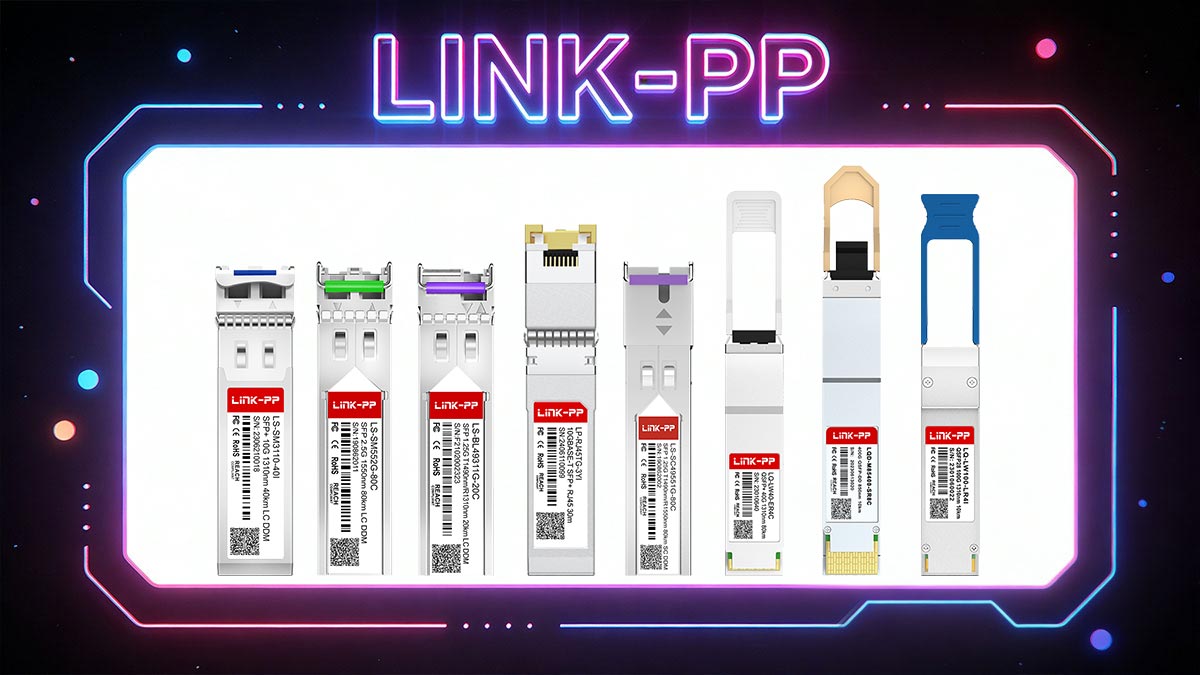
For organizations looking to maximize network efficiency and minimize procurement costs, selecting tested and certified third-party SFPs is essential. Explore LINK-PP Official Store to find a wide range of MSA-compliant, vendor-tested optical modules designed for reliability, compatibility, and high performance in diverse networking environments.