

In today’s high-speed network environments, choosing the right SFP module is critical for ensuring reliable connectivity and optimal performance. Copper SFP vs. Fiber SFP remains a common debate among network engineers, IT professionals, and data center managers. Each type of SFP module offers unique advantages in terms of transmission distance, power consumption, and deployment cost, making the decision highly dependent on your network’s specific requirements.
This guide explores the key differences, performance factors, and deployment scenarios for Copper SFP and Fiber SFP modules, helping you make informed choices for 10GBASE-T networks, PoE setups, and data center applications. By reading this article, you’ll gain insights into SFP hot-swappable modules, compatibility with Cisco and Juniper switches, and long-distance fiber transmission considerations, allowing you to select the most efficient solution for your network infrastructure.
🚩 Understanding Copper SFP vs. Fiber SFP
Choosing the right SFP module is essential for network reliability, speed, and cost efficiency. Both Copper SFP and Fiber SFP modules are widely used in data centers, enterprise networks, and telecom applications, but they differ significantly in design, performance, and deployment scenarios. Understanding these differences is the first step toward building a robust, high-performance network.
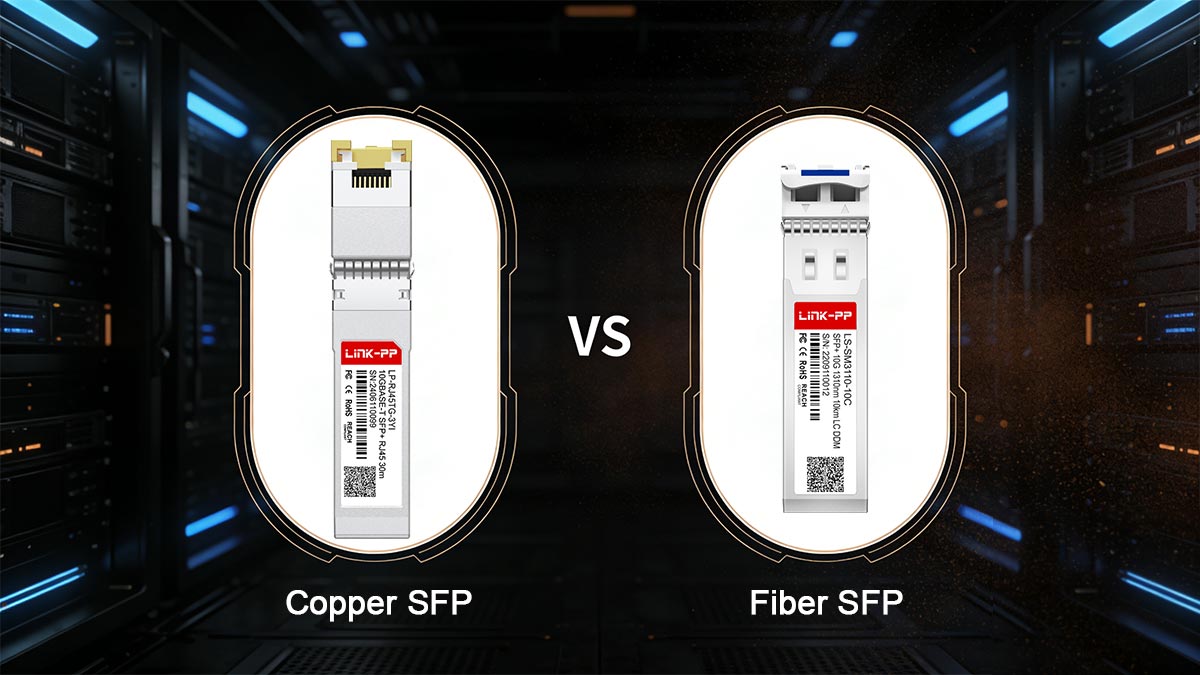
What is a Copper SFP Module?
A Copper SFP module is a hot-swappable transceiver that connects network devices using standard copper Ethernet cables, such as Cat5e, Cat6, or Cat6a. These modules are commonly used for short-distance connections, typically up to 100 meters for 1GBASE-T and up to 30 meters for 10GBASE-T networks.
Key features of Copper SFP modules include:
Hot-swappable design, allowing easy replacement without shutting down the switch or router.
Cost-effective deployment for short-distance links, avoiding the need for fiber cabling.
Compatibility with PoE devices and standard RJ45 Ethernet ports.
Copper SFPs are particularly suitable for home labs, small office networks, and server racks where distance requirements are limited, and budget considerations are important.
What is a Fiber SFP Module?
A Fiber SFP module uses optical fiber to transmit data, providing significantly longer reach and higher reliability compared to copper solutions. Fiber SFPs can support distances from 550 meters to over 80 kilometers, depending on whether they are single-mode (SMF) or multi-mode (MMF) modules.
Key advantages of Fiber SFP modules:
Long-distance transmission without signal degradation.
Low latency and high bandwidth, suitable for data centers and enterprise backbone networks.
Immunity to electromagnetic interference (EMI), making them ideal for industrial and campus deployments.
Fiber SFPs are commonly used in data centers, campus networks, and multi-building enterprise setups where high-speed connectivity over long distances is required.
Copper SFP vs. Fiber SFP Main Comparison Items
When evaluating Copper SFP vs. Fiber SFP, consider these main factors:
Comparison Factor | Copper SFP | Fiber SFP |
|---|---|---|
Transmission Distance | Short (up to 100m for 1G, 30m for 10G) | Long (up to 80 km depending on type) |
Bandwidth / Speed | Up to 10G (10GBASE-T) | Up to 100G+ with modern SFP+ and SFP28 |
Cost | Lower initial cost, inexpensive cabling | Higher initial cost, fiber cables and optics required |
Power Consumption | Higher for 10GBASE-T modules | Lower, more energy-efficient |
Installation Complexity | Easy plug-and-play | Requires careful fiber handling and cleaning |
Compatibility | Standard RJ45 Ethernet ports, PoE-friendly | Requires SFP slots and sometimes vendor-specific support |
Understanding these key comparison points helps network engineers, IT managers, and data center operators choose the right module for their network topology, budget, and performance requirements.
🚩 Performance Comparison: Copper vs. Fiber
When selecting between Copper SFP and Fiber SFP modules, understanding performance differences is crucial. Network speed, reliability, and efficiency can be greatly affected by your choice of module, especially in data centers, enterprise networks, and PoE deployments.
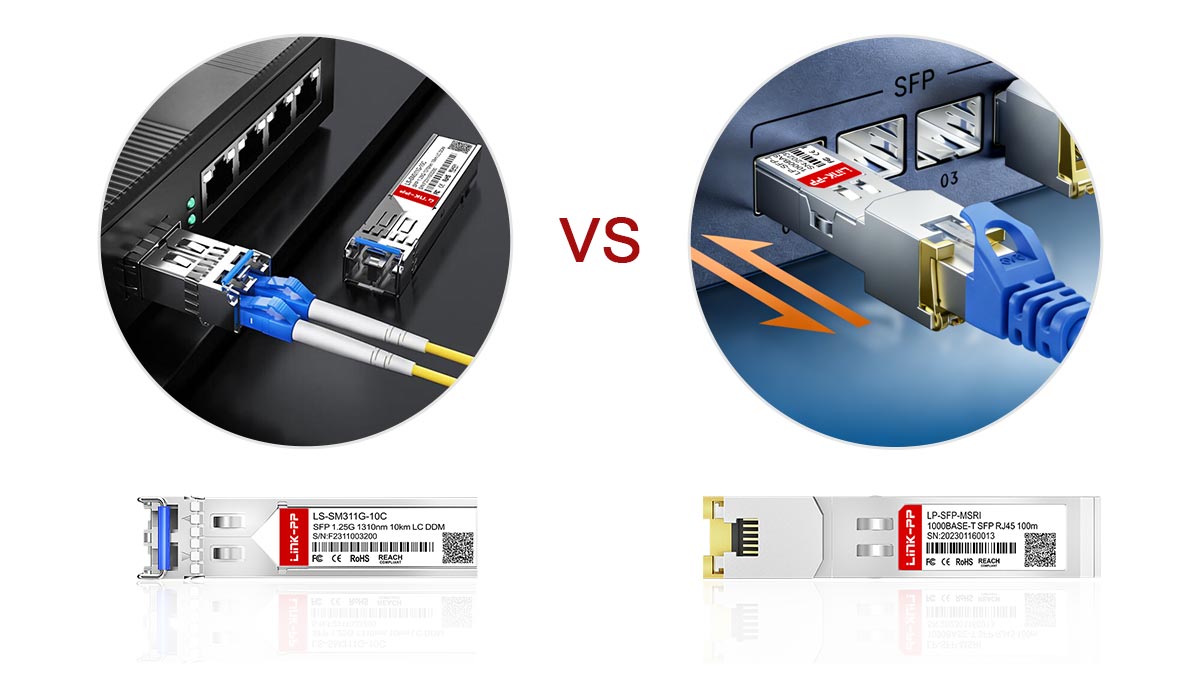
Transmission Distance and Speed
Copper SFP modules are designed for short-distance connectivity, typically supporting:
100 meters for 1GBASE-T connections
30 meters for 10GBASE-T setups using high-quality Cat6a cables
In contrast, Fiber SFP modules excel in long-distance applications:
Multi-mode fiber (MMF) can reach distances up to 550 meters
Single-mode fiber (SMF) supports connections from 2 km to over 80 km, depending on module type and network standards
Fiber SFPs also allow higher bandwidth and faster data transmission with lower signal degradation over long distances, making them ideal for backbone networks and cross-building connections. Copper SFPs remain more practical for short links where installation simplicity and cost efficiency are priorities.
Power Consumption and Heat
One critical consideration often overlooked is power efficiency.
Copper SFPs, especially 10GBASE-T modules, consume more power (typically 2–4 W per module) and generate more heat due to the electrical conversion required to transmit over copper cables.
Fiber SFPs consume less power (often under 1 W for 10G SFP+ modules), reducing operational costs and thermal load within densely packed switch or server racks.
Lower power consumption not only improves energy efficiency but also extends the lifespan of networking equipment by minimizing heat-related wear and tear.
Latency and Network Efficiency
Latency is another area where Fiber SFP modules often outperform copper:
Copper SFP adds slight delays due to signal processing and electrical-to-electrical conversion.
Fiber SFP offers near-instantaneous signal propagation, especially over long distances, resulting in lower end-to-end latency.
For high-performance environments such as financial trading platforms, data centers, and AI compute clusters, the lower latency and higher network efficiency of fiber modules provide a tangible performance advantage.
In summary, Copper SFP modules excel in short-distance, cost-sensitive deployments, offering convenient hot-swappable connections and easy integration with PoE devices. Meanwhile, Fiber SFP modules outperform copper in long-distance transmission, low latency, and energy efficiency, making them ideal for data centers, campus networks, and enterprise backbones. Choosing the right module depends on your network speed requirements, distance, and performance priorities, ensuring optimal connectivity and long-term reliability.
🚩 Cost and Compatibility Considerations
Beyond performance, cost and compatibility are decisive factors when choosing between Copper SFP and Fiber SFP modules. Understanding both the initial investment and ongoing operational implications can save time, money, and troubleshooting headaches.
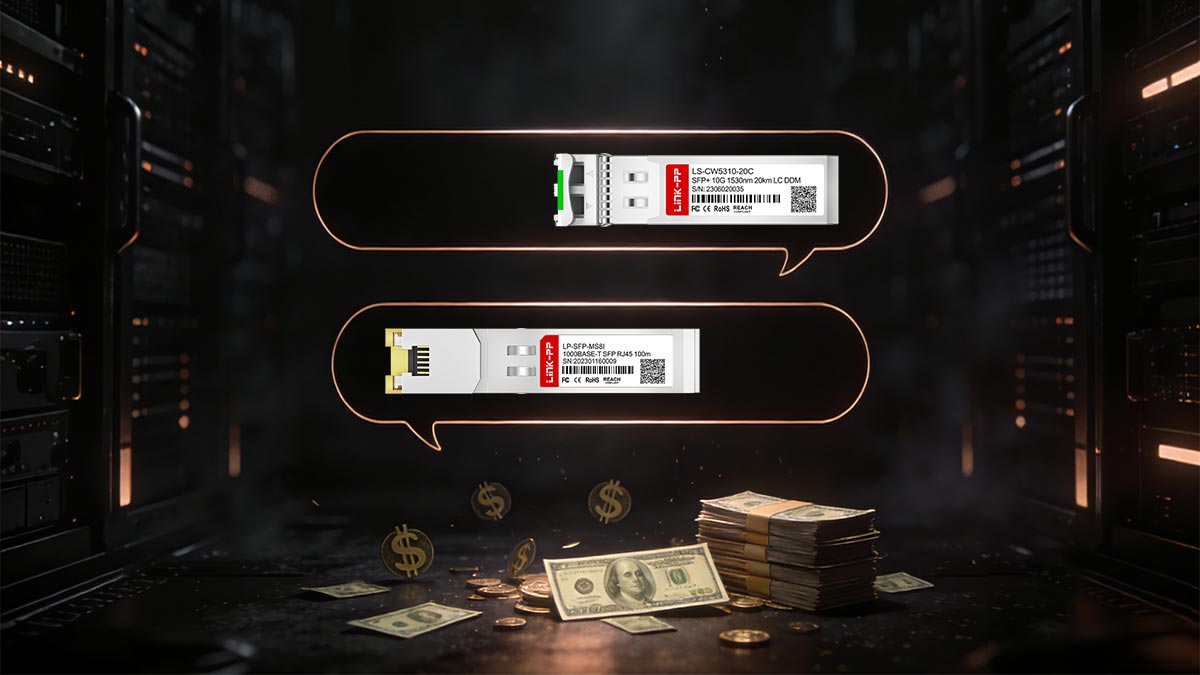
Initial Module Cost vs. Deployment Cost
Copper SFP modules generally have a lower initial purchase price, and standard Ethernet cables (Cat5e, Cat6, Cat6a) are widely available and inexpensive. This makes copper ideal for short-distance deployments, small offices, or home labs.
Fiber SFP modules require higher upfront costs due to the transceiver, fiber optic cables, and potential installation equipment. However, in large-scale networks or long-distance links, fiber can reduce costs related to signal repeaters, maintenance, and energy consumption over time.
Considering both module cost and cabling infrastructure is critical for enterprise network budgeting.
Switch Compatibility and Vendor Lock-In
Compatibility is a frequent concern for network engineers:
Copper SFPs are typically compatible with any RJ45 port supporting 1G or 10GBASE-T standards. They are also hot-swappable, reducing downtime during maintenance.
Fiber SFPs may require specific SFP slot types, module standards (SFP, SFP+, SFP28), or even vendor-approved optics for guaranteed operation. Some switches from Cisco, Juniper, or Arista may reject third-party fiber modules, creating potential vendor lock-in.
Before deployment, always verify that the SFP module is supported by your switch model to prevent compatibility issues and network downtime.
PoE Support Differences
Power over Ethernet (PoE) can affect module choice:
Copper SFPs support PoE delivery directly through the Ethernet cabling, which is convenient for devices like IP cameras, access points, and VoIP phones.
Fiber SFPs do not carry power, so additional infrastructure is required if devices rely on PoE. This makes fiber more suitable for backbone or inter-building connections where power delivery is not needed.
When it comes to cost and compatibility, Copper SFPs provide a lower upfront investment and broad compatibility with standard RJ45 ports, while Fiber SFPs require higher initial costs but offer superior scalability and future-proofing for large networks. Compatibility with switches, vendor-specific requirements, and PoE support should guide the selection process. Evaluating both deployment cost and operational efficiency ensures the chosen SFP module meets both budget and technical needs for reliable network performance.
🚩 Use Cases and Deployment Scenarios
Selecting the right SFP module depends not only on performance and cost but also on the specific network environment and deployment scenario. Both Copper SFP and Fiber SFP modules have unique advantages that make them suitable for different use cases.
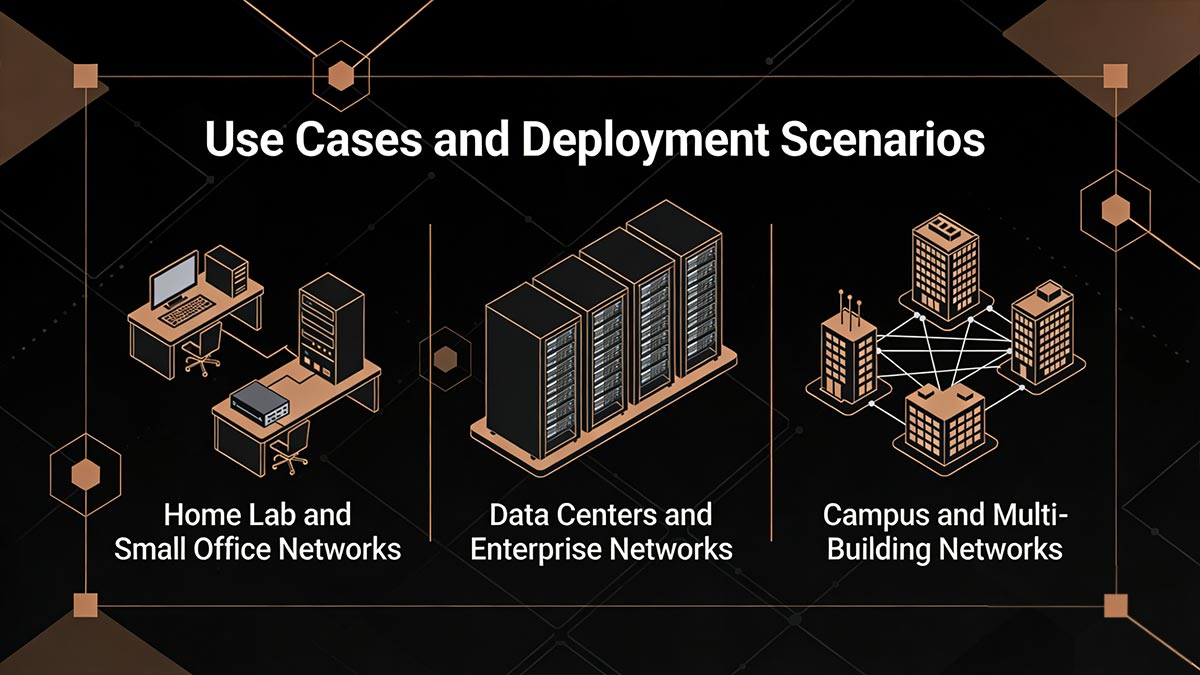
Home Lab and Small Office Networks
For home labs and small office networks, Copper SFP modules are often the preferred choice due to:
Lower cost and readily available Cat5e/Cat6 cabling
Hot-swappable convenience, reducing downtime during experiments or upgrades
PoE support for IP phones, access points, or cameras
Copper SFPs allow small-scale networks to maintain reliable 1G or 10G connections without the complexity of fiber installation, making them ideal for short-distance, cost-sensitive deployments.
Data Centers and Enterprise Networks
In data centers and large enterprise environments, Fiber SFP modules dominate due to:
High-speed, low-latency transmission over long distances
Scalability for connecting racks, servers, and storage systems
Reduced electromagnetic interference (EMI) in dense cabling environments
Fiber SFPs, including SFP+ and SFP28 modules, support backbone and cross-building connections where performance and reliability are critical, especially in 10G, 25G, or higher-speed networks.
Campus and Multi-Building Networks
For campus or multi-building networks, Fiber SFP modules are essential:
Enable long-distance connectivity across multiple buildings
Maintain consistent network speed and minimal latency
Support future-proof expansion with single-mode or multi-mode fiber options
Copper SFPs are generally unsuitable for multi-building links due to distance limitations, making fiber the preferred solution for long-haul connectivity and enterprise-grade infrastructure.
Comparison Table: Copper SFP vs. Fiber SFP Use Cases
Use Case | Recommended Module | Key Advantages | Notes / Considerations |
|---|---|---|---|
Home Lab Networks | Copper SFP | Low cost, hot-swappable, PoE support | Short-distance; ideal for experimentation |
Small Office Networks | Copper SFP | Easy deployment, budget-friendly | Typically under 100m links |
Data Center Rack Connections | Fiber SFP | High-speed, low-latency, EMI-resistant | Best for server-to-server or storage connections |
Enterprise Backbone Networks | Fiber SFP | Long-distance, scalable, high bandwidth | Suitable for 10G, 25G, 40G networks |
Campus Networks | Fiber SFP | Multi-building connectivity, minimal signal loss | Single-mode or multi-mode fiber required |
Industrial / Factory Networks | Fiber SFP | EMI immunity, stable in harsh environments | Use extended-temperature or ruggedized modules |
Telecom / ISP Infrastructure | Fiber SFP | Long-haul transmission, high reliability | Supports optical transport systems |
High-Density Switch / Server Links | Copper SFP or Fiber SFP | Copper for short internal links, Fiber for cross-rack | Hot-swappable modules simplify maintenance |
🚩 Installation Tips and Best Practices
Proper installation and maintenance of SFP modules are essential to ensure network reliability, performance, and longevity. Following best practices can prevent downtime, reduce troubleshooting, and extend the life of both Copper SFP and Fiber SFP modules.
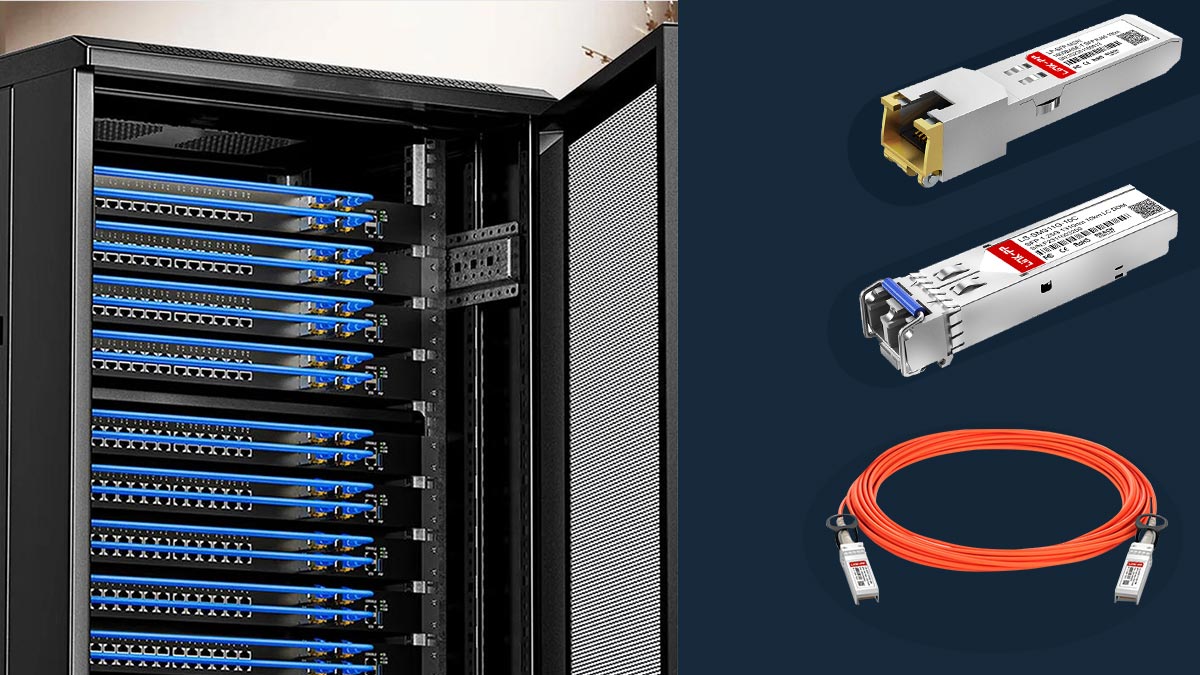
Choosing Between DAC, Copper SFP, or Fiber SFP
Selecting the right transceiver depends on distance, budget, and network requirements:
DAC (Direct Attach Copper): Ideal for ultra-short connections (typically <7m), offering very low latency and cost-effective setup.
Copper SFP: Best for short-distance links up to 100m (1G) or 30m (10GBASE-T). Supports PoE devices and is easy to deploy in home labs, small offices, and dense racks.
Fiber SFP: Recommended for medium to long-distance connections, multi-building campuses, and data centers. Offers low latency, EMI immunity, and scalability for high-speed networks.
By assessing your network topology, switch capabilities, and budget, you can choose the module that balances cost, performance, and future scalability.
Cable Management and Cleaning
Proper cable handling is critical for maintaining optimal performance:
Fiber SFPs require careful handling to avoid scratches and dust on LC or SC connectors. Regularly clean fiber endfaces using lint-free wipes or fiber cleaning kits.
Copper SFPs should be connected using quality Ethernet cables, ensuring proper termination and avoiding bends that exceed recommended bend radius.
Organized cabling using cable trays or Velcro ties reduces stress on transceivers and simplifies maintenance in dense switch or server racks.
Good cable management not only enhances signal integrity and reliability but also simplifies troubleshooting and reduces operational downtime.
Maintaining SFP Module Longevity
To extend the lifespan of SFP modules:
Always insert and remove hot-swappable modules according to manufacturer guidelines.
Avoid excessive heat; ensure proper airflow in rack-mounted switches and servers.
Periodically inspect for dust accumulation or corrosion on connector contacts.
Track module age and usage cycles to anticipate replacement before performance degrades.
Following these best practices ensures consistent network performance, reduces failures, and protects your investment in both Copper and Fiber SFP modules.
🚩 Troubleshooting Common Issues
Even with proper installation, SFP modules can encounter operational issues. Understanding common problems and their solutions helps maintain network uptime, performance, and reliability for both Copper SFP and Fiber SFP modules.
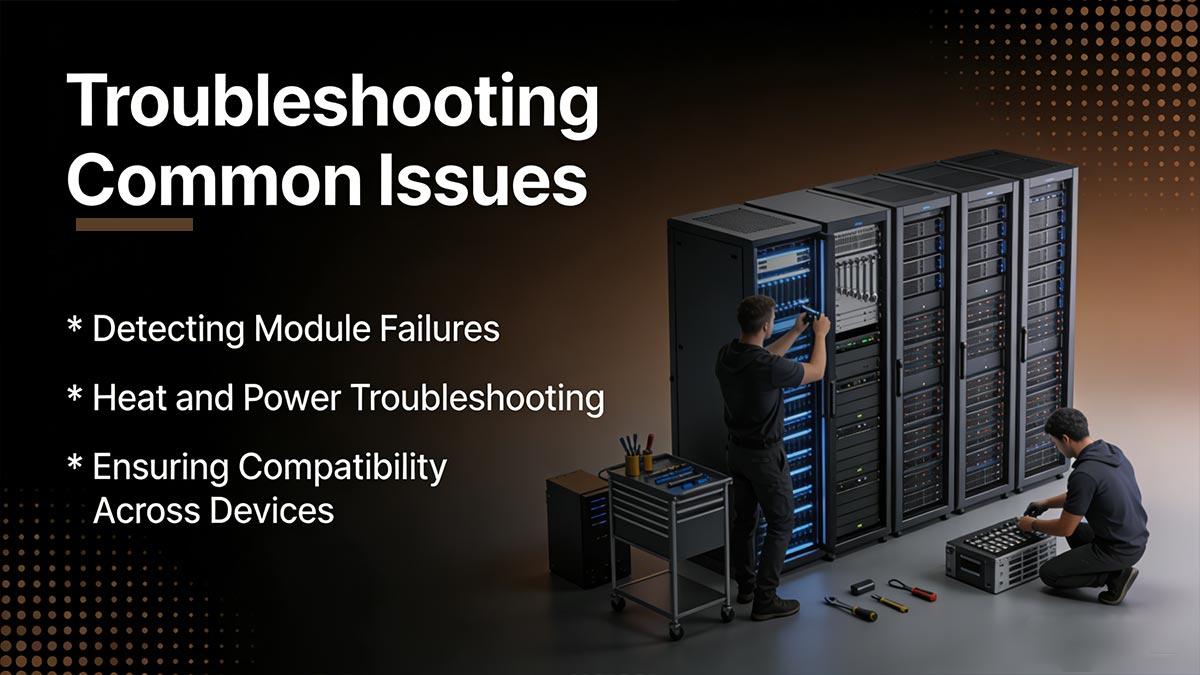
Detecting Module Failures
Common signs of an SFP module failure include:
Link light not turning on despite proper cable connection
Inconsistent or fluctuating network speeds
Switch logs reporting module errors or unsupported transceivers
Troubleshooting tips:
Swap the suspected module with a known working one to isolate the issue
Ensure the SFP is fully seated in the switch or router slot
Verify compatibility with the switch vendor (Cisco, Juniper, Arista, etc.)
Heat and Power Troubleshooting
High power consumption and heat are common in Copper SFP modules, particularly 10GBASE-T models:
Excessive heat can trigger automatic shutdowns or reduce module lifespan
Power spikes may cause intermittent connectivity or link drops
Solutions:
Improve rack airflow or add additional cooling if modules overheat
Monitor module temperature using switch diagnostics or SNMP tools
Consider using Fiber SFP modules for long-distance or high-density deployments to reduce power load
Ensuring Compatibility Across Devices
Incompatibility is a frequent source of network issues:
Third-party SFP Modules may not be recognized by some switches
Fiber SFPs require matching standards (SFP, SFP+, SFP28) and fiber type (single-mode or multi-mode)
Best practices:
Check the switch’s approved SFP list before installation
Maintain consistency in module type across uplinks for stable network performance
Use SFP hot-swappable modules to quickly replace faulty units without downtime
🚩 FAQs About Copper SFP vs. Fiber SFP
Q1. Which is better: Copper SFP or Fiber SFP?
A: The choice between Copper SFP and Fiber SFP depends on the network distance and performance requirements. Copper SFP modules are ideal for short-distance connections (up to 100 meters) and offer lower installation costs using standard Ethernet cables. Fiber SFP modules, on the other hand, provide long-distance transmission, lower latency, and better resistance to electromagnetic interference, making them more suitable for data centers and enterprise backbone networks.
Q2. Why do Copper SFP modules consume more power?
A: Copper SFP modules, especially 10GBASE-T SFP+, require additional signal processing to transmit electrical signals over twisted-pair cables. This conversion process increases power consumption and heat generation, typically ranging from 2–4 watts per module. In contrast, Fiber SFP modules use optical transmission, which generally consumes less than 1 watt, making them more energy-efficient in high-density network environments.
Q3. When should I choose a Copper SFP instead of a Fiber SFP?
A: Copper SFP modules are usually the best option when:
The network distance is under 100 meters
Existing Cat5e, Cat6, or Cat6a cabling is already installed
PoE devices such as IP cameras or access points are required
The deployment needs to be cost-effective and simple
For short connections inside server rooms or small office networks, Copper SFP can be a practical and economical solution.
Q4. Can Copper SFP and Fiber SFP be used on the same switch?
A: Yes. Most modern switches support multiple types of SFP modules, allowing both Copper SFP and Fiber SFP to operate on different ports simultaneously. However, compatibility depends on the switch model and supported standards (SFP, SFP+, or SFP28). Network administrators should always verify the module compatibility list provided by the switch manufacturer.
Q5. Why do data centers prefer Fiber SFP modules?
A: Data centers often prefer Fiber SFP modules because they provide:
Long-distance connectivity between racks or buildings
Lower latency for high-performance workloads
Reduced electromagnetic interference (EMI)
Lower power consumption in large-scale deployments
These advantages make fiber optics the preferred choice for high-speed enterprise networks and cloud infrastructure.
Q6. Are Copper SFP modules hot-swappable?
A: Yes. Most SFP modules, including Copper SFP and Fiber SFP, are hot-swappable. This means they can be inserted or removed from a switch without shutting down the device. Hot-swappability simplifies maintenance, upgrades, and troubleshooting, reducing network downtime.
Q7. What is the main limitation of Copper SFP modules?
A: The main limitation of Copper SFP modules is distance. Even with high-quality Ethernet cables, copper-based connections typically reach a maximum of 100 meters for Gigabit Ethernet and around 30 meters for 10GBASE-T. For longer connections, Fiber SFP modules provide significantly better performance and reliability.
🚩 Conclusion: Selecting the Right SFP Module
Selecting the right SFP module requires balancing performance, cost, compatibility, and deployment requirements. Both Copper SFP and Fiber SFP modules have distinct advantages depending on network distance, speed, and environmental conditions. Understanding their strengths ensures reliable, efficient, and future-proof network connectivity.
Summary of Pros and Cons
Module Type | Pros | Cons |
|---|---|---|
Copper SFP | Lower initial cost, PoE support, hot-swappable, easy installation | Limited distance (up to 100m for 1G, 30m for 10G), higher power consumption, heat generation |
Fiber SFP | Long-distance connectivity, low latency, EMI immunity, scalable for high-speed networks | Higher initial cost, requires fiber cabling and careful installation, potential vendor compatibility issues |
This comparison helps identify which module aligns with your network speed, distance, and budget requirements.
Recommendations Based on Use Case
Home Labs & Small Offices: Copper SFP is ideal for short-distance, cost-effective deployments.
Data Centers & Enterprise Backbones: Fiber SFP modules provide scalability, high-speed, and low-latency links.
Campus or Multi-Building Networks: Single-mode or multi-mode Fiber SFP modules ensure reliable long-distance transmission.
High-Density Switch Environments: Use Copper SFP for internal rack links and Fiber SFP for cross-rack or cross-data center connections.
Choosing modules based on these scenarios ensures optimized performance, reliability, and operational efficiency.
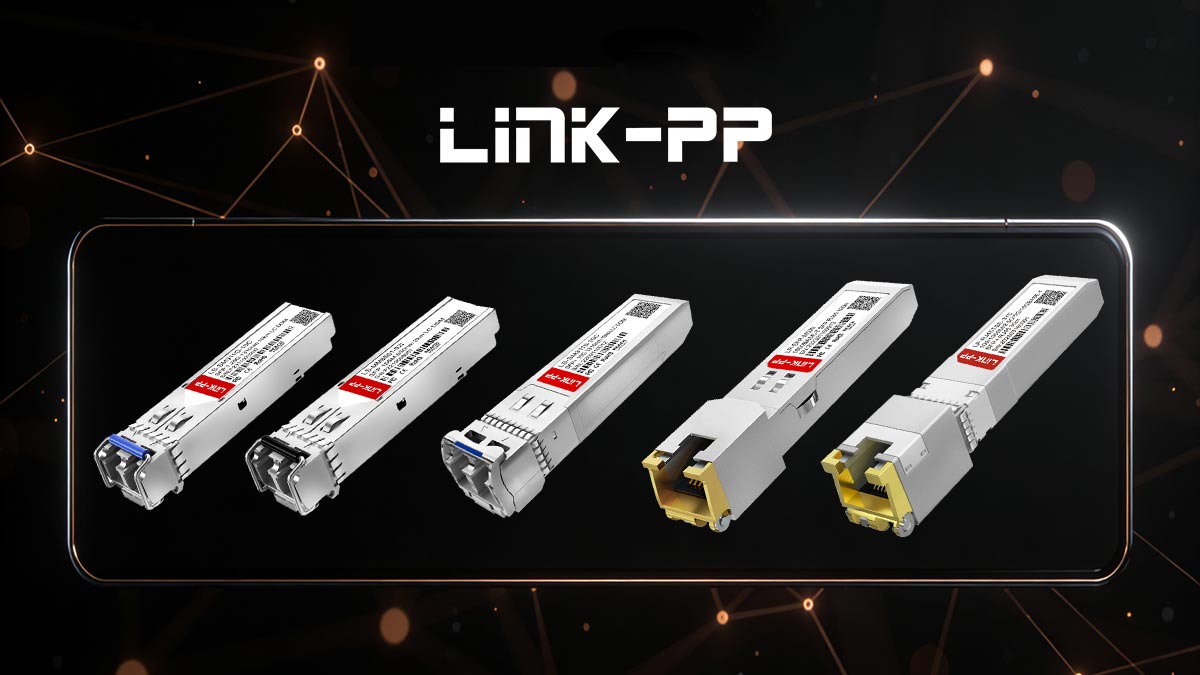
Explore High-Quality Copper and Fiber SFP Modules
Ready to upgrade your network? Explore our high-quality Copper and Fiber SFP modules, fully compatible with major switches like Cisco, Juniper, and Arista. Take advantage of hot-swappable, low-latency, and energy-efficient SFP solutions for home labs, small offices, data centers, and campus networks.