

In modern Ethernet networks, Small Form-factor Pluggable (SFP) modules play a critical role in enabling flexible and scalable connectivity between switches, routers, servers, and storage systems. Among the most commonly deployed options are electrical SFP modules (copper SFP) and fiber SFP modules (optical SFP). While both serve the same basic purpose—providing pluggable network interfaces—their performance characteristics, deployment scenarios, and total cost of ownership can differ significantly.
An Electrical SFP, often referred to as a Copper SFP or RJ45 SFP module, transmits data through standard Ethernet copper cables such as Cat5e, Cat6, or Cat6a. These modules are typically used for short-distance connections within racks, wiring closets, or small enterprise networks where existing copper infrastructure is already available.
In contrast, Fiber SFP modules transmit data using optical signals through fiber optic cables. They are widely used in data centers, campus networks, and long-distance connections where higher bandwidth, lower latency, and greater transmission distance are required.
Because both technologies remain widely used in enterprise and data center environments, network engineers often face a common question:
Should you deploy Electrical SFP or Fiber SFP for your network infrastructure?
The answer depends on several factors, including:
Transmission speed requirements
Maximum link distance
Power consumption and thermal limits
Infrastructure compatibility
Overall deployment and maintenance costs
This guide provides a clear technical comparison of Electrical SFP vs. Fiber SFP, covering speed, distance, reliability, and cost considerations. By the end of this article, you will understand when copper SFP modules are the better choice and when fiber SFP solutions provide a superior network design.
⭐ What Is an Electrical SFP Module?
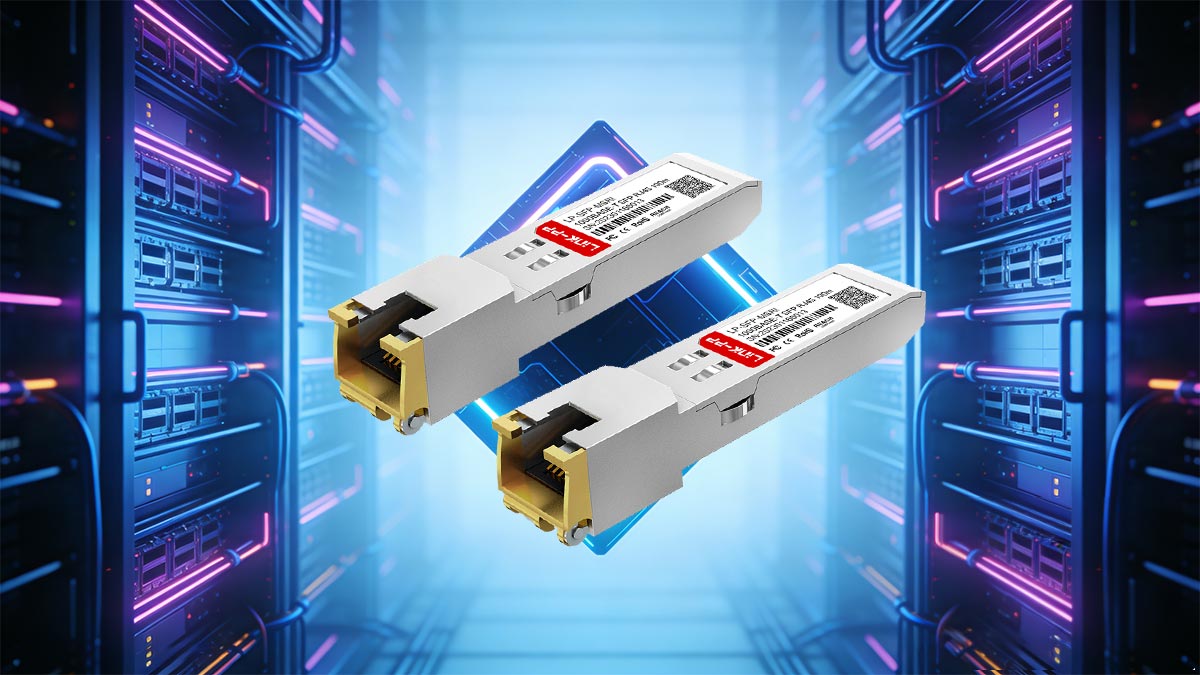
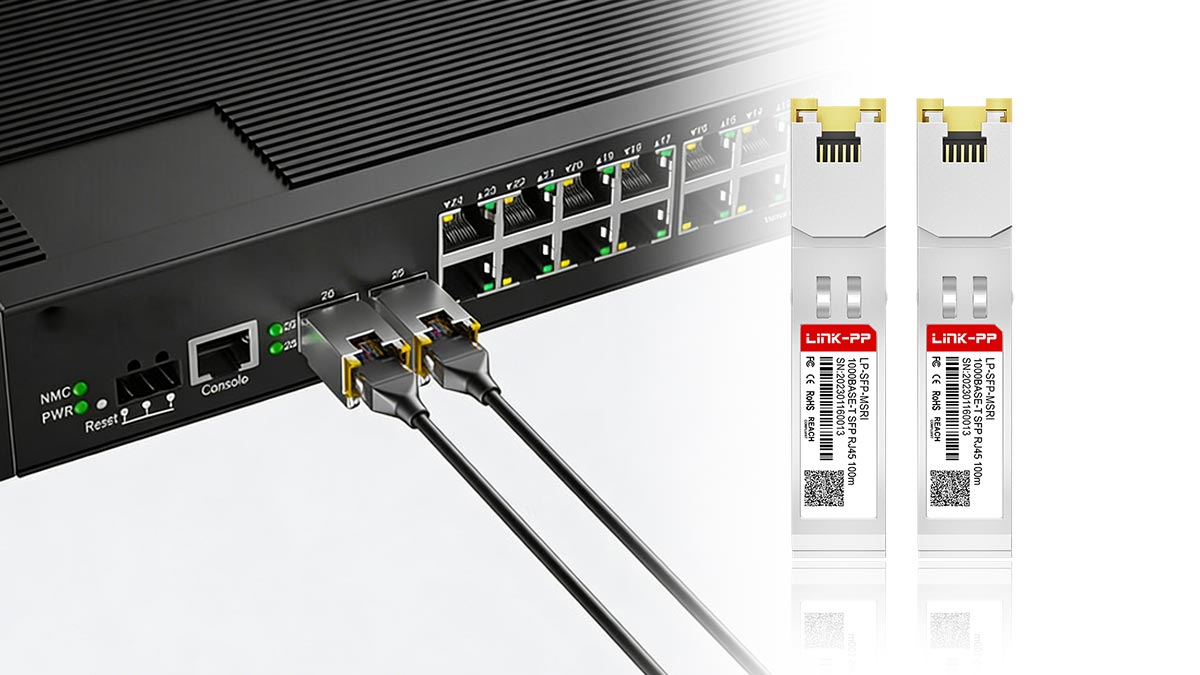
An Electrical SFP module is a type of Small Form-factor Pluggable transceiver that enables Ethernet data transmission over copper twisted-pair cables instead of fiber optic cables. These modules allow network devices such as switches, routers, and network interface cards to connect using standard RJ45 Ethernet infrastructure, making them a practical solution for short-distance networking.
Electrical SFP modules are commonly used in enterprise networks, wiring closets, and data center rack connections, where copper cabling is already deployed. Because they use standard Ethernet cables such as Cat5e, Cat6, or Cat6a, they offer a cost-effective and convenient way to expand network connectivity without requiring fiber infrastructure.
Electrical SFP Definition and Working Principle
An Electrical SFP, often referred to as a Copper SFP, converts electrical Ethernet signals from a network device into signals that can be transmitted over twisted-pair copper cables. Unlike optical SFP modules that use lasers and photodiodes to transmit light signals, electrical SFP modules rely entirely on electrical signaling over copper conductors.
The working principle typically involves three key components:
Ethernet PHY (Physical Layer Chip)
The module contains an integrated Ethernet PHY that converts the switch's SFP interface signals into 1000BASE-T Ethernet signaling used by copper networks.Signal Processing and Encoding
Advanced signal processing techniques such as PAM-5 encoding and echo cancellation allow the module to transmit gigabit Ethernet over standard twisted-pair cables.RJ45 Interface Output
The electrical signal is delivered through a standard RJ45 connector, allowing the module to connect directly to copper Ethernet cables.
Because of this design, electrical SFP modules function as a plug-and-play copper Ethernet interface inside an SFP slot.
Common Types of Electrical SFP Modules
Electrical SFP modules come in several forms depending on the Ethernet standard and connector type they support. The most widely used types include the following.
Module Type | Interface | Max Speed | Typical Distance | Common Use Case |
|---|---|---|---|---|
1000BASE-T SFP | RJ45 | 1 Gbps | Up to 100 m | Standard Gigabit Ethernet over Cat5e/Cat6 |
RJ45 SFP Module | RJ45 | 10/100/1000 Mbps | Up to 100 m | Switch uplinks and device connectivity |
Copper SFP Transceiver | RJ45 Copper | 1 Gbps | Up to 100 m | Enterprise LAN and copper network upgrades |
① 1000BASE-T SFP
A 1000BASE-T SFP module is the most common type of electrical SFP transceiver. It supports Gigabit Ethernet (1 Gbps) over twisted-pair copper cables and typically provides a maximum transmission distance of up to 100 meters when used with Cat5e or higher-grade cabling.
Key features include:
1 Gbps data rate
RJ45 copper interface
Up to 100 m transmission distance
Auto-negotiation support for 10/100/1000 Mbps
These modules are widely deployed in enterprise switches and access layer networking equipment.
② RJ45 SFP Module
An RJ45 SFP module refers to any SFP transceiver that provides a standard RJ45 Ethernet port instead of a fiber connector such as LC or SC.
This type of module enables network devices with SFP slots to connect directly to traditional Ethernet copper cabling, eliminating the need for additional media converters. RJ45 SFP modules are commonly used for:
Network device uplinks
Switch-to-switch connections
Server connectivity
Because they integrate an RJ45 port directly into the SFP form factor, they offer high compatibility with existing Ethernet infrastructure.
③ Copper SFP Transceiver
The term Copper SFP transceiver is often used as a general category for electrical SFP modules designed to transmit Ethernet signals over copper cables. These modules are typically compliant with the IEEE 802.3ab 1000BASE-T standard.
Copper SFP transceivers provide advantages such as:
Easy installation in SFP slots
Compatibility with common Ethernet cables
Lower infrastructure cost compared with fiber optics
However, they usually consume more power than optical SFP modules, which can be an important consideration in high-density switch deployments.
Typical Applications of Copper SFP in Enterprise Networks
Copper SFP modules are widely used in enterprise and data center environments where short-distance connectivity and cost efficiency are priorities.
Common deployment scenarios include:
1. Switch-to-Server Connections
In many enterprise server rooms, copper SFP modules connect switches directly to servers using standard Ethernet cables.
2. Top-of-Rack Networking in Data Centers
Copper SFP modules can be used for short-distance connections between switches and nearby devices within the same rack.
3. Access Layer Network Expansion
Organizations can quickly add Ethernet ports to switches equipped with SFP slots without installing fiber infrastructure.
4. Legacy Ethernet Infrastructure Integration
Electrical SFP modules allow modern network hardware to remain compatible with existing copper cabling systems, reducing upgrade costs.
Because of these advantages, electrical SFP modules remain a practical and widely deployed solution for short-range Ethernet connectivity in enterprise networks.
⭐ What Is Fiber SFP?
A Fiber SFP, also known as an Optical SFP module, is a Small Form-factor Pluggable transceiver designed to transmit data using optical signals through fiber optic cables. Unlike electrical SFP modules that rely on copper Ethernet cables and electrical signaling, fiber SFP modules use lasers and photodiodes to convert electrical data into light signals and transmit them over optical fiber.
Fiber SFP modules are widely used in data centers, campus networks, telecommunications infrastructure, and long-distance enterprise connections because they support higher bandwidth, longer transmission distances, and greater resistance to electromagnetic interference (EMI).
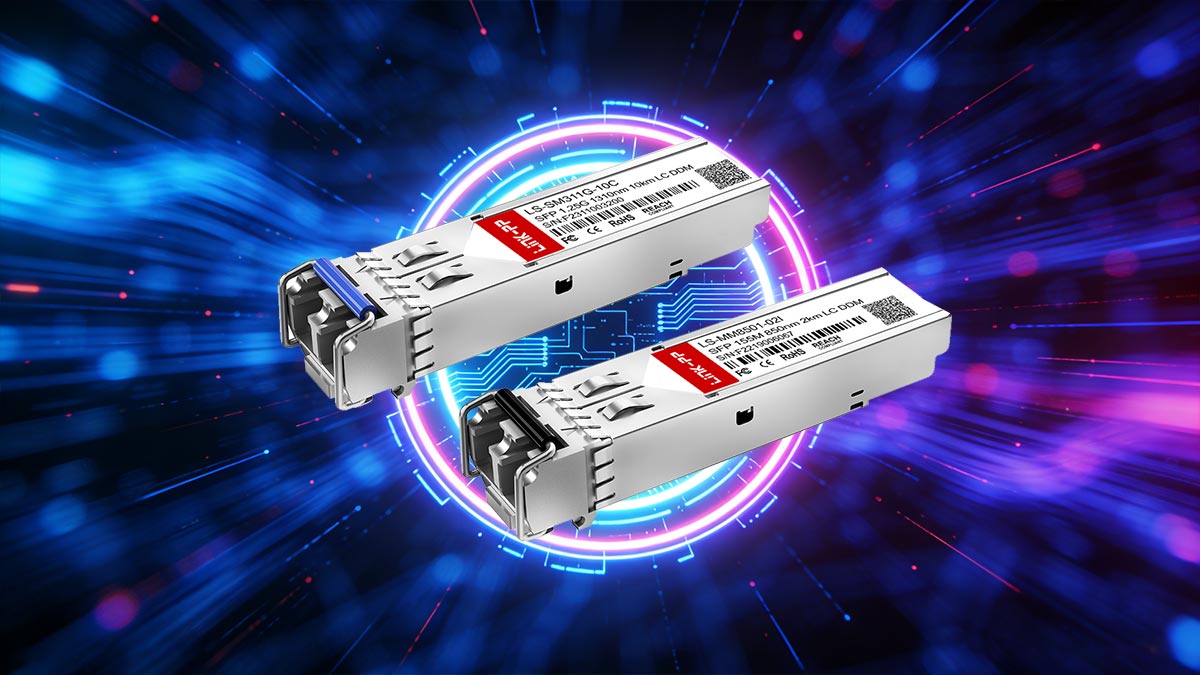
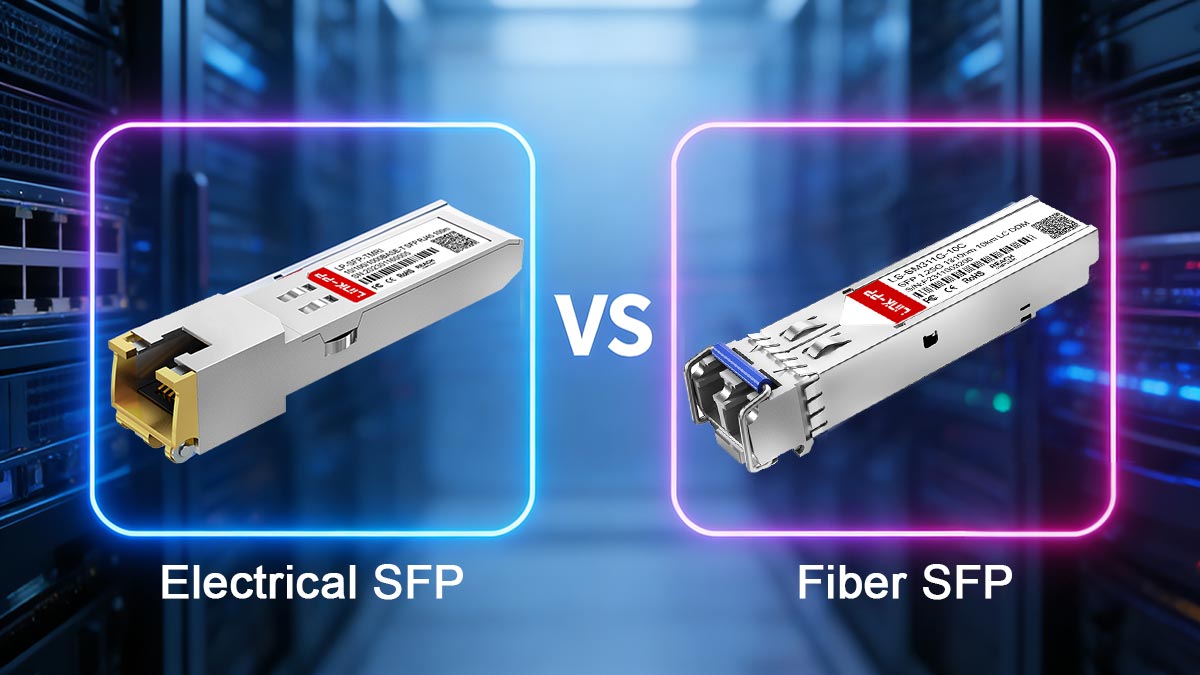
The main difference between Electrical SFP vs Fiber SFP lies in the transmission medium and performance characteristics:
Electrical SFP uses copper twisted-pair cables (RJ45).
Fiber SFP uses optical fiber cables (LC or SC connectors).
Fiber SFP typically supports longer distances and higher reliability.
Electrical SFP is usually more cost-effective for short-distance connections.
Understanding how fiber SFP modules work and the different standards available helps network engineers select the most suitable solution for their network infrastructure.
Optical SFP Working Principle
Fiber SFP modules operate by converting electrical Ethernet signals into optical signals that travel through fiber optic cables.
The process generally includes the following steps:
Electrical Signal Input
The network switch or router sends an electrical data signal to the SFP module through the device’s SFP interface.Optical Signal Conversion
Inside the module, a laser diode or LED transmitter converts the electrical signal into a modulated light signal.Fiber Transmission
The optical signal travels through single-mode or multimode fiber cables, allowing data to be transmitted over much longer distances compared to copper.Optical-to-Electrical Conversion
At the receiving end, a photodiode detects the incoming light signal and converts it back into an electrical signal for the receiving device.
Because fiber optic communication uses light instead of electrical currents, it provides lower signal loss, higher bandwidth potential, and immunity to electromagnetic interference, making it ideal for large-scale and high-performance networks.
Common Fiber SFP Standards
Fiber SFP modules are available in several standards designed for different fiber types, wavelengths, and transmission distances. Some of the most widely used optical SFP modules include the following.
Fiber SFP Type | Fiber Type | Wavelength | Maximum Distance | Typical Application |
|---|---|---|---|---|
SX SFP | Multimode Fiber | 850 nm | Up to 550 m | Data center and building networks |
LX SFP | Single-mode Fiber | 1310 nm | Up to 10 km | Campus and enterprise backbone |
ZX SFP | Single-mode Fiber | 1550 nm | 40–80 km | Long-distance telecom networks |
BiDi SFP | Single-mode Fiber | 1310/1550 nm | Up to 10–20 km | Single-fiber deployments |
① SX SFP
An SX SFP module is designed for short-range transmission over multimode fiber (MMF). These modules typically operate at a wavelength of 850 nm and are commonly used for connections within buildings or data centers.
Typical characteristics:
Supports Gigabit Ethernet (1000 Mbps)
Works with multimode fiber
Transmission distance up to 550 meters depending on fiber type
SX modules are often used for switch-to-switch connections inside data centers or enterprise buildings.
② LX SFP
An LX SFP module supports transmission over single-mode fiber (SMF) and operates at a wavelength of approximately 1310 nm. It is designed for medium-distance network connections.
Key features:
Supports Gigabit Ethernet
Works with single-mode fiber
Transmission distance up to 10 km
LX modules are widely used in campus networks, metropolitan area networks (MANs), and enterprise backbone connections.
③ ZX SFP
A ZX SFP module is designed for long-distance fiber communication, often used in telecommunications or large enterprise networks. These modules operate at a wavelength of around 1550 nm.
Typical specifications include:
Gigabit Ethernet support
Single-mode fiber operation
Transmission distances of 40 km to 80 km, depending on the module design
ZX modules are commonly deployed in long-distance network backbones and inter-building connectivity.
④ BiDi SFP
A BiDi SFP (Bidirectional SFP) module enables two-way data transmission over a single fiber strand by using different wavelengths for transmitting and receiving signals.
Key characteristics:
Uses wavelength division multiplexing (WDM)
Requires paired modules with complementary wavelengths
Reduces the number of fiber strands required
BiDi SFP modules are particularly useful in environments where fiber resources are limited or where infrastructure costs must be minimized.
When Optical SFP Is the Preferred Solution
Fiber SFP modules are often the better choice when network environments require high performance, long-distance connectivity, or improved signal reliability.
Common situations where optical SFP is preferred include:
1. Long-Distance Network Links
Fiber SFP modules support distances ranging from hundreds of meters to tens of kilometers, far exceeding the capabilities of copper-based electrical SFP modules.
2. Data Center Backbone Connections
High-speed fiber connections are commonly used to link core switches, aggregation switches, and storage networks.
3. Electromagnetically Noisy Environments
Because fiber optic cables do not carry electrical signals, they are immune to electromagnetic interference (EMI) and radio-frequency interference.
4. High-Bandwidth Applications
Optical SFP modules support higher-speed standards such as 10G, 25G, 40G, and beyond, making them suitable for modern data center architectures.
5. Future Network Scalability
Fiber infrastructure provides a long-term upgrade path, allowing organizations to support faster speeds without replacing the entire cabling system.
For these reasons, fiber SFP modules are widely considered the preferred solution for high-performance and long-distance network connectivity, while electrical SFP modules remain practical for short-range and cost-sensitive deployments.
⭐ Electrical SFP vs. Fiber SFP: Key Differences Explained
Understanding the differences between Electrical SFP (Copper SFP) and Fiber SFP (Optical SFP) is essential for network engineers, IT administrators, and data center planners. While both modules serve the same purpose—providing pluggable network interfaces—their transmission medium, performance characteristics, and deployment costs differ significantly. The following sections break down the key differences in a structured and SEO-friendly way.
● Speed Comparison
Feature | Electrical SFP | Fiber SFP |
|---|---|---|
Maximum Data Rate | 1 Gbps (1000BASE-T) | 1 Gbps – 10 Gbps and higher |
Typical Use | Short-range connections | Short- and long-range connections |
Upgrade Potential | Limited by copper cabling | Can support future higher-speed upgrades |
Insight: Electrical SFP modules are sufficient for standard Gigabit Ethernet but have limitations when upgrading to higher speeds like 10G or 25G, where fiber SFP modules excel.
● Transmission Distance
Feature | Electrical SFP | Fiber SFP |
|---|---|---|
Maximum Distance | Up to 100 meters | 550 m (SX) – 80 km (ZX) |
Cable Type | Cat5e/Cat6/Cat6a | Multimode or Single-mode fiber |
Signal Reliability | Susceptible to EMI | Immune to electromagnetic interference |
Insight: Fiber SFP modules are preferred for long-distance backbone connections, whereas electrical SFP modules are ideal for short-range, rack-to-rack connections.
● Latency and Signal Stability
Electrical SFPs: Slightly higher latency due to copper signal processing and PHY conversion. Susceptible to signal degradation over distance.
Fiber SFPs: Lower latency and more stable signal, especially over long distances or in high-density network environments.
Practical Note: In modern data centers requiring microsecond-level timing (e.g., storage or HPC clusters), fiber SFP is often mandatory.
● Power Consumption
Feature | Electrical SFP | Fiber SFP |
|---|---|---|
Typical Power Usage | 2–3 W per module | 0.8–1 W per module |
Heat Generation | High, can affect switch cooling | Low, more efficient for dense racks |
Insight: Electrical SFP modules consume 2–3 times more power than SFP optical modules, which can be a critical factor in high-density switch deployments.
● Hardware and Deployment Cost
Electrical SFP:
Typically lower initial cost for short distances
Requires no fiber infrastructure
More expensive than fiber at 10G+ speeds
Fiber SFP:
Higher module cost
Requires fiber cables and sometimes optical patch panels
Long-term investment allows higher speeds and future scalability
● Network Scalability
Electrical SFP modules are ideal for small-scale or legacy copper networks, but fiber SFP modules scale better for:
Multi-building campuses
High-speed data centers
Metro area networks (MANs)
Takeaway: Choosing between electrical and fiber SFP depends on distance requirements, power budgets, bandwidth needs, and future scalability.
✅ Summary Table: Key Differences
Aspect | Electrical SFP (Copper) | Fiber SFP (Optical) |
|---|---|---|
Transmission Medium | Copper Ethernet Cable (RJ45) | Fiber Optic Cable |
Maximum Speed | 1 Gbps (limited) | 1 Gbps – 10 Gbps+ |
Maximum Distance | 100 m | 550 m – 80 km |
Latency | Higher | Lower |
Power Consumption | 2–3 W | 0.8–1 W |
EMI Susceptibility | Yes | No |
Deployment Cost | Low short-range, high long-range | Higher upfront, scalable long-term |
⭐ When Should You Choose Electrical SFP Instead of Fiber
Choosing the right SFP module is critical for network efficiency, cost management, and long-term scalability. While fiber SFP modules provide superior distance and bandwidth, Electrical SFP (Copper SFP) remains the preferred choice in several practical scenarios. Understanding these use cases helps network engineers and IT managers make informed deployment decisions.
Short-Distance Enterprise Networks
Electrical SFP modules are ideal for short-range connections, typically up to 100 meters, within office buildings, wiring closets, and small enterprise networks.
Key advantages in this scenario:
Leverages existing copper cabling (Cat5e, Cat6, Cat6a)
Fast deployment without new fiber installation
Adequate for standard Gigabit Ethernet requirements
Practical Example: Connecting desktop switches to a main access switch within the same floor or building.
Data Center Top-of-Rack Connections
In modern data centers, top-of-rack (ToR) switches often connect to servers located in the same rack. Electrical SFP modules are suitable for these short, high-density links because:
Distance rarely exceeds 100 meters
Copper SFP modules are plug-and-play for SFP ports
Reduces the need for fiber patch panels in each rack
Insight: While fiber is ideal for inter-rack or core backbone links, electrical SFP is cost-efficient for rack-level connections.
Cost-Sensitive Network Upgrades
Electrical SFP modules often provide a lower upfront cost for network expansions, particularly in environments where:
Short-range connectivity is sufficient
Existing copper infrastructure is already in place
Budget constraints limit large-scale fiber deployment
Comparison Tip: For Gigabit Ethernet within a single building or campus, using electrical SFP modules can save on both cabling and transceiver costs, without compromising performance for short distances.
Legacy RJ45 Infrastructure Compatibility
Many enterprises still rely on legacy RJ45 copper cabling for existing network equipment. Electrical SFP modules allow:
Seamless integration with older switches or servers
Minimal disruption to existing Ethernet networks
Avoidance of costly media converters or fiber rewiring
Example: A company upgrading to SFP-capable switches can use SFP RJ45 modules to connect directly to existing Cat6 wiring, extending the network without a full fiber overhaul.
✅ Summary Table: When Electrical SFP Is Preferred
Scenario | Why Electrical SFP Works Best | Typical Distance |
|---|---|---|
Short-distance Enterprise Networks | Uses existing copper cabling, fast deployment | ≤100 m |
Data Center Top-of-Rack Connections | Plug-and-play in rack environments | ≤100 m |
Cost-Sensitive Network Upgrades | Lower upfront cost vs fiber | ≤100 m |
Legacy RJ45 Infrastructure | Compatible with existing copper Ethernet | ≤100 m |
Key Takeaway: Electrical SFP modules are most effective for short-range, cost-conscious, and legacy-compatible deployments, while fiber SFP modules remain the go-to choice for long-distance, high-bandwidth, and interference-prone networks.
⭐ FAQs About Electrical SFP vs. Fiber SFP
This section addresses the most common questions network engineers, IT managers, and data center operators have when deciding between Electrical (Copper) SFP modules and Fiber SFP modules.
1. What is the maximum distance for Electrical SFP?
Answer: Electrical SFP modules, typically using 1000BASE-T standards over copper cables, support a maximum distance of up to 100 meters with Cat5e, Cat6, or Cat6a cables. Beyond this distance, signal quality degrades, making fiber SFP the preferred solution for longer links.
2. Is Copper SFP slower than Fiber SFP?
Answer: For standard Gigabit Ethernet (1 Gbps), copper (Electrical SFP) and fiber SFP offer similar speeds. However, fiber SFP modules support higher-speed standards such as 10G, 25G, and 40G, whereas copper SFP modules are generally limited to 1 Gbps or 10GBASE-T, depending on the PHY and cabling.
3. Can Electrical SFP support 10G speeds?
Answer: Only specific 10GBASE-T SFP+ modules can support 10 Gigabit Ethernet over copper cables. These modules consume more power and generate more heat compared to fiber SFP modules and are usually limited to 30–100 meters depending on cable quality.
4. Can you plug a standard Ethernet cable into an SFP port?
Answer: You cannot plug a standard RJ45 Ethernet cable directly into a standard SFP slot. You must use an Electrical (Copper) SFP module that provides an RJ45 interface. The module acts as a media converter, allowing the SFP slot to connect to copper Ethernet cabling.
5. Which is more cost-effective: Electrical SFP or Fiber SFP?
Answer: It depends on the application:
Short-distance, under 100 meters: Electrical SFP modules are generally more cost-effective because they use existing copper cabling and require no fiber installation.
Long-distance or high-speed deployments: Fiber SFP modules offer better long-term scalability, lower latency, and reduced power consumption, making them more cost-efficient over time.
6. Are Electrical SFP modules compatible with all switches?
Answer: Electrical SFP modules are generally compatible with most SFP-enabled switches, but some vendors (e.g., Cisco, HP, Juniper) may require vendor-approved modules to ensure full compatibility. Always check switch compatibility lists before purchasing third-party SFP modules.
⭐ Conclusion: Electrical SFP vs. Fiber SFP: Which One Should You Use?
Choosing between Electrical (Copper) SFP and Fiber SFP modules depends on a careful evaluation of network requirements, deployment distance, speed needs, power consumption, and long-term scalability. Both types serve critical roles in modern Ethernet networks, but their strengths differ significantly.
Key Takeaways:
Electrical SFP (Copper SFP)
Ideal for short-distance connections (≤100 meters) within offices, wiring closets, and rack-level data center links.
Compatible with existing RJ45 infrastructure, allowing cost-effective network expansion without rewiring.
Generally consumes more power and can generate heat in high-density switch deployments.
Fiber SFP (Optical SFP)
Supports long-distance transmission (up to 80 km with ZX modules) and higher-speed networks (10G, 25G, 40G).
Immune to electromagnetic interference, providing reliable performance in challenging environments.
Requires fiber cabling and potentially higher upfront investment, but scales more efficiently for future network growth.
Practical Recommendation:
Use Electrical SFP for short-range, cost-sensitive, or legacy-compatible deployments.
Use Fiber SFP for high-performance, long-distance, or scalable network infrastructures, especially in data centers and campus backbones.
By carefully considering these factors, network engineers and IT managers can optimize both performance and cost, ensuring that their network infrastructure meets current needs while remaining future-ready.
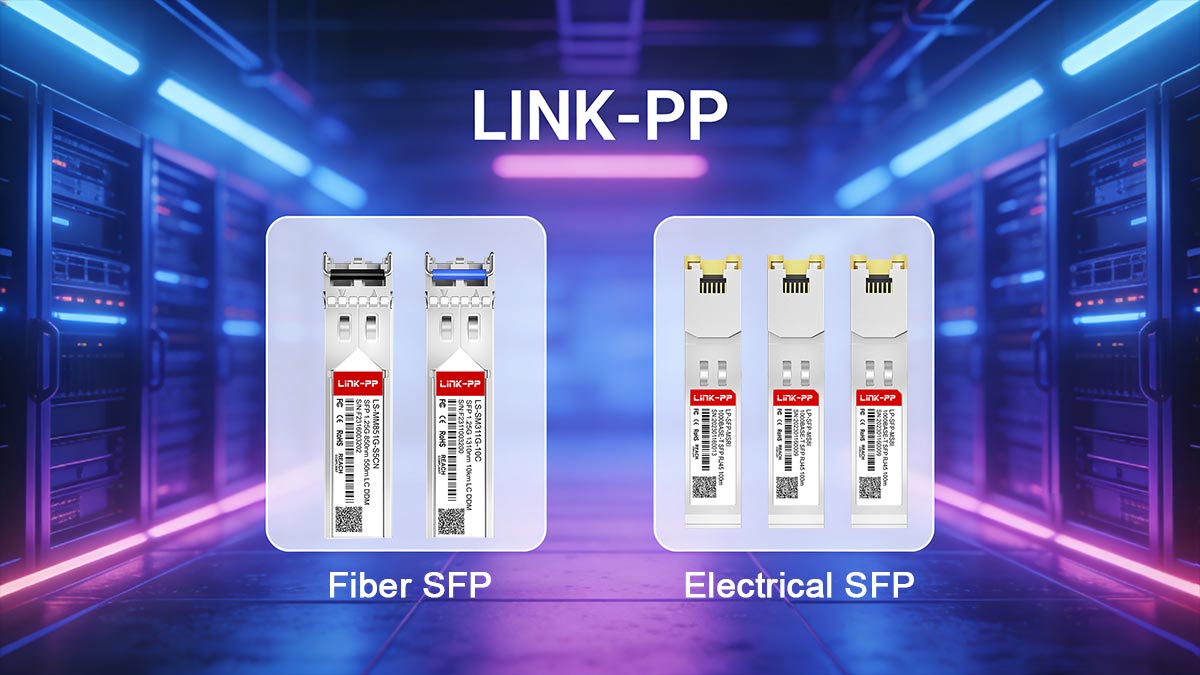
For high-quality SFP modules, including Electrical RJ45 SFP and Fiber SFP transceivers, explore the LINK-PP Official Store to find compatible modules for your network switches and servers.