

As network speeds continue to increase across data centers and enterprise infrastructures, 10-Gigabit Ethernet (10GbE) has become a standard for high-bandwidth connectivity between switches, servers, and storage systems. One of the most widely deployed optical solutions for short-distance 10G links is the multimode SFP+ transceiver, commonly referred to as a 10GBASE-SR module.
Multimode SFP+ transceivers are compact, hot-pluggable optical modules designed to deliver 10Gbps data transmission over multimode fiber (MMF). These modules operate at a wavelength of 850 nm and are optimized for short-reach applications where high speed, low latency, and cost efficiency are critical.
In most modern deployments, 10GBASE-SR multimode SFP+ modules are used with OM3 or OM4 fiber cables, which support transmission distances of up to 300–400 meters depending on fiber quality and network design. The combination of 850 nm VCSEL laser technology and multimode fiber allows these modules to provide reliable high-speed connectivity while maintaining low power consumption and affordable deployment costs.
Because of these advantages, multimode SFP+ modules are widely used in data centers, enterprise networks, and high-density switch environments, where short-range optical links between switches, servers, and storage devices are required.
What You Will Learn in This Guide
In this article, you will learn:
What multimode SFP+ modules are and how 10GBASE-SR technology works
Key technical specifications, including wavelength, fiber types, and transmission distance
The differences between multimode and single-mode SFP+ transceivers
Which fiber types (OM3 vs. OM4) are best for 10G SFP+ deployments
Common applications of 10G multimode SFP+ modules in data centers and enterprise networks
Typical troubleshooting and compatibility issues with SFP+ links
By the end of this guide, you will have a clear understanding of how 10GBASE-SR multimode SFP+ transceivers work and how to choose the right module for your network infrastructure.
🛑 What Is SFP+ Module Multimode Fiber 10GbE LC?
An SFP+ module multimode fiber 10GbE LC typically refers to a 10GBASE-SR optical transceiver that uses the SFP+ form factor, operates over multimode fiber (MMF), and connects through a duplex LC connector. These modules are widely used for 10-Gigabit Ethernet (10GbE) links in data centers and enterprise networks where short-distance, high-speed connectivity is required.
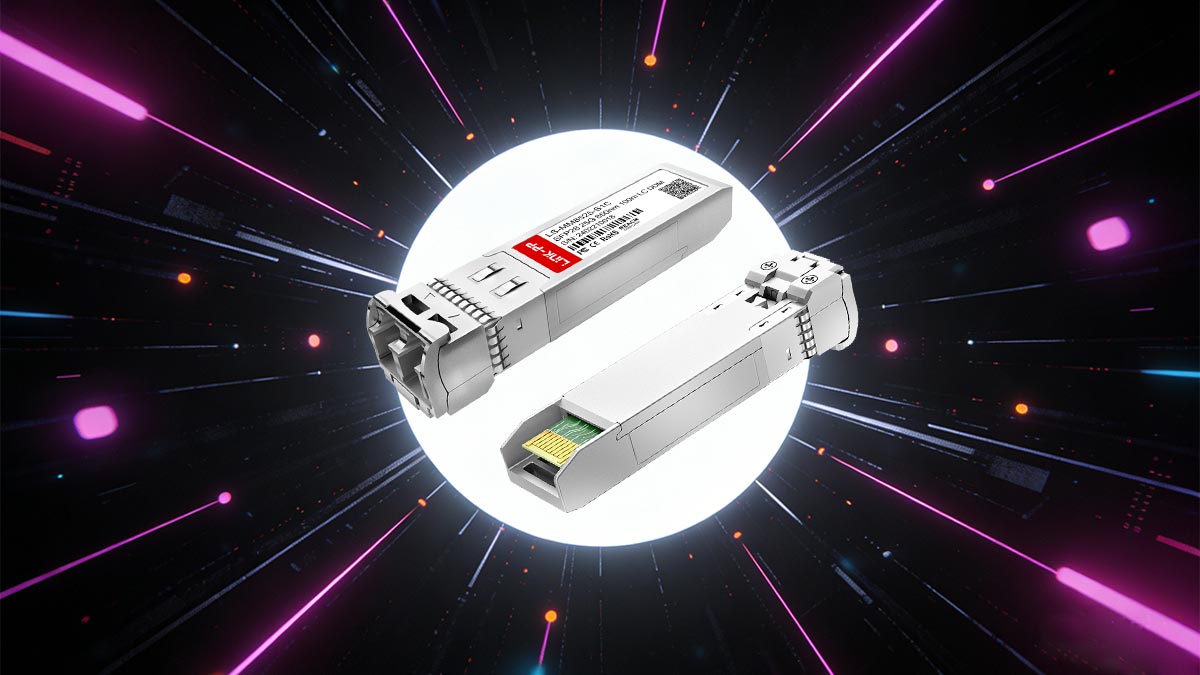
SFP+ Form Factor with Multimode
The SFP+ form factor itself is not limited to a specific fiber type. SFP+ simply defines the physical size, electrical interface, and hot-pluggable design of the optical module.
Different SFP+ modules can support different transmission media, including:
SFP+ Module Type | Fiber Type | Typical Distance |
|---|---|---|
Multimode Fiber (MMF) | Up to 300–400 m | |
Single-Mode Fiber (SMF) | Up to 10 km | |
Single-Mode Fiber (SMF) | Up to 40 km |
This means an SFP+ module can be either multimode or single-mode, depending on the optical specification used.
SFP-10G-SR for Multimode Fiber Networks
SFP-10G-SR modules are specifically designed for multimode fiber networks.
The SR (Short Reach) optical standard uses:
850 nm wavelength
VCSEL laser technology
Multimode fiber (OM3 or OM4)
These characteristics make SR modules ideal for short-distance high-speed links such as switch-to-server connections inside data centers.
Typical transmission distances include:
Fiber Type | Maximum Distance |
|---|---|
OM1 | ~33 m |
OM2 | ~82 m |
OM3 | Up to 300 m |
OM4 | Up to 400 m |
Key Components of a Multimode 10G SFP+ Module
1. SFP+ Form Factor
SFP+ (Enhanced Small Form-factor Pluggable) is a compact, hot-swappable transceiver interface used for high-speed optical communication. It is commonly deployed for 10-Gigabit Ethernet and 8G/16G Fibre Channel connections.
2. SR Optical Standard
The 10GBASE-SR standard defines short-range 10GbE transmission using 850 nm optics over multimode fiber. It offers low power consumption and cost-effective deployment for short-distance links.
3. Multimode Fiber Compatibility
Multimode SFP+ modules are optimized for OM3 and OM4 multimode fiber, which provide high bandwidth and support 300–400 meters of 10G transmission.
4. LC Duplex Connector
Most multimode 10GbE SFP+ modules use an LC duplex interface, allowing separate fibers for transmit (TX) and receive (RX) signals.
10GBASE-SR SFP+ modules have become the most common optical solution for short-reach 10GbE connections, particularly in data centers, enterprise networks, and high-density switching environments.
In the following sections, we will explore the technical specifications of 10GBASE-SR SFP+ modules, supported fiber types such as OM3 and OM4, transmission distance limits, and typical networking use cases to help you better understand when and how multimode SFP+ transceivers should be deployed.
🛑 Key Technical Specifications of 10GBASE-SR SFP+ Modules
10GBASE-SR SFP+ modules are designed to deliver high-speed 10-Gigabit Ethernet (10GbE) connectivity over multimode fiber in short-distance network environments. These optical transceivers use 850 nm VCSEL laser technology and are optimized for OM3 and OM4 multimode fiber, making them one of the most widely deployed optics in data centers and enterprise networks.
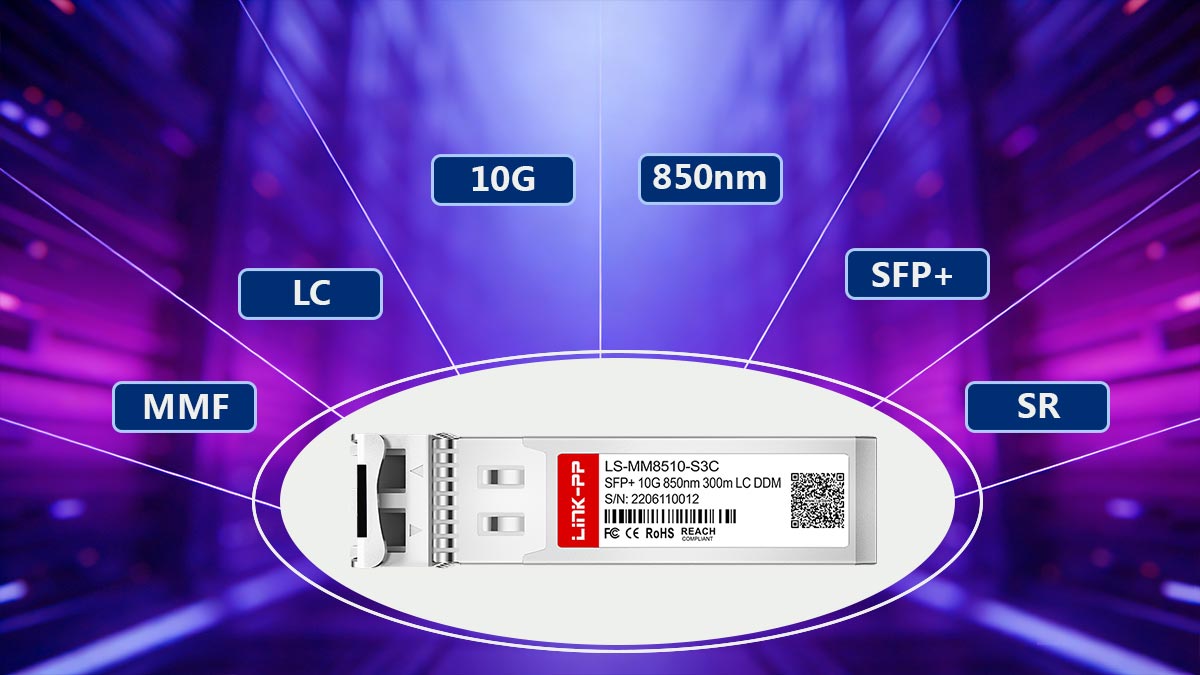
The following table summarizes the core technical specifications of typical SFP+ SR modules.
Parameter | Specification |
|---|---|
Data Rate | 10 Gbps |
Wavelength | 850 nm |
Fiber Type | OM3 / OM4 Multimode Fiber (MMF) |
Max Distance | 300–400 m |
Connector | LC Duplex |
Power Consumption | < 1 W |
Explanation of 10GBASE-SR Specifications
Data Rate – 10 Gbps
10GBASE-SR modules support 10-Gigabit Ethernet transmission, typically operating at 10.3125 Gbps line rate, which aligns with the IEEE 802.3ae standard for 10GbE networks.
Wavelength – 850 nm
These modules operate at an 850 nm optical wavelength, which is optimized for multimode fiber and enables efficient transmission using VCSEL (Vertical-Cavity Surface-Emitting Laser) technology.
Fiber Type – OM3 / OM4 Multimode Fiber
10GBASE-SR modules are designed specifically for multimode fiber (MMF).
For optimal performance, they are typically used with:
OM3 fiber – supports up to 300 m
OM4 fiber – supports up to 400 m
Maximum Distance – 300–400 m
Transmission distance depends on the type of multimode fiber used. Higher-grade fiber such as OM4 provides greater bandwidth and longer reach compared to older fiber standards like OM1 or OM2.
Connector – LC Duplex
Most SFP+ SR modules use a duplex LC connector, allowing separate fibers for transmit (TX) and receive (RX) signals. This connector type is widely used due to its compact size and high-density compatibility.
Power Consumption – < 1 W
10GBASE-SR SFP+ modules typically consume less than 1 watt of power, making them more energy-efficient than many copper-based 10G alternatives such as 10GBASE-T modules.
10GBASE-SR multimode SFP+ modules are considered the most cost-effective and energy-efficient solution for short-range 10GbE optical connectivity in modern high-density networking environments.
🛑 Multimode vs. Single-Mode SFP+: What’s the Difference?
When selecting a 10G SFP+ optical module, one of the most important considerations is whether the transceiver is designed for multimode fiber (MMF) or single-mode fiber (SMF). The difference mainly involves the fiber type, optical wavelength, and maximum transmission distance supported by the module.
In most short-distance 10GbE deployments, such as connections within a data center rack or between nearby switches, multimode SFP+ modules (10GBASE-SR) are commonly used. For longer-distance links between buildings or across campuses, single-mode SFP+ modules (10GBASE-LR or ER) are the preferred option.
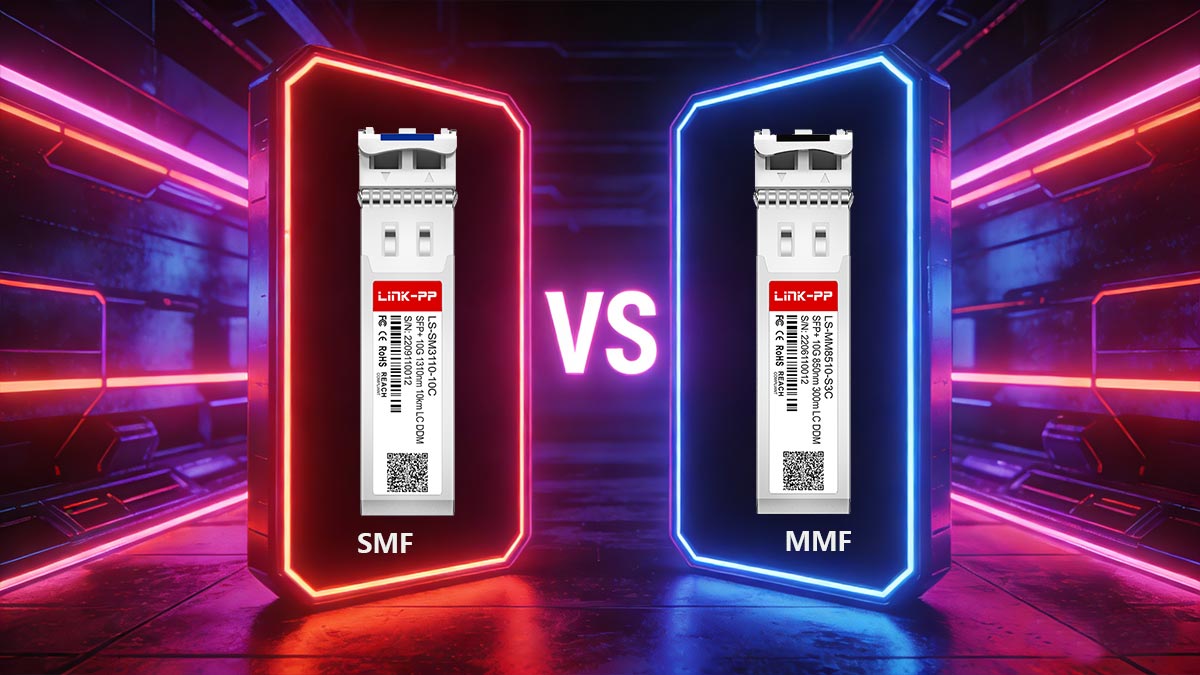
The table below highlights the key differences between the most common 10G SFP+ optical standards.
Type | Fiber | Wavelength | Distance |
|---|---|---|---|
SR (Short Reach) | Multimode Fiber (MMF) | 850 nm | Up to 300 m |
LR (Long Reach) | Single-Mode Fiber (SMF) | 1310 nm | Up to 10 km |
SMF vs. MMF SFP+ Transceivers
The primary differences between single-mode and multimode SFP+ modules include fiber design, transmission distance, and cost.
Multimode SFP+ modules (10GBASE-SR) use 850 nm optics and operate over OM3 or OM4 multimode fiber, supporting distances of up to 300–400 meters. They are typically used for short-range connections in data centers, where high bandwidth and lower equipment costs are priorities.
In contrast, single-mode SFP+ modules such as 10GBASE-LR use 1310 nm lasers and transmit data over single-mode fiber, allowing signals to travel much farther—typically up to 10 kilometers. These modules are commonly deployed in campus networks, metropolitan networks, and long-distance backbone links.
Is SFP 10G LR Single-Mode or Multimode?
SFP-10G-LR modules are designed for single-mode fiber (SMF).
The LR (Long Reach) optical standard uses a 1310 nm wavelength and is optimized for long-distance transmission over single-mode fiber cables, supporting links up to 10 km.
Because of this extended reach capability, LR modules are often used when network connections must span multiple buildings, campuses, or service provider infrastructure.
SFP SR vs. LR modules Summary
In simple terms:
SR modules → Multimode fiber → Short-distance links
LR modules → Single-mode fiber → Long-distance links
Understanding these differences helps network engineers choose the right SFP+ module for their fiber infrastructure, distance requirements, and budget.
🛑 What Multimode Fiber Should You Use for 10G SFP+?
Choosing the right fiber type for 10G SFP+ connections is a common question among network engineers and IT professionals. In many online technical communities and networking forums, discussions often focus on whether OM3 or OM4 multimode fiber should be used for 10GBASE-SR deployments, and whether older fiber types like OM1 or OM2 are still suitable.
For 10G SFP+ multimode modules (10GBASE-SR) operating at 850 nm, the recommended fiber types are OM3 or OM4 multimode fiber, which are designed to support high-bandwidth applications and longer transmission distances. These fibers provide significantly better performance compared to older multimode standards.
Older fiber types such as OM1 and OM2 can still support 10G transmission, but their distance capabilities are much more limited due to lower modal bandwidth.
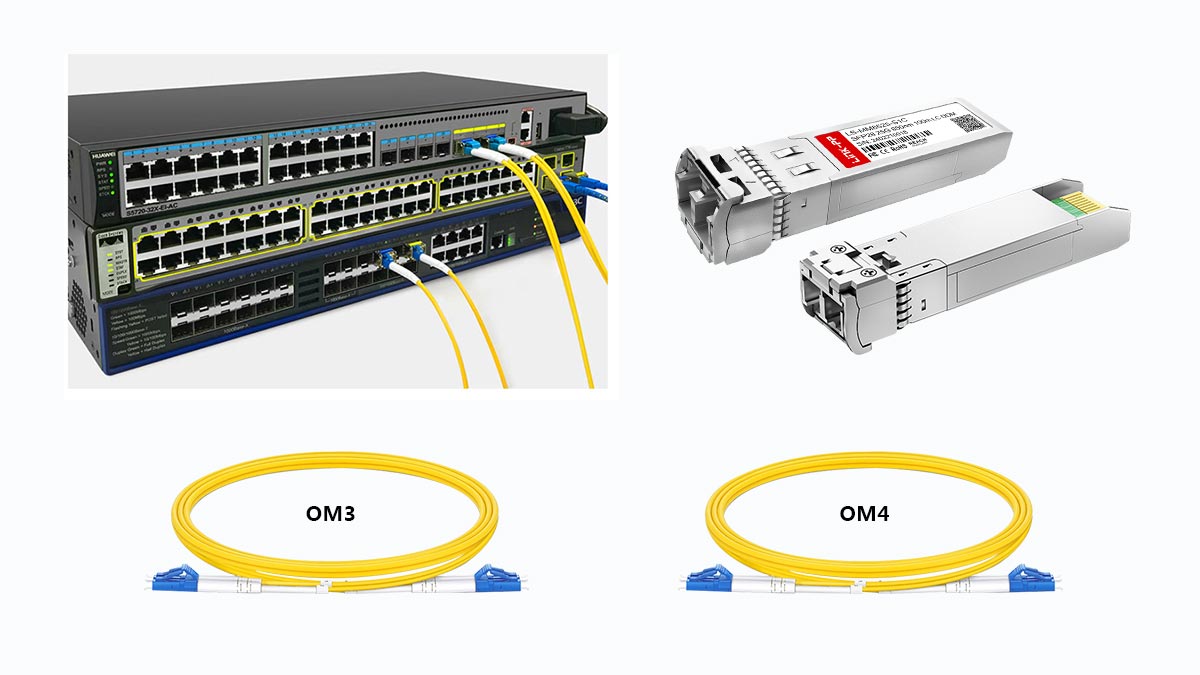
The table below shows the typical maximum transmission distances for different multimode fiber types when used with 10G-SR SFP+ modules.
Fiber | Distance |
|---|---|
OM1 | 33 m |
OM2 | 82 m |
OM3 | 300 m |
OM4 | 400 m |
OM3 Multimode Fiber
OM3 fiber is the most commonly deployed multimode fiber for 10G Ethernet networks. It is optimized for 850 nm laser transmission and supports distances of up to 300 meters with 10GBASE-SR modules. OM3 is widely used in data centers and enterprise network backbones due to its balance of performance and cost.
OM4 Multimode Fiber
OM4 fiber is an enhanced version of OM3 with higher modal bandwidth. When used with 10GBASE-SR SFP+ transceivers, it can support distances of up to 400 meters. OM4 is often selected for large data center environments where slightly longer reach or future scalability may be required.
Limitations of OM1 and OM2 Fiber
Older multimode fibers such as OM1 and OM2 were originally designed for lower-speed applications like 1G Ethernet. Although they can technically support 10GBASE-SR connections, the supported distance is significantly shorter.
OM1 fiber supports only about 33 meters
OM2 fiber supports up to about 82 meters
Because of these limitations, modern 10G network deployments typically prefer OM3 or OM4 fiber to ensure stable performance and allow for future network upgrades.
In summary, OM3 and OM4 multimode fiber cables are the recommended choices for most 10G SFP+ SR deployments, providing reliable high-speed connectivity for short-range optical links in modern network infrastructures.
🛑 Typical Applications of SFP+ Multimode Modules
Because of their high bandwidth, low power consumption, and cost-effective deployment, multimode SFP+ modules are widely used in short-range optical networking environments. Operating at 850 nm over OM3 or OM4 multimode fiber, these modules are ideal for scenarios where 10GbE connectivity is required within a few hundred meters.
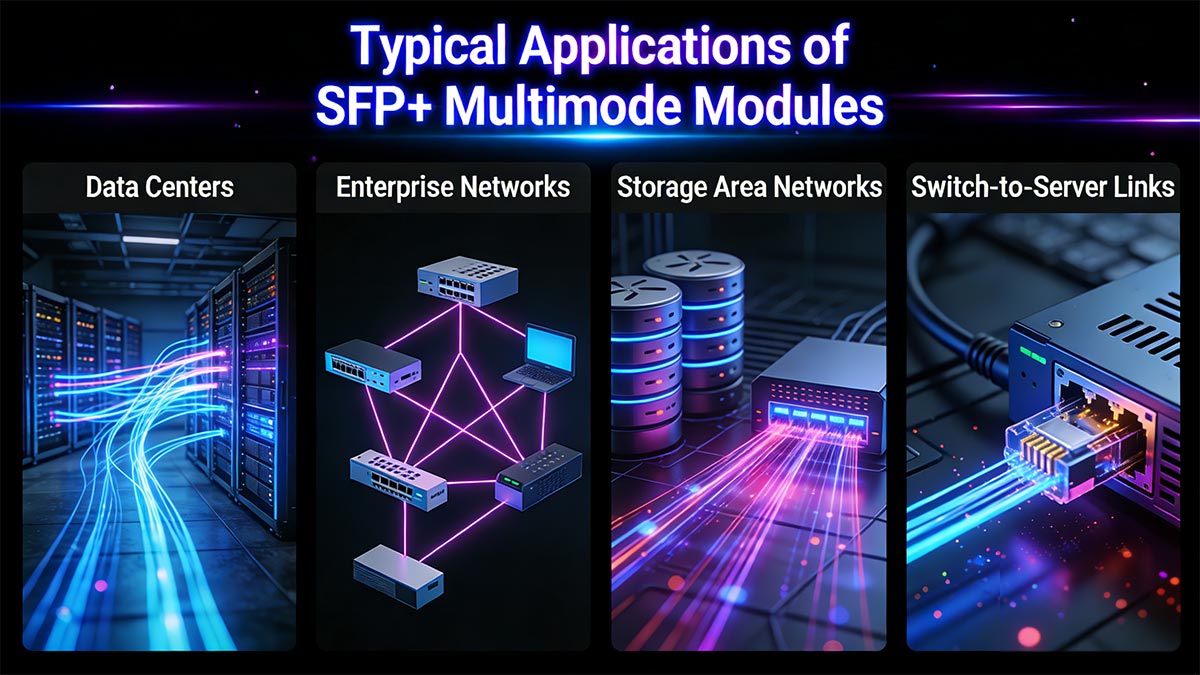
Below are the most common applications where 10G multimode SFP+ transceivers are deployed.
Data Centers
One of the primary applications of 10GBASE-SR SFP+ modules is inside data centers, where high-speed communication between network devices is essential. Multimode SFP+ optics are commonly used for:
Top-of-Rack (ToR) switch connections
Leaf–spine network architectures
High-density switch uplinks
Because data center equipment is usually located within the same room or rack row, the 300–400 m transmission capability of OM3/OM4 fiber is more than sufficient.
Enterprise Networks
In enterprise campus networks, multimode SFP+ modules are often used for building backbone connections and aggregation layers. They provide reliable 10GbE links between switches, routers, and network distribution points within office buildings or campus facilities.
Compared with long-range single-mode optics, multimode SR modules offer a more economical solution for short-distance enterprise networking.
Storage Area Networks (SAN)
High-performance Storage Area Networks (SAN) also rely on SFP+ multimode optics to deliver fast data transfer between storage arrays and servers. In SAN environments, these modules are commonly used for:
Fibre Channel connections
High-speed storage replication
Low-latency server-to-storage communication
Their low latency and high throughput make them suitable for demanding storage workloads.
Switch-to-Server Links
Another common use case is direct switch-to-server connectivity within racks or between adjacent racks. Many modern servers equipped with 10GbE network interface cards (NICs) use SFP+ multimode modules with LC duplex connectors to connect to top-of-rack switches.
This architecture provides:
High-speed server access
Reduced cable bulk compared with copper
Improved airflow in high-density racks
Overall, multimode SFP+ modules are the preferred solution for short-reach 10G optical connectivity, particularly in environments where devices are located within the same facility or data center infrastructure.
🛑 Common Problems with 10G Multimode SFP+ Links
Although multimode SFP+ modules are widely used for short-distance optical networking, deployment issues can still occur. Many discussions in networking communities and technical forums highlight several common causes of 10G SFP+ link failures or instability, especially in mixed-vendor environments.
Understanding these common problems can help engineers quickly diagnose and resolve 10G multimode SFP+ connectivity issues.
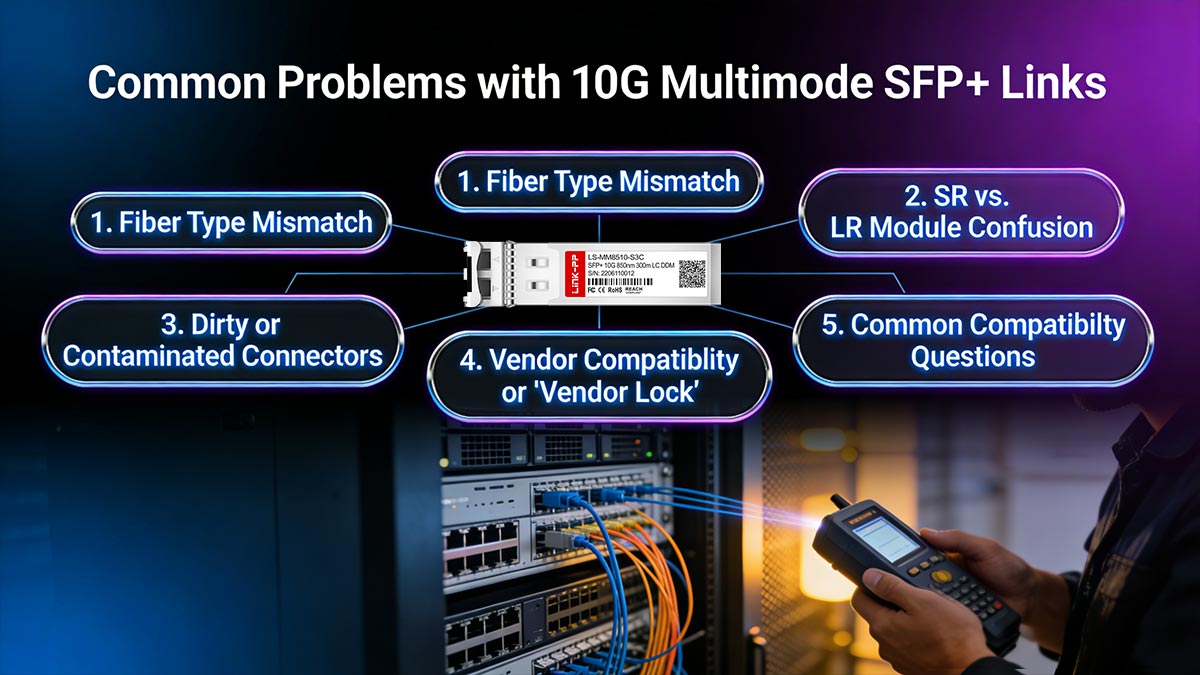
1. Fiber Type Mismatch
One of the most frequent problems is using the wrong fiber type for the optical module.
For example:
10GBASE-SR modules are designed for multimode fiber (OM3 / OM4).
10GBASE-LR modules require single-mode fiber (SMF).
If a single-mode transceiver is connected to multimode fiber, or vice versa, the optical signal may not be transmitted correctly, causing the link to fail.
To avoid this issue, always confirm that the fiber type matches the transceiver specification before installation.
2. SR vs. LR Module Confusion
Another common issue is accidentally mixing SR (Short Reach) and LR (Long Reach) modules in the same link.
For a 10G fiber connection to work properly:
Both ends must use compatible optical standards.
For example: SR ↔ SR or LR ↔ LR.
If one side uses SR (850 nm) and the other uses LR (1310 nm), the devices will not establish a valid optical link.
3. Dirty or Contaminated Connectors
Fiber optic connectors are highly sensitive to dust and contamination. Even a small particle on the LC connector ferrule can significantly reduce optical signal quality.
Symptoms may include:
Link not coming up
High error rates
Intermittent connectivity
Best practices include:
Cleaning fiber connectors before installation
Using fiber inspection tools
Keeping dust caps on unused ports
Regular cleaning helps maintain stable optical performance in 10G networks.
4. Vendor Compatibility or “Vendor Lock”
Some networking equipment manufacturers implement vendor compatibility checks that restrict the use of third-party optical modules.
In such cases:
The switch may display an unsupported transceiver warning
The port may be disabled automatically
The module may not be recognized by the system
Many modern MSA-compliant SFP+ modules are designed to work with multiple platforms, but compatibility should always be verified with the target device.
5. Common Compatibility Questions (SFP vs. SFP+)
Another frequent source of confusion involves the difference between SFP and SFP+ modules.
Are SFP and SFP+ the Same?
No. Although they share a similar physical design, SFP and SFP+ support different data rates.
Module Type | Maximum Speed | Typical Use |
|---|---|---|
Up to 1 Gbps | Gigabit Ethernet | |
Up to 10 Gbps | 10-Gigabit Ethernet |
Can an SFP+ Module Work in an SFP Port?
In most cases, an SFP+ module will not work in a standard SFP port, because the port hardware does not support 10G signaling.
However, many SFP+ ports are backward compatible with 1G SFP modules, allowing networks to support both speeds if needed.
By understanding these common issues—such as fiber mismatch, incorrect module types, dirty connectors, and compatibility limitations—network engineers can significantly reduce troubleshooting time and ensure stable 10G multimode SFP+ network performance.
🛑 FAQs About Multimode SFP+ Transceivers
Below are some of the most frequently asked questions about multimode SFP+ transceivers, especially 10GBASE-SR modules used in 10-Gigabit Ethernet networks.
Q1. Is all SFP+ multimode?
SFP+ itself is not limited to multimode fiber.
SFP+ refers to the transceiver form factor used for high-speed optical modules that support data rates up to 10Gbps. Depending on the optical standard, SFP+ modules can work with either multimode fiber (MMF) or single-mode fiber (SMF).
For example:
10GBASE-SR SFP+ → Multimode fiber
10GBASE-LR SFP+ → Single-mode fiber
10GBASE-ER SFP+ → Single-mode fiber for longer distances
Therefore, whether an SFP+ module is multimode or single-mode depends on the specific optical specification of the module.
Q2. Is SFP-10G-SR multimode?
Yes. SFP-10G-SR modules are designed specifically for multimode fiber networks.
The SR (Short Reach) optical standard uses:
850 nm wavelength
VCSEL laser technology
OM3 or OM4 multimode fiber
With these characteristics, 10GBASE-SR SFP+ modules typically support distances up to 300 meters on OM3 fiber and up to 400 meters on OM4 fiber.
Q3. Is SFP 10G LR single or multimode?
10G LR SFP+ modules are designed for single-mode fiber (SMF).
The LR (Long Reach) standard operates at a 1310 nm wavelength and supports transmission distances of up to 10 kilometers over single-mode fiber cables.
Because of this long-distance capability, LR modules are commonly used for:
Campus networks
Inter-building connections
Metropolitan fiber links
Q4. Are SFP and SFP+ the same?
No. Although SFP and SFP+ modules share a similar physical size, they support different data rates and applications.
Another key difference is that SFP+ modules are designed for higher-speed signaling, which requires compatible hardware and network equipment.
In many switches, SFP+ ports are backward compatible with 1G SFP modules, but a 10G SFP+ module typically cannot operate in a standard SFP port.
🛑 Conclusion: Understanding 10GBASE-SR Multimode SFP+ Modules

Multimode 10GBASE-SR SFP+ optics have become the most widely deployed 10G optical solution for short-distance networking environments. By operating at 850 nm over OM3 or OM4 multimode fiber, these modules provide reliable 10GbE connectivity with transmission distances of up to 300–400 meters, making them ideal for high-density infrastructures.
Compared with many other 10G optical standards, SR transceivers offer a strong balance of performance, cost efficiency, and low power consumption. Their compatibility with LC duplex multimode fiber cabling and support for hot-swappable SFP+ interfaces allow network engineers to build scalable and flexible fiber networks.
Because of these advantages, 10GBASE-SR SFP+ modules have become a data center standard, commonly used for switch uplinks, server connectivity, and storage networking within racks or across data center rows.
For organizations looking to deploy reliable and cost-effective short-range optical links, multimode SFP+ modules remain one of the most practical choices.
Explore compatible 10G SFP+ SR optical modules for reliable and cost-effective fiber connectivity at the LINK-PP Official Store.