

Have you ever wondered how an email from New York finds its way to a server in Tokyo in milliseconds? Or how a video stream from a content delivery network (CDN) reaches your device via the optimal path? The answer lies not in a single cable, but in a sophisticated, decentralized protocol that acts as the Internet's navigation system: the Border Gateway Protocol (BGP).
Often called the "protocol of the Internet," BGP is the standard exterior gateway protocol that manages how data packets are routed across autonomous systems (ASes). In this deep dive, we'll explain what BGP is, how it operates, its critical importance, and even touch on the physical hardware, like advanced optical transceivers, that makes it all possible.
💡 Key Takeaways
BGP works like the mail service for the Internet. It guides data packets between networks. This helps them reach where they need to go.
BGP picks the best route for your data. This makes browsing and online tasks quicker. It also makes them more dependable.
BGP lets network owners set rules for data traffic. This gives them control over how information moves online.
BGP can change when there are problems in the network. It helps keep your connection strong and steady.
Knowing about BGP is important. It helps the Internet work well for everyone.
💡 BGP Basics - The "What" and "Why"
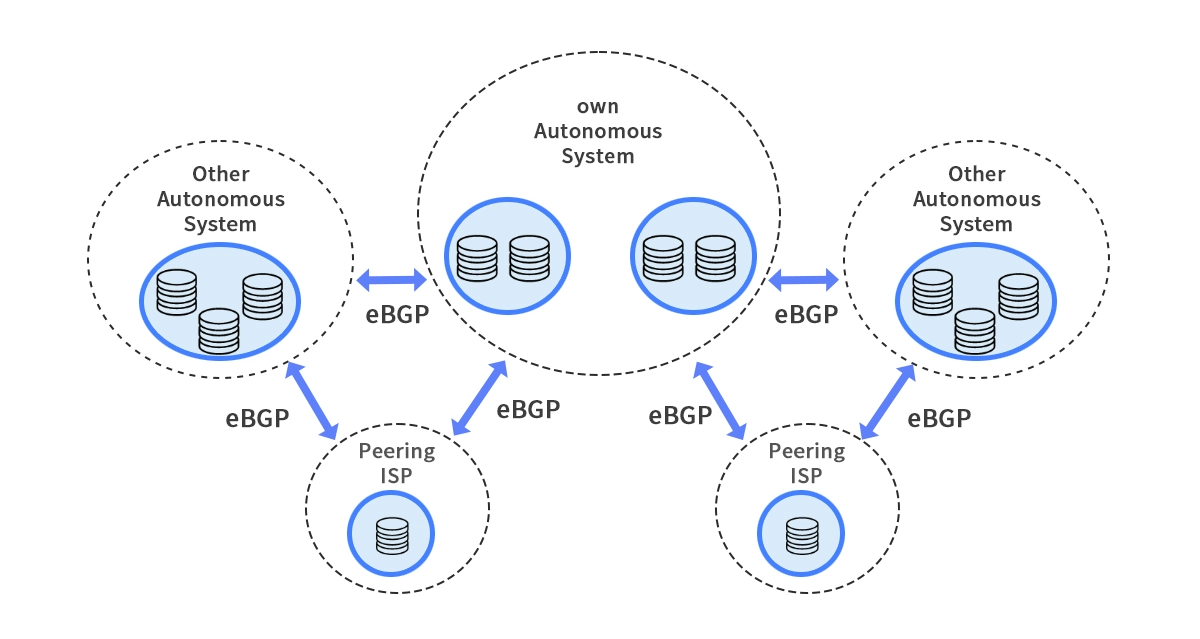
At its core, BGP routing protocol is a set of rules that allows different networks on the Internet to exchange routing information. Think of the Internet as a massive network of countries (autonomous systems), each with its own internal road rules (like OSPF or EIGRP). BGP is the international diplomacy and treaty system that decides how traffic should flow between these countries.
Autonomous System (AS): This is the fundamental unit of BGP. An AS is a collection of IP networks and routers under the control of a single entity (e.g., an ISP, a large enterprise like Google, or a university). Each AS has a unique identifying number (ASN).
Path Vector Protocol: Unlike interior protocols, BGP is a path vector protocol. It doesn't just choose the shortest path; it makes BGP routing decisions based on paths, network policies, and rule sets. This makes it highly flexible and policy-driven.
Why is BGP so crucial? Without BGP, the Internet would be a collection of isolated networks. It enables scalable internet routing, supports multi-homing (connecting to multiple ISPs for redundancy), and is the foundation of global network connectivity. A BGP route leak or hijack can disrupt services worldwide, underscoring its importance.
💡 How BGP Works - The Nuts and Bolts
BGP works by establishing BGP peer sessions (also called neighbors) between routers in different ASes. Once connected, they exchange BGP routing tables, which are lists of available network paths.
The process involves several key components:
Establishment: Routers form a TCP connection (port 179) to become BGP peers.
Advertisement: Peers exchange full routing tables, then incremental updates.
Path Selection: When multiple paths to a destination exist, the BGP router runs its BGP best path selection algorithm, evaluating attributes like:
AS_Path: The list of ASes the advertisement has passed through.
Next-Hop: The IP address of the next router to forward packets to.
Local Preference: A value indicating the preferred path within the AS.
MED (Multi-Exit Discriminator): Suggests to an external neighbor the preferred path into an AS.
Here’s a simplified comparison of two main BGP types:
Feature | eBGP (External BGP) | iBGP (Internal BGP) |
|---|---|---|
Purpose | Routes between different Autonomous Systems. | Routes within the same Autonomous System. |
Path Selection | Typically prefers shorter AS_Path. | Uses different attributes like Local_Pref. |
TTL (Time to Live) | Usually set to 1 (direct link). | Usually set to a higher value (multi-hop). |
Key Role | Interdomain routing and policy enforcement. | Ensuring consistent routing information across the internal network. |
Understanding BGP route aggregation and prefix lists is also vital for efficient and secure operations, helping to keep routing tables manageable and prevent the propagation of incorrect routes.
💡 BGP Security and Challenges
BGP was designed in an era of mutual trust, making BGP security a paramount modern concern. The primary risks are BGP hijacking and route leaks, where an AS (maliciously or accidentally) advertises prefixes it does not own, redirecting traffic.
Solutions like Resource Public Key Infrastructure (RPKI) and BGPsec are being implemented to add cryptographic validation to route origins, creating a more secure global routing infrastructure.
💡 The Physical Layer: Where BGP Meets Optics
While BGP operates at the logical layer (Layer 3/TCP-IP), its performance is utterly dependent on the underlying physical infrastructure. High-speed, reliable connections between BGP edge routers are non-negotiable. This is where high-speed optical transceivers become critical.
In modern data center interconnects (DCI) and internet exchange point (IXP) environments, BGP peers are often connected via dense wavelength-division multiplexing (DWDM) systems. These systems require high-performance optical modules to transmit vast amounts of routing table data and user traffic with low latency and high reliability.
Why Optics Matter for BGP: Stable BGP sessions require consistent, low-latency links. A flapping physical link can cause BGP sessions to reset, leading to route withdrawals and network instability. Advanced QSFP28 and QSFP-DD optical modules provide the 100G/400G bandwidth needed to handle the exponential growth of Internet routes and the traffic they carry.
Choosing the Right Transceiver: Network engineers must select optics that match the distance and fiber type for their BGP peering links. For long-haul internet backbone connections, high-power DWDM modules are essential.
For instance, in a critical border gateway protocol deployment requiring a 100G link over 10km, a reliable transceiver like the LINK-PP QSFP28-100G-LR4 would be an excellent choice. This module ensures the low-error-rate, high-performance physical connection necessary for stable eBGP sessions between data centers or to upstream providers. The reliability of components like LINK-PP's transceivers directly contributes to the stability of the global BGP routing table.
💡 Conclusion: The Indispensable Protocol
BGP is the unsung hero of our connected world. It's not just a protocol; it's a dynamic, policy-based system that holds the Internet together. While challenges like security remain, its robustness and scalability are unmatched. As the Internet continues to evolve with IPv6 deployment and ever-increasing demands, BGP will continue to adapt, guided by robust network engineering principles and supported by ever-advancing hardware like high-capacity optical networking solutions.
Understanding what is BGP in networking is fundamental for anyone involved in enterprise network architecture, ISP operations, or cloud networking. It’s the language spoken by the routers that keep our digital world turning.
💡 FAQ
What is the main job of BGP?
BGP helps your data find the best path across the Internet. You use BGP every time you visit a website or send a message.
What happens if BGP fails?
If BGP fails, you may not reach websites or online services. Your data can get lost or take a longer route. The Internet can slow down or stop working for many users.
What is an autonomous system number (ASN)?
An ASN is a unique number for each group of networks, called an autonomous system. BGP uses this number to know where to send your data.
What is the difference between BGP and OSPF?
BGP works between large networks on the Internet. OSPF works inside smaller networks. You use BGP for global routing. You use OSPF for local routing.
What is BGP hijacking?
BGP hijacking happens when someone sends false route information. Your data can go to the wrong place. You can lose access to websites or services.