
In modern data centers and high-performance networks, the choice of interconnects can significantly impact both performance and cost. Copper-based interconnects, which use copper cabling for data transmission, have become a popular solution for short-distance network connections due to their affordability and simplicity. But what exactly are copper-based interconnects, and how do they compare to other solutions like fiber optics?
In this article, we’ll dive into the benefits of copper-based interconnects, their applications in network architecture, and how they can help reduce capital expenditures (CAPEX) in data center environments.
▶ What Are Copper-based Interconnects?
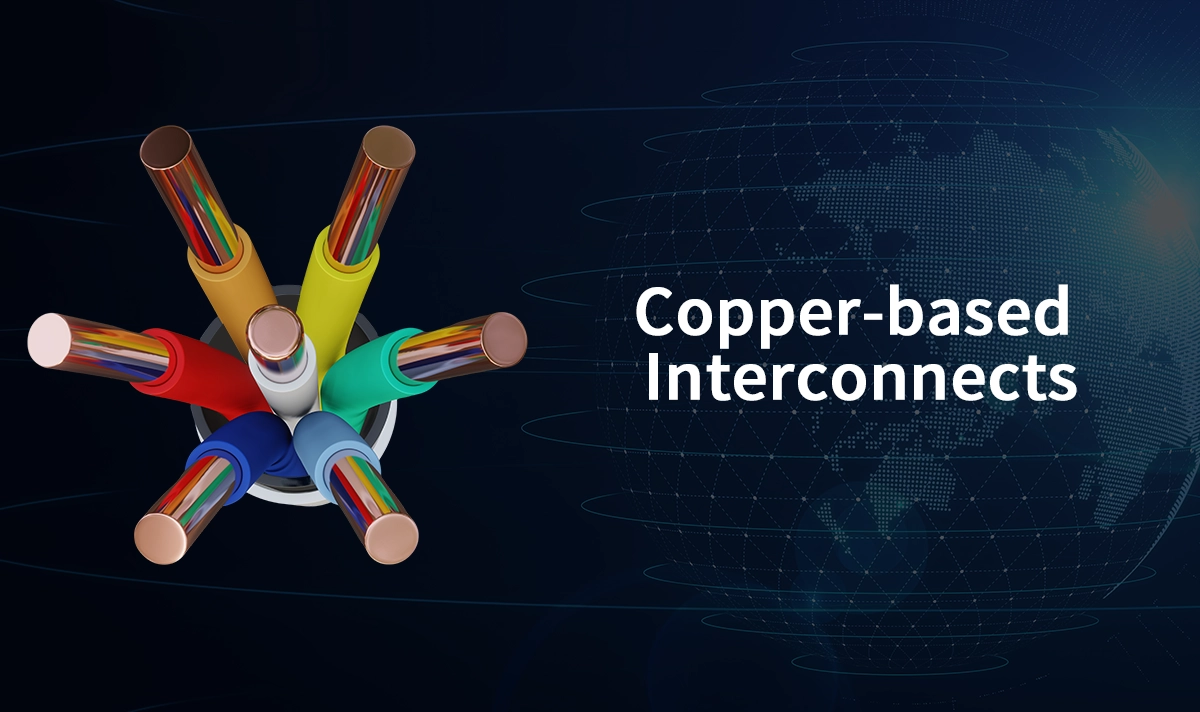
Copper-based interconnects refer to network connections that use copper cables (such as Cat 5e, Cat 6, Cat 6a, or Direct Attach Copper (DAC) cables) to transfer data between devices in a network. These cables are made from copper wire and are used in both traditional Ethernet networks and high-speed data center environments for connecting servers, switches, and other network devices.
While fiber optic cables are often preferred for long-distance connections due to their higher bandwidth and speed, copper interconnects are favored for short-range applications due to their cost-efficiency and ease of installation.
▶ Benefits of Copper-based Interconnects
1. Cost-Effectiveness
One of the primary reasons copper-based interconnects are so widely used in data centers is their lower cost compared to fiber optic solutions. Copper cables, such as Cat 6a or DAC cables, are far less expensive than fiber optic cables and require less expensive equipment for installation and maintenance. This makes them an attractive option for networks that require high-speed connectivity over relatively short distances.
Moreover, the maintenance and repair costs for copper cables are typically lower, and the cables are generally easier to replace and troubleshoot than fiber optic connections.
2. Simplicity of Installation and Maintenance
Copper cables are easier to handle, install, and maintain. They don’t require specialized skills or tools to set up, unlike fiber optics, which require careful handling and splicing. This makes them ideal for environments where installation speed and flexibility are important.
Additionally, network upgrades using copper-based interconnects are often simpler and faster, providing significant time savings compared to fiber solutions.
3. Short-Distance Network Optimization
Copper-based interconnects are perfect for short-distance connections (typically within a single rack or between racks in close proximity). In Top-of-Rack (ToR) architecture, for instance, copper cables are often used to connect switches to servers within a single server rack or between neighboring racks.
Since the range of copper cables is limited compared to fiber, their primary advantage lies in local area network (LAN) environments where distances are generally shorter than 300 meters for high-speed Ethernet standards like 10GBASE-T.
▶ Applications of Copper-based Interconnects in Data Centers
In modern data centers, copper interconnects are commonly deployed in the following areas:
Top-of-Rack (ToR) Switching: Copper-based interconnects are often used to connect servers to switches within the rack, making it cost-effective for high-density environments.
End-to-End Connectivity: Copper cables are often used for internal connections between equipment, especially in mid-range networks or legacy systems that still rely on older Ethernet standards like Gigabit Ethernet (1GbE) or 10GbE.
Direct Attach Copper (DAC) Cables: These are used for short-distance connections between servers and switches. DAC cables are especially popular in high-frequency trading, storage area networks (SANs), and data centers, where speed and reliability are crucial but distances are short.
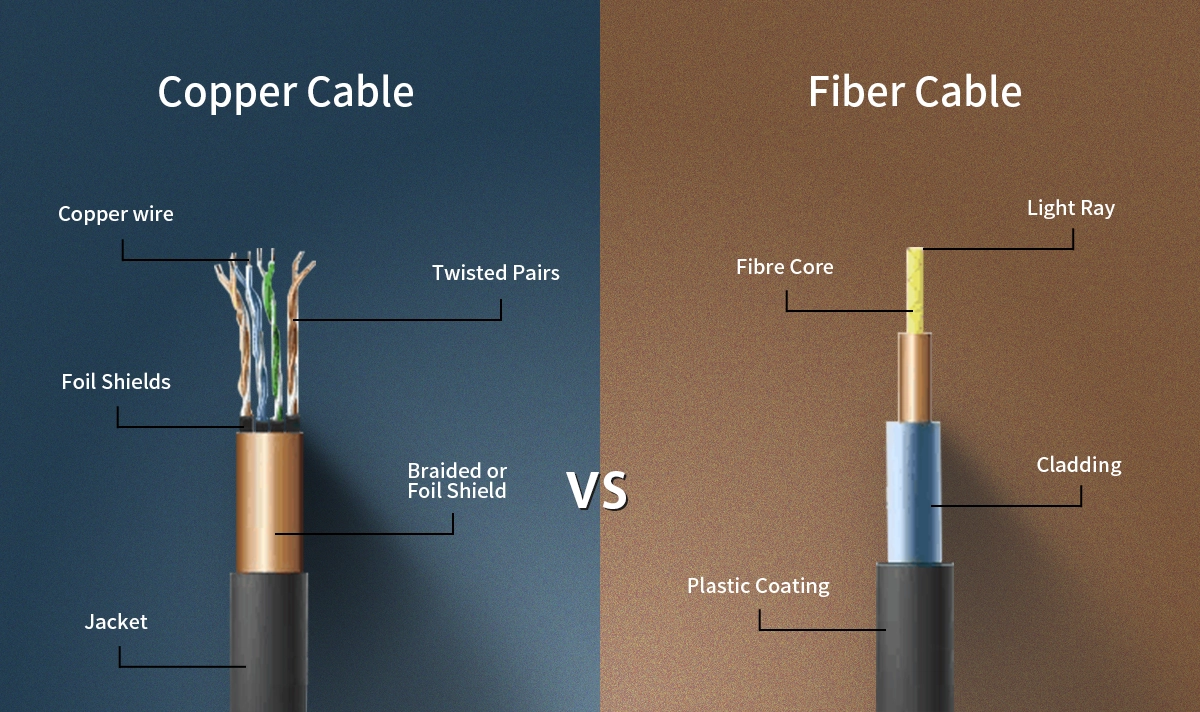
▶ Copper-based vs. Fiber Optic Interconnects
Advantages of Copper
Lower Initial Cost: Copper cables are significantly less expensive than their fiber optic counterparts, especially in terms of both material and installation costs.
Ease of Use: They require less training and fewer tools for installation and maintenance.
Flexible and Versatile: Copper cables are more flexible, making them easier to work with in tight spaces or when needing to change configurations.
Limitations of Copper
Bandwidth and Distance: Copper cables are suitable for short-range applications (usually less than 100 meters for high-speed Ethernet). For long-distance or high-bandwidth applications, fiber optics are preferred.
Electromagnetic Interference (EMI): Copper cables are more susceptible to external interference compared to fiber optic cables, which can lead to data degradation over long distances.
▶ Why Choose Copper-based Interconnects for Your Network?
Choosing the right network interconnect for your infrastructure depends on several factors: cost, distance, speed, and flexibility. If your network primarily involves short-range connectivity and budget is a concern, copper-based interconnects offer an effective solution that optimizes cost-efficiency without sacrificing performance.
Moreover, if you’re building a new data center or expanding an existing one, copper cables are a great option to handle the internal connections that require high-speed Ethernet at lower costs.
▶ Conclusion
As network infrastructure continues to evolve, copper-based interconnects remain a cost-effective, flexible, and reliable solution for many organizations. Whether for data centers, LAN environments, or enterprise networks, copper offers a practical alternative to more expensive fiber optic solutions. By understanding the benefits and limitations of copper-based interconnects, businesses can make informed decisions to optimize their network performance and reduce capital expenditures (CAPEX).
▶ FAQ: Copper-based Interconnects
1. What are copper-based interconnects used for?
Copper-based interconnects are primarily used for short-distance network connections, especially in data centers, LAN environments, and Top-of-Rack (ToR) switching architectures. They provide cost-effective, high-speed Ethernet connectivity between servers, switches, and storage devices. Common applications include Cat 6a/7 cabling, 10GBASE-T, and Direct Attach Copper (DAC) cables for 1G, 10G, 25G, and even 100G short-range links.
2. Are copper-based interconnects better than fiber optic cables?
It depends on the use case. Copper-based interconnects are better for short distances (typically under 30 meters for DAC and under 100 meters for Cat 6a). They offer lower cost, easier installation, and excellent performance for rack-level or row-level networking.
Fiber optics are preferred for long-distance and ultra-high bandwidth connections due to higher signal integrity and longer reach.
3. How far can copper-based interconnects reach?
The maximum distance depends on the cable type:
Cat 6 / Cat 6a (10GBASE-T): up to 100 meters
Cat 7: up to 100 meters
SFP+ DAC cables: typically 1–7 meters
QSFP DAC cables: typically 1–5 meters
Copper performs best in short-reach environments due to signal attenuation and EMI sensitivity.
4. Why are copper-based interconnects considered cost-effective?
Copper cables are significantly cheaper than fiber optics and do not require expensive components like optical transceivers. Installation is also simpler, with no fiber polishing, splicing, or specialized tools needed. This reduces both CAPEX and OPEX, especially in dense data center deployments.
5. Do copper-based interconnects support high-speed networking?
Yes. Modern copper interconnects support a wide range of speeds:
1G Ethernet (Cat 5e/6)
10G Ethernet (Cat 6a/7 or SFP+ DAC)
25G Ethernet (SFP28 DAC)
40G/100G Ethernet (QSFP+/QSFP28 DAC)
While copper is limited by distance, it delivers excellent performance for short—high-speed links commonly used inside data centers.
6. What are the main limitations of copper-based interconnects?
Key limitations include:
Shorter transmission distance compared to fiber
Higher susceptibility to EMI (electromagnetic interference)
Heavier and less flexible at higher cable categories
Despite these limitations, copper remains ideal for ToR and short-path connectivity due to its overall cost-efficiency.
7. When should I choose copper over fiber?
Choose copper-based interconnects if your deployment meets the following conditions:
✔ Distance under 30 meters (DAC) or 100 meters (Cat 6a/7)
✔ Need to minimize CAPEX
✔ High-density ToR/MoR deployments
✔ Frequent re-cabling or hardware changes
For longer distances, fiber optics are the better option.