

In our interconnected digital world, the seamless experiences we enjoy—from logging in with Facebook to seeing live weather on our phones—are powered by an invisible technology: the Application Programming Interface, or API. But what is an API, exactly?
This guide will demystify APIs, explaining how they work, why they are the bedrock of modern software, and how they even connect to physical hardware like optical transceivers. By the end, you'll see why mastering API integration is crucial for any business's digital strategy.
✅ Key Takeaways
APIs work like bridges for software programs. They help programs talk and share information.
You need to know about API parts like endpoints, methods, and data formats. This helps you use APIs the right way.
APIs help save time and effort. Developers can add things like maps and payments fast. They do not need to build everything themselves.
Security is very important when using APIs. Always use strong passwords. Make sure you know who can use your API.
APIs are used in many things every day. They help with checking the weather and shopping online. APIs help technology work smoothly.
✅ What is an API? The Digital Waiter
Think of an API as a waiter in a restaurant. You (the customer) are the application wanting something, like a meal. The kitchen is another system or server that has the resources you need.
You don’t barge into the kitchen and start cooking. Instead, you tell the waiter your order. The waiter takes your request to the kitchen, gets your food, and brings it back to your table. The API acts exactly like this waiter—it’s a messenger that takes requests, tells a system what you want to do, and then returns the system’s response back to you.
Technically, an Application Programming Interface is a set of defined rules and protocols that allows different software applications to communicate with each other. It specifies how to request data, what data can be requested, and how the data will be structured in the response.
✅ How Do APIs Work? A Peek Under the Hood
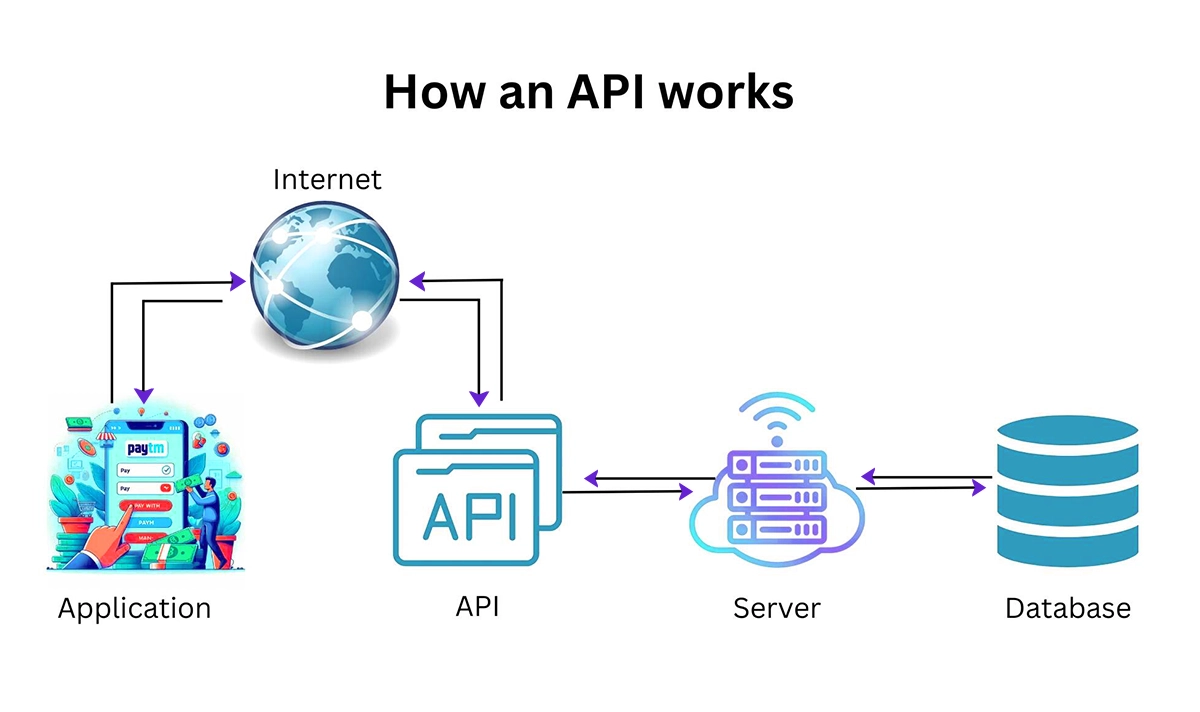
Most modern web APIs, known as RESTful APIs, operate over the internet using standard HTTP requests. A typical interaction involves four key components:
The Client: The application making the request (e.g., your mobile app).
The Server: The application providing the resource or service (e.g., a weather data service).
The Request: The client sends a request to the server's API endpoint. This request includes a specific URL, a method (like GET, POST, PUT, DELETE), and sometimes headers and a body with data.
The Response: The server processes the request and sends back a response, which includes a status code (like 200 for "OK" or 404 for "Not Found") and the requested data, often in a lightweight format like JSON.
This standardized communication is the foundation of effective enterprise application integration, allowing disparate systems to work in harmony.
✅ Common Types of APIs and Their Uses
Not all APIs are created equal. They can be categorized based on their accessibility and use case. Here’s a quick comparison:
API Type | Description | Common Use Case Example |
|---|---|---|
Open/Public API | Available to any developer with minimal restrictions. | Integrating Google Maps into a ride-sharing app. |
Partner API | Requires specific rights or licenses, often for B2B collaborations. | A hotel booking website sharing data with a specific airline partner. |
Internal/Private API | Used within a single organization to connect internal systems. | A company's HR system communicating with its payroll software. |
Composite API | Combines multiple API calls into a single request to improve performance. | An e-commerce checkout process that validates address, processes payment, and updates inventory in one step. |
For businesses looking to streamline complex processes, leveraging a robust API management platform is key to handling these different types securely and efficiently.
✅ Why Are APIs So Important? The Business Benefits
APIs are more than just a technical tool; they are a business enabler. Here’s why:
Innovation & Speed: Instead of building every feature from scratch, developers can use APIs to integrate powerful third-party services, drastically reducing development time.
Scalability: APIs allow systems to grow and add new functionalities without overhauling the entire architecture. This is a core principle of microservices architecture.
Collaboration: They enable different platforms and businesses to work together, creating ecosystems of services that provide more value to the end-user.
Monetization: Companies can package their data or services as APIs and sell access to them, creating new revenue streams.
✅ The Physical Connection: APIs and Optical Modules
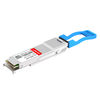
You might wonder how a software concept like an API connects to physical hardware. The answer lies in the Internet of Things (IoT) and modern network management. Consider an optical transceivers—a critical hardware component that converts electrical signals into light waves for high-speed data transmission over fiber optic cables.
In a large data center or telecommunications network, thousands of these optical modules are running. Manually monitoring the health, performance, and status of each one is impossible. This is where APIs come in.
Modern optical transceivers are "smart." They can be managed via a Network Management System (NMS) that uses APIs to communicate with them. For instance, an NMS can use an API call to:
Query a specific optical module for real-time data like temperature, optical power, and voltage.
Configure the module's settings remotely.
Receive alerts if a module is failing or performing outside its parameters.
This level of automation and remote management is only possible through APIs. They act as the bridge between the software-based management system and the physical hardware.
For network engineers seeking reliable, high-performance components that are easily integrable into automated systems, choosing the right hardware is crucial. A product like the LINK-PP QSFP28-100G-SR4 optical module is designed for exactly this purpose. It offers high-speed 100G connectivity and provides rich, API-accessible data points for seamless integration into modern, software-defined network infrastructures, ensuring optimal performance and quick troubleshooting.
✅ Conclusion: APIs Are the Glue of the Digital World
From the apps on your phone to the infrastructure that powers the global internet, APIs are the invisible glue that holds our digital world together. Understanding what is an application programming interface and its potential is the first step toward leveraging its power for innovation, efficiency, and growth.
Whether you're building the next great app, automating your business processes, or managing complex hardware like the LINK-PP QSFP28-100G-SR4, a solid API integration strategy is no longer optional—it's essential.
✅ FAQ
What is an API key?
An API key is a unique code that lets you access an API. You use it to show who you are. Many APIs need a key to keep your data safe.
What can you do with an API?
You can use an API to connect apps, get data, or add features. APIs help you build new tools without starting from scratch.
What makes REST APIs popular?
REST APIs use simple rules and work with many apps. You can send and get data quickly. Many developers choose REST because it is easy to use.
What happens if an API is not secure?
If an API is not secure, someone could steal or change your data. You should always use safe connections and protect your API keys.
What is API documentation?
API documentation explains how to use an API. You find details about requests, responses, and rules. Good documentation helps you use the API correctly.