
🔹 Introduction
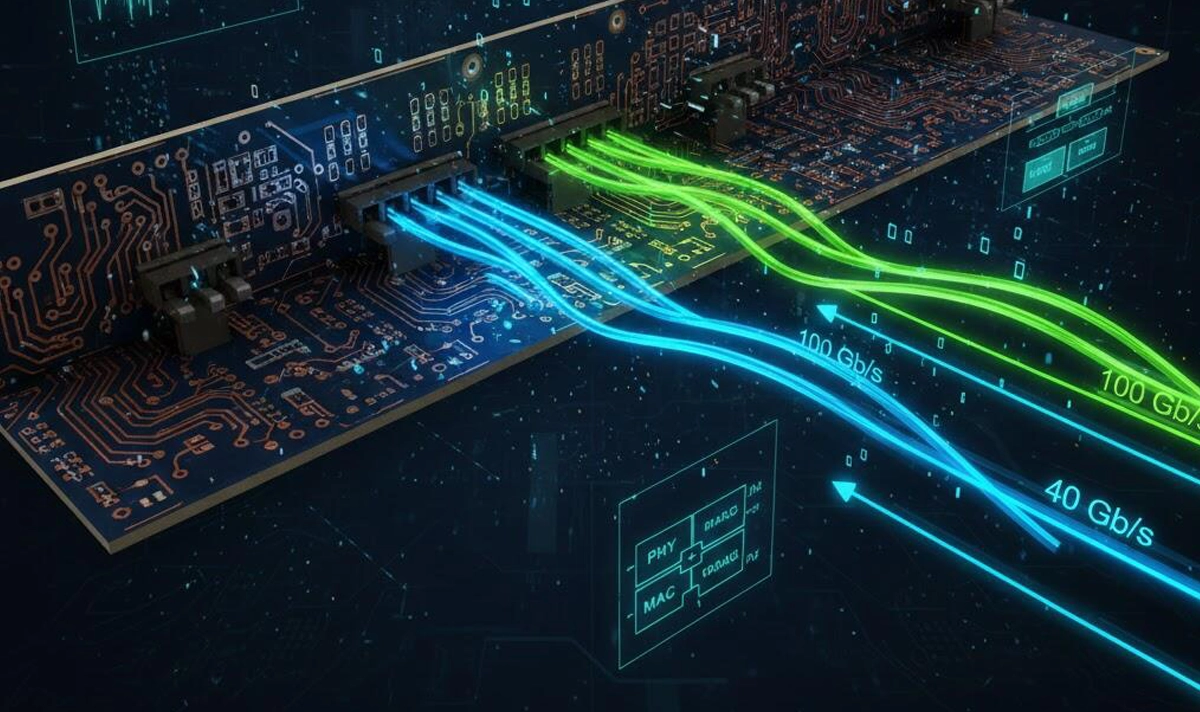
As data centers scale toward higher port density and faster switching capacity, the need for reliable high-speed electrical interfaces becomes critical. The IEEE 802.3bj standard—approved in 2014—defines how 40G and 100G Ethernet operate over backplane channels and copper cable assemblies.
This standard is a milestone in Ethernet evolution, introducing 25 Gb/s signaling technologies that later became the foundation for 25G, 50G, 100G, 200G, and 400G Ethernet.
This article breaks down the purpose, key technologies, PHY types, and industry impact of IEEE 802.3bj—optimised for engineers, network architects, and technical buyers.
🔹 What Is IEEE 802.3bj?
IEEE 802.3bj is a physical-layer (PHY) specification for:
100GBASE-KR4 – 100 Gb/s over backplane
100GBASE-KP4 – 100 Gb/s over backplane with PAM4
100GBASE-CR4 – 100 Gb/s over twinax copper cable
40GBASE-CR4 – 40 Gb/s over twinax copper cable
Its primary goal is to enable 25 Gb/s per lane transmission on challenging PCB backplane environments and short-reach copper links.
🔹 Why IEEE 802.3bj Matters
Before 802.3bj, Ethernet mainly used 10 Gb/s per lane (10GBASE-KR). As density increased, this approach couldn’t scale efficiently.
IEEE 802.3bj introduced the first generation of 25 Gb/s electrical lanes, which became the de facto building block for:
In short:
802.3bj is the transition point that enabled modern high-speed Ethernet generations.
🔹 Key Technologies Introduced by IEEE 802.3bj
1. 25 Gb/s Electrical Signaling
The standard introduces single-lane 25G signaling to reduce the number of lanes needed for high-speed links.
2. PAM4 Modulation (for KP4)
100GBASE-KP4 uses 4-level Pulse-Amplitude Modulation (PAM4), improving spectral efficiency to operate over higher-loss backplanes.
3. Forward Error Correction (FEC)
802.3bj defines robust Reed-Solomon FEC, essential for compensating channel loss and maintaining bit-error-rate (BER) performance.
4. Improved Signal Integrity Requirements
The standard includes specifications for:
Crosstalk suppression
Return loss
Jitter tolerance
Channel equalization (DFE, CTLE)
These improvements paved the way for high-speed SERDES used in modern switches and NICs.
🔹 PHY Types Defined in IEEE 802.3bj
Below is a clear breakdown of each PHY defined in the standard:
PHY Type | Speed | Medium | Description | Typical Use |
|---|---|---|---|---|
100GBASE-KR4 | 100Gb/s | Backplane | 4 lanes×25G | High-density chassis backplanes |
100GBASE-KP4 | 100Gb/s | Backplane | PAM4 signaling | High-loss backplanes |
100GBASE-CR4 | 100Gb/s | Twinax Copper Cable | TOR switches, short-range interconnects | |
40GBASE-CR4 | 40Gb/s | Twinax Copper Cable | 4 lanes×10G | Legacy 40G copper connectivity |
🔹 IEEE 802.3bj vs IEEE 802.3cd vs IEEE 802.3bs
Feature | 802.3bj | ||
|---|---|---|---|
Release Year | 2014 | 2018 | 2017 |
Modulation | NRZ / PAM4 | PAM4 | PAM4 |
Max Electrical Lane Rate | 25G | 50G | 25G |
Applications | 40G / 100G | 50G / 100G / 200G | 200G / 400G |
Innovations | First 25G lanes | 50G lanes, TDECQ | 400G optical PMDs |
802.3bj is the foundational transition point, while 802.3bs/cd expands the speeds and optical interfaces.
🔹 Real-World Applications of IEEE 802.3bj
Spine-leaf data center switching
High-density modular backplanes
Short-reach DAC/AOC copper cable assemblies
Server to top-of-rack (ToR) connections
Mid-plane and backplane chassis interconnects
Wherever 100G Ethernet over electrical lanes is needed, 802.3bj-compliant PHYs appear.
🔹 How LINK-PP Supports IEEE 802.3bj Deployments
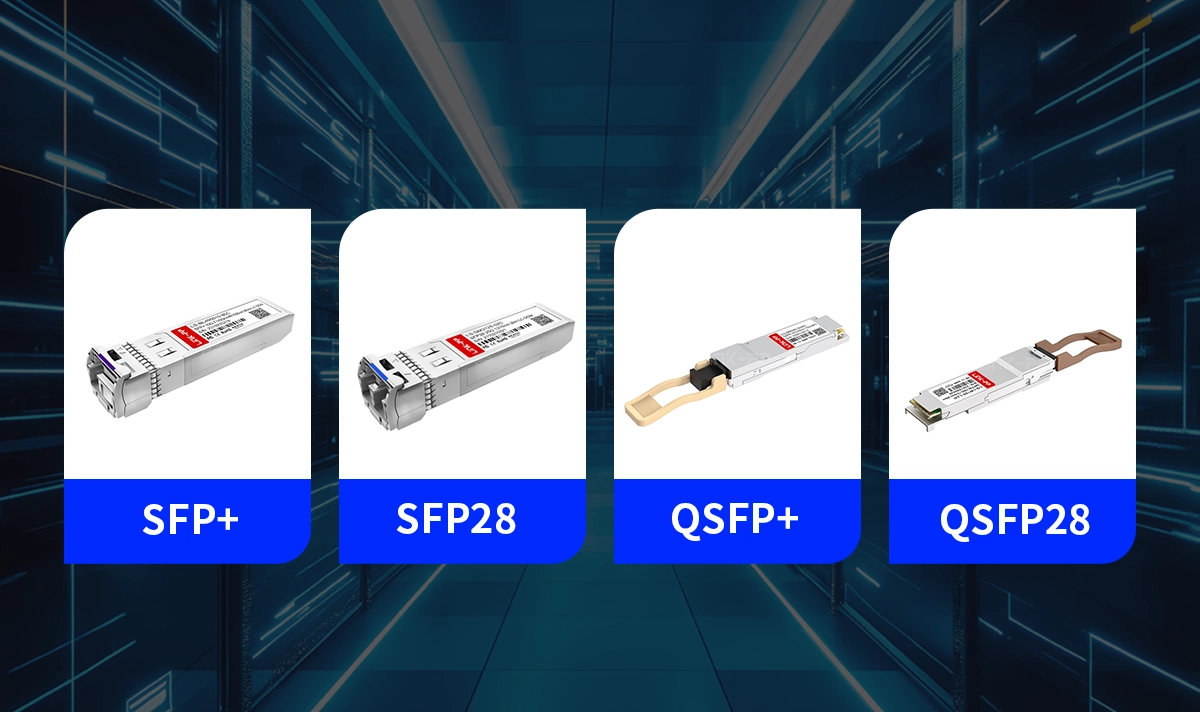
LINK-PP provides a wide selection of SFP+, SFP28, QSFP+, QSFP28 optical transceivers and copper modules that coexist seamlessly with 802.3bj-based electrical backplanes or switches.
Our compatible modules include:
100G QSFP28 SR4 / LR4 / PSM4 series
10G / 25G / 40G / 100G SFP and QSFP solutions
View the product lineup here:
🔗 https://www.l-p.com/store-25432-optics-transceivers-sfp
These modules are built to complement systems using 802.3bj PHYs, ensuring stable, high-speed, and cost-optimized data center connectivity.
🔹 Advantages of IEEE 802.3bj-Compliant Systems
✔ Lower Power Usage
Compared to optical links at short reach.
✔ Cost-Effective Deployment
Copper-based interconnects reduce CAPEX for TOR switching.
✔ High Density
25G lanes allow more bandwidth per connector and backplane.
✔ Scalable to Future Standards
The same electrical lane architecture evolves into 100G/200G/400G.
🔹Conclusion
IEEE 802.3bj is one of the most important standards in Ethernet history. It introduced 25G electrical lane technology, defined reliable 100G/40G copper and backplane solutions, and set the stage for all future high-speed Ethernet developments.
For modern data centers adopting 100G and preparing for 200G/400G upgrades, understanding 802.3bj is essential—and LINK-PP offers fully compatible optical and copper connectivity solutions for every stage of that transition.