

In modern Ethernet networks, flexibility is just as important as speed. The 1000BASE-T SFP transceiver module for Category 5 copper wire has become a practical solution for network engineers, system integrators, and IT teams who need to bridge traditional copper infrastructure with SFP-based switches and routers. Instead of replacing existing cabling, this module allows organizations to continue using installed Cat5 copper wiring while upgrading or expanding network hardware.
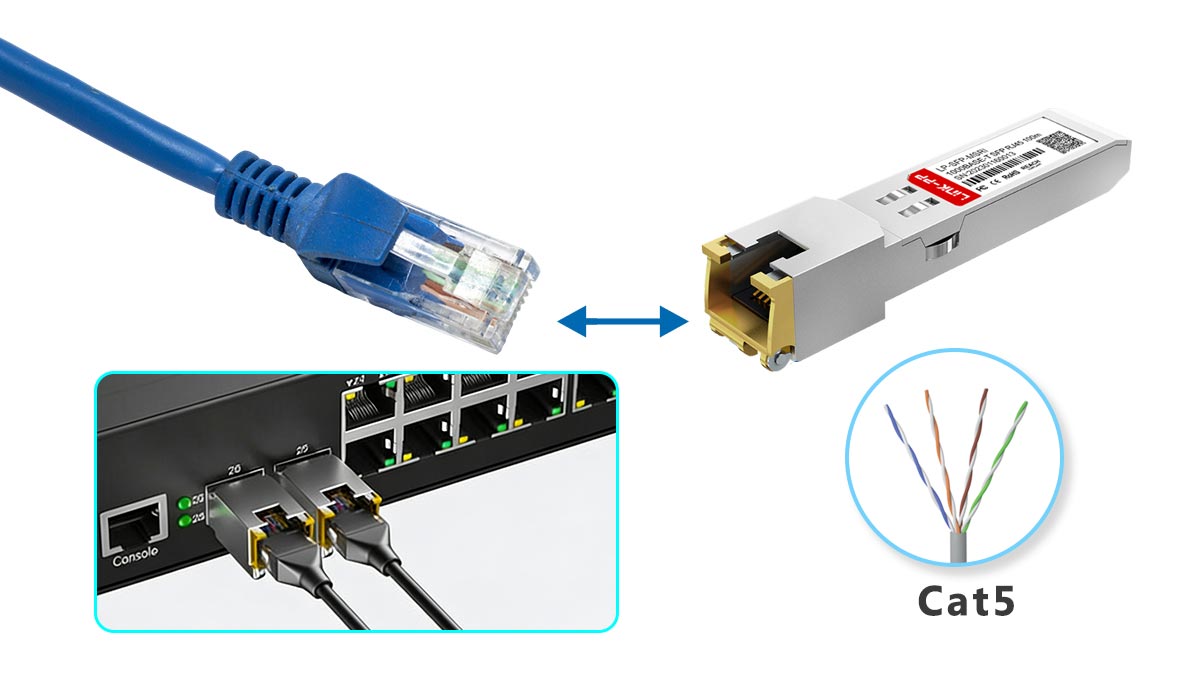
At its core, a 1000BASE-T SFP module is a compact transceiver designed to convert an SFP slot into an RJ45 Ethernet port, enabling 1 Gigabit Ethernet connectivity over standard twisted-pair copper cables. This makes it especially useful in environments where fiber deployment is not feasible or where legacy Cat5 cabling is already in place.
However, despite its convenience, real-world usage reveals important considerations that go beyond basic compatibility. Discussions across networking communities and practical deployments consistently highlight factors such as heat generation, power consumption, switch compatibility, and cable quality differences between Cat5 and Cat5e. These aspects can significantly affect performance and long-term stability.
This guide is designed to provide a complete, experience-based understanding of how 1000BASE-T SFP transceiver modules operate over Category 5 copper wire, including technical standards, real-world limitations, and deployment best practices. By the end of this article, you will clearly understand when this solution is ideal, when it becomes a compromise, and what alternatives may deliver better performance in modern network environments.
🔰 What Is a 1000BASE-T SFP Transceiver Module?
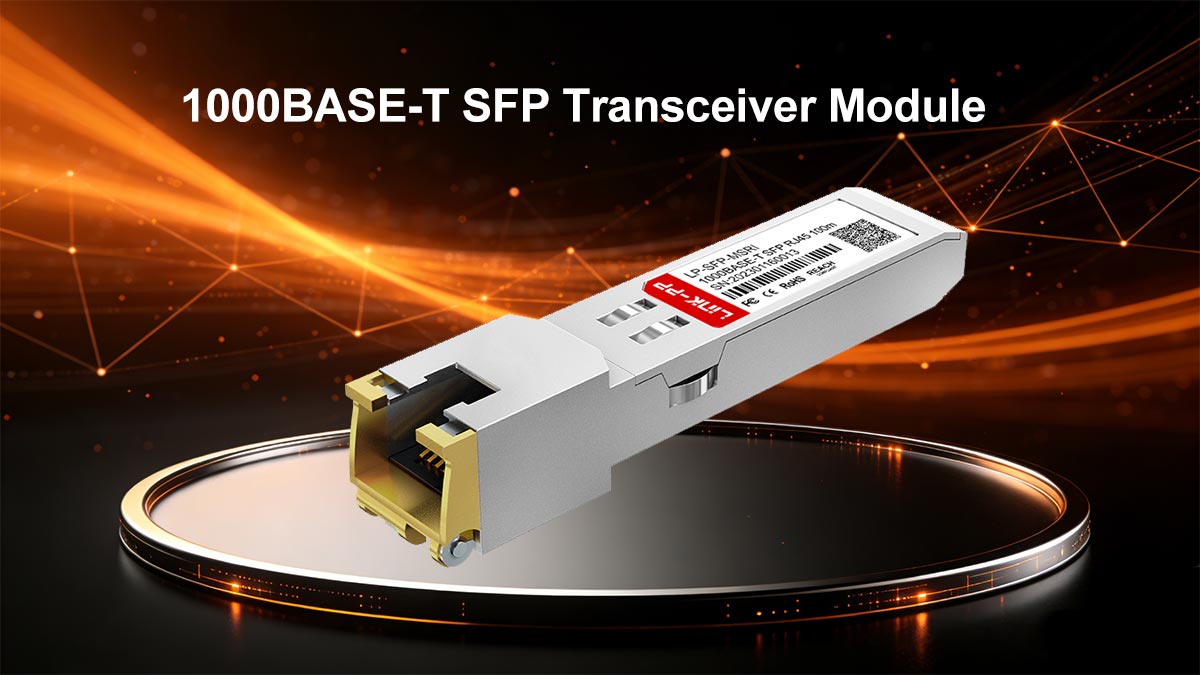
A 1000BASE-T SFP transceiver module is a compact networking device that enables an SFP (Small Form-factor Pluggable) port to support Gigabit Ethernet over copper cabling using an RJ45 interface. In simple terms, it allows a switch or router with SFP slots to communicate through standard Ethernet copper cables instead of fiber optics.
Definition of RJ45 Copper SFP
An RJ45 copper SFP module is a type of SFP transceiver with an integrated Ethernet PHY chipset. Unlike optical SFP modules that transmit data using light over fiber, a copper SFP uses electrical signaling over twisted-pair copper wires.
Key characteristics include:
Supports 1000BASE-T Gigabit Ethernet standard (IEEE 802.3ab)
Uses a standard RJ45 Ethernet port
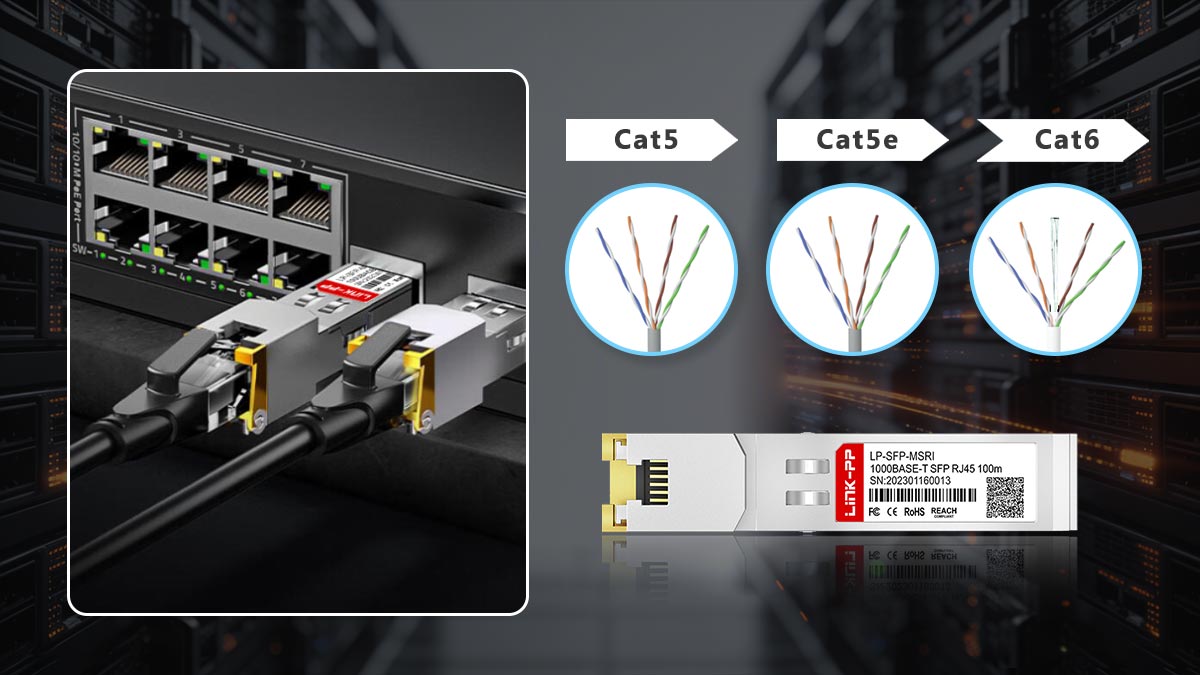
Compatible with Category 5e / Category 6 (and in many cases Category 5) copper cables
Operates as a “media converter inside a module”
This makes it fundamentally different from fiber SFPs, as it performs additional signal processing to handle electrical Ethernet transmission.
How It Converts an SFP Port to Ethernet RJ45
A 1000BASE-T SFP module functions as a protocol and media bridge inside the SFP slot.
Here is how the conversion works:
SFP interface connection
The module plugs into the switch’s SFP cage
The host device communicates using SGMII or similar internal signaling
Internal PHY processing
The module contains a Gigabit Ethernet PHY chip
It converts digital SFP signals into Ethernet electrical signals
RJ45 output transmission
The processed signal is sent through the RJ45 port
Data is transmitted over twisted-pair copper cabling (Cat5/Cat5e/Cat6)
Auto-negotiation
The module automatically negotiates speed (10/100/1000 Mbps)
It ensures compatibility with connected network devices
In essence, the module acts as a miniature media converter embedded inside an SFP form factor, enabling copper connectivity without requiring external adapters.
Typical Use in Network Switches and Routers
1000BASE-T SFP transceiver modules are widely used in scenarios where flexibility and cost efficiency are more important than optical performance.
Common deployment environments include:
🔹 Enterprise and SMB switches
Adding RJ45 ports to SFP-only switches
Expanding copper connectivity without replacing hardware
🔹 Data center edge connections
Connecting servers or uplinks that still rely on copper Ethernet
Bridging between fiber backbone and copper endpoints
🔹 Network upgrades and migrations
Gradually transitioning from copper to fiber infrastructure
Maintaining compatibility with legacy Cat5/Cat5e cabling systems
🔹 Industrial and office networks
Supporting existing structured cabling systems
Avoiding costly rewiring in established buildings
While highly convenient, these modules are typically considered a practical compromise solution rather than a performance-optimized choice. Their role is primarily to extend the usability of existing copper infrastructure within modern SFP-based networking environments.
🔰 Can 1000BASE-T SFP Work with Category 5 Copper Wire?
Yes — a 1000BASE-T SFP transceiver module can work with Category 5 copper wire, but with important technical and practical limitations that must be understood before deployment. While the IEEE standard defines gigabit operation over twisted-pair copper, real-world performance depends heavily on cable quality, installation conditions, and network environment.
IEEE 802.3ab Standard Explanation
The 1000BASE-T standard is defined under IEEE 802.3ab, which specifies Gigabit Ethernet transmission over four pairs of balanced twisted-pair copper cabling.
Key technical points include:
Supports 1 Gbps full-duplex transmission
Uses all four twisted pairs simultaneously
Employs advanced signal encoding (PAM-5 modulation)
Designed for Category 5 or higher structured cabling
In theory, this standard allows Gigabit Ethernet to run over existing Cat5 infrastructure, which is why 1000BASE-T SFP modules exist as a practical retrofit solution for legacy networks.
However, the standard assumes properly installed and compliant Category 5 cabling, not degraded or poorly terminated legacy cable runs.
Cat5 vs. Cat5e vs. Cat6 Differences
Although Cat5 is technically supported by the IEEE standard, real-world usage strongly differentiates between cable categories:
🔹 Category 5 (Cat5)
Designed for up to 100 MHz bandwidth
Supports Gigabit Ethernet only under ideal conditions
More susceptible to crosstalk and signal degradation
Often found in older installations
🔹 Category 5e (Enhanced)
Improved crosstalk performance over Cat5
Fully optimized for Gigabit Ethernet
Considered the minimum recommended standard for 1000BASE-T
🔹 Category 6
Supports up to 250 MHz bandwidth
Better shielding and reduced interference
More stable for long-distance or high-density deployments
📌 Practical takeaway:
While Cat5 may work, Cat5e is the real-world baseline for reliable 1000BASE-T SFP performance.
100 Meter Theoretical Distance Limit
According to IEEE 802.3ab, the maximum transmission distance for 1000BASE-T over twisted-pair copper is:
👉 100 meters (328 feet)
This includes:
Up to 90 meters of permanent horizontal cabling
Up to 10 meters of patch cords
This limit applies equally to:
Cat5
Cat5e
Cat6
However, reaching this distance reliably depends on cable quality and installation standards. In older Cat5 infrastructure, performance may degrade significantly before reaching the theoretical maximum.
Real-World Performance Considerations
In practical deployments, especially those discussed in engineering communities and field feedback, several factors affect whether Cat5 can reliably support a 1000BASE-T SFP module:
🔥 1. Cable quality and aging
Old Cat5 cables may suffer from attenuation and insulation degradation
Poor termination increases packet loss and link instability
⚡ 2. Electromagnetic interference (EMI)
Cat5 is more vulnerable to noise in industrial or high-density environments
Nearby power lines or equipment can impact signal integrity
🌡️ 3. Module heat and signal stability
RJ45-based SFP modules generate more heat than fiber modules
Heat can indirectly affect stability in dense switch environments
🔄 4. Auto-negotiation variability
Some switches handle legacy Cat5 links inconsistently
Speed negotiation may fall back to 100 Mbps in poor conditions
A 1000BASE-T SFP module can operate over Category 5 copper wire, but reliability depends heavily on real-world conditions. While the IEEE standard supports it, most modern network designs consider Cat5 as a minimum-risk or legacy-use case only, with Cat5e or better recommended for stable Gigabit performance.
🔰 Real-World Performance: Heat, Power, and Stability Issues
Although the 1000BASE-T SFP transceiver module for Category 5 copper wire is fully compliant with IEEE standards and works in most environments, real-world deployments often reveal performance tradeoffs that are not obvious from datasheets. Among the most frequently discussed concerns are heat generation, higher power consumption, and stability limitations in dense switch environments.
Why RJ45 SFP Modules Generate Heat
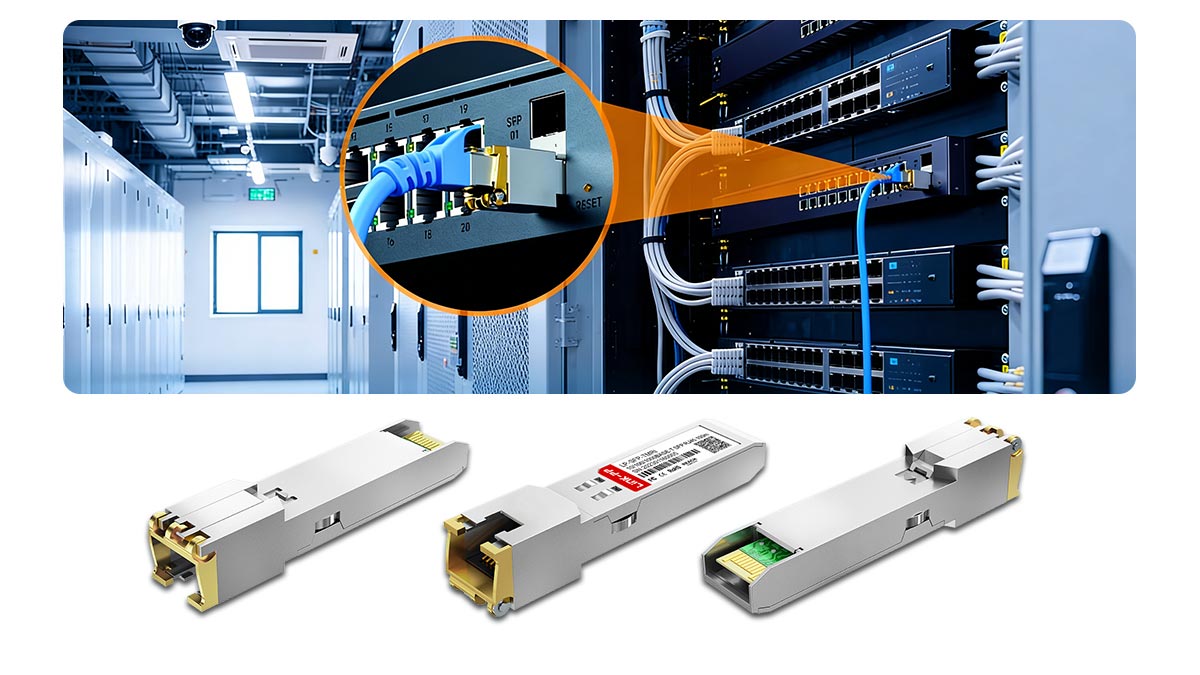
One of the most consistently reported characteristics of RJ45 copper SFP modules is that they run significantly hotter than optical or DAC alternatives.
This happens due to the internal architecture:
The module contains a full Gigabit Ethernet PHY chip
It performs complex analog signal processing for copper transmission
It converts SFP signaling into electrical Ethernet signals in real time
It drives four-pair twisted copper cabling at full duplex
Unlike fiber SFPs, which primarily handle optical signal conversion, 1000BASE-T modules must actively process and equalize electrical signals, which requires more computation and power.
📌 Result:
Noticeably warm surface temperature during operation
Increased heat in high-density switch deployments
Potential thermal stress when multiple modules are installed side-by-side
Power Consumption vs. Fiber SFP Modules
Another important factor is energy efficiency.
Typical comparison in real deployments:
Fiber SFP modules: ~0.8W to 1.5W
1000BASE-T RJ45 SFP modules: ~2W to 3W+
This difference may seem small per module, but it becomes significant in:
Switches with many SFP ports
Edge aggregation devices
Industrial or enclosed rack environments
Because RJ45 SFP modules require a PHY layer for copper signaling, they inherently consume more power than fiber-based alternatives, which rely on simpler optical conversion.
📌 Key takeaway:
Copper SFPs trade simplicity and efficiency for compatibility with RJ45 infrastructure.
Community-Reported Stability Issues
Across networking communities and field usage reports, stability is generally acceptable—but not perfect, especially in less-than-ideal conditions.
Commonly reported issues include:
🔄 1. Intermittent link drops
Occur more frequently on older Cat5 cabling
Often related to marginal signal quality or poor termination
⚙️ 2. Auto-negotiation inconsistencies
Some switch models struggle with stable 1 Gbps negotiation
Occasional fallback to 100 Mbps mode
🔌 3. Vendor compatibility variations
Certain switches handle third-party RJ45 SFP modules inconsistently
Firmware restrictions or EEPROM coding can affect behavior
📌 Overall sentiment:
While most modules function correctly, users often describe RJ45 SFP as “works, but not always perfectly stable under stress.”
Dense Switch Environment Risks
One of the most critical real-world limitations appears in high-density switch deployments, such as data centers or enterprise aggregation layers.
Key risks include:
🌡️ 1. Thermal accumulation
Multiple RJ45 SFP modules increase overall switch temperature
Heat buildup can affect adjacent ports
🧱 2. Port spacing limitations
SFP cages are often tightly packed
Copper modules generate more heat per port than fiber
⚡ 3. Reduced airflow efficiency
Dense RJ45 SFP usage can reduce cooling efficiency inside the chassis
May trigger higher fan speeds or thermal throttling in some systems
📌 Practical observation:
Many network engineers avoid populating all SFP slots with RJ45 modules in dense switches, preferring a mix of fiber and DAC for thermal balance.
In real-world deployments, the 1000BASE-T SFP transceiver module for Category 5 copper wire is functional but thermally and electrically intensive. It performs well in low-density or edge environments, but its heat output, power usage, and stability sensitivity make it less ideal for dense or high-performance networking designs.
🔰 Switch Compatibility and Vendor Limitations
One of the most important practical considerations for deploying a 1000BASE-T SFP transceiver module for Category 5 copper wire is switch compatibility. While the module is based on an open IEEE standard (802.3ab), real-world operation can still be influenced by vendor policies, firmware restrictions, and transceiver coding mechanisms.
In practice, compatibility is less about the electrical standard and more about how each switch manufacturer handles SFP module authentication and negotiation behavior.
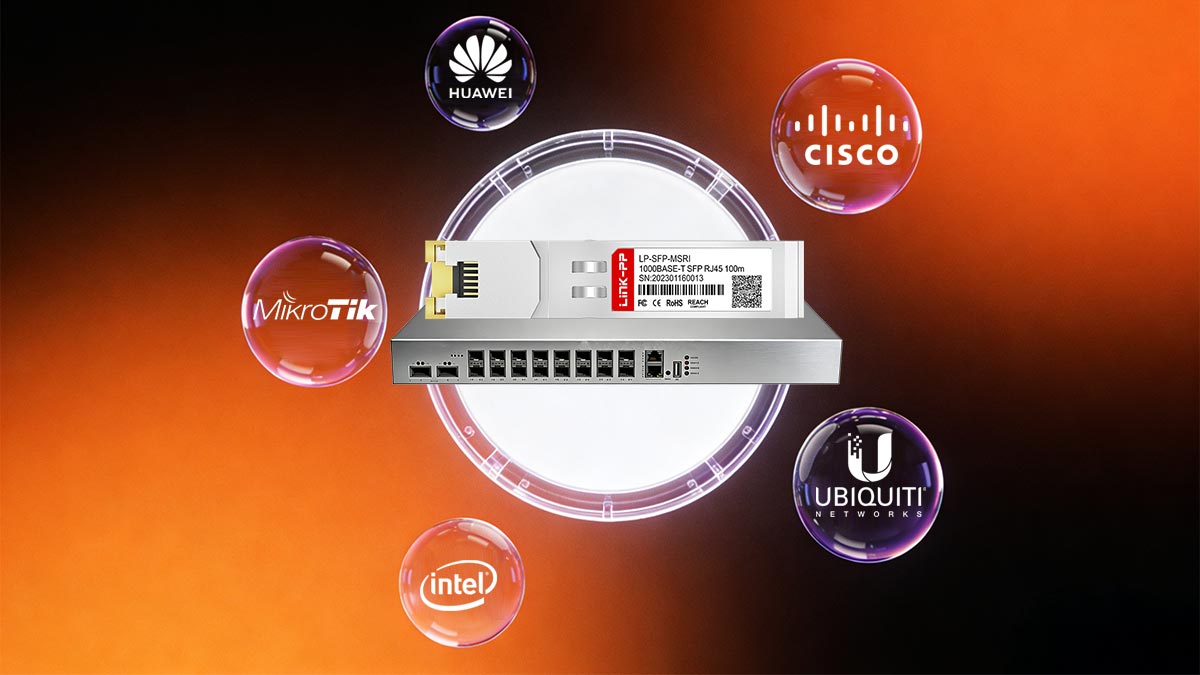
Cisco / Ubiquiti / Mikrotik Compatibility Overview
Different networking vendors implement varying levels of strictness when it comes to accepting third-party SFP modules.
🔹 Cisco
Often enforces EEPROM-based vendor validation
May display warnings such as “unsupported transceiver”
In many cases, still allows operation if compatibility checks are bypassed or disabled
Enterprise-grade switches tend to be stricter than small business models
🔹 Ubiquiti
Generally more flexible with third-party modules
Most UniFi and EdgeSwitch platforms support generic 1000BASE-T SFP modules
Fewer restrictions compared to traditional enterprise vendors
🔹 MikroTik
Known for high compatibility tolerance
Commonly used in homelab and ISP environments with third-party SFPs
Typically supports RJ45 SFP modules without blocking, though monitoring warnings may appear
📌 Key takeaway:
Vendor choice significantly impacts deployment success, even when the module is fully IEEE-compliant.
EEPROM Coding and Vendor Lock Issues
Modern SFP modules contain an internal EEPROM (Electrically Erasable Programmable Read-Only Memory) that stores identification data such as:
Vendor name
Model number
Supported specifications
Compatibility codes
Switches may read this information to determine whether a module is “approved.”
⚠️ Common issues include:
“Unsupported transceiver” warnings
Port disabling on strict enterprise devices
Reduced functionality in locked-down environments
Some manufacturers use vendor-specific coding, meaning that even technically identical 1000BASE-T modules may behave differently depending on how they are programmed.
📌 Practical insight:
This is why “compatible coded SFP modules” are often marketed separately from generic versions.
Third-Party SFP Acceptance Behavior
Third-party RJ45 SFP modules are widely used, but acceptance varies based on switch firmware and configuration.
Typical behavior patterns:
✔ Fully accepted with no warnings (common in MikroTik and many SMB switches)
⚠ Accepted but with system logs showing “unsupported module”
❌ Blocked or disabled in strict enterprise environments
Factors influencing acceptance include:
Firmware version
Switch model generation
Whether “SFP verification” is enforced
Vendor support policy
📌 Important note:
Even when warnings appear, the module may still function normally at full Gigabit speed.
Auto-Negotiation Behavior in Mixed Networks
The 1000BASE-T SFP transceiver module for Category 5 copper wire supports auto-negotiation, but behavior can vary in mixed or legacy environments.
Key characteristics:
Automatically negotiates 10/100/1000 Mbps speeds
Adjusts duplex mode (typically full duplex for gigabit links)
Attempts compatibility with older network devices
Potential issues in mixed environments:
Downshifting to 100 Mbps when cable quality is marginal
Negotiation delays during link establishment
Inconsistent behavior when paired with unmanaged or legacy switches
📌 Real-world observation:
Mixed networks with older Cat5 infrastructure are more likely to experience negotiation inconsistencies than modern Cat5e/Cat6 deployments.
While the 1000BASE-T SFP module itself is standards-based and broadly compatible, actual deployment success depends heavily on switch vendor policies, EEPROM coding restrictions, and auto-negotiation behavior in mixed network environments. For stable deployment, MikroTik and Ubiquiti environments tend to be more flexible, while Cisco systems may require additional compatibility considerations.
🔰 1000BASE-T SFP vs. Fiber SFP vs. DAC Cable
When selecting a connectivity solution for SFP-based switches, engineers typically compare 1000BASE-T copper SFP modules, fiber SFP modules, and DAC (Direct Attach Copper) cables. Although all three options can deliver Gigabit Ethernet connectivity, their performance characteristics, power efficiency, and deployment suitability are significantly different.
Understanding these differences is essential when deciding whether a 1000BASE-T SFP transceiver module for Category 5 copper wire is the right choice or simply a convenient compromise.
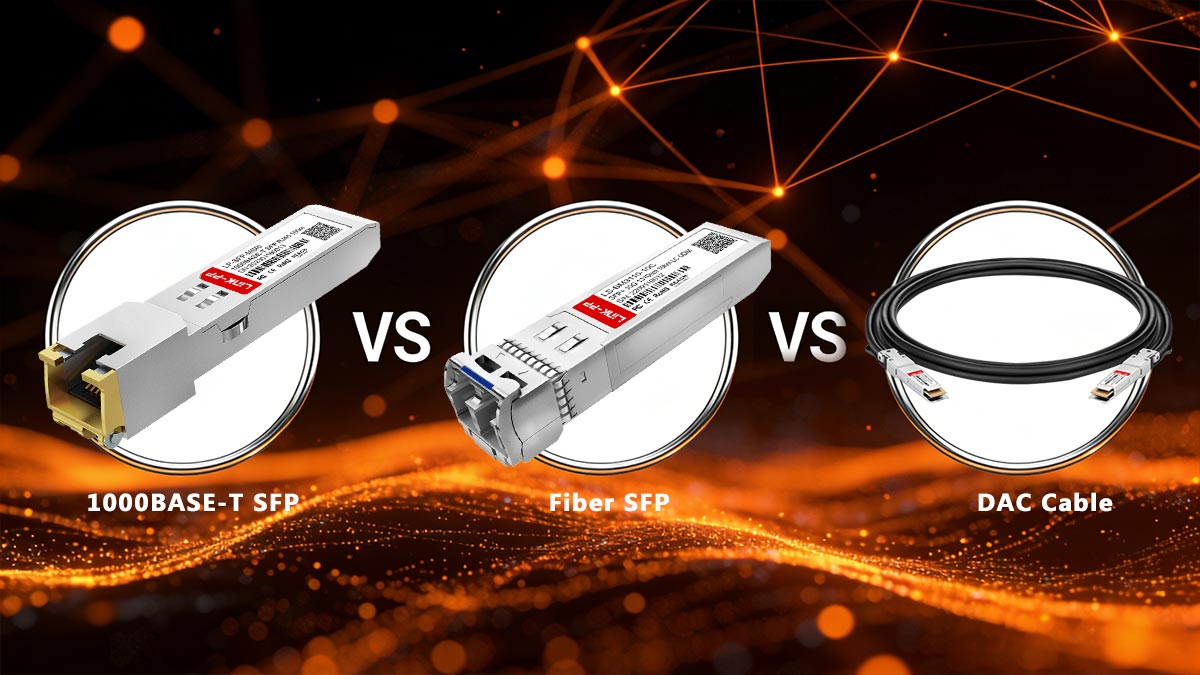
Performance Comparison Table Logic
Below is a simplified engineering-level comparison of the three technologies:
Feature | 1000BASE-T Copper SFP | Fiber SFP Module | DAC Cable |
|---|---|---|---|
Medium | Twisted-pair copper (Cat5/Cat5e/Cat6) | Fiber optic cable | Twinax copper cable |
Max Distance | Up to 100m | From 550m to 80km+ (depends on type) | Typically 1–10m |
Power Consumption | High (~2–3W) | Low (~0.8–1.5W) | Very low |
Heat Generation | High | Low | Low |
Latency | Slightly higher | Lowest | Very low |
Installation Flexibility | High (existing copper reuse) | Medium | Low (short range only) |
Cost Efficiency | Medium | Higher initial cost, better long-term | Lowest for short runs |
Heat and Power Efficiency Differences
One of the most significant differences between these technologies is energy efficiency.
🔥 1000BASE-T SFP (Copper RJ45)
Contains a full PHY chipset for copper signal processing
Requires more power to drive electrical signals over twisted pairs
Generates noticeable heat during operation
Uses optical signaling (light instead of electrical transmission)
Requires less complex signal processing
Typically runs cooler and more efficiently
⚡ DAC Cable
Passive or semi-active copper solution
No complex PHY conversion inside module (in most cases)
Lowest power consumption of the three options
📌 Conclusion:
Copper SFP is the least power-efficient solution, especially in dense switch environments.
Latency and Stability Considerations
Although all three options support Gigabit Ethernet, their internal processing affects performance characteristics:
⏱️ Latency differences
Fiber SFP: Lowest and most consistent latency
DAC: Extremely low latency (ideal for short-distance high-speed links)
1000BASE-T SFP: Slightly higher latency due to PHY processing overhead
📶 Stability differences
Fiber: Most stable in electrically noisy environments
DAC: Stable but limited by distance and compatibility
Copper SFP: More sensitive to cable quality and EMI interference
📌 Real-world insight:
For most enterprise and data center applications, stability and predictability outweigh convenience.
When to Avoid Copper SFP Modules
Although 1000BASE-T SFP modules are useful, there are scenarios where they are not recommended:
❌ 1. High-density switch environments
Excessive heat buildup
Reduced airflow efficiency
Increased risk of thermal stress
❌ 2. Performance-sensitive networks
Trading systems
Low-latency applications
High-frequency data aggregation
❌ 3. Long-term infrastructure design
Fiber provides better scalability
Copper limits future bandwidth upgrades
Higher long-term power costs
❌ 4. Poor-quality or aging Cat5 infrastructure
Signal degradation risk
Link instability or fallback speeds
Increased troubleshooting overhead
While the 1000BASE-T SFP transceiver module for Category 5 copper wire offers unmatched convenience for reusing existing Ethernet cabling, it is fundamentally a trade-off solution. Fiber SFP and DAC cables consistently outperform copper SFP modules in terms of efficiency, latency, and long-term stability, making them the preferred choice in modern high-performance networks.
🔰 Best Use Cases for Cat5 RJ45 SFP Modules
Although the 1000BASE-T SFP transceiver module for Category 5 copper wire is not the most power-efficient or thermally optimal networking solution, it remains widely used because of one key advantage: it allows existing copper infrastructure to be reused without redesigning the network. In many real-world deployments, this practicality outweighs its performance tradeoffs.
Understanding where these modules perform best helps network engineers make cost-effective and reliable deployment decisions.
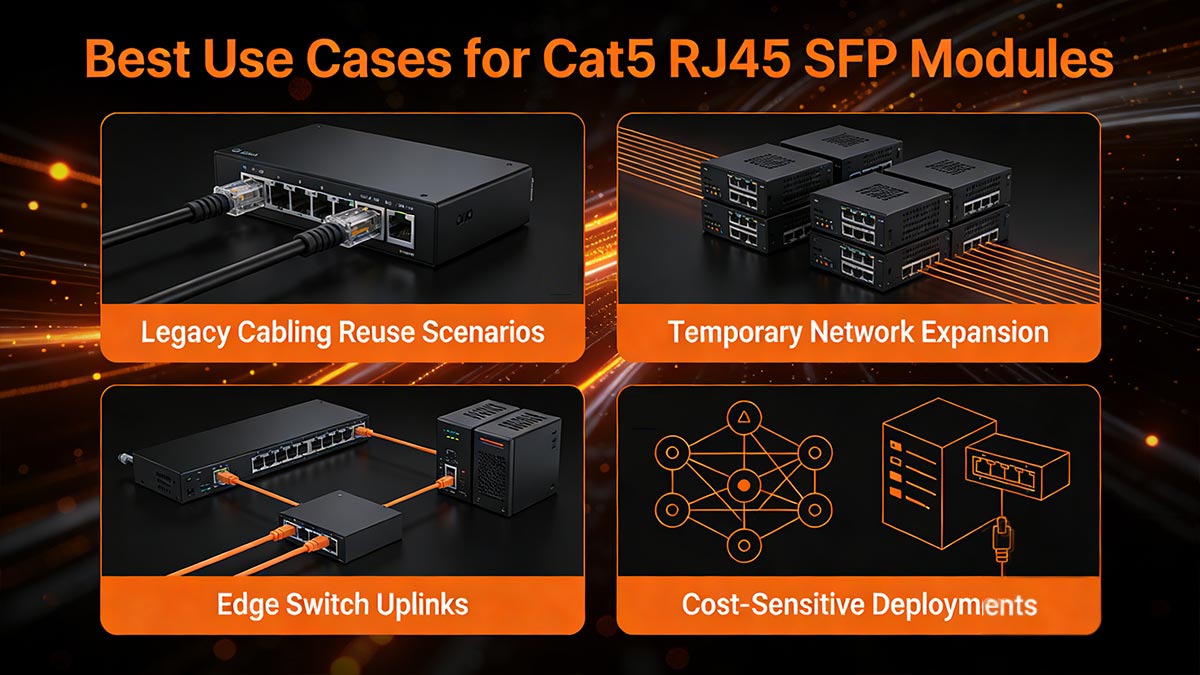
Legacy Cabling Reuse Scenarios
One of the most common use cases for RJ45 SFP modules is in environments with existing Cat5 or Cat5e structured cabling that is still in good physical condition.
Typical scenarios include:
Older office buildings with pre-installed copper Ethernet
Educational institutions with long-standing network infrastructure
Industrial environments where rewiring is costly or disruptive
Instead of replacing hundreds of cable runs, organizations can simply install a 1000BASE-T SFP module into an SFP-enabled switch and immediately bring legacy cabling back into service.
📌 Key benefit:
Avoids expensive and time-consuming re-cabling projects
Extends lifecycle of existing infrastructure
Temporary Network Expansion
RJ45 copper SFP modules are also frequently used for short-term or transitional network needs.
Common examples include:
Temporary office setups or relocation sites
Event networks (conferences, exhibitions, testing labs)
Interim connectivity during infrastructure upgrades
In these cases, speed of deployment is more important than long-term efficiency. A 1000BASE-T SFP module allows IT teams to quickly add Ethernet ports without changing hardware design.
📌 Key benefit:
Fast deployment with minimal configuration
Flexible and reversible network expansion
Edge Switch Uplinks
Another practical application is using RJ45 SFP modules for edge network connectivity, particularly in smaller or distributed network architectures.
Typical use cases:
Connecting edge switches to access-layer devices
Linking small office switches to core infrastructure
Providing uplinks where fiber is not available or not necessary
In these scenarios, distance is usually short and bandwidth requirements are moderate, making Cat5/Cat5e cabling sufficient.
📌 Key benefit:
Convenient copper-based uplinks in access networks
Works well in low-density switch environments
Cost-Sensitive Deployments
Cost efficiency is another major reason organizations choose copper SFP modules over fiber or DAC alternatives.
This includes:
Small and medium-sized businesses (SMBs)
Budget-limited IT infrastructure upgrades
Environments where existing copper cabling eliminates additional investment
By leveraging existing Cat5 infrastructure, organizations can:
Avoid fiber optic installation costs
Reduce hardware replacement expenses
Extend the life of current network layouts
📌 Key benefit:
Lowest barrier to upgrading SFP-based switches to Ethernet connectivity
The 1000BASE-T SFP transceiver module for Category 5 copper wire is best viewed as a pragmatic infrastructure bridge rather than a performance-optimized solution. It excels in environments where cost savings, deployment speed, and legacy compatibility are more important than maximum efficiency or long-term scalability.
🔰 Common Problems and Troubleshooting Guide
While the 1000BASE-T SFP transceiver module for Category 5 copper wire is generally reliable under IEEE-compliant conditions, real-world deployments often encounter operational issues. Most problems are not caused by the module itself, but by a combination of cable quality, switch compatibility, environmental factors, and negotiation behavior.
This section summarizes the most common issues and practical troubleshooting approaches used by network engineers.
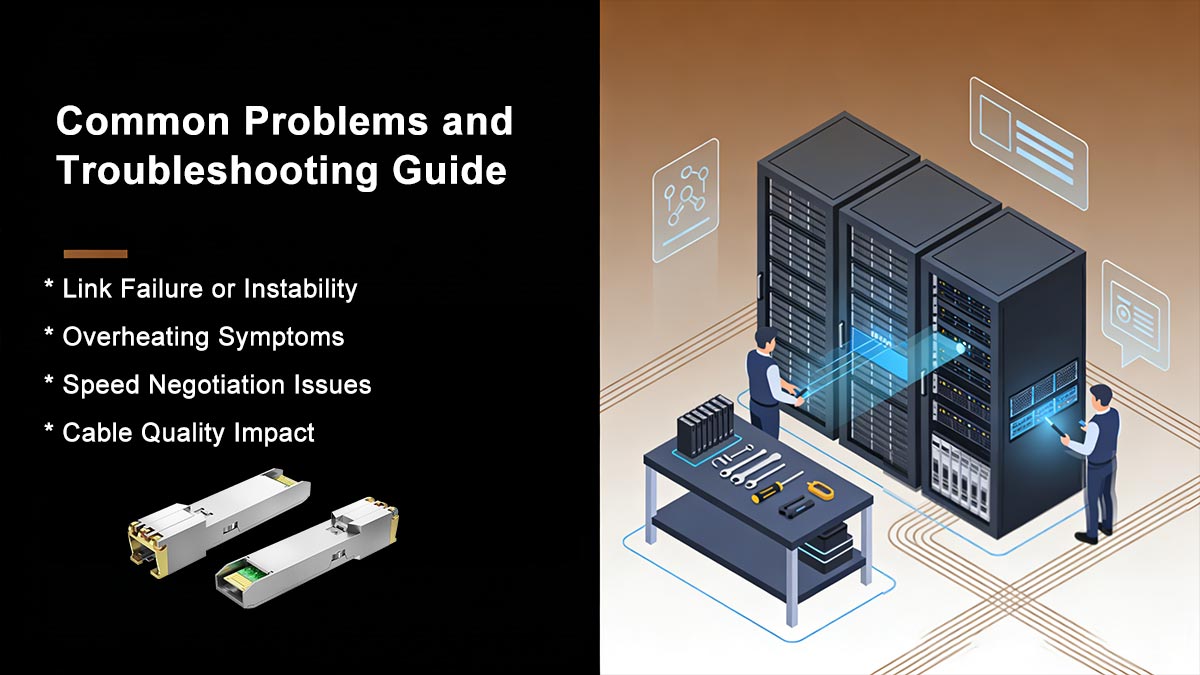
Link Failure or Instability
One of the most frequently reported issues is intermittent link drops or unstable connectivity.
🔍 Common causes:
Poor-quality or aging Cat5 cabling
Loose RJ45 termination or damaged connectors
Excessive electromagnetic interference (EMI)
Marginal signal integrity over long cable runs
🛠️ Troubleshooting steps:
Replace or re-terminate patch cables
Test with a known-good Cat5e or Cat6 cable
Reduce cable length where possible
Move cable away from high-power electrical sources
📌 Insight:
In many cases, replacing Cat5 with Cat5e immediately resolves instability issues.
Overheating Symptoms
Another common concern with RJ45 SFP modules is thermal buildup, especially in dense switch environments.
🔥 Symptoms include:
Module casing feels excessively hot to touch
Switch fan speed increases unexpectedly
Port instability after prolonged operation
Intermittent link resets under load
🛠️ Troubleshooting steps:
Ensure proper airflow in switch chassis
Avoid placing multiple RJ45 SFP modules adjacent to each other
Consider replacing copper SFP with fiber or DAC in high-density setups
Verify ambient rack temperature is within specifications
📌 Insight:
Heat is a natural byproduct of copper PHY processing and cannot be fully eliminated.
Speed Negotiation Issues
Some deployments experience inconsistent or incorrect link speed negotiation, especially in mixed or legacy environments.
🔍 Common symptoms:
Link falls back to 100 Mbps instead of 1 Gbps
Delayed link establishment
Flapping between speed states
🛠️ Troubleshooting steps:
Force auto-negotiation settings on switch (if supported)
Replace older Cat5 with Cat5e or higher-grade cable
Check for duplex mismatch configuration
Update switch firmware to latest version
📌 Insight:
1000BASE-T requires all four wire pairs; damage or degradation on any pair can reduce performance.
Cable Quality Impact (Cat5 vs. Cat5e)
Cable quality is one of the most critical factors affecting performance of a 1000BASE-T SFP module.
🔹 Category 5 (Cat5)
Designed for older Fast Ethernet standards
May support Gigabit Ethernet under ideal conditions only
More prone to crosstalk and signal loss
🔹 Category 5e (Enhanced)
Specifically optimized for Gigabit Ethernet
Improved shielding and reduced interference
Recommended baseline for stable operation
🛠️ Practical troubleshooting insight:
If issues disappear when switching from Cat5 to Cat5e, the root cause is almost always signal integrity limitations of legacy cabling.
Most operational problems associated with the 1000BASE-T SFP transceiver module for Category 5 copper wire are not caused by the module itself, but by environmental and infrastructure limitations. In practice, upgrading to higher-quality cabling and ensuring proper thermal management resolves the majority of instability and performance issues.
🔰 Is 1000BASE-T SFP the Right Choice for Cat5 Networks?
Choosing whether to deploy a 1000BASE-T SFP transceiver module for Category 5 copper wire is not a purely technical decision—it is a balance between cost, infrastructure constraints, performance expectations, and long-term scalability. While the module provides a convenient way to reuse existing copper cabling, it is not always the optimal solution for modern network design.
This section provides a practical decision-making framework to help determine when it is appropriate—and when it should be avoided.
Decision-Making Framework
To evaluate whether a 1000BASE-T SFP module is suitable, network engineers typically assess four key dimensions:
🔹 1. Existing Infrastructure
Do you already have installed Cat5 or Cat5e cabling?
Is rewiring feasible or cost-prohibitive?
👉 If existing copper infrastructure is extensive and functional, RJ45 SFP becomes more attractive.
🔹 2. Performance Requirements
Is the network latency-sensitive?
Are you supporting high-throughput or mission-critical applications?
👉 If performance is critical, fiber or DAC is usually preferred.
🔹 3. Environmental Conditions
Is the switch deployed in a dense rack?
Is thermal management sufficient?
Is EMI a concern?
👉 Harsh environments reduce suitability for copper SFP modules.
🔹 4. Budget and Deployment Speed
Is minimizing upfront cost a priority?
Is rapid deployment required?
👉 Copper SFP wins in short-term and cost-sensitive scenarios.
Tradeoff Summary: Cost vs. Performance vs. Reliability
The decision ultimately comes down to a three-way tradeoff:
💰 Cost Advantage
Reuses existing Cat5 infrastructure
Eliminates need for fiber installation
Lower initial deployment cost
⚡ Performance Limitations
Higher power consumption than fiber or DAC
More heat generation inside switch chassis
Slightly higher latency due to PHY processing
🛡️ Reliability Considerations
Dependent on cable quality (Cat5 vs. Cat5e)
More sensitive to EMI and termination quality
Variable stability in mixed or legacy environments
📌 Key insight:
Copper SFP modules prioritize compatibility and convenience over efficiency and scalability.
When Fiber or DAC Is a Better Alternative
In many modern network designs, alternatives outperform RJ45 SFP modules in almost every technical category.
🔹 Fiber SFP is better when:
Long-distance transmission is required (beyond 100m)
High-density or enterprise data center environments are used
Low latency and high stability are critical
Future scalability is a priority
🔹 DAC cable is better when:
Connections are short-range (typically <10m)
High-performance interconnects between switches or servers are needed
Low power consumption and minimal heat are required
Cost-effective short-distance connectivity is desired
📌 Practical conclusion:
Fiber and DAC are generally preferred in modern architectures, while copper SFP is used primarily for legacy compatibility or transitional upgrades.
The 1000BASE-T SFP transceiver module for Category 5 copper wire is best understood as a situational solution rather than a default choice. It is ideal when existing copper infrastructure must be preserved, but less suitable for new deployments where performance, efficiency, and scalability are priorities. In most modern network designs, fiber and DAC alternatives provide superior long-term value.
🔰 How to Choose the Right 1000BASE-T SFP Module
Selecting the right 1000BASE-T SFP transceiver module for Category 5 copper wire requires more than simply matching Gigabit Ethernet specifications. In real deployments, factors such as switch compatibility, thermal performance, power consumption, and vendor coding directly determine whether the module will operate reliably over time.
This section provides a practical engineering checklist to help ensure stable and efficient deployment.
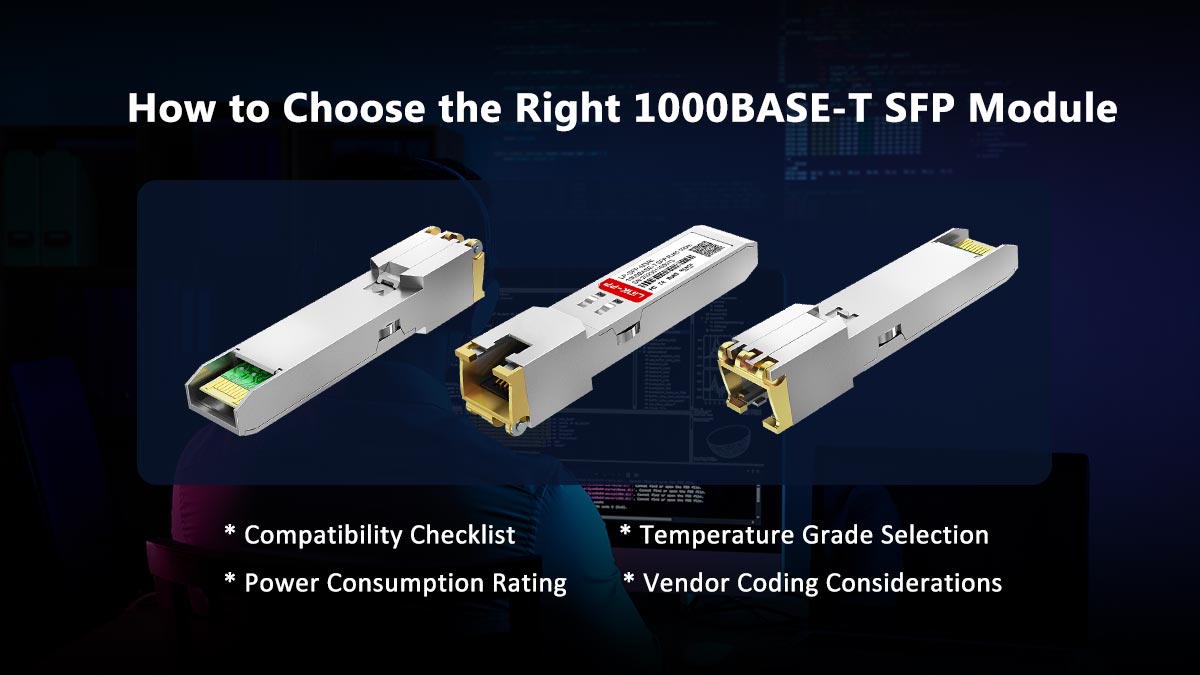
Compatibility Checklist
Before purchasing or deploying a 1000BASE-T SFP module, the first step is to confirm hardware and protocol compatibility.
🔍 Key checks include:
✔ Switch supports SFP ports with copper (RJ45) modules
✔ Supports 1000BASE-T (IEEE 802.3ab) standard
✔ Physical SFP cage accepts third-party modules (if non-branded)
✔ Auto-negotiation enabled for 10/100/1000 Mbps operation
✔ Proper cabling available (Cat5e recommended, Cat5 acceptable in limited cases)
📌 Practical insight:
Even if the module is technically compliant, switch-level restrictions may still block or warn against operation.
Temperature Grade Selection
Because RJ45 SFP modules generate more heat than fiber alternatives, thermal classification is a critical selection factor.
🔹 Commercial grade (0°C to 70°C)
Suitable for office and standard IT environments
Most commonly used for general networking deployments
🔹 Industrial grade (-40°C to 85°C)
Designed for harsh environments
Better thermal stability under continuous load
Preferred in outdoor cabinets or industrial networks
📌 Key consideration:
In dense switch environments, even commercial-grade modules may require careful airflow management.
Power Consumption Rating
Power usage directly impacts both heat output and switch port density limitations.
Typical ranges:
Fiber SFP: ~0.8W–1.5W
1000BASE-T SFP: ~2W–3W+
What to evaluate:
Total switch power budget
Number of RJ45 SFP modules per device
Cooling capacity of the chassis
📌 Insight:
High-density deployment of copper SFP modules can significantly increase overall system thermal load.
Vendor Coding Considerations
One of the most overlooked but critical factors is SFP EEPROM coding and vendor compatibility.
🔹 Key concepts:
Each SFP module contains EEPROM identification data
Switches may validate vendor-specific information
Non-matching modules may trigger warnings or blocking behavior
⚠️ Potential outcomes:
“Unsupported transceiver” warning messages
Port disabled on strict enterprise switches
Reduced functionality or monitoring alerts
🔧 Best practice:
Choose compatible-coded modules for Cisco, Ubiquiti, MikroTik, etc.
Verify switch firmware compatibility before deployment
Use vendor-tested modules in enterprise environments
📌 Insight:
Even identical hardware can behave differently depending on EEPROM coding.
Choosing the right 1000BASE-T SFP transceiver module for Category 5 copper wire is a balance between compatibility assurance, thermal design, power efficiency, and vendor interoperability. A well-matched module ensures stable Gigabit performance, while mismatches in coding or thermal rating can lead to instability even when cabling and standards are correct.
For reliable sourcing of high-quality and compatibility-tested networking components, you can explore the LINK-PP Official Store, which provides a wide range of industrial-grade and enterprise-compatible SFP solutions designed for real-world deployment stability.