

In modern 10-Gigabit Ethernet deployments, optical transceivers play a critical role in extending network connectivity beyond the physical limits of copper interfaces. Among the many 10G optical modules used in enterprise and data-center networks, SFP-10GLR-31 is one of the most commonly deployed long-reach options for single-mode fiber links.
The SFP-10GLR-31 transceiver is widely used to support 10GBASE-LR optical communication, enabling high-speed data transmission over single-mode fiber (SMF) with a typical reach of up to 10 kilometers. Operating at a 1310 nm wavelength, this type of SFP+ optical module is designed for reliable long-distance connections between switches, routers, and aggregation devices in campus networks, data centers, and metropolitan fiber infrastructures.
Because the naming convention can vary between vendors, many network engineers and procurement teams often search for answers to questions such as:
What exactly is SFP-10GLR-31?
Is SFP-10GLR-31 the same as a 10GBASE-LR SFP+ module?
What does the “31” in the model name mean?
Will an SFP-10GLR-31 transceiver work with Cisco or other switches?
Understanding these details is important for selecting the correct optics and avoiding compatibility or deployment issues. Although the module is commonly referenced in product catalogs and network documentation, its specifications, naming structure, and interoperability are not always clearly explained.
This guide provides a comprehensive technical overview of SFP-10GLR-31, including its specifications, wavelength characteristics, fiber compatibility, and differences compared with other 10G optical modules such as SR and ER optics. By the end of this article, you will clearly understand when to use an SFP-10GLR-31 SFP+ transceiver, how it fits into modern 10Gb Ethernet networks, and what factors engineers should consider when deploying it in real-world fiber infrastructures.
What Is SFP-10GLR-31? Understanding the 10G LR SFP+ Transceiver
SFP-10GLR-31 is a 10-Gigabit SFP+ optical transceiver module designed for long-distance data transmission over single-mode fiber (SMF). It is commonly used to support 10 Gigabit Ethernet (10GbE) links in enterprise networks, data centers, and campus fiber infrastructures where reliable connections are required over several kilometers.
In practical terms, the SFP-10GLR-31 transceiver converts electrical signals from a switch, router, or network interface card into optical signals that can travel through fiber optic cables. On the receiving side, the optical signal is converted back into an electrical signal, allowing devices to communicate at 10 Gbps speeds over long distances.
Because of its balance between performance, cost, and compatibility, this type of optical module has become one of the most widely deployed 10G single-mode SFP+ optics in modern Ethernet networks.
Relationship to the 10GBASE-LR Standard
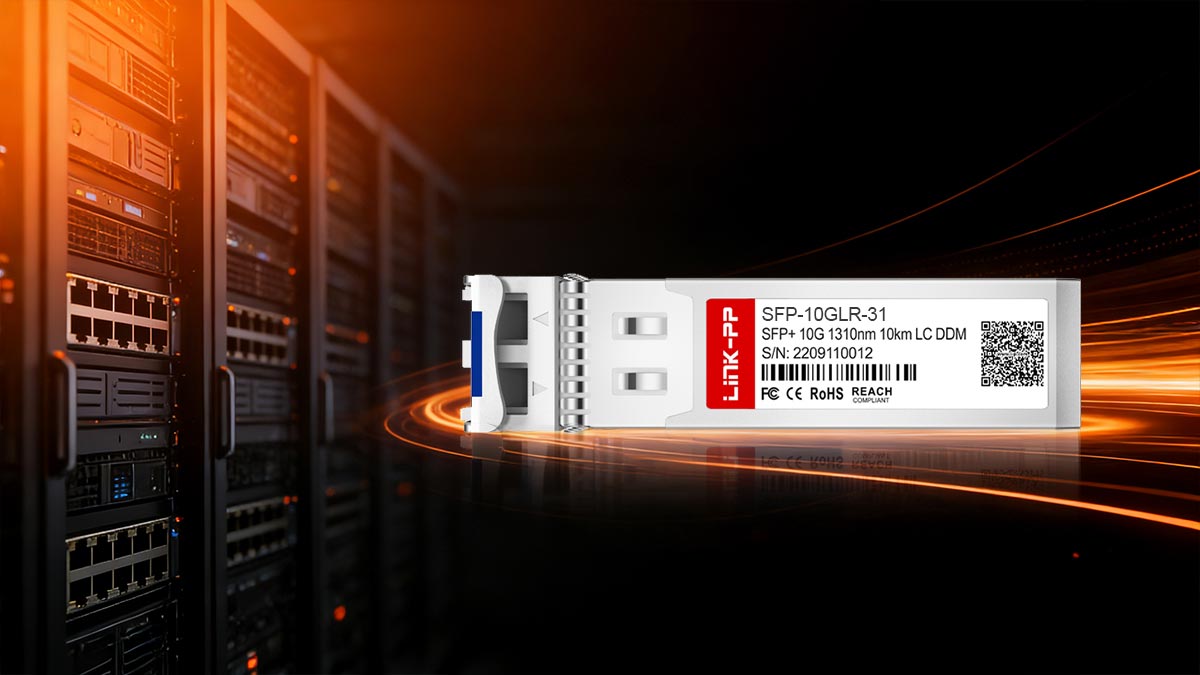
The SFP-10GLR-31 module is typically designed to comply with the 10GBASE-LR specification defined in IEEE 802.3 for 10-Gigabit Ethernet optical transmission. The LR (Long Reach) designation indicates that the transceiver is optimized for longer fiber links compared with short-reach optics.
Under the 10GBASE-LR standard, the module provides:
Data rate: 10.3125 Gbps
Maximum transmission distance: up to 10 km
Fiber type: single-mode fiber (SMF)
Connector: LC duplex optical interface
These characteristics make LR optics suitable for building-to-building links, campus networks, and data center interconnects, where copper or multimode fiber cannot reach the required distance.
1310 nm Single-Mode Optical Transmission
One of the defining characteristics of the SFP-10GLR-31 transceiver is its 1310 nm operating wavelength. This wavelength is optimized for transmission over single-mode fiber, where optical attenuation is relatively low and signal integrity can be maintained over long distances.
Compared with short-reach multimode modules such as SR optics, a 1310 nm single-mode SFP+ module provides several advantages:
Longer transmission distance (up to 10 km)
Lower dispersion over long fiber spans
Better suitability for metropolitan and campus networks
Because of these properties, 1310 nm LR optics have become a standard solution for many 10GbE backbone links in enterprise and service-provider environments.
SFP-10GLR-31 Specifications: Wavelength, Distance, and Fiber Type
Understanding the technical specifications of SFP-10GLR-31 is essential when selecting the correct optical transceiver for a 10-Gigabit Ethernet deployment. This type of 10GBASE-LR SFP+ module is designed to deliver stable high-speed communication over single-mode fiber (SMF) using a 1310 nm optical wavelength, making it ideal for medium-distance fiber links in enterprise and campus networks.
The core parameters engineers usually verify before deployment include the optical wavelength, transmission distance, fiber type, and connector interface. These factors determine whether the module is compatible with the existing fiber infrastructure and whether it can achieve the required link performance.
Optical Wavelength
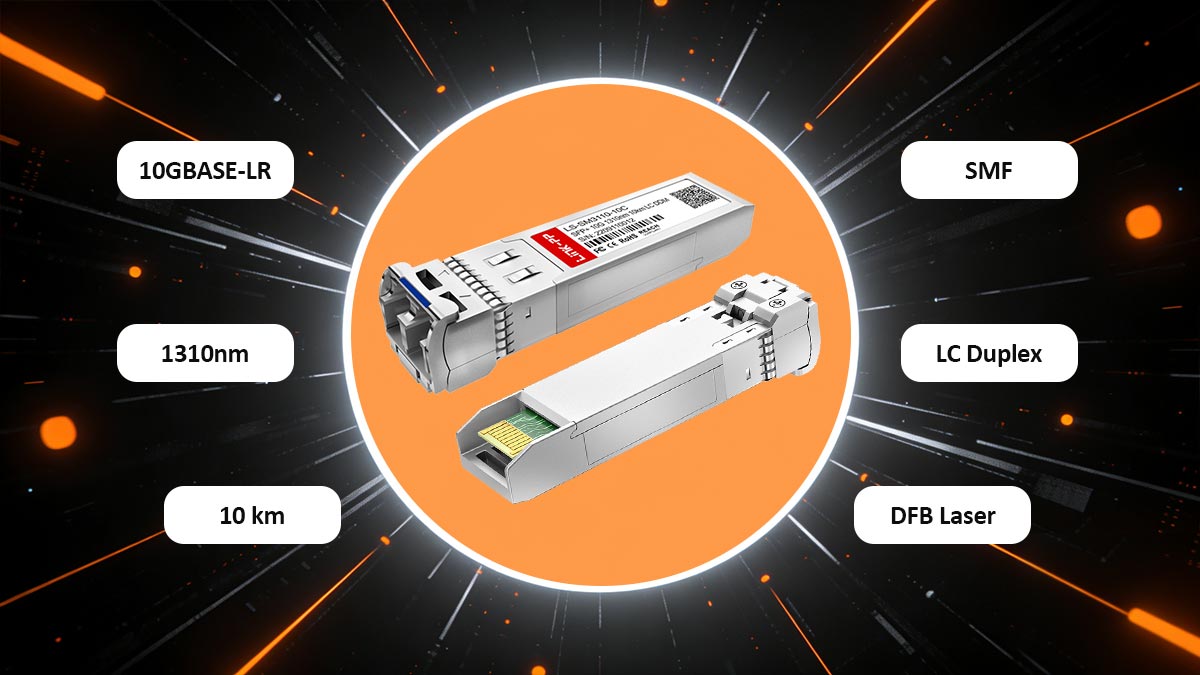
The SFP-10GLR-31 transceiver operates at a wavelength of 1310 nm, which is one of the standard transmission windows for single-mode fiber networks. This wavelength offers relatively low attenuation and stable signal propagation, allowing reliable communication over multi-kilometer fiber spans.
In 10Gb Ethernet deployments, the 1310 nm wavelength is commonly used for LR (Long Reach) optics, while shorter wavelengths such as 850 nm are typically associated with multimode SR modules.
Transmission Distance
A key feature of the SFP-10GLR-31 module is its ability to support fiber links up to approximately 10 kilometers when used with standard single-mode fiber.
This transmission distance makes LR optics a practical choice for:
Campus backbone connections
Inter-building network links
Data center interconnects
Metro access network segments
Compared with short-reach SFP+ modules designed for hundreds of meters, LR modules provide significantly greater coverage without requiring amplification or additional optical equipment.
Fiber Type
The SFP-10GLR-31 transceiver is designed for single-mode fiber (SMF), typically using OS1 or OS2 fiber types.
Single-mode fiber has a much smaller core diameter (usually 9/125 μm) compared with multimode fiber, allowing optical signals to travel longer distances with lower dispersion and signal loss. This makes SMF the preferred medium for long-distance Ethernet links.
Using the correct fiber type is critical. LR optics are optimized for SMF operation, and using multimode fiber may significantly reduce link performance or prevent proper communication.
Optical Connector Interface
Most SFP-10GLR-31 modules use a duplex LC connector, which is the standard interface for modern SFP+ optical transceivers.
The LC duplex interface enables:
Separate transmit (Tx) and receive (Rx) fiber paths
High port density on switches and routers
Reliable connection in high-speed network environments
This compact connector design allows network devices to support multiple 10G fiber links within a small physical footprint.
Typical SFP-10GLR-31 Specification Table
Parameter | Typical Specification |
|---|---|
Form Factor | SFP+ |
Ethernet Standard | 10GBASE-LR |
Data Rate | 10.3125 Gbps |
Optical Wavelength | 1310 nm |
Maximum Distance | Up to 10 km |
Fiber Type | Single-Mode Fiber (SMF) |
Connector | LC Duplex |
Transmitter Type | DFB Laser |
Receiver Type | PIN Photodiode |
Digital Diagnostics | DDM / DOM Supported |
Power Consumption | < 1 W |
These specifications make the SFP-10GLR-31 optical transceiver a reliable and widely adopted solution for 10-Gigabit long-reach fiber connections, especially in environments where stable communication over several kilometers is required.
Why the Module Is Called “SFP-10GLR-31”
Many network engineers and buyers search for “what does 31 mean in SFP-10GLR-31” because the model name may initially appear cryptic. In reality, the naming follows a widely used convention in the optical transceiver industry, where each part of the model number indicates a key specification such as the form factor, data rate, transmission reach, or optical wavelength.
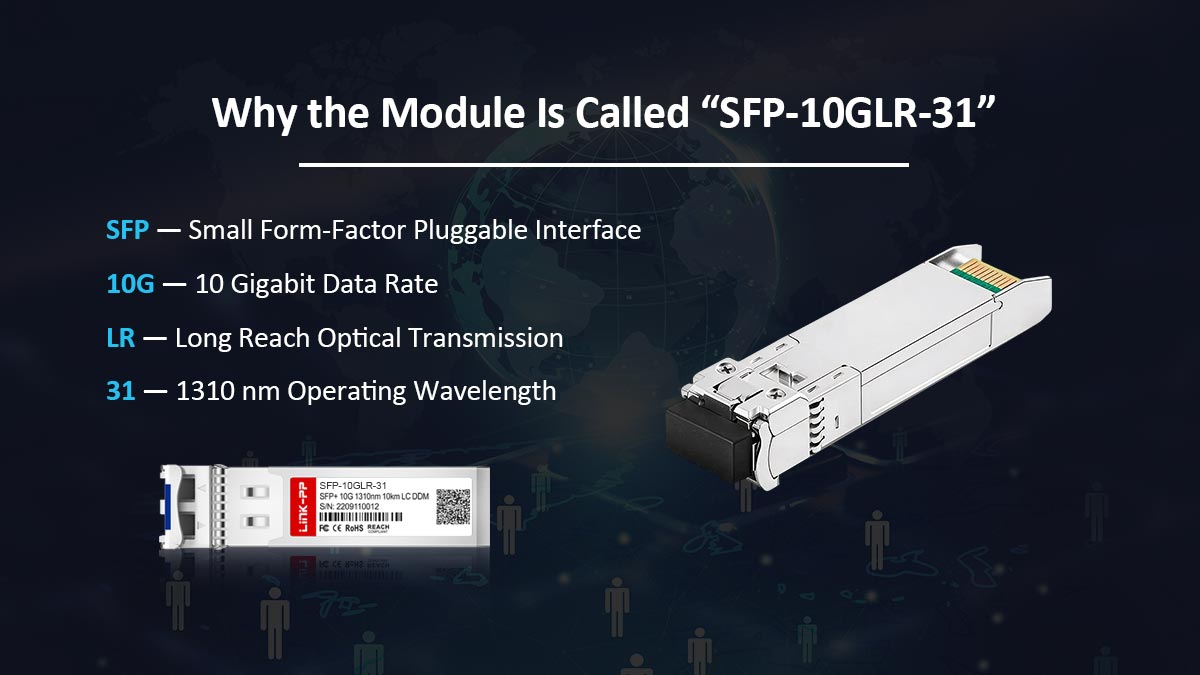
The designation SFP-10GLR-31 can be understood by breaking it into four components:
SFP-10GLR-31
│   │   │
│   │   └── 31 = 1310 nm wavelength
│   └────── LR = Long Reach transmission
└────────── SFP = Small Form-factor Pluggable
Each element provides useful technical information about the module.
SFP — Small Form-Factor Pluggable Interface
The SFP portion of the name refers to the Small Form-factor Pluggable interface, a widely adopted modular transceiver form factor used in networking equipment.
In the case of 10-Gigabit Ethernet, the module actually belongs to the SFP+ generation, which supports higher data rates than earlier SFP modules while maintaining the same compact hot-swappable design. SFP+ modules allow switches, routers, and network interface cards to support flexible optical connectivity without changing the hardware platform.
10G — 10 Gigabit Data Rate
The 10G portion indicates that the transceiver operates at a 10 Gigabit per second data rate, supporting 10Gb Ethernet transmission.
For Ethernet networks, the typical line rate associated with this module is 10.3125 Gbps, which corresponds to the signaling requirements defined for 10GBASE optical standards.
LR — Long Reach Optical Transmission
The LR abbreviation stands for Long Reach, which identifies the optical transmission class of the module.
In Ethernet optical standards, LR modules are optimized for longer fiber distances compared with short-reach (SR) modules. LR optics are typically used with single-mode fiber and are capable of transmitting signals over distances up to approximately 10 km, depending on the fiber quality and link conditions.
31 — 1310 nm Operating Wavelength
The final portion, “31”, refers to the 1310 nm optical wavelength used by the transmitter laser.
This shorthand is commonly used in the optical module industry, where the number represents the first two digits of the wavelength in nanometers:
31 → 1310 nm
85 → 850 nm
55 → 1550 nm
Because 1310 nm is a standard wavelength for single-mode long-reach transmission, it is widely used in 10GBASE-LR optical modules such as the SFP-10GLR-31.
Summary of the SFP-10GLR-31 Naming Structure
The model name SFP-10GLR-31 essentially provides a compact description of the module’s core specifications.
Component | Meaning |
|---|---|
SFP | Small Form-factor Pluggable (SFP+ optical module) |
10G | 10 Gigabit Ethernet data rate |
LR | Long Reach optical transmission |
31 | 1310 nm operating wavelength |
By understanding this naming structure, network engineers can quickly identify the speed, reach class, and wavelength of an optical transceiver when evaluating modules for 10Gb Ethernet fiber deployments.
SFP-10GLR-31 Compatibility: Cisco, Juniper, and Other Switches
One of the most common concerns engineers have when selecting optical transceivers is device compatibility. Searches such as “SFP-10GLR-31 Cisco compatibility” or “will a generic SFP module work in my switch?” reflect a real operational challenge: many networking vendors implement firmware checks that verify whether a transceiver is officially supported.
In practice, the SFP-10GLR-31 transceiver is designed to follow the SFP+ Multi-Source Agreement (MSA) and 10GBASE-LR optical specifications, which means it can operate in a wide range of network equipment if the module is properly coded. However, compatibility often depends on the vendor EEPROM configuration and the policies implemented by the switch manufacturer.
Cisco Compatibility
Cisco switches and routers are widely deployed in enterprise networks, so Cisco compatibility is one of the most frequently asked questions about SFP-10GLR-31 modules.
Cisco devices typically verify the EEPROM identification data stored inside the optical module. If the module is not recognized as Cisco-compatible, the device may display warning messages such as:
Unsupported transceiver detected
Third-party optics installed
In many Cisco platforms, the module will still function normally after a configuration command such as:
service unsupported-transceiverHowever, network administrators should verify compatibility with the specific switch model and firmware version before deployment.
Juniper and Other Vendor Compatibility
Other networking vendors such as Juniper, Arista, MikroTik, HPE, and Dell also support SFP+ optical modules that comply with the MSA standard. In general:
Juniper devices may require modules coded specifically for Juniper identification.
Arista switches are typically more tolerant of third-party optics.
MikroTik and white-box switches often support generic MSA-compliant modules without restrictions.
Because the SFP-10GLR-31 specification follows standard 10GBASE-LR optics, many third-party modules can operate across multiple platforms when properly programmed.
Vendor Lock and Transceiver Authentication
Some network equipment vendors implement vendor lock mechanisms to encourage the use of branded optical modules. These mechanisms may include:
Firmware verification of vendor IDs
Optical module authentication checks
Warning messages for unsupported optics
Although these checks rarely affect the physical transmission capability of the module, they can create operational restrictions in certain environments.
To address this, many optical transceiver manufacturers offer vendor-coded modules, where the firmware identification data is programmed to match the target platform.
The Role of EEPROM Coding in Optical Modules
Inside every SFP+ optical module is a small memory chip that stores identification data known as the EEPROM (Electrically Erasable Programmable Read-Only Memory). This data includes information such as:
Vendor name
Part number
Supported data rate
Optical wavelength
Compatibility identifiers
Network devices read this information when the module is inserted. If the EEPROM coding matches the expected vendor format, the device recognizes the module as supported.
Because of this mechanism, many third-party suppliers offer multi-vendor compatible SFP-10GLR-31 modules that can be pre-programmed for Cisco, Juniper, or other switch platforms.
SFP-10GLR-31 Compatibility Considerations
When deploying SFP-10GLR-31 transceivers in a network, engineers typically verify several factors:
Whether the switch supports 10GBASE-LR optics
Whether the module is vendor-coded for the target device
Whether firmware restrictions apply
Whether the optical link budget matches the fiber distance
By checking these parameters, network administrators can ensure stable operation and avoid compatibility warnings when installing 10G LR SFP+ modules in production networks.
SFP-10GLR-31 vs. SFP-10G-LR: Are They the Same?
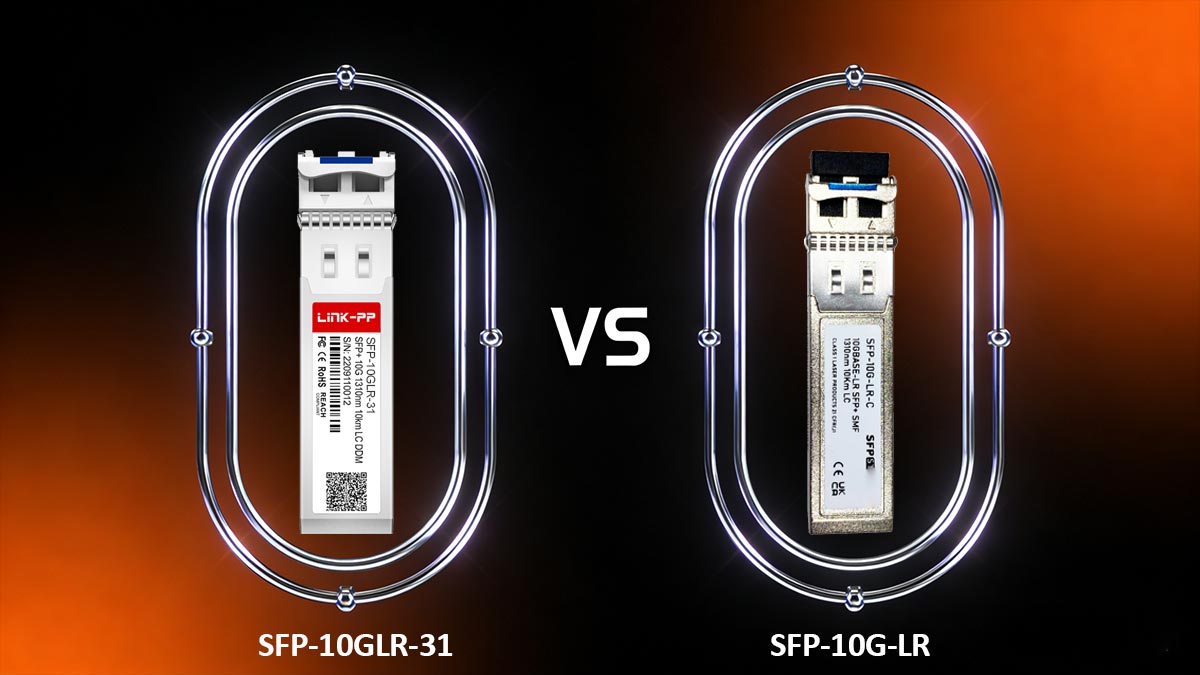
A common question engineers ask when selecting 10G optical modules is whether SFP-10GLR-31 and SFP-10G-LR refer to the same type of transceiver. At first glance the model names appear different, but in most networking environments they describe the same class of 10GBASE-LR optical modules designed for long-reach transmission over single-mode fiber.
The difference between the two names mainly comes from vendor naming conventions rather than technical specifications.
Naming Difference Between the Two 10G LR Models
The model SFP-10G-LR is typically used as a standardized product name associated with the 10GBASE-LR Ethernet specification. Many networking vendors—including switch manufacturers—use this naming format to indicate compatibility with the LR optical standard.
By contrast, SFP-10GLR-31 is commonly used by third-party optical module suppliers as a more descriptive SKU. The name includes additional information about the optical wavelength used by the module.
For example:
SFP-10G-LR
│   │
│   └── LR = Long Reach
└────── 10G = 10 Gigabit Ethernet
SFP-10GLR-31
│ │ │
│ │ └── 31 = 1310 nm wavelength
│ └────── LR = Long Reach
└────────── SFP = SFP+ optical moduleIn practice, both names typically refer to a 10GBASE-LR SFP+ optical transceiver operating at 1310 nm with a reach of up to 10 km over single-mode fiber.
Vendor SKU vs. Industry Standard SFP Naming
Another way to understand the difference is to distinguish between industry standards and vendor product numbers.
Type | Example | Meaning |
|---|---|---|
Ethernet Standard | 10GBASE-LR | Defines optical transmission specifications |
Generic Module Name | Indicates a 10G LR SFP+ optic | |
Vendor SKU | SFP-10GLR-31 | Manufacturer-specific model number |
In other words:
10GBASE-LR defines the technical standard
SFP-10G-LR is a common product naming format
SFP-10GLR-31 is a specific SKU used by many transceiver vendors
Although the naming varies, the core optical specifications are generally the same.
Interoperability in Real Network Deployments
From a deployment perspective, SFP-10GLR-31 and SFP-10G-LR modules are usually interoperable as long as they meet the same optical specifications and are compatible with the network equipment.
Both module types typically share the following characteristics:
1310 nm optical wavelength
10 km transmission distance
Single-mode fiber (SMF) support
LC duplex connector
10GBASE-LR compliance
Because these parameters are defined by Ethernet standards, a properly coded module from either naming convention can generally operate in the same 10GbE fiber link.
However, engineers should still verify device compatibility and vendor coding, since switch firmware may check the module’s EEPROM identification data. When correctly programmed for the target platform, both SFP-10GLR-31 and SFP-10G-LR modules can function interchangeably in most enterprise and data-center networks.
SFP-10GLR-31 vs. SR vs. ER: Choosing the Right 10G Optics
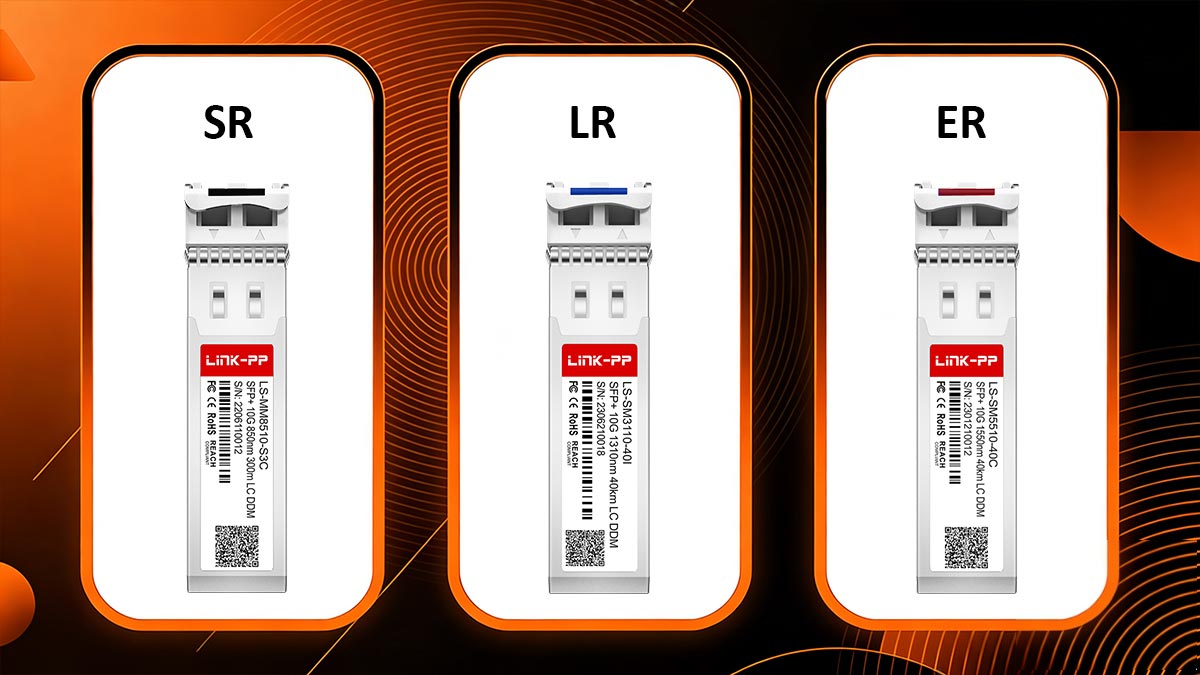
When designing a 10-Gigabit Ethernet fiber network, engineers often need to choose between different optical transmission classes such as SR (Short Reach), LR (Long Reach), and ER (Extended Reach). Each type is optimized for a specific fiber type, wavelength, and transmission distance, making the selection process critical for reliable network performance.
The SFP-10GLR-31 transceiver belongs to the LR optics category, which is designed for medium-distance links over single-mode fiber. However, depending on the deployment scenario, SR or ER modules may be more suitable.
Understanding the differences between these optics helps engineers select the most efficient and cost-effective solution for their network infrastructure.
SR (Short Reach) Optical Modules
SR optics are designed for short-distance connections, typically within the same data center or equipment room. These modules operate at a wavelength of 850 nm and are optimized for multimode fiber (MMF).
Typical characteristics of SR modules include:
Wavelength: 850 nm
Fiber type: Multimode fiber (OM3 / OM4)
Transmission distance: up to 300–400 meters depending on fiber grade
Primary use cases:
Data center top-of-rack links
Server-to-switch connections
High-density short-range networking
Because multimode fiber infrastructure is common inside data centers, SR optics are often the most cost-effective option for short links.
LR (Long Reach) Optical Modules
LR optics, including the SFP-10GLR-31 module, are designed for longer distances using single-mode fiber. They operate at a wavelength of 1310 nm, allowing reliable signal transmission over several kilometers.
Typical characteristics include:
Wavelength: 1310 nm
Fiber type: Single-mode fiber (SMF)
Transmission distance: up to 10 km
Primary use cases:
Campus backbone networks
Building-to-building fiber links
Data center interconnects
LR modules provide a balanced solution between distance capability and cost, making them one of the most widely deployed 10G optical solutions.
ER (Extended Reach) Optical Modules
For networks that require even longer distances, ER optics provide extended transmission capability. These modules typically operate at 1550 nm, a wavelength that supports lower attenuation over long fiber spans.
Typical characteristics include:
Wavelength: 1550 nm
Fiber type: Single-mode fiber (SMF)
Transmission distance: up to 40 km
Primary use cases:
Metropolitan area networks (MAN)
Long-distance campus links
Telecom access networks
Because ER modules require more powerful lasers and more sensitive receivers, they are generally more expensive than SR or LR optics.
10G Optical Module Comparison
The following table summarizes the key differences between SR, LR, and ER optical modules.
Optical Type | Wavelength | Fiber Type | Maximum Distance | Typical Applications |
|---|---|---|---|---|
SR (Short Reach) | 850 nm | Multimode Fiber (MMF) | 300–400 m | Data center internal links |
LR (Long Reach) | 1310 nm | Single-Mode Fiber (SMF) | Up to 10 km | Campus networks, building interconnect |
ER (Extended Reach) | 1550 nm | Single-Mode Fiber (SMF) | Up to 40 km | Metro networks, long-distance links |
How to Choose the Right 10G Optical Module
When selecting between SR, LR, and ER optics, engineers usually evaluate three key factors:
Transmission distance
The physical distance between network devices is the most important factor.Fiber infrastructure
Existing installations may use multimode or single-mode fiber, which determines the compatible module type.Deployment cost
SR modules are typically the most economical, while ER modules involve higher hardware costs due to their extended range.
For networks requiring reliable 10G connections over several kilometers, the SFP-10GLR-31 LR optical module provides an optimal balance of performance, compatibility, and cost.
Common Deployment Mistakes When Using SFP-10GLR-31
Although SFP-10GLR-31 modules are widely used and relatively straightforward to deploy, network engineers frequently encounter issues during installation and troubleshooting. Many of these problems appear in real-world discussions on engineering forums and communities, where misconfigurations or incorrect fiber choices lead to unexpected link failures.
Understanding the most common deployment mistakes can help prevent network downtime and simplify troubleshooting when installing 10GBASE-LR SFP+ transceivers.
▲ Using Multimode Fiber Instead of Single-Mode Fiber
One of the most frequent mistakes is connecting an SFP-10GLR-31 module to multimode fiber (MMF) instead of single-mode fiber (SMF).
LR optics are designed for single-mode fiber with a 9/125 μm core, while multimode fiber typically has 50/125 μm or 62.5/125 μm cores. Because LR modules use a 1310 nm laser optimized for SMF, using MMF can cause:
Severe signal loss
Unstable link negotiation
No link detection at all
In some cases, the link may appear to work over very short distances but fail intermittently due to modal dispersion and optical power mismatch.
Best practice: Always verify that the fiber infrastructure is OS1 or OS2 single-mode fiber before installing LR optics.
▲ Wavelength or Optics Type Mismatch
Another common issue occurs when different optical module types are connected on each end of the link.
For example, engineers sometimes accidentally connect:
10GBASE-LR (1310 nm) on one side
10GBASE-ER (1550 nm) or 10GBASE-SR (850 nm) on the other
Since each module type uses different wavelengths and receiver sensitivity levels, the optical signal may not be detected correctly.
Typical symptoms include:
Link light not turning on
High receive power alarms
No signal detected on the receiver
Best practice: Both ends of the fiber link should use the same optical standard, such as LR-to-LR connections.
▲ Incorrect or Dirty LC Connectors
Physical connector problems are another frequent source of optical link failures. The SFP-10GLR-31 module uses a duplex LC connector, which relies on precise fiber alignment.
Common connector-related problems include:
Dirty fiber end faces
Incorrect polarity (Tx/Rx reversed)
Damaged patch cables
Loose LC connections
Even small amounts of dust on the fiber tip can significantly reduce optical signal quality and cause high bit error rates or link instability.
Best practice:
Always clean fiber connectors using proper fiber cleaning tools
Verify Tx/Rx polarity
Inspect connectors with a fiber inspection scope when troubleshooting
▲ Ignoring Optical Power Budget
In longer fiber runs approaching the 10 km limit, link failures may occur if the optical power budget is not properly calculated.
Potential causes include:
Excessive fiber attenuation
Too many patch panels or connectors
Poor-quality fiber splicing
These factors can reduce the received optical power below the module's sensitivity threshold.
Best practice: Verify that the total link loss remains within the optical budget of the LR module before deploying long-distance fiber links.
Quick SFP-10GLR-31 Troubleshooting Checklist
When an SFP-10GLR-31 link fails to establish, engineers typically check the following items:
Confirm both modules are 10GBASE-LR optics
Verify the fiber is single-mode (SMF)
Check Tx/Rx polarity
Clean and inspect LC connectors
Verify optical power levels and link budget
Confirm device compatibility and module coding
By systematically checking these factors, most SFP-10GLR-31 deployment issues can be quickly identified and resolved in real-world network environments.
Typical Applications of SFP-10GLR-31 in Modern Networks
The SFP-10GLR-31 optical transceiver is designed for 10-gigabit long-distance fiber connectivity over single-mode fiber (SMF). Because it operates at 1310 nm with a typical reach of up to 10 km, it is widely used in networks that require reliable medium-distance optical links without the higher cost of extended-reach optics.
In modern network architectures, this module is commonly deployed in data centers, enterprise campuses, and metropolitan access networks.
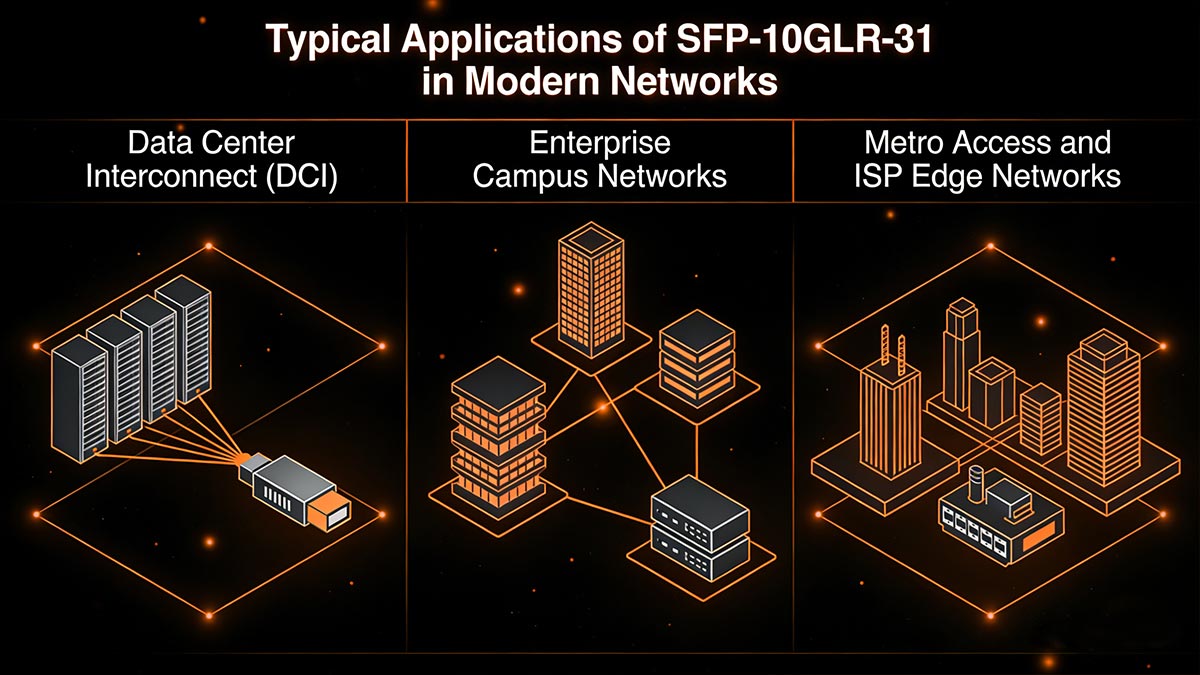
1. Data Center Interconnect (DCI)
Within data centers, SFP-10GLR-31 modules are often used to connect:
Top-of-Rack (ToR) switches
Aggregation or spine switches
Inter-building data center links
Although short-reach optics such as SR are typically used inside a single data hall, LR optics become necessary when fiber links extend across multiple buildings or distant equipment rooms.
Typical scenarios include:
Connecting two data center buildings across a campus
Linking server aggregation switches to core switches
Providing optical uplinks from access switches to aggregation layers
Because single-mode fiber infrastructure is common in large data centers, LR modules provide a stable and scalable 10G connection without requiring specialized optics.
2. Enterprise Campus Networks
Enterprise networks frequently span multiple buildings across large campuses, making fiber the preferred medium for backbone connectivity.
SFP-10GLR-31 modules are commonly used for:
Building-to-building fiber links
Core-to-distribution switch uplinks
Campus backbone networks
For example:
Network Layer | Typical Use |
|---|---|
Core → Distribution | 10 GbE backbone links |
Distribution → Access | High-speed uplinks |
Building Interconnect | Fiber links between campus buildings |
Since most campus fiber runs are under 10 km, LR optics provide the ideal balance between distance capability and cost efficiency.
3. Metro Access and ISP Edge Networks
In service provider and metro access environments, SFP-10GLR-31 modules are used to connect:
Edge routers
aggregation switches
access network equipment
Typical applications include:
Fiber uplinks from enterprise customers to ISP edge routers
Aggregation links in metro Ethernet networks
Interconnection between telecom equipment rooms
While longer-distance optics such as ER (40 km) are used for regional links, LR modules remain common for short-to-medium metropolitan fiber segments.
4. Network Equipment Uplinks
Many switches and routers include SFP+ uplink ports specifically designed for 10 GbE optical modules.
Typical equipment using SFP-10GLR-31 includes:
Enterprise switches
Layer-3 routers
Data center leaf-spine switches
Network interface cards (NICs) in servers
Because the module conforms to the 10GBASE-LR standard, it can typically interoperate across different vendors when the optics are correctly coded.
Why LR Optics Are Widely Deployed
Compared with other 10G optical options, LR modules offer a balanced combination of reach, compatibility, and cost.
Key advantages include:
Up to 10 km transmission distance
Standard 1310 nm single-mode operation
Wide switch compatibility
Lower cost than ER or ZR optics
For this reason, SFP-10GLR-31 modules have become one of the most widely deployed 10G optical transceivers for medium-distance fiber networks.
FAQs About SFP-10GLR-31 Transceivers
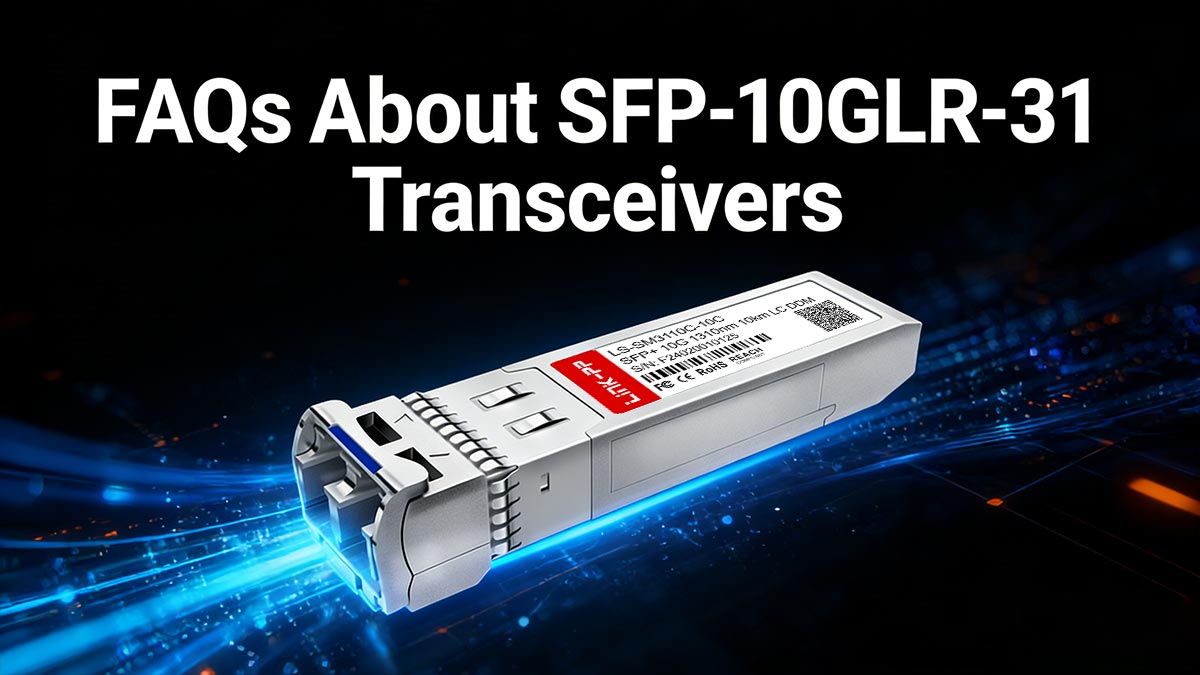
Q1. Is SFP-10GLR-31 a single-mode optical module?
Yes. SFP-10GLR-31 is designed to operate over single-mode fiber (SMF).
The module follows the 10GBASE-LR optical specification defined in IEEE 802.3ae, which specifies transmission at 1310 nm wavelength over single-mode fiber with a typical reach of up to 10 km.
Because of this design:
Fiber type: Single-mode fiber (OS1 / OS2)
Connector: Typically LC duplex
Maximum distance: Around 10 km
Using SFP-10GLR-31 on multimode fiber (MMF) is generally not recommended because the optical characteristics are optimized specifically for single-mode transmission.
Q2. What wavelength does SFP-10GLR-31 use?
SFP-10GLR-31 modules typically operate at a 1310 nm optical wavelength.
The “31” in the module name commonly refers to 1310 nm, which is the standard wavelength used by 10GBASE-LR optics.
Typical wavelength range:
Parameter | Typical Value |
|---|---|
Optical wavelength | 1310 nm |
Standard | 10GBASE-LR |
Fiber type | Single-mode fiber |
The 1310 nm band is widely used for medium-distance single-mode optical transmission because it provides a good balance between signal attenuation and optical component cost.
Q3. Can SFP-10GLR-31 work with Cisco switches?
Yes, SFP-10GLR-31 modules can work with Cisco switches, provided the module firmware is properly coded for compatibility.
Many network vendors implement vendor identification in the module EEPROM, which allows switches to verify whether an optical module is approved by the manufacturer.
In practice, there are three common scenarios:
Vendor-branded modules
Official optics provided by vendors such as Cisco are guaranteed to be recognized by the switch firmware.Compatible third-party optics
Many third-party optical modules are EEPROM-programmed to match vendor requirements, allowing them to operate normally in Cisco equipment.Uncoded generic optics
Some switches may display warnings or reject modules if the vendor code is not recognized.
Because of these restrictions, engineers often choose vendor-compatible optics that are specifically programmed for Cisco, Juniper, or other platforms.
Q4. Is SFP-10GLR-31 the same as 10GBASE-LR?
Functionally, yes — but the naming is different.
10GBASE-LR refers to the Ethernet optical standard defined in IEEE 802.3ae.
SFP-10GLR-31 is typically a vendor product name or SKU used by optical module manufacturers.
Both describe the same fundamental optical technology:
Feature | 10GBASE-LR | SFP-10GLR-31 |
|---|---|---|
Standard | IEEE Ethernet standard | Vendor module name |
Speed | 10 Gb/s | 10 Gb/s |
Wavelength | 1310 nm | 1310 nm |
Fiber type | Single-mode fiber | Single-mode fiber |
Distance | Up to 10 km | Up to 10 km |
In real deployments, modules labeled SFP-10GLR-31 are typically designed to comply with the 10GBASE-LR specification, which ensures interoperability across different networking platforms.
Conclusion: When to Choose SFP-10GLR-31 for 10G Fiber Networks
Selecting the right optical transceiver is essential for building stable and scalable 10-Gigabit Ethernet fiber networks. In many enterprise and data-center deployments, SFP-10GLR-31 is a practical choice when a reliable medium-distance 10G optical link is required.
Based on the 10GBASE-LR specification defined in IEEE 802.3ae, the SFP-10GLR-31 module operates at a 1310 nm wavelength over single-mode fiber, supporting transmission distances of up to 10 km while maintaining stable optical performance and low signal attenuation.
Because of these characteristics, SFP-10GLR-31 is widely used in several typical network scenarios:
Enterprise network backbone links
Connecting core switches and aggregation switches across enterprise buildings or floors.
Data center inter-switch connectivity
Supporting 10G switch-to-switch links between racks, rows, or network zones inside data centers.
Campus and building fiber connections
Extending high-speed network connectivity between buildings using single-mode campus fiber infrastructure.
Compared with short-reach optics such as SR modules, LR optics like SFP-10GLR-31 provide much longer transmission distances while maintaining the same 10 Gbps Ethernet data rate. At the same time, they are typically more cost-efficient and easier to deploy than extended-reach optics designed for metropolitan or long-haul fiber networks.
Before deploying an SFP-10GLR-31 transceiver, network engineers should verify several key parameters:
Fiber type compatibility (single-mode fiber)
Optical wavelength (1310 nm)
Connector interface (LC duplex)
Switch compatibility and EEPROM vendor coding
These factors help ensure stable interoperability with switches from vendors such as Cisco, Juniper Networks, and other enterprise networking platforms.
Understanding how SFP-10GLR-31 fits within the broader family of 10G optical modules—including SR and ER optics—also helps engineers choose the most cost-effective transceiver based on transmission distance and fiber infrastructure.
Explore Compatible 10G Optical Modules
If you are planning to deploy or upgrade 10G fiber networks, choosing a reliable and standards-compliant optical module supplier is critical.
You can explore compatible 10GBASE-LR SFP+ optical modules, fiber connectivity solutions, and related networking components through the LINK-PP Official Store, where a wide range of enterprise-grade optical transceivers and connectivity products are available for data center, telecom, and industrial networking applications.
Selecting the right SFP-10GLR-31 10G LR module ensures stable long-distance fiber connectivity, strong interoperability, and efficient 10-Gigabit Ethernet performance across modern optical network infrastructures.