

In modern Gigabit Ethernet fiber networks, one of the most common points of confusion is the comparison between 1000BASE-LX and 1000BASE-LH SFP modules. At first glance, these two labels look like they describe different technologies—but in real-world deployments, engineers, IT buyers, and network designers often discover that the differences are far less about optical performance and more about naming conventions and vendor terminology.
Both 1000BASE-LX and 1000BASE-LH are closely related to the Gigabit Ethernet standard defined under IEEE 802.3z, which specifies Gigabit transmission over optical fiber using a 1310 nm wavelength. In most implementations, these modules are designed to work with SFP transceivers, supporting both single-mode fiber (SMF) and, in some cases, legacy multimode fiber (MMF) with specific deployment conditions.
The confusion mainly arises because “LX” is an IEEE-standard term (Long Wavelength), while “LH” is a vendor-specific naming convention, most commonly used by Cisco to describe “Long Haul” optics. Despite the different naming styles, both typically refer to similar optical characteristics, including the same wavelength range and overlapping transmission distances in standard Gigabit Ethernet environments.
Because of this overlap, search intent around “1000BASE-LX vs. 1000BASE-LH” is rarely about fundamental technology differences. Instead, users are usually trying to answer practical questions such as:
Are LX and LH SFP modules interchangeable?
Why does Cisco label some optics as LX/LH?
Can I use LX/LH on both single-mode and multimode fiber?
Do I need special patch cables for compatibility?
This article will break down these questions in a clear, engineering-focused way, helping you quickly understand the real-world differences, avoid compatibility mistakes, and choose the correct SFP module for your network deployment.
🟠 What are 1000BASE-LX and 1000BASE-LH?
To understand the comparison between 1000BASE-LX and 1000BASE-LH, it is important to first define what each term actually represents in real networking environments. Although they are often treated as separate technologies in search queries, they are not fundamentally different optical standards in most practical deployments.
What is 1000BASE-LX?
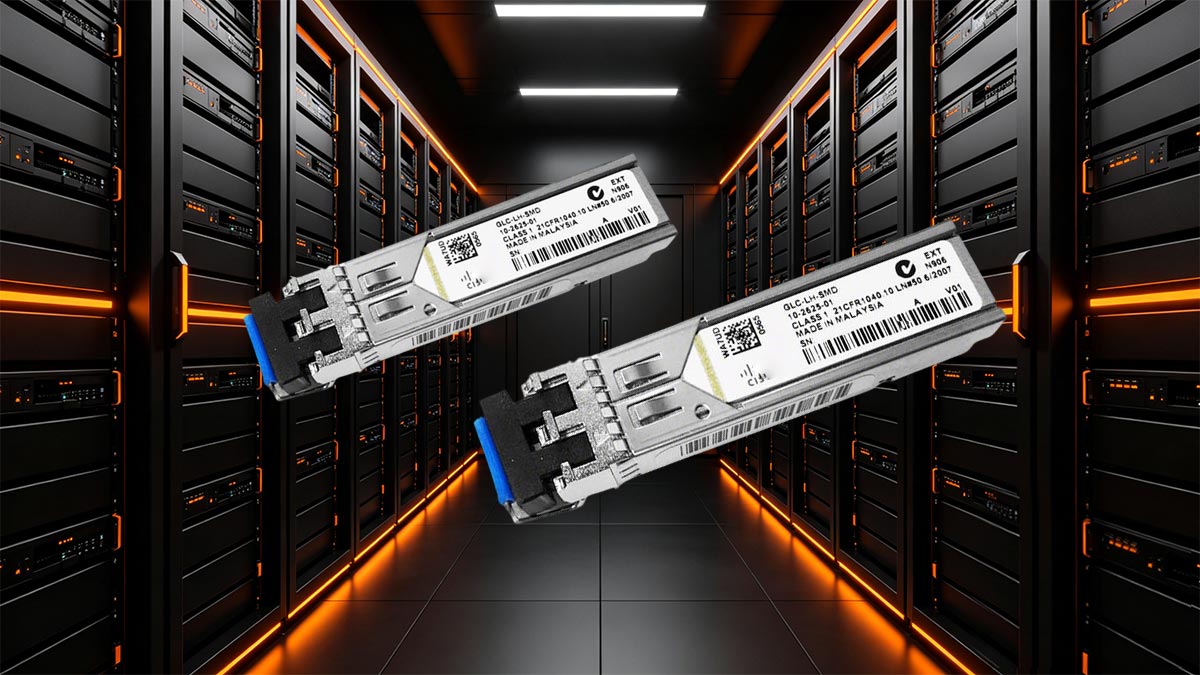
1000BASE-LX is an official Gigabit Ethernet fiber standard defined by the IEEE under IEEE 802.3z. The “LX” stands for Long Wavelength, and it specifies the use of a 1310 nm laser wavelength for Gigabit Ethernet transmission over fiber optic cabling.
In practical networking terms, 1000BASE-LX is designed for:
Single-mode fiber (SMF) links up to approximately 10 km
Multimode fiber (MMF) links up to approximately 550 m under specific conditions (often requiring proper launch conditions or a mode-conditioning patch cable in legacy installations)
Because it is an IEEE-defined standard, 1000BASE-LX is widely supported across different vendors and is considered the baseline specification for Gigabit fiber connectivity in enterprise and campus networks.
What is 1000BASE-LH?
1000BASE-LH is not an official IEEE standard. Instead, it is a vendor-defined naming convention, most commonly used by manufacturers such as Cisco Systems.
The term “LH” stands for Long Haul, and it is typically used to describe SFP transceivers that operate with the same optical characteristics as 1000BASE-LX modules, including:
A wavelength around 1310 nm
Support for single-mode fiber (SMF) links up to around 10 km
Compatibility with multimode fiber (MMF) in specific legacy scenarios
In most real-world deployments, 1000BASE-LH is functionally equivalent to 1000BASE-LX, especially when used in Cisco environments where the combined labeling 1000BASE-LX/LH is common. This dual naming simply reflects IEEE compliance (LX) plus vendor marketing terminology (LH), not a difference in physical transmission behavior.
Key takeaway
The distinction between the two is not technical performance but standardization vs. branding:
1000BASE-LX = IEEE standardized definition
1000BASE-LH = vendor naming (commonly Cisco “Long Haul”)
Understanding this helps eliminate one of the most common misconceptions in fiber networking: that LX and LH represent different optical capabilities. In reality, they are largely describing the same class of Gigabit SFP transceiver.
🟠 1000BASE-LX vs. 1000BASE-LH: the Real Differences
When comparing 1000BASE-LX and 1000BASE-LH, the most important conclusion is that they are not two competing optical technologies. Instead, they describe nearly identical Gigabit Ethernet fiber transceivers, with differences mainly in standardization and vendor naming rather than physical transmission behavior.
For most network engineers and buyers, the real decision factors are not “LX vs. LH,” but fiber type, link distance, and compatibility with existing infrastructure.
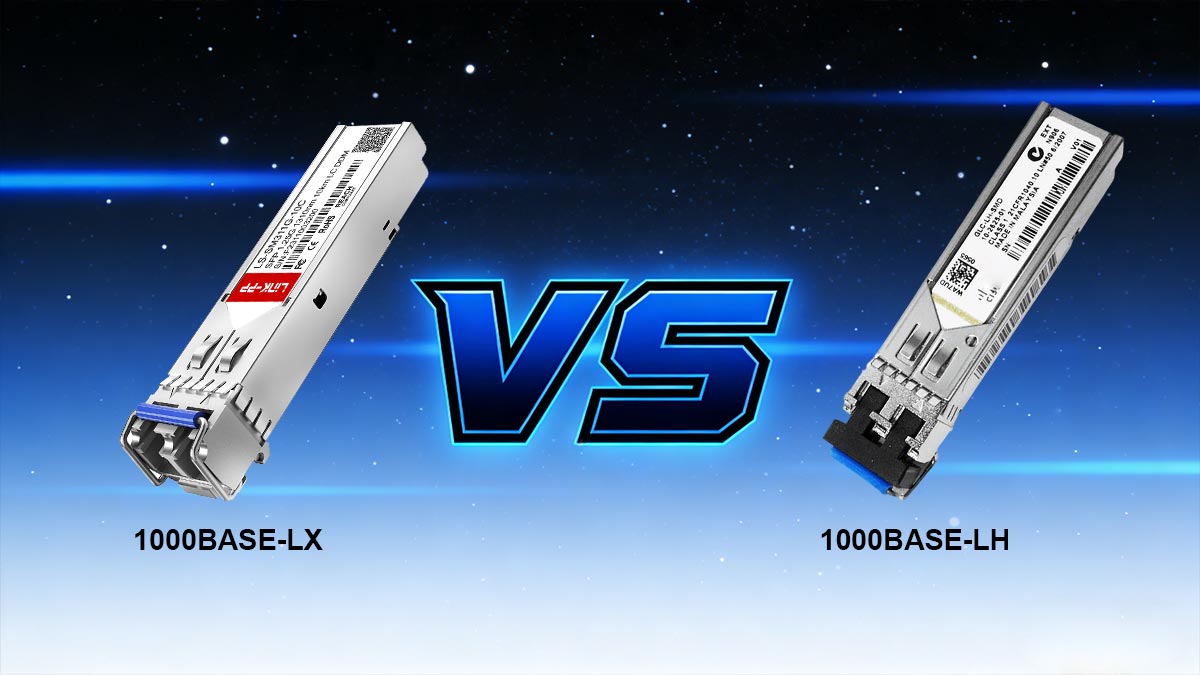
1000BASE-LX vs. 1000BASE-LH Comparison Table
Feature | 1000BASE-LX | 1000BASE-LH |
|---|---|---|
Standard | IEEE 802.3z | Vendor-specific (commonly Cisco) |
Wavelength | 1310 nm | 1310 nm |
Optical Behavior | Standard Gigabit Ethernet over fiber | Same as LX (no physical difference) |
Single-mode Fiber (SMF) | Up to ~10 km | Up to ~10 km |
Multimode Fiber (MMF) | Up to ~550 m (with conditions) | Up to ~550 m (with conditions) |
Mode Conditioning Patch Cable | Required for legacy MMF (OM1/OM2) | Same requirement |
Naming Type | Industry standard | Marketing / vendor naming |
Typical Usage | Multi-vendor interoperability | Cisco/enterprise labeled optics |
Wavelength: Essentially Identical (1310 nm)
Both 1000BASE-LX and 1000BASE-LH optics operate in the 1310 nm wavelength range, which is part of the standard second optical window used in Gigabit Ethernet over fiber.
1000BASE-LX → IEEE-defined optical specification
1000BASE-LH → Vendor naming for the same optical class
Practical takeaway: There is no meaningful wavelength difference between LX and LH modules in standard implementations. They use the same optical band and therefore behave the same at the physical layer.
Transmission Distance: Same Real-world Reach Class
In most real deployments, both LX and LH modules support similar distance capabilities:
Single-mode fiber (SMF): up to ~10 km
Multimode fiber (MMF): up to ~550 m (depending on fiber grade and conditions)
This is why many vendors combine the labeling as 1000BASE-LX/LH, indicating one transceiver class rather than two separate performance tiers.
Practical takeaway: “LH” does not automatically mean longer distance than “LX” in standard Gigabit SFP usage.
Fiber Type Compatibility: SMF vs. Legacy MMF
Both LX and LH modules can operate on:
Single-mode fiber (SMF) → primary and most reliable use case
Multimode fiber (MMF) → supported in legacy environments only
However, when using older multimode fiber types (such as OM1 or OM2), a mode-conditioning patch cable may be required to stabilize the signal and avoid modal dispersion issues.
Practical takeaway: Compatibility depends more on fiber infrastructure quality than on whether the module is labeled LX or LH.
Naming Convention: IEEE Standard vs. Vendor Marketing
This is the core difference that drives most search confusion:
1000BASE-LX → IEEE standardized term defined under IEEE 802.3z
1000BASE-LH → Vendor-specific naming, widely used by Cisco Systems
Many Cisco optics are labeled 1000BASE-LX/LH, which reflects:
LX = IEEE compliance
LH = Cisco marketing term (“Long Haul”)
Practical takeaway: LH is not a separate optical standard—it is a naming layer on top of LX.
Summary: real-world difference is minimal
From a deployment perspective, the differences can be summarized as:
No meaningful difference in wavelength or optical behavior
Same distance class and fiber compatibility
Difference exists mainly in standardization (LX) vs. branding (LH)
✔ In practice, LX and LH modules behave the same in most Gigabit Ethernet networks.
✔ The real engineering focus should be fiber type, distance budget, and compatibility—not the label itself.
🟠 Is 1000BASE-LX/LH Compatible with Single-mode and Multimode fiber?
This is one of the most important questions users ask when comparing 1000BASE-LX vs. 1000BASE-LH, because it directly affects real-world deployment success, link stability, and purchasing decisions.
The short answer is: yes — 1000BASE-LX/LH is designed to support both single-mode fiber (SMF) and multimode fiber (MMF), but with different performance conditions and limitations.
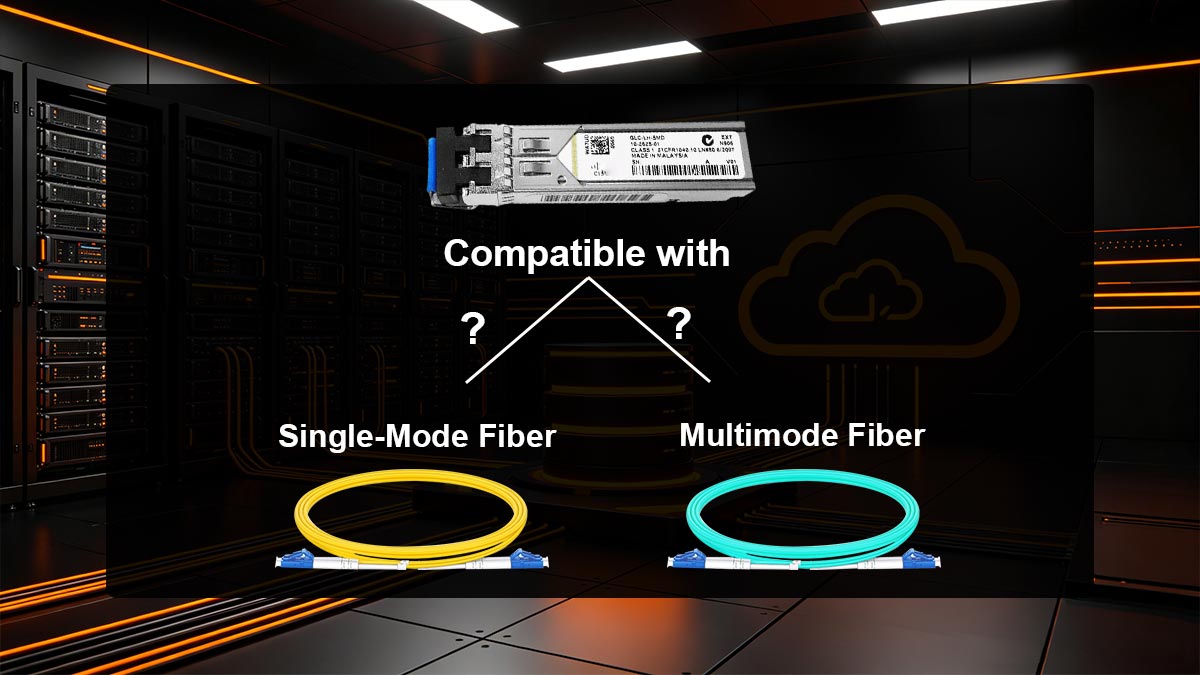
Single-Mode Fiber (SMF) — Standard Use Case
Fiber type: Single-mode fiber
Typical distance: up to ~10 km
Wavelength: 1310 nm
Application: backbone, campus, inter-building links
This is the native and most reliable operating mode for LX/LH optics.
Multimode Fiber (MMF) — Secondary / Legacy Use
Fiber type: Multimode fiber
Typical distance: up to ~550 meters
Works mainly on higher-grade MMF (OM2/OM3)
Older fiber (OM1) may require special conditions
Important requirement: In many legacy MMF installations, a mode-conditioning patch cable (MCP) is required to ensure stable signal transmission.
Distance Limitations And Real-World Performance Factors
Although datasheets provide nominal distance values, actual transmission performance depends on multiple environmental and physical factors, including:
Fiber type and grade (OM1, OM2, OM3, or SMF)
Number of splices and patch panels in the link path
Connector quality and cleanliness
Optical power budget of the transceiver
Typical guideline values are:
Single-mode fiber (SMF): up to approximately 10 km
Multimode fiber (MMF): up to approximately 550 m under ideal conditions
Legacy MMF systems: may require MCP and may support significantly shorter distances
Key takeaway: The fiber infrastructure has a greater impact on performance than the LX or LH labeling itself.
Vendor Implementation Example (Cisco Systems)
In documentation from Cisco Systems, the commonly used 1000BASE-LX/LH SFP is defined as compatible with:
Single-mode fiber up to 10 km
Multimode fiber up to 550 m
Mode-conditioning patch cables for legacy multimode fiber environments
This confirms that the LX/LH designation represents a single optical class with dual fiber support, rather than two distinct physical standards.
Practical Deployment Summary
For engineering and procurement decisions, the following guidelines apply:
Single-mode fiber (SMF): Recommended and fully supported for long-distance links
Multimode fiber (MMF): Supported but dependent on fiber grade and installation quality
Mode-conditioning patch cable: Required in certain legacy MMF deployments
LX vs. LH labeling: Does not affect optical compatibility or performance
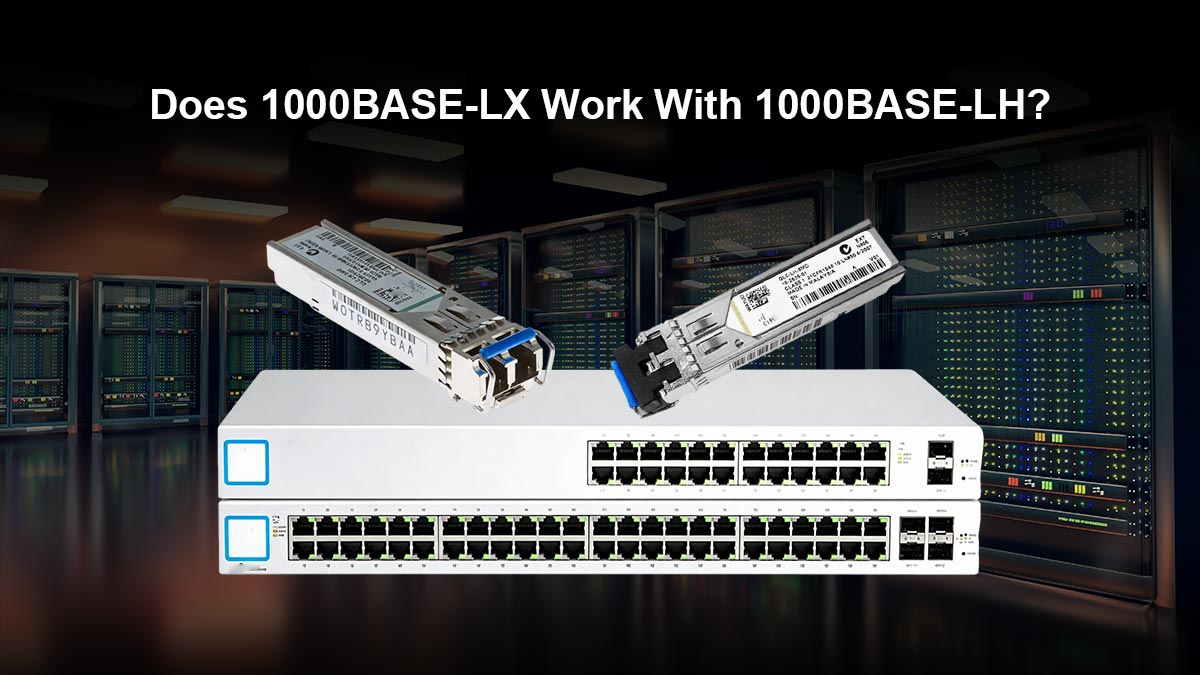
🟠 Does 1000BASE-LX Work With 1000BASE-LH?
Direct Answer: Yes, They Are Fully Compatible
Yes. 1000BASE-LX and 1000BASE-LH are compatible and can interoperate in standard Gigabit Ethernet environments.
In practical networking deployments, there is no functional difference that prevents an LX module from linking with an LH module, provided both devices support the same optical parameters (wavelength, fiber type, and link budget).
In most cases, they behave as the same optical class of SFP transceiver.
Why LX And LH Are Interchangeable In Practice
The reason 1000BASE-LX and 1000BASE-LH work together is simple:
Both typically operate at 1310 nm wavelength
Both follow the same Gigabit Ethernet optical behavior defined under IEEE 802.3z
Both support similar single-mode fiber (SMF) and multimode fiber (MMF) ranges
Because the optical transmission characteristics are aligned, there is no protocol-level or physical-layer incompatibility between LX and LH modules.
Key takeaway: In real deployments, LX and LH are not competing standards—they are variations of the same optical class.
Why Cisco Uses Both “LX” And “LH” Labels
The dual labeling such as 1000BASE-LX/LH is commonly seen on modules from Cisco Systems and can cause confusion for users.
This happens because:
“LX” refers to the IEEE-standard designation (Long Wavelength)
“LH” refers to Cisco’s vendor naming convention (Long Haul)
Cisco combines both to ensure cross-reference compatibility with industry standards and legacy product naming
As a result, a Cisco SFP labeled 1000BASE-LX/LH indicates:
IEEE-compliant LX optical specification
Cisco marketing designation for the same transceiver class
No difference in optical behavior or compatibility
Practical Compatibility Summary
From an engineering perspective:
✔ LX and LH modules can interoperate
✔ They share the same optical characteristics (wavelength and reach class)
✔ They are commonly used interchangeably in enterprise networks
⚠ Compatibility depends more on fiber type and link budget than labeling
1000BASE-LX and 1000BASE-LH are functionally equivalent in most real-world deployments.
The distinction exists mainly because:
LX = IEEE standard naming
LH = vendor-specific labeling (commonly Cisco)
Therefore, when you see 1000BASE-LX/LH, it does not indicate two different technologies—it indicates a single interoperable Gigabit optical class with dual naming conventions.
🟠 What Does “Cisco 1000BASE-LX/LH SFP” Mean?
Direct Answer: It Is A Single SFP Type With Dual Naming
The label “Cisco 1000BASE-LX/LH SFP” refers to one optical transceiver type, not two different products. It is a Gigabit Ethernet SFP module that follows the 1000BASE-LX optical specification, while also using Cisco’s internal naming convention “LH” (Long Haul).
In practical terms, this means:
✔ It is fully compliant with the IEEE 1000BASE-LX standard
✔ It is marketed by Cisco using the LX/LH combined naming format
✔ It represents one unified optical behavior, not two separate standards
Why Cisco Uses “LX/LH” Together
The combined label exists because of two overlapping naming systems:
LX (Long Wavelength) → Defined by the IEEE under IEEE 802.3z
LH (Long Haul) → Cisco-specific product naming convention used by Cisco Systems
To avoid confusion in mixed environments, Cisco uses “1000BASE-LX/LH” to indicate that:
The module is technically an LX-compliant optic
It is also part of Cisco’s LH product family labeling
Both terms describe the same physical transceiver behavior
What It Means In Real Network Deployment
In real-world usage, a Cisco 1000BASE-LX/LH SFP typically means:
Operates at 1310 nm wavelength
Supports single-mode fiber (SMF) up to ~10 km
Supports multimode fiber (MMF) up to ~550 m (with conditions)
May require a mode-conditioning patch cable on legacy MMF systems
Can interoperate with standard 1000BASE-LX optics from other vendors
Key takeaway: The “LX/LH” label does not indicate enhanced performance or a different distance class—it indicates standards compatibility plus vendor naming alignment.
Why This Label Confuses Users
This is one of the most frequently searched questions because users often assume:
“LX” = one type of optic
“LH” = a different, longer-distance optic
However, Cisco’s labeling shows that:
There is no separate LH optical standard
The difference is naming convention, not hardware capability
Final Takeaway
Cisco 1000BASE-LX/LH SFP means a single IEEE-compliant LX transceiver that is also labeled under Cisco’s LH (Long Haul) naming system.
In practice:
There is no performance difference between LX and LH
The module is a unified Gigabit Ethernet optical solution
The label exists primarily for documentation clarity and product alignment
🟠 Do You Need A Mode-Conditioning Patch Cable For 1000BASE-LX/LH?
This is a critical deployment question because many 1000BASE-LX vs. 1000BASE-LH link failures in real networks are not caused by the SFP itself, but by improper multimode fiber usage without correct conditioning.
Direct Answer: Only Required In Specific Legacy Multimode Scenarios
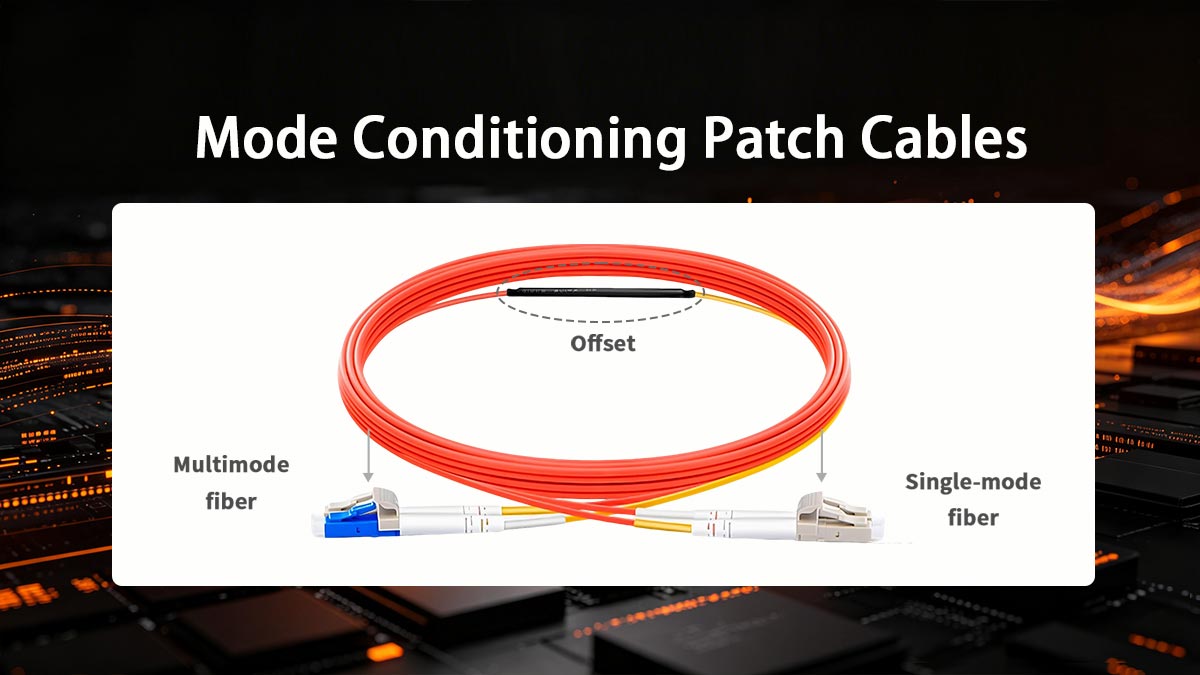
A mode-conditioning patch cable (MCP) is not always required for 1000BASE-LX/LH.
It is required only when using LX/LH optics over legacy multimode fiber (MMF), especially:
OM1 (62.5 µm fiber) installations
OM2 fiber in long-distance runs or poor-quality layouts
Older building backbone cabling systems with mixed splicing or patch panels
If you are using single-mode fiber (SMF), a mode-conditioning patch cable is not required at all.
Why A Mode-Conditioning Patch Cable Is Needed
1000BASE-LX/LH optics are optimized for single-mode transmission at 1310 nm.
When this signal is launched directly into multimode fiber, it can create:
Uneven light distribution across fiber modes
Differential Mode Delay (DMD)
Signal distortion over distance
Intermittent link instability or failure
A mode-conditioning patch cable solves this by:
Shifting the laser launch point into a controlled offset position
Reducing modal dispersion in multimode fiber
Stabilizing signal propagation in legacy MMF environments
Key takeaway: MCP is not about increasing power—it is about controlling how light enters multimode fiber.
Step-By-Step Deployment Check (Practical Guide)
Before deciding whether you need a mode-conditioning patch cable, follow this checklist:
Step 1: Identify fiber type
✔ Single-mode fiber (yellow jacket typically) → No MCP required
⚠ Multimode fiber (orange/aqua jacket typically) → Proceed to Step 2
Step 2: Determine fiber generation
OM3 / OM4 → usually no MCP required
OM1 / OM2 → MCP may be required
Step 3: Check link distance
Short patching (<100 m) → usually stable without MCP
Longer runs (hundreds of meters) → MCP strongly recommended for legacy MMF
Step 4: Validate link stability
If you observe:
Link flapping
High error rates (CRC errors)
Intermittent connectivity
MCP or fiber re-architecture is likely required.
When You Do NOT Need MCP
You can safely skip mode-conditioning patch cables when:
Using single-mode fiber (SMF)
Using modern multimode fiber (OM3/OM4) with short runs
Using optics specifically designed for pure multimode operation (not LX/LH class)
Final Takeaway
A mode-conditioning patch cable is not a universal requirement for 1000BASE-LX/LH.
Instead:
✔ SMF = no MCP needed
⚠ Legacy MMF (OM1/OM2) = MCP often required
✔ Modern MMF (OM3/OM4) = usually stable without MCP
In real-world troubleshooting, most “LX/LH not working on fiber” issues are caused by incorrect multimode deployment rather than SFP incompatibility.
🟠 Common Mistakes When Choosing LX Vs. LH SFP Modules
Although 1000BASE-LX vs. 1000BASE-LH appears to be a technical comparison, most real-world issues do not come from optical differences. Instead, they come from misinterpretation of labels, fiber infrastructure mismatches, and deployment assumptions. This section summarizes the most common mistakes seen in practical network deployments.
Mistake 1: Assuming LX And LH Are Different Performance Standards
One of the most frequent errors is assuming that:
LX = one performance level
LH = a longer-distance or higher-performance version
In reality, both terms generally describe the same optical class defined under IEEE 802.3z and implemented by vendors such as Cisco Systems.
Reality: LX and LH modules typically share the same wavelength (1310 nm), distance range, and fiber compatibility characteristics.
Mistake 2: Ignoring Fiber Type (SMF VS. MMF)
Many deployment failures occur because users select SFP modules without verifying the fiber infrastructure.
Common issues include:
Using MMF when SMF is required for long-distance links
Expecting MMF to perform like single-mode fiber
Mixing fiber types across the same link path
Reality: Fiber type has a far greater impact on performance than whether the module is labeled LX or LH.
Mistake 3: Forgetting Mode-Conditioning Patch Cable (MCP) On Legacy MMF
Another common issue is deploying LX/LH optics over older multimode fiber without proper conditioning.
This can lead to:
Link instability
High error rates (CRC errors)
Intermittent or failed connections
A mode-conditioning patch cable (MCP) is often required in:
OM1 and OM2 fiber environments
Long-distance multimode runs
Legacy building backbone systems
Reality: MCP is not optional in many legacy MMF cases—it is essential for stable operation.
Mistake 4: Confusing Vendor Naming With IEEE Standards
Many users incorrectly interpret LX and LH as separate technical standards, when in fact:
1000BASE-LX is an IEEE-defined standard
1000BASE-LH is a vendor naming convention
This is commonly seen in products labeled 1000BASE-LX/LH, especially from Cisco Systems.
Reality: LX and LH describe the same optical behavior, but come from different naming systems.
Mistake 5: Over-Relying On SFP Labels Instead Of Link Budget Planning
Some deployments fail because decisions are based only on module labels instead of engineering factors such as:
Optical power budget
Connector losses
Fiber attenuation per kilometer
Patch panel count
Reality: A stable link depends on the full optical budget, not just the SFP model name.
Key Takeaway
Most issues attributed to “LX vs LH incompatibility” are actually caused by:
Incorrect fiber selection
Missing MCP in legacy MMF environments
Misunderstanding of naming conventions
Lack of proper optical budget planning
In practice, LX and LH are not the problem—the deployment conditions are.
🟠 Which Module Should You Choose For Your Network?
Choosing between 1000BASE-LX and 1000BASE-LH SFP modules should not be based on the label itself. As explained throughout this article, both terms generally describe the same optical behavior. The correct selection depends on fiber infrastructure, transmission distance, and vendor compatibility requirements, rather than naming conventions.
In practical network design, the decision should always be driven by what your fiber plant actually supports, not whether the module is labeled LX or LH.
Step-By-Step Decision Guide
Step 1: Identify Your Fiber Type
Single-mode fiber (SMF):
✔ Best choice for 1000BASE-LX/LH
✔ Supports long-distance links (up to ~10 km)
✔ Stable and low-loss transmissionMultimode fiber (MMF):
✔ Supported in LX/LH optics under conditions
⚠ Requires careful validation of fiber grade (OM1/OM2/OM3/OM4)
⚠ May require mode-conditioning patch cable in legacy systems
Step 2: Evaluate Link Distance
Short-range interconnects → MMF may be sufficient
Campus backbone or inter-building links → SMF strongly recommended
Long-haul enterprise or metro links → SMF required
Step 3: Check Vendor Compatibility Coding
Even though LX and LH are functionally similar, always verify:
Switch and transceiver compatibility matrix
Vendor coding requirements (especially for Cisco environments such as Cisco Systems)
Whether the module is labeled 1000BASE-LX/LH, indicating dual compatibility
Best Use Case Summary
To simplify selection:
SMF deployments (recommended):
✔ Best for 1000BASE-LX/LH
✔ Stable long-distance backbone connections
✔ Minimal deployment riskMMF deployments (legacy or short range):
✔ Works with LX/LH under proper conditions
⚠ May require mode-conditioning patch cable
⚠ Performance depends on fiber gradeCampus networks:
✔ Typically SMF-based using LX/LH optics
✔ Ideal balance of cost, distance, and reliabilityLegacy fiber environments:
⚠ Requires careful validation of OM1/OM2 infrastructure
⚠ MCP may be necessary to ensure stability
Key Engineering Principle
The most important takeaway is:
The performance of a 1000BASE-LX/LH link is determined by the fiber infrastructure, not the label on the SFP module.
LX and LH are not competing technologies—they are two naming conventions for the same Gigabit Ethernet optical class.
Final Conclusion
When selecting between 1000BASE-LX and 1000BASE-LH modules:
Do not treat them as different optical standards
Focus on fiber type, distance, and installation environment
Ensure compatibility with your switching platform and vendor requirements
✔ In most modern deployments, either option will perform identically when properly matched to the fiber infrastructure.
If you are looking for reliable and fully compatible 1000BASE-LX/LH SFP modules, explore the LINK-PP Oficial Store for tested optical transceivers designed for stable Gigabit Ethernet performance across both single-mode and multimode fiber environments.
Choose the right SFP solution for your network and ensure consistent, high-performance connectivity from edge to core.