

As network speeds continue to scale with cloud computing, AI workloads, and data-intensive applications, SFP 10 Gbps (SFP+) has become a foundational technology in both enterprise and data center environments. Whether you're upgrading from 1G infrastructure or designing a new high-performance network, understanding how 10G SFP+ modules work—and how to select the right one—is critical for achieving reliable, cost-efficient connectivity.
At its core, SFP+ (Small Form-factor Pluggable Plus) is a compact, hot-swappable transceiver designed to deliver 10 Gigabit Ethernet (10GbE) speeds over fiber or copper connections. Compared to traditional RJ45-based networking, SFP+ offers advantages in latency, power efficiency, and flexibility, making it the preferred choice for many network engineers.
However, choosing the right SFP 10Gbps solution is not always straightforward. Questions like:
What is the difference between SFP and SFP+?
Should you use DAC, fiber, or RJ45 modules?
Is SFP+ really better than Ethernet?
are among the most commonly searched—and often misunderstood—topics.
In this guide, we’ll break down everything you need to know about 10G SFP+, including how it works, where it’s used, and how to choose the right module for your specific deployment scenario. By the end, you’ll have a clear, practical framework for making informed 10Gbps networking decisions.
☑️ What Is 10G SFP+?
SFP 10 Gbps, commonly referred to as SFP+, is a hot-swappable transceiver module that supports data rates up to 10 Gigabits per second (10Gbps).
It is widely used in switches, routers, and servers to enable high-speed network connectivity through different physical media:
Fiber optics (SR, LR, ER) for short to long distances
Direct Attach Copper (DAC) for low-cost, short-range connections
Active Optical Cable (AOC) for lightweight, flexible optical links
👉 In short:
SFP = 1G, SFP+ = 10G
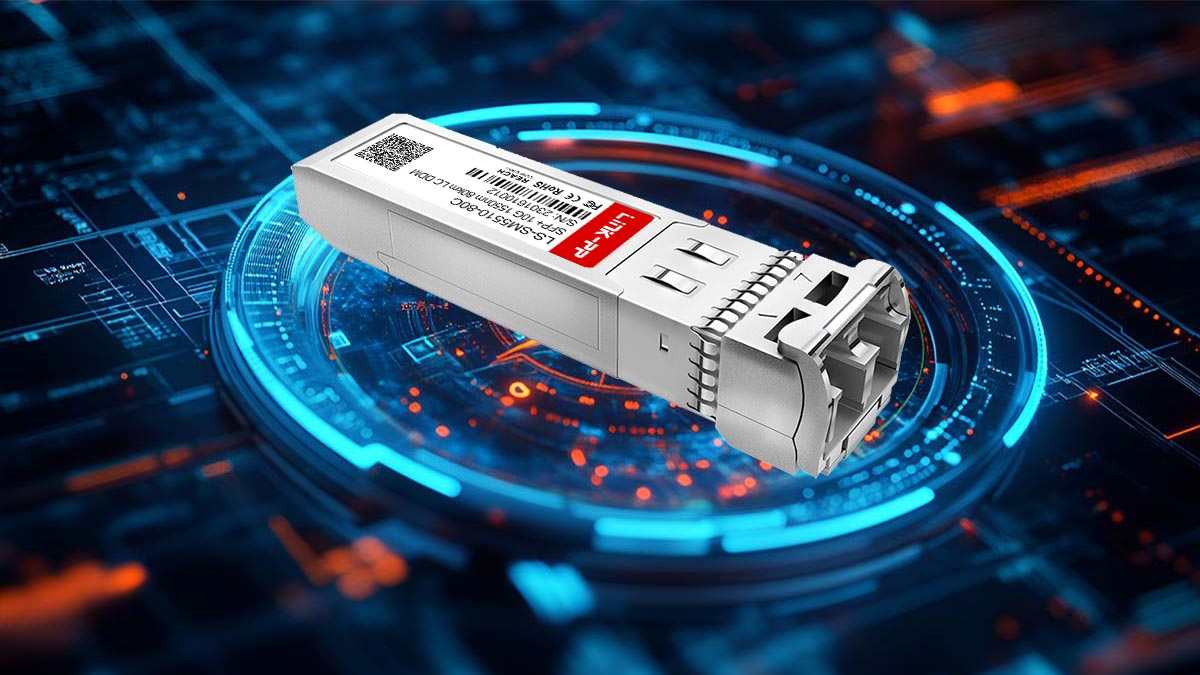
How SFP+ Works in a 10Gb Network
An SFP+ module acts as the interface between your network device and the transmission medium. It converts electrical signals from the device into optical or electrical signals suitable for high-speed data transmission.
Key characteristics include:
Hot-swappable design → replace or upgrade without powering down
Modular flexibility → choose different transceivers based on distance and medium
Standardized form factor → compatible across many networking platforms
Why SFP+ Became the 10Gbps Standard
SFP+ is widely adopted because it offers a strong balance of:
Performance → consistent 10Gbps throughput
Efficiency → lower latency and power consumption than 10GBase-T
Scalability → supports both short-range (DAC) and long-range (fiber) deployments
Compared to fixed-port solutions, SFP+ allows network engineers to adapt infrastructure without replacing hardware, which is critical in modern, fast-evolving environments.
SFP vs. SFP+: Key Difference at a Glance
Feature | ||
|---|---|---|
Max Data Rate | 1Gbps | 10Gbps |
Typical Use | Legacy / access layer | Core / aggregation / high-speed links |
Compatibility | Fits SFP ports | Fits SFP+ ports (often backward compatible with SFP) |
✔️ Important: While many SFP+ ports support 1G SFP modules, SFP ports cannot support SFP+ modules.
☑️ What Are SFP 10 Gbps Used For? (Real-World Use Cases)
SFP 10Gbps (SFP+) modules are widely used to deliver high-speed, low-latency connectivity across modern network infrastructures. Their flexibility and scalability make them a preferred choice in environments where performance and reliability are critical.
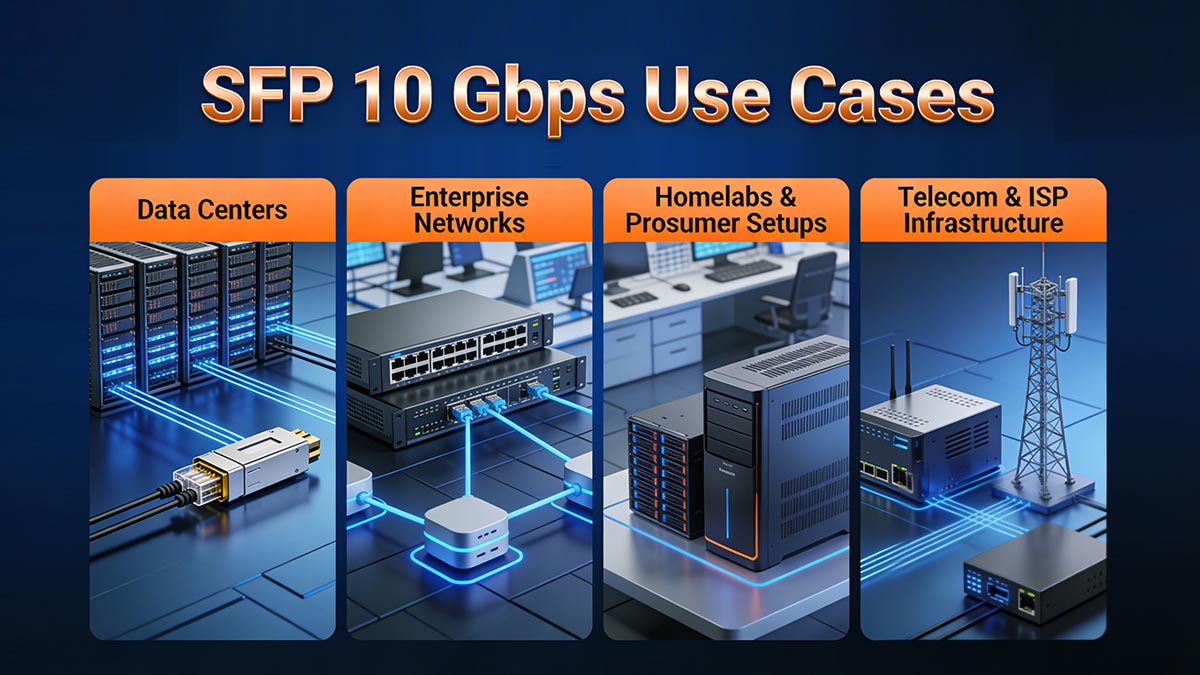
Below are the most common real-world applications:
1. Data Centers
In data centers, 10G SFP+ is a standard for high-throughput, low-latency connections:
Server-to-switch uplinks → Ensures fast communication between servers and Top-of-Rack (ToR) switches
Spine-leaf architectures → Provides scalable east-west traffic flow for cloud and AI workloads
✔️ Why SFP+ here?
Low latency and efficient cabling (DAC or fiber) make it ideal for dense environments.
2. Enterprise Networks
Enterprises rely on 10Gbps SFP for building robust and scalable internal networks:
Core aggregation → Aggregates traffic from multiple access switches
High-speed backbone links → Connects different floors, buildings, or departments
✔️ Typical scenario:
Upgrading from 1G to 10G backbone without replacing all infrastructure.
3. Homelabs & Prosumer Setups
With the rise of advanced home networking, SFP+ is increasingly used by tech enthusiasts:
NAS (Network Attached Storage) connections → Faster file transfers and backups
Virtualization clusters → Supports high-bandwidth workloads like VMs and containers
✔️ Popular choice:
DAC cables for short, cost-effective connections inside racks.
4. Telecom & ISP Infrastructure
Telecom operators and ISPs use 10G SFP+ modules for scalable fiber networks:
Fiber aggregation → Combines multiple access links into high-capacity uplinks
Metro networks → Supports city-wide data transmission over long distances
✔️ Key advantage:
Long-range modules (e.g., LR) enable reliable transmission over kilometers.
Why SFP 10Gbps Is So Widely Adopted
Across all these use cases, SFP+ stands out because it offers:
Flexible deployment (DAC, AOC, fiber)
Cost-effective scaling from 1G to 10G
High compatibility across vendors and platforms
👉 In practical terms, SFP 10Gbps is the backbone technology that bridges performance, flexibility, and cost efficiency in modern networks.
☑️ Types of 10Gbps SFP+ Modules (Complete Guide: SR, LR, ER, ZR, DAC, AOC, RJ45)
To choose the right SFP 10 Gbps module, you need to understand that SFP+ options are not limited to just SR and LR. In fact, 10G SFP+ modules cover a full spectrum—from short in-rack copper links to 80 km long-haul fiber transmission.
These modules can be grouped into three practical categories:
Short to Medium Range (Data Center / Enterprise)
Long Range Optical (Campus / Telecom)
Direct Connectivity (Low-cost / Plug-and-play)
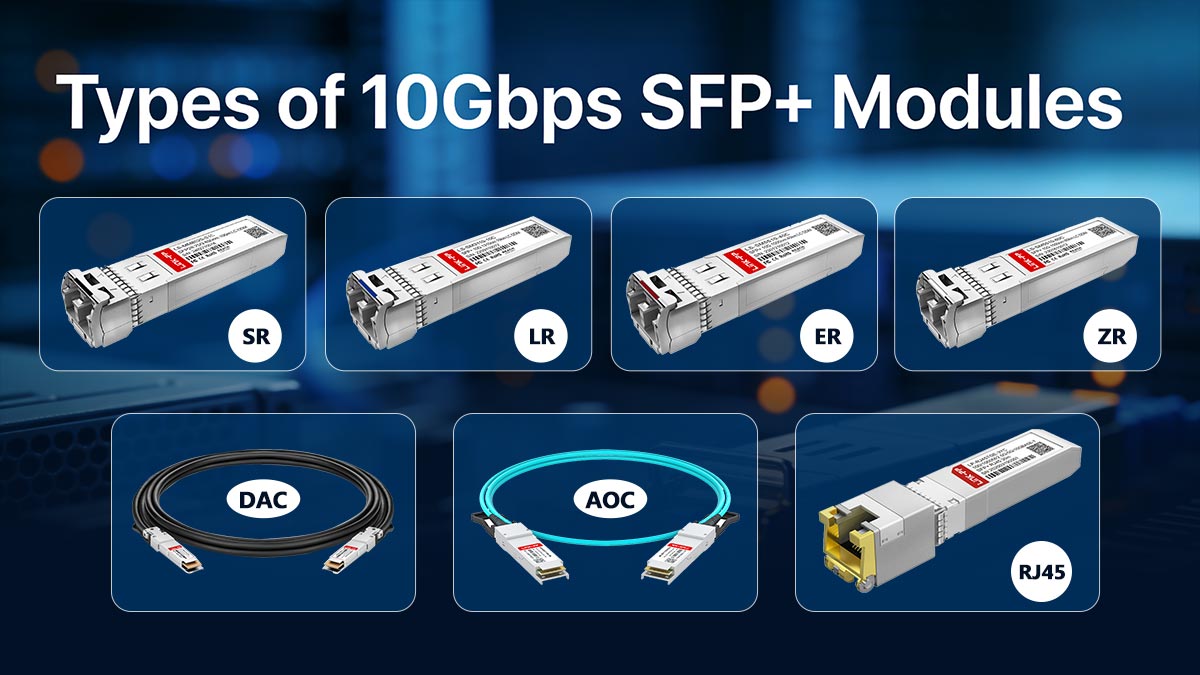
1. Short to Medium Range Optical Modules
SFP+ SR (Short Range)
Distance: Up to 300 meters
Fiber Type: Multimode Fiber (MMF)
Wavelength: 850 nm
SFP+ SR is the most widely deployed 10G optical module in data centers.
✔️ Best for:
Rack-to-rack connections
Top-of-Rack (ToR) switching
High-density environments
SFP+ LR (Long Range)
Distance: Up to 10 km
Fiber Type: Single-mode Fiber (SMF)
Wavelength: 1310 nm
SFP+ LR is used when connections extend beyond building-level distances.
✔️ Best for:
Campus networks
Inter-building links
Enterprise backbone
2. Long-Range Optical Modules (Extended Reach)
SFP+ ER (Extended Range)
Distance: Up to 40 km
Fiber Type: Single-mode Fiber (SMF)
Wavelength: 1550 nm
SFP+ ER modules extend beyond LR for long-distance, high-reliability transmission.
✔️ Best for:
Large campus environments
Telecom aggregation
Regional network links
SFP+ ZR (Ultra Long Range)
Distance: Up to 80 km (or more depending on vendor)
Fiber Type: Single-mode Fiber (SMF)
Wavelength: 1550 nm
ZR modules are designed for long-haul and metro optical networks, often eliminating the need for intermediate signal amplification.
✔️ Best for:
ISP backbone infrastructure
Metro networks
Long-distance fiber transport
3. Direct Connectivity Options (Cost-Optimized)
SFP+ DAC (Direct Attach Copper)
Distance: Typically 1–7 meters
Medium: Twinax copper cable
Cost: Lowest
DAC cables are the most cost-effective 10G solution, with minimal latency and power consumption.
✔️ Best for:
Server-to-switch connections
Inside racks or adjacent racks
SFP+ AOC (Active Optical Cable)
Distance: Typically up to 100 meters
Medium: Integrated fiber with active components
Weight: Lightweight and flexible
AOCs combine the ease of DAC with the reach of fiber.
✔️ Best for:
Medium-distance connections
Complex cable routing environments
10GBase-T SFP+ (RJ45 Module)
Cable Type: Cat6a / Cat7 Ethernet
Distance: Up to 30–100 meters
Power Consumption: High
Thermal Output: High
These modules allow SFP+ ports to connect to traditional Ethernet infrastructure.
⚠️ Important considerations:
Generates significant heat
Requires proper cooling and airflow
Higher power consumption than fiber or DAC
✔️ Best for:
Environments with existing RJ45 cabling
Gradual upgrades from copper networks
Quick Comparison Table: All SFP 10 Gbps Module Types
Type | Distance | Fiber/Cable | Power | Typical Use Case |
|---|---|---|---|---|
≤300m | MMF | Low | Data centers | |
≤10km | SMF | Low | Campus / enterprise | |
≤40km | SMF | Medium | Telecom / large campus | |
≤80km+ | SMF | Higher | ISP / metro networks | |
DAC | ≤7m | Copper | Very Low | Rack-level |
AOC | ≤100m | Fiber | Low | Flexible cabling |
≤100m | Cat6a/7 | High | Legacy compatibility |
How to Choose the Right SFP+ Type (Quick Decision Guide)
≤7m: DAC (lowest cost, best efficiency)
≤300m: SR (data center standard)
≤10km: LR (enterprise backbone)
10–40km: ER (extended campus / aggregation)
40–80km+: ZR (long-haul / ISP)
Need RJ45 compatibility: 10GBase-T SFP+
A complete understanding of SFP 10Gbps module types goes beyond SR and LR.
👉 Enterprise networks typically rely on SR, LR, DAC, and AOC
👉 Telecom and long-distance deployments require ER and ZR
Choosing the correct type ensures:
Optimal performance
Lower operational costs
Long-term scalability
☑️ How to Choose the Right SFP 10Gbps Module
Selecting the right SFP 10 Gbps (SFP+) module is not just about speed—it’s about matching distance, compatibility, thermal conditions, and cost to your actual deployment scenario.
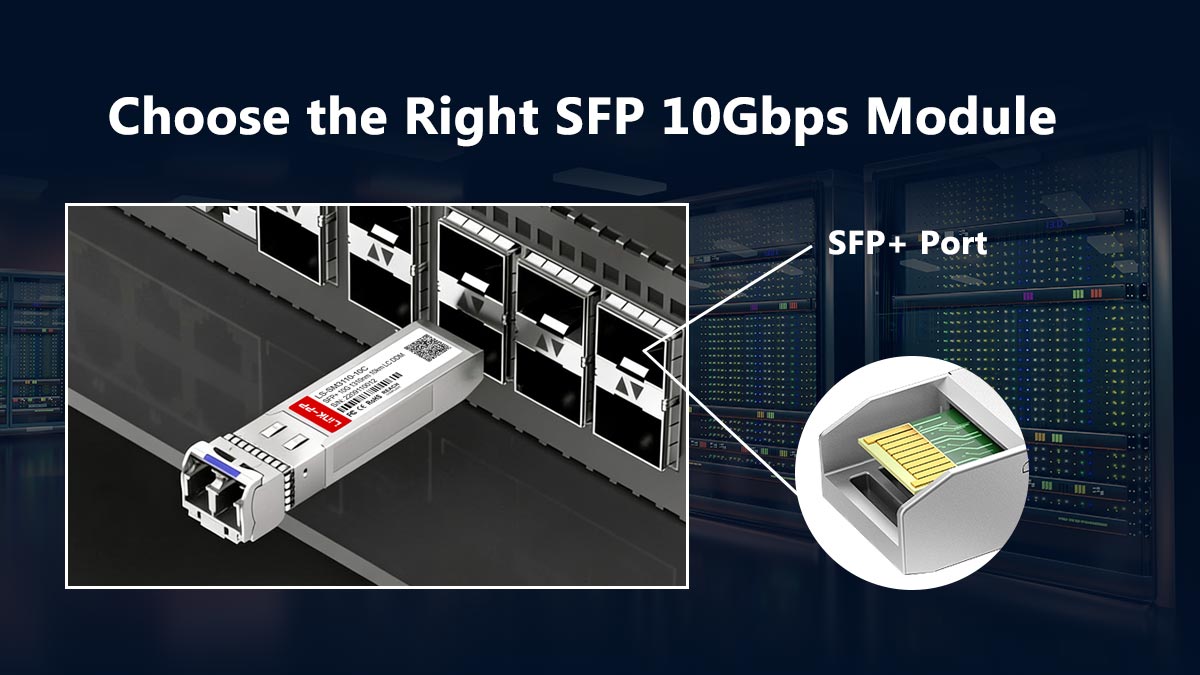
Follow this step-by-step framework used by network engineers:
Step 1: Identify Transmission Distance
Distance is the most critical factor in choosing the correct SFP+ type:
≤ 5 meters → DAC (Direct Attach Copper)
✔ Lowest cost, lowest latency, plug-and-play5m – 300m → SFP+ SR (Multimode Fiber)
✔ Ideal for data centers and short-range fiber links> 300m → SFP+ LR (Single-mode Fiber)
✔ Suitable for campus and inter-building connections
👉 Rule of thumb:
Short distance = DAC → Medium = SR → Long = LR/ER/ZR
Step 2: Check Port Compatibility
Before purchasing any 10G SFP+ module, always verify compatibility:
SFP vs. SFP+ ports
SFP+ ports usually support 1G SFP
SFP ports do NOT support SFP+
Vendor compatibility (critical for stability)
✔️ Best practice:
Always confirm compatibility lists or use tested third-party modules.
Step 3: Consider Thermal Design
Thermal performance is often overlooked—but it directly affects network stability and hardware lifespan.
Avoid high-density deployment of 10GBase-T (RJ45) SFP+ modules
These modules:
Consume more power
Generate significantly more heat
Ensure:
Proper switch airflow design
Adequate rack cooling
⚠️ Real-world insight:
Overheating is one of the most common causes of SFP+ failure in dense environments.
Step 4: Optimize Cost vs Performance
Different SFP+ options offer different trade-offs:
DAC → Cheapest
Best for short distances
Minimal power consumption
Fiber (SR/LR/ER/ZR) → Most scalable
Ideal for long-term infrastructure
Supports higher distances and flexibility
RJ45 (10GBase-T SFP+) → Most convenient
Works with existing Ethernet cabling
But higher cost, power, and heat
👉 Decision logic:
Budget-sensitive + short range → DAC
Performance + scalability → Fiber (SR/LR)
Legacy compatibility → RJ45 module
Quick Decision Checklist
Before finalizing your SFP 10 Gbps module, confirm:
✔ Distance requirement is clearly defined
✔ Switch and module compatibility is verified
✔ Cooling and airflow are sufficient
✔ Total cost (module + cable + power) is optimized
Choosing the right 10Gbps SFP module is about making the right trade-offs:
Distance determines the type
Compatibility ensures it works
Thermal design ensures reliability
Cost optimization ensures long-term value
☑️ Common SFP 10Gbps Mistakes to Avoid (Real-World Lessons from Engineers)
Even though SFP 10 Gbps (SFP+) is widely used, many deployment issues come from a few repeating mistakes. Avoiding these can save significant time, cost, and troubleshooting effort.
❌ 1. Using SFP Instead of SFP+ for 10G
One of the most common errors is assuming all SFP modules support 10Gbps.
SFP = 1G only
SFP+ = 10G required
⚠️ Installing an SFP module in a 10G design will limit performance to 1Gbps, creating unexpected bottlenecks.
✔️ Best practice: Always verify module type matches your speed requirement.
❌ 2. Ignoring Switch Compatibility Lists
Not all SFP+ modules work universally across devices.
Many vendors (Cisco, Aruba, etc.) enforce compatibility checks
Unsupported modules may:
Fail to initialize
Trigger warnings
Cause unstable links
✔️ Best practice:
Use vendor-approved or compatibility-tested SFP+ modules to ensure stability.
❌ 3. Overusing 10GBase-T (RJ45) SFP+ Modules
While convenient, RJ45 SFP+ modules introduce serious trade-offs:
Higher power consumption
Significant heat generation
Potential thermal throttling or failure
⚠️ In high-density switches, this can lead to overheating and reduced lifespan.
✔️ Best practice:
Use RJ45 modules only when necessary, not as the default solution.
❌ 4. Choosing MMF vs. SMF Incorrectly
Selecting the wrong fiber type can break your deployment:
MMF (Multimode Fiber) → Short distance (SR)
SMF (Single-mode Fiber) → Long distance (LR/ER/ZR)
⚠️ Mismatched fiber and transceiver types will result in link failure.
✔️ Best practice:
Plan fiber type based on distance and future scalability, not just current cost.
5. Common 10Gbps SFP+ Modules Deployment Experiences
In addition to technical specs, real-world deployment experience provides valuable guidance. Across multiple engineer discussions, several consistent insights stand out:
🔥 Common High-Engagement Feedback
“DAC cables are cheaper, lower latency, and just work.”
“10GBase-T SFP+ modules run extremely hot — airflow matters.”
“If you’re building from scratch, go SFP+ instead of RJ45.”
Key Patterns from Engineers
DAC is preferred for ≤3–5 meters
→ Lowest cost, simplest deployment, best efficiencyFiber is preferred for scalability
→ Future-proof, longer reach, better performanceRJ45 SFP+ is used only when necessary
→ Mainly for compatibility with existing copper infrastructure
6. What These Mistakes Teach You
Across real deployments, one principle stands out:
👉 The best SFP 10Gbps design is not the most convenient—it’s the most appropriate for the environment.
Use DAC for simplicity and cost
Use fiber for performance and growth
Avoid RJ45 unless required
Avoiding these common mistakes ensures your 10G SFP+ deployment is stable, efficient, and scalable:
Match module type to speed (SFP vs. SFP+)
Verify compatibility before purchase
Design for thermal conditions, not just convenience
Choose the right fiber type for distance
☑️ Frequently Asked Questions About SFP 10Gbps (SFP+)
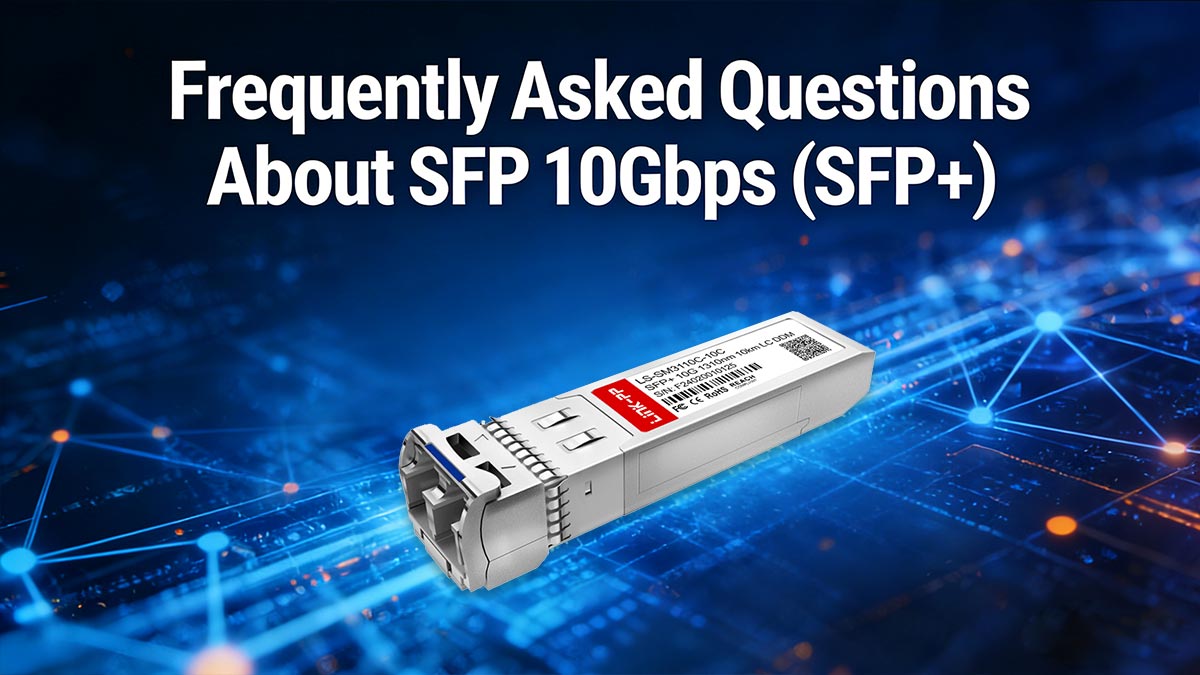
Q1. What is 10Gbps SFP?
10Gbps SFP, commonly known as SFP+, is a hot-swappable transceiver module that supports data transmission speeds up to 10 Gigabits per second (10Gbps).
It is used in networking equipment such as switches, routers, and servers to enable high-speed optical or copper connections using:
Fiber optics (SR, LR, ER, ZR)
Direct Attach Copper (DAC)
Active Optical Cable (AOC)
10GBase-T (RJ45) modules
👉 In simple terms:
SFP+ is the 10Gbps version of SFP technology.
Q2. Can SFP run at 10GB?
No, standard SFP modules cannot run at 10Gbps.
SFP (Small Form-factor Pluggable) → supports up to 1Gbps
SFP+ (Small Form-factor Pluggable Plus) → supports up to 10Gbps
⚠️ Important compatibility note:
SFP+ ports can often support 1G SFP modules
But SFP ports cannot support 10G SFP+ modules
👉 Therefore, to achieve 10Gbps speeds, you must use SFP+ modules and compatible ports.
Q3. What are 10G SFP ports used for?
10G SFP+ ports are used to provide high-speed network connectivity in enterprise and data center environments.
Common applications include:
Data centers: Server-to-switch and switch-to-switch links
Enterprise networks: Core aggregation and backbone connections
Telecom networks: Fiber aggregation and metro transport
Homelabs: NAS systems and virtualization clusters
✔️ These ports are designed for flexibility, scalability, and high-performance networking using modular transceivers.
Q4. Is SFP+ faster than Ethernet?
SFP+ is not inherently faster than Ethernet—it is a hardware form factor, not a protocol.
However, in real-world deployments:
SFP+ (fiber/DAC) typically delivers:
Lower latency
Lower power consumption
More stable 10Gbps performance
10GBase-T Ethernet (RJ45 SFP+):
Higher latency
Higher power usage
More heat generation
Feature | SFP+ (Fiber / DAC) | 10GBase-T (RJ45 Ethernet) |
|---|---|---|
Latency | Lower | Higher |
Power Consumption | Lower | Higher |
Heat | Cooler | Runs hot |
Distance | Fiber = long range | Copper = limited |
Cost (short range) | Lower (DAC) | Higher |
👉 Conclusion:
SFP+ is generally more efficient and preferred for 10Gbps networking, especially in data centers.
☑️ Practical Takeaways for 10Gbps SFP Selection
As modern networks continue evolving toward higher bandwidth and lower latency, SFP 10 Gbps (SFP+) remains one of the most widely deployed and cost-effective connectivity standards. Choosing the right module is not just a technical decision—it directly impacts network performance, scalability, and long-term operational cost.
To summarize the most important points from this guide:
SFP+ = 10Gbps standard for modern networking
It is the baseline technology for high-speed modular connectivity in enterprise and data center environments.DAC and fiber dominate real-world deployments
DAC is ideal for short-range, low-cost connections, while fiber (SR/LR) is preferred for scalability and performance.RJ45 SFP+ is situational, not ideal
10GBase-T modules are useful for compatibility but introduce higher power consumption and heat.Always match:
Port type → SFP vs SFP+ compatibility
Distance → DAC, SR, LR, ER, ZR selection
Compatibility → Vendor support and switch validation
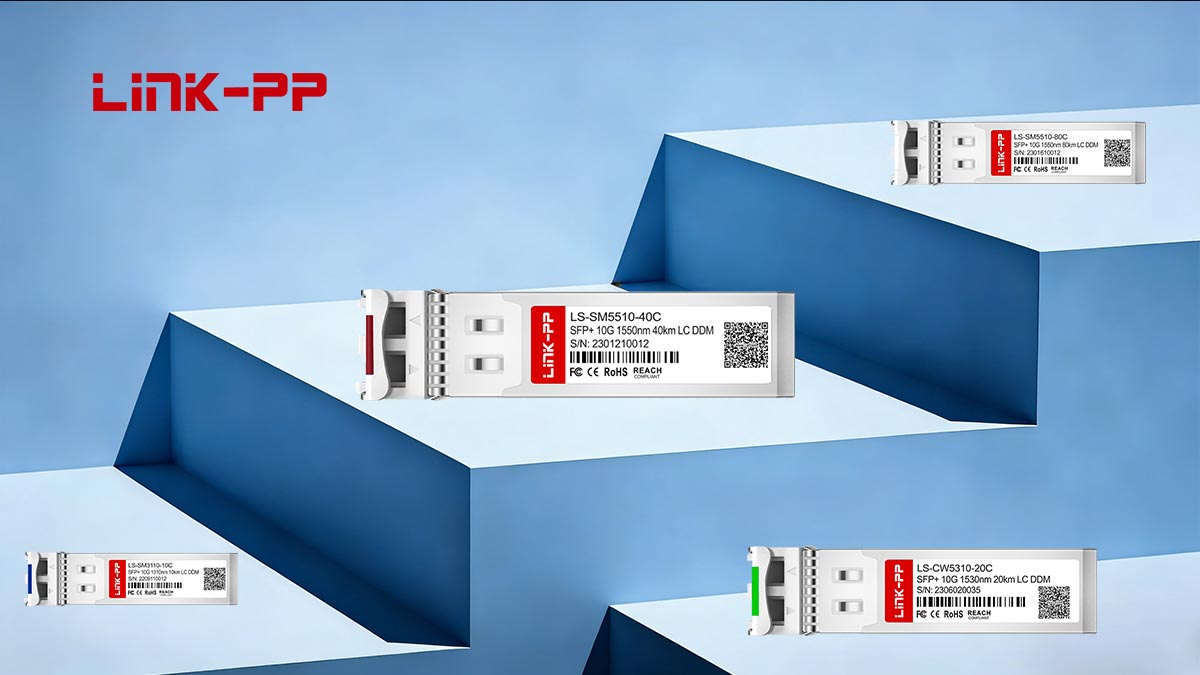
If you are planning a 10G network deployment, the most reliable approach is to:
Compare module types (SR, LR, DAC) based on your topology
Verify switch and device compatibility before purchase
Choose high-quality, tested transceivers for stable long-term performance
👉 Explore LINK-PP Official Store for:
High-performance 10G SFP+ modules
Compatibility-tested optical and copper solutions
Technical datasheets and selection guides for engineers
Why SFP+ Still Matters in 2026
Even as the industry moves toward 25G, 40G, and 100G networking, 10G SFP+ continues to hold a critical position in global infrastructure:
It remains the best price-to-performance sweet spot
It is widely supported across both legacy and modern devices
It is ideal for edge networks, SMB environments, and hybrid cloud architectures
👉 In practical terms, SFP+ is not being replaced—it is being stabilized as the universal 10G layer of networking.