
⏰ Introduction: The Critical First Seconds of a Failure
In the demanding world of IT operations and network management, every second counts when a failure occurs. While metrics like MTTR (Mean Time to Repair) focus on the fix, a more foundational metric governs the speed of your initial human reaction: Mean Time to Acknowledge (MTTA).
MTTA is the often-overlooked hero of the incident lifecycle. It measures the efficiency of your monitoring and on-call systems, bridging the gap between an automated alert and the start of a human-led recovery effort. For any organization pursuing true high availability and resilience, mastering MTTA is the first, non-negotiable step toward minimizing total downtime.
🚨 Defining Mean Time to Acknowledge (MTTA)
MTTA stands for Mean Time to Acknowledge. It is the average time elapsed from the moment a monitoring system or service generates an alert about a fault to the moment an authorized on-call responder formally acknowledges that alert.
▷ The MTTA Time Window
MTTA focuses exclusively on the time it takes for a human to register and accept ownership of a problem. This time window includes:
Alert Generation: The monitoring system detects the failure (ideally, a low MTTD - Mean Time to Detect).
Notification Routing: The alert is sent via phone, email, or a dedicated paging system.
Human Reaction: The on-call engineer receives the notification.
Acknowledge Action: The engineer logs into the incident management platform and silences or officially "takes ownership" of the alert.
A low MTTA indicates that the team is highly responsive and that the alerting system is clear and effective.
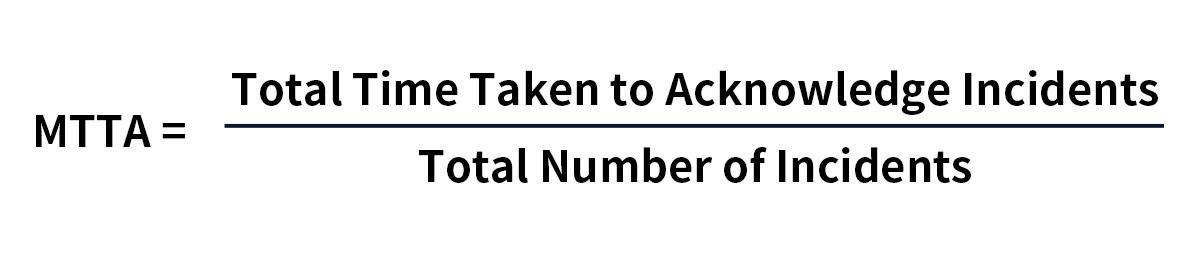
▷ Calculating the MTTA
The calculation for MTTA is simple, allowing for easy tracking and benchmarking over time:
⏱️ Why MTTA is the Gatekeeper of Availability
Reducing MTTA has a profound ripple effect across the entire incident response process, directly influencing business outcomes.
1. Directly Impacting Total Downtime
Total downtime is the sum of time spent detecting, acknowledging, repairing, and recovering from an incident. The time spent waiting for an acknowledgment is purely unproductive. Every minute saved in the MTTA phase is a minute gained in availability and revenue protection. The faster you acknowledge, the sooner you can repair.
2. Preventing Alert Fatigue and Improving Focus
When a monitoring system issues frequent false positives or ambiguous alerts, operators often delay acknowledging or become desensitized—a phenomenon known as alert fatigue. A well-optimized system that results in a low MTTA confirms that alerts are actionable and reliable, boosting the confidence and efficiency of the response team.
3. Laying the Foundation for a Low MTTR
MTTA is the necessary precursor to a successful MTTR. Until the incident is acknowledged, the MTTR counter cannot truly begin. By shortening the acknowledgment phase, you give the repair team maximum time to execute the fix, ensuring adherence to strict Service Level Objectives (SLOs).
📊 Bridging MTTD, MTTA, and MTTR
To understand incident management fully, MTTA must be seen in context with its counterparts:
MTTD (Mean Time to Detect): The time from the failure occurring to the system generating an alert. (System's efficiency)
MTTA (Mean Time to Acknowledge): The time from the alert to the human response. (Response team's efficiency)
MTTR (Mean Time to Repair): The time from the start of the fix until the service is restored. (Repair process efficiency)
A professional IT operation aims to minimize all three metrics simultaneously.
🚀 Strategies for Optimizing and Reducing Your MTTA
Lowering MTTA from 30 minutes to 5 minutes often requires more process optimization than technological advancement.
1. Sharpening Alert Quality and Routing
Actionable Alerts: Alerts must be clear, concise, and contain immediate context (what failed, where, and what the severity is). Vague alerts require longer triage, increasing MTTA.
Targeted Routing: Implement robust on-call scheduling and escalation policies to ensure the alert always goes to the right person immediately. Avoid broadcasting alerts to large, generalized groups.
2. Leveraging Digital Diagnostics and Modular Hardware
The quality of the monitoring data is paramount for achieving a low MTTA. Poor data leads to hesitant acknowledgment.
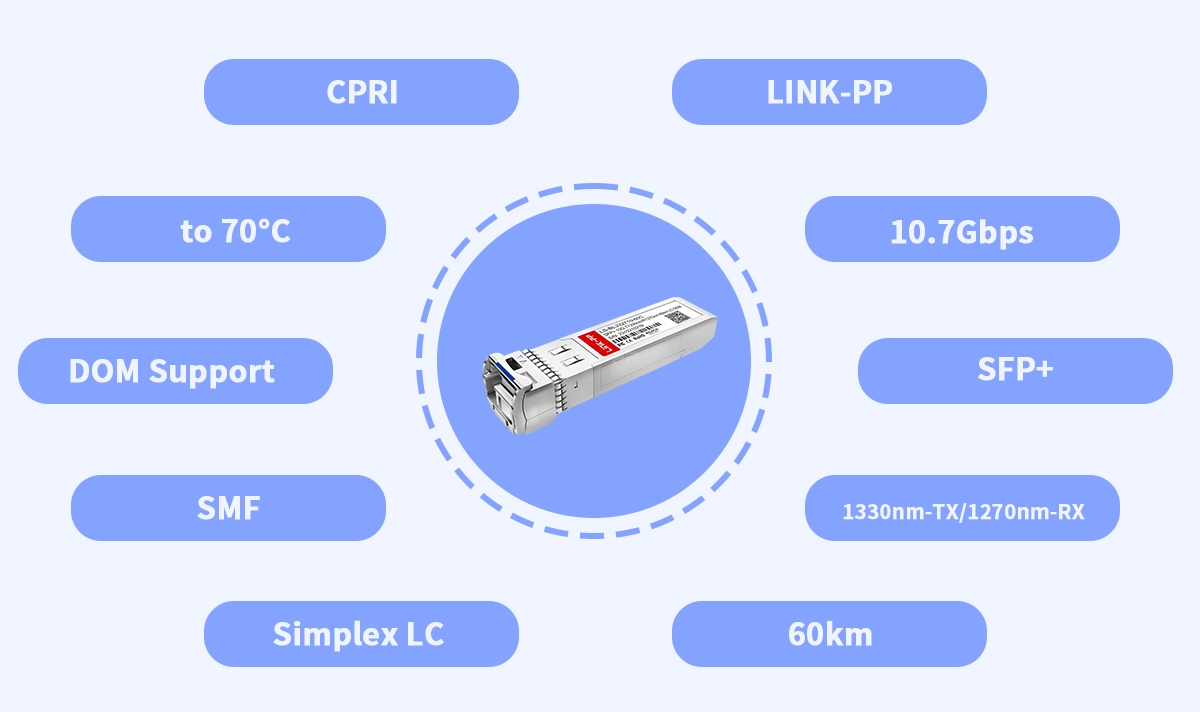
Network Insight: In data centers, components like SFP/SFP+ Optical Transceivers are central to network performance. High-quality modules include Digital Diagnostics Monitoring (DDM/DOM) capabilities. These features provide granular, real-time data on parameters like temperature, voltage, and optical power. This actionable data allows monitoring systems to generate highly reliable and specific alerts, which speeds up the operator's decision to acknowledge the incident and bypass unnecessary verification steps.
3. Defining Clear Acknowledgment Policies
Service Ownership: Clearly define which team or individual owns which service. Ambiguity slows down acknowledgment.
Escalation Logic: Establish a time limit (e.g., 5 minutes) for a primary responder to acknowledge an alert before it automatically escalates to a secondary responder or manager.
💡 Conclusion: The Competitive Edge of Speed
In the race for continuous uptime, speed of acknowledgment is a competitive advantage. Mastering MTTA signifies not just a technical metric, but a cultural commitment to swift, accountable incident response.
By integrating clear operational policies, effective on-call rotations, and leveraging hardware that provides precise diagnostic data—such as LINK-PP’s DDM-enabled SFP/SFP+ Optical Transceivers—organizations can drastically minimize their Mean Time to Acknowledge, transforming system resilience from a goal into a reality.