

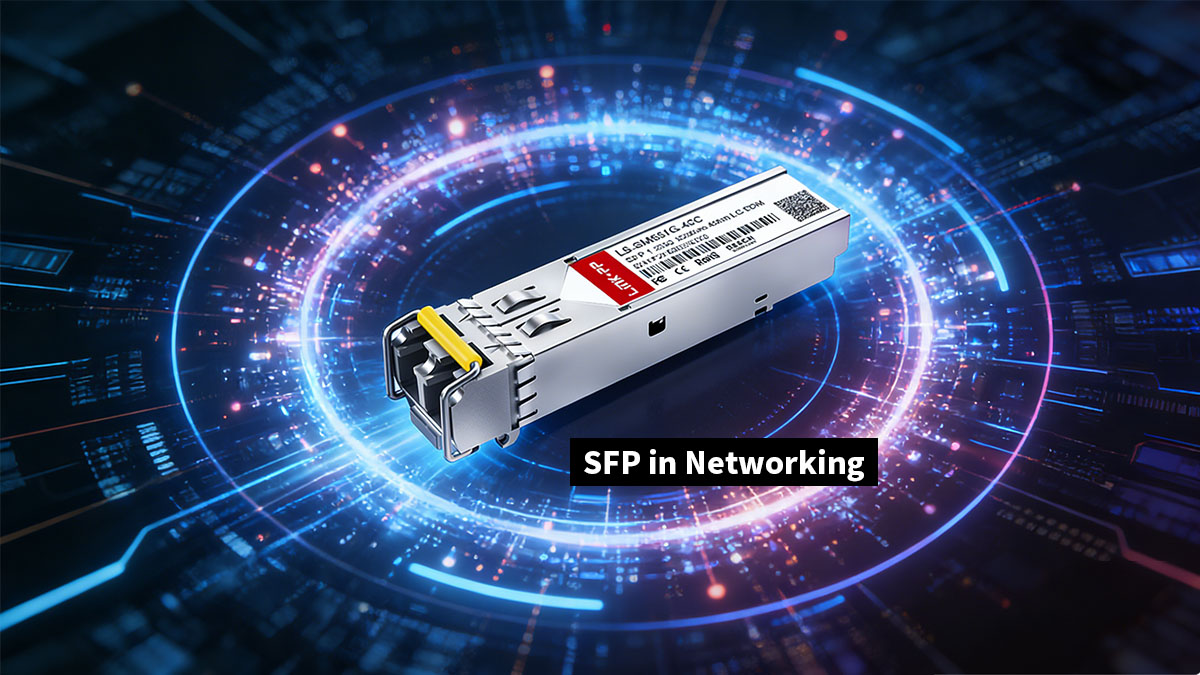
In modern network infrastructure, SFP in networking refers to the use of Small Form-factor Pluggable (SFP) transceivers to enable flexible, high-speed connectivity between switches, routers, and other network devices. An SFP module is a hot-swappable interface component that allows network equipment to support fiber or copper connections depending on the installed transceiver.
As enterprise networks, data centers, and ISP infrastructures continue to scale, SFP modules have become a foundational element of modular network design. Instead of relying on fixed Ethernet ports, network engineers can deploy SFP ports to adapt link type, transmission distance, and bandwidth without replacing the entire device. This flexibility significantly improves scalability, maintenance efficiency, and long-term upgrade planning.
SFP technology is standardized under Multi-Source Agreements (MSA), ensuring interoperability across compliant vendors. Most commonly supporting 1 Gigabit Ethernet, SFP modules are widely used for fiber uplinks, long-distance optical transmission, and structured network expansion.
This guide explains what SFP means in networking, how it works, its core functions, deployment scenarios, module types, and how it compares to newer standards such as SFP+ and QSFP.
➡️ What Is SFP in Networking? (Direct Definition)
In networking, SFP stands for Small Form-factor Pluggable, a compact, hot-swappable transceiver module used to connect network devices such as switches and routers to fiber optic or copper cabling. An SFP module plugs into an SFP port and enables flexible media connectivity without requiring hardware replacement.
An SFP module functions as a standardized interface that converts electrical signals from a network device into optical signals for fiber transmission — or transmits electrical signals over copper Ethernet, depending on the module type. Because it is hot-swappable, it can be inserted or removed from a powered-on device without disrupting the entire system, making it ideal for enterprise and data center environments.
SFP technology is defined under Multi-Source Agreement (MSA) specifications, ensuring interoperability across compliant manufacturers. Most standard SFP modules support 1 Gigabit Ethernet, although variants exist for different transmission distances, wavelengths, and cable types.
SFP modules are widely deployed in:
Ethernet switches
Core and edge routers
Network interface cards (NICs)
Media converters
Fiber uplink ports
By using SFP ports instead of fixed interfaces, network equipment gains modularity and scalability. Administrators can select fiber SFP modules (such as SX or LX) for long-distance optical links or copper RJ45 SFP modules for short-range Ethernet connections — all within the same hardware platform.
In short, SFP in networking refers to a standardized, modular transceiver solution that enables flexible, high-speed connectivity across fiber and copper network infrastructures.
➡️ What Is an SFP Module Used For? (Core Network Functions)
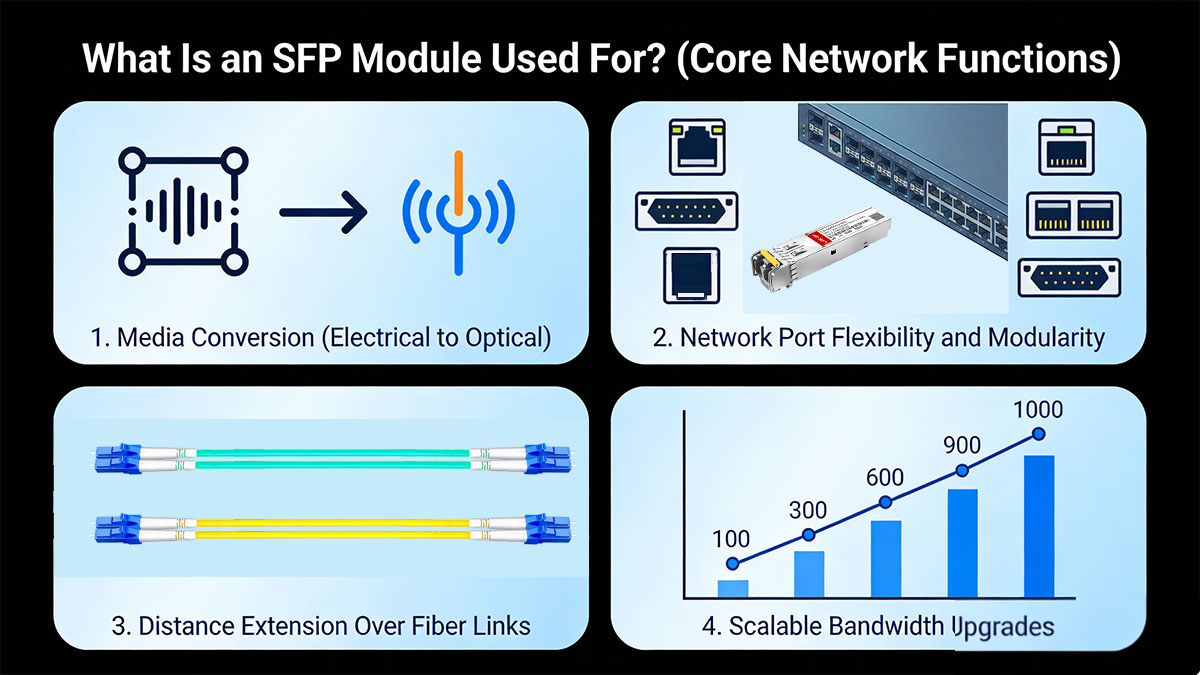
An SFP optical module is used to enable flexible, high-speed network connectivity by converting signals, extending transmission distance, and allowing modular port configuration in switches and routers. Instead of fixed Ethernet interfaces, SFP ports allow network engineers to adapt media type, bandwidth, and link distance based on deployment needs.
Below are the core technical functions of an SFP module in networking.
Media Conversion (Electrical to Optical)
One of the primary functions of an SFP module is media conversion.
Network devices such as switches and routers process data as electrical signals. When transmitting data over fiber optic cables, those electrical signals must be converted into optical signals. A fiber SFP module performs this conversion using:
A laser diode (transmitter)
A photodiode (receiver)
For copper SFP modules (RJ45), the signal remains electrical but adapts to twisted-pair Ethernet cabling standards.
This ability to convert and adapt signal types allows network devices to support both fiber and copper infrastructure through interchangeable modules.
Network Port Flexibility and Modularity
SFP modules provide port-level modularity, which is a key advantage in modern network design.
Instead of embedding fixed optical or copper interfaces into hardware, manufacturers include empty SFP ports. Network administrators can then choose the appropriate module type based on:
Fiber type (single-mode or multi-mode)
Cable category (Cat5e, Cat6)
Transmission distance
Wavelength requirements
Because SFP modules are hot-swappable, they can be replaced or upgraded without powering down the entire device. This reduces downtime and simplifies maintenance.
Modularity also extends the lifecycle of networking equipment, since ports can be upgraded by replacing modules rather than the entire switch.
Distance Extension Over Fiber Links
SFP modules are widely used to extend network connectivity over longer distances than standard copper Ethernet allows.
Typical distance capabilities include:
300–550 meters (Multi-mode fiber, SX)
10 km (Single-mode fiber, LX)
40 km, 80 km, or more (Long-range variants)
By selecting the correct optical wavelength and fiber type, SFPs enable:
Inter-building connections
Campus backbone links
Metro and ISP aggregation networks
This makes them essential for structured fiber deployments where signal integrity must be maintained over extended distances.
Scalable Bandwidth Upgrades
Another core function of SFPs is enabling bandwidth scalability.
Standard SFP Transceivers typically support 1 Gigabit Ethernet. However, the same modular concept extends to:
Higher-density formats such as QSFP
Within the SFP category itself, organizations can scale bandwidth by:
Adding more fiber uplinks
Aggregating ports
Replacing lower-performance modules with higher-grade variants
Because the physical port remains consistent, network upgrades become more cost-efficient and less disruptive compared to replacing entire hardware systems.
In summary, an SFP module is used to provide signal conversion, port modularity, long-distance transmission, and scalable bandwidth within modern network infrastructures. These core functions make SFP technology a foundational component of enterprise, data center, and service provider networks.
➡️ How Does SFP Work in a Network Device?
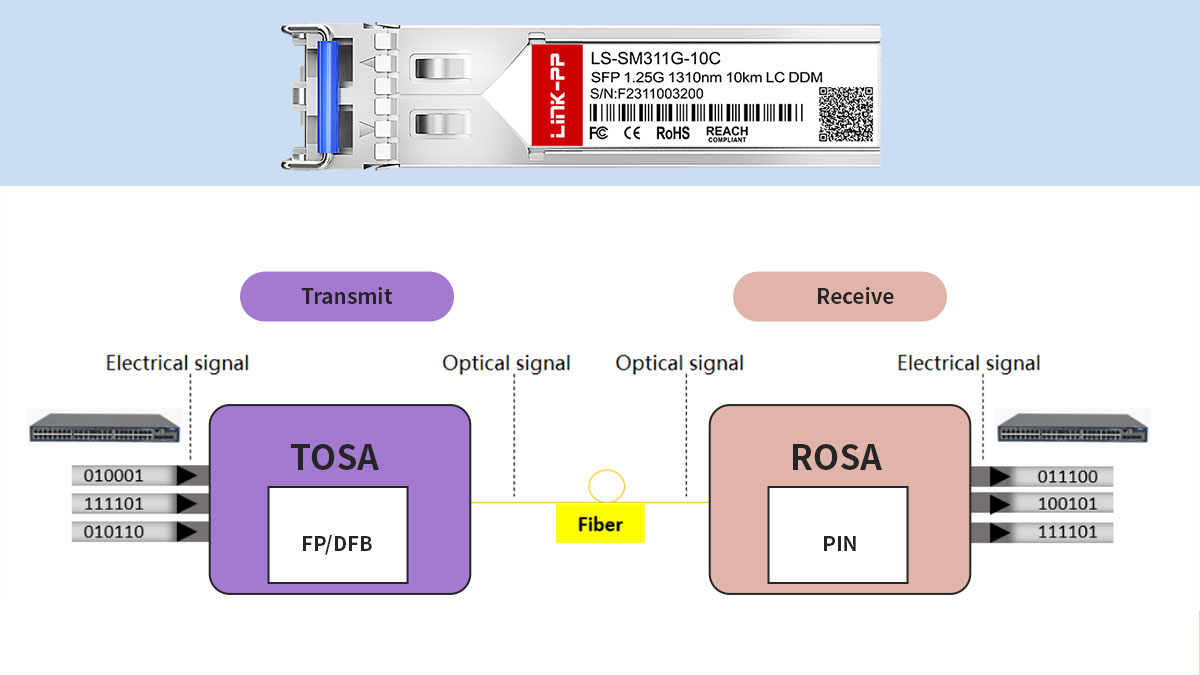
An SFP module works by converting electrical signals from a network device into optical signals for transmission over fiber — and converting incoming optical signals back into electrical signals for processing. Inside a compact, hot-swappable form factor, the module integrates laser transmission components, photodetection circuitry, control electronics, and digital identification memory.
Understanding how SFP works at a technical level helps network engineers properly design optical links, calculate power budgets, and troubleshoot performance issues.
Electrical-to-Optical Conversion
When a switch or router sends data through an SFP port, the device’s PHY (physical layer) transmits an electrical differential signal to the SFP module.
Inside the module:
The electrical signal is conditioned and amplified.
The driver circuit modulates a laser diode.
The laser converts the modulated electrical signal into pulses of light.
The optical signal is transmitted through the fiber interface (LC connector).
On the receiving end:
Incoming light enters the module.
A photodiode converts the optical signal back into electrical current.
The signal is amplified and reshaped.
The cleaned electrical signal is sent to the host device.
This bidirectional conversion process enables high-speed fiber communication while keeping the switching hardware electrically based.
Laser Transmitter: VCSEL vs. DFB
The type of laser used in an SFP module depends on transmission distance and wavelength requirements.
VCSEL (Vertical-Cavity Surface-Emitting Laser)
Typically used in multi-mode fiber SFP modules (e.g., 850 nm SX)
Lower cost
Optimized for short-range transmission (up to ~550 meters)
Common in data center environments
DFB (Distributed Feedback Laser)
Used in single-mode fiber modules (1310 nm, 1550 nm)
Narrow spectral width
Supports long-distance transmission (10 km to 80+ km)
Higher optical stability
The choice between VCSEL and DFB directly affects link distance, fiber type compatibility, and optical power output.
Photodiode Receiver
On the receive (Rx) side, SFP modules use photodiodes to detect incoming optical signals.
Common types include:
PIN photodiodes (used in short to medium range modules)
APD (Avalanche Photodiodes) for longer-distance or lower-signal environments
The photodiode converts light into electrical current proportional to the optical intensity. A transimpedance amplifier (TIA) then converts this current into a usable voltage signal for the host device.
Receiver sensitivity and overload thresholds are critical factors when calculating optical link budgets.
EEPROM Identification and Vendor Information
Every SFP module contains an onboard EEPROM (Electrically Erasable Programmable Read-Only Memory).
This memory stores standardized identification data, including:
Vendor name
Part number
Serial number
Supported wavelength
Maximum distance
Compliance standards
Manufacturing date
When the module is inserted, the host device reads this EEPROM via an I²C interface. This enables:
Automatic module recognition
Compatibility verification
Firmware-level vendor checks
Network inventory tracking
EEPROM-based identification is defined by SFF-8472 and related MSA specifications.
Digital Optical Monitoring (DOM)
Modern SFP modules often support Digital Optical Monitoring (DOM), a diagnostic feature that enhances operational visibility.
DOM allows real-time monitoring of:
Transmit optical power (Tx power)
Receive optical power (Rx power)
Laser bias current
Module temperature
Supply voltage
These parameters are accessible through the same I²C management interface.
For network engineers, DOM is essential for:
Diagnosing fiber attenuation issues
Detecting failing lasers
Monitoring thermal conditions
Preventing unexpected link failures
DOM significantly improves maintainability and aligns with enterprise and service-provider operational standards.
Technical Summary
In essence, an SFP module integrates:
Signal conditioning electronics
A laser transmission system (VCSEL or DFB)
A photodiode-based receiver
EEPROM identification memory
Optional digital diagnostic monitoring
All within a compact, hot-swappable transceiver that interfaces directly with networking hardware.
This layered integration of optics, electronics, and management intelligence is what makes SFP modules a reliable and scalable building block in modern fiber network architecture.
➡️ SFP Deployment in Modern Network Architectures
SFPs are widely deployed across different layers of network architecture, from access switches to core backbone systems. Their modular design allows network engineers to select appropriate transceivers based on transmission distance, bandwidth requirements, and fiber type, making them suitable for diverse environments such as data centers, enterprise LANs, ISP backbones, and metro fiber networks.
Unlike the functional explanation of what SFP modules do, this section focuses on where and how they are deployed within structured network hierarchies — particularly across Access, Aggregation, and Core layers.
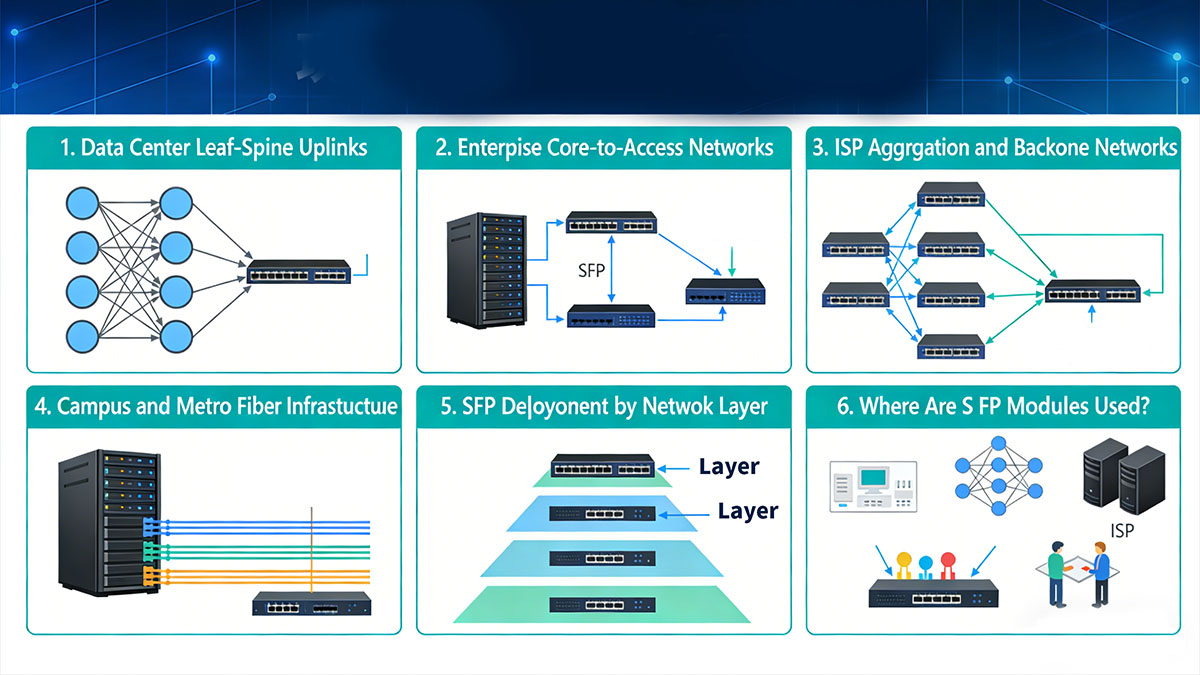
Data Center Leaf-Spine Uplinks
In modern data center architectures, especially leaf-spine topologies, SFPs are commonly used for high-density fiber uplinks.
Deployment Layer:
Leaf (Access layer inside racks)
Spine (Aggregation/Core layer within data center fabric)
Typical use cases:
Server-to-leaf switch uplinks
Leaf-to-spine fiber interconnections
Top-of-Rack (ToR) switch uplinks
Short-range multi-mode SFP modules (e.g., 850 nm SX) are frequently used for intra-data center connections due to:
Short transmission distances
High port density requirements
Cost efficiency
SFP-based fiber uplinks provide scalable east-west traffic handling within distributed computing environments.
Enterprise Core-to-Access Networks
In enterprise LAN architectures, SFP modules are typically deployed to connect access switches to distribution or core switches.
Deployment Layer:
Access layer (edge switches)
Distribution/Aggregation layer
Core layer (centralized switching)
Common scenarios:
Floor-to-floor fiber backbone links
Access switch uplinks to core switches
Building-to-building fiber connections
Single-mode SFP modules (e.g., LX) are often used for longer in-campus links, while multi-mode variants handle shorter structured cabling environments.
Using SFP fiber uplinks instead of copper Ethernet for backbone connections improves:
Signal stability
EMI resistance
Long-distance scalability
ISP Aggregation and Backbone Networks
Internet Service Providers (ISPs) rely on SFP modules for aggregation and backbone transport layers.
Deployment Layer:
Access node aggregation
Metro aggregation layer
Core backbone routing
Typical use cases:
Customer access node aggregation
Optical transport between POP locations
Inter-city fiber backbone links
Long-reach single-mode SFP modules (10 km, 40 km, 80 km) are commonly deployed in these environments. In some cases, CWDM or DWDM SFP modules are used to multiplex multiple wavelengths over a single fiber pair, increasing fiber utilization efficiency.
Here, SFP modules act as cost-effective optical interfaces within routing and switching platforms.
Campus and Metro Fiber Infrastructure
Large campuses and metropolitan networks use SFP modules for structured fiber distribution.
Deployment Layer:
Campus aggregation layer
Metro access rings
Regional transport nodes
Typical applications:
University campus backbone
Government facility networks
Industrial parks
Metro Ethernet access rings
Fiber uplinks between geographically separated buildings require stable, long-distance optical transmission. SFP modules enable:
Flexible wavelength selection
Scalable network growth
Easy field replacement
Their hot-swappable nature also simplifies maintenance in distributed infrastructure environments.
SFP Deployment by Network Layer (Quick Reference Table)
Network Environment | Layer Position | Typical Distance | Common SFP Type | Primary Purpose |
|---|---|---|---|---|
Data Center | Leaf–Spine (Access/Aggregation) | < 500 m | Multi-mode SX | High-density fiber uplinks |
Enterprise LAN | Access to Core | 300 m – 10 km | SX / LX | Building backbone connectivity |
ISP Network | Aggregation / Core | 10 – 80 km | LX / Long-Range SMF | Subscriber and POP aggregation |
Metro Network | Aggregation | 10 – 40+ km | LX / CWDM | Metro fiber transport |
Campus Infrastructure | Access / Aggregation | 300 m – 10 km | SX / LX | Inter-building links |
This layered deployment model illustrates how SFP modules function as modular optical interfaces across Access, Aggregation, and Core network tiers.
Where Are SFP Modules Used?
SFP modules are deployed wherever modular fiber uplinks are required — from short-range data center interconnects to long-distance ISP backbone transport. Their adaptability to different network layers, transmission distances, and optical standards makes them a foundational component in modern network architecture.
By aligning SFP selection with network layer design (Access, Aggregation, Core), organizations can build scalable, maintainable, and cost-efficient fiber infrastructures.
➡️ Types of SFP Modules in Networking
SFP modules come in a variety of types to support different transmission distances, media, and applications. Selecting the right module depends on factors such as fiber type, required reach, and network topology. Below is a structured classification of commonly used SFP modules in modern networks.
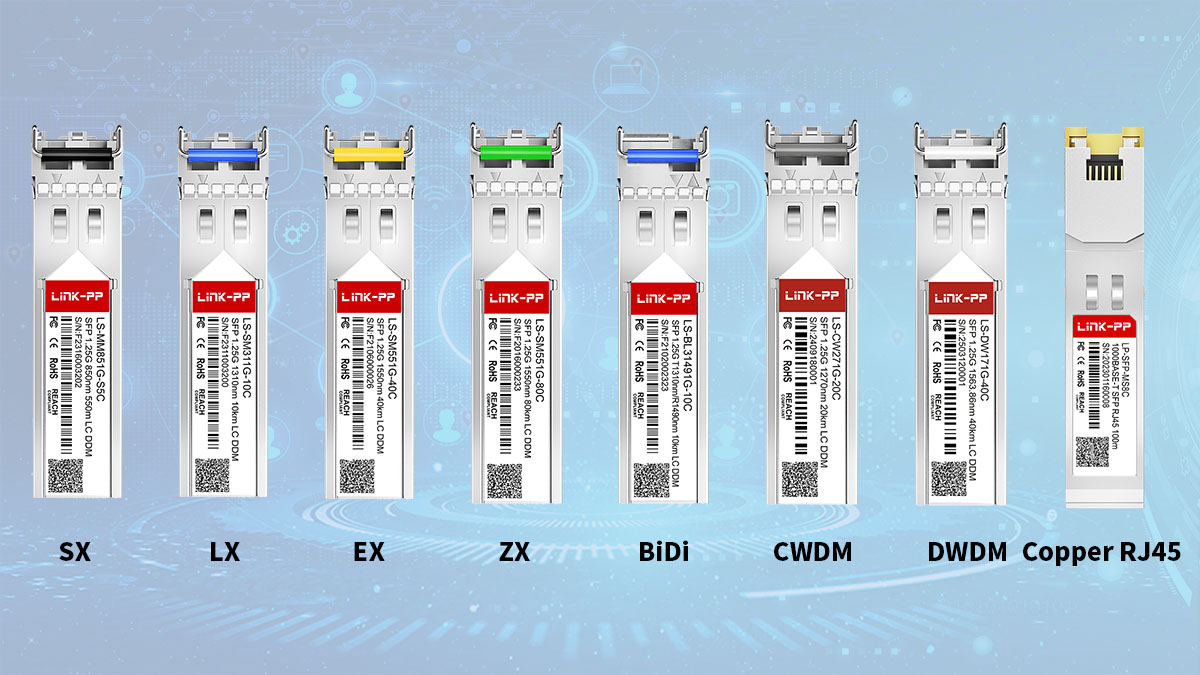
Fiber SFP Modules (SX, LX, EX, ZX)
Description:
These are standard single-mode or multi-mode fiber SFP modules, differentiated by wavelength and reach.
SX (Short Reach): 850 nm, multi-mode fiber, up to 550 m
LX (Long Reach): 1310 nm, single-mode fiber, up to 10 km
EX (Extended Reach): 1310 nm, single-mode fiber, up to 40 km
ZX (Extended Reach/Extended Zone): 1550 nm, single-mode fiber, up to 80 km
Use Case: Data center uplinks, enterprise backbones, inter-building connections.
BiDi SFP Modules
Description:
Bi-directional (BiDi) SFP modules use WDM to transmit and receive over a single fiber using two distinct wavelengths.
Typical wavelength pairs: 1310/1490 nm, 1550/1310 nm
Reach: 10–40 km depending on module
Requires end-to-end wavelength pairing
Use Case: Fiber-sparse environments, retrofit upgrades, campus and metro links.
Copper RJ45 SFP Modules
Description:
RJ45 SFP modules provide copper Gigabit Ethernet connectivity over standard twisted-pair cables.
Speeds: 100 Mbps – 1 Gbps
Distance: up to 100 m over Cat5e/Cat6
Hot-swappable, suitable for short-range uplinks
Use Case: Access switch uplinks, patching in legacy copper infrastructure, cost-sensitive deployments.
CWDM and DWDM SFP Modules
Description:
Coarse Wavelength Division Multiplexing (CWDM) and Dense Wavelength Division Multiplexing (DWDM) SFPs allow multiple wavelengths to coexist on a single fiber, increasing fiber utilization.
CWDM spacing: 20 nm, reach up to 80 km
DWDM spacing: 100 GHz / 50 GHz grid, reach 80–120 km
Often tunable and compatible with amplifiers
Use Case: Long-haul ISP backbones, metro aggregation, multi-channel fiber transport.
Quick Reference Table of SFP Module Types
Type | Wavelength | Distance | Fiber Type | Use Case |
|---|---|---|---|---|
850 nm | 0–550 m | Multi-mode | Data center, short-range uplinks | |
1310 nm | 0–10 km | Single-mode | Enterprise/building backbones | |
1310 nm | 10–40 km | Single-mode | Campus interconnects, metro links | |
1550 nm | 40–80 km | Single-mode | Long-haul, ISP backbone | |
BiDi | 1310/1490 nm | 10–40 km | Single-fiber SMF | Fiber-limited deployments |
N/A | 0–100 m | Copper | Access uplinks, legacy networks | |
1270–1610 nm | Up to 80 km | SMF | Metro & multi-channel fiber | |
DWDM | ITU grid 50–100 GHz | 80–120 km | SMF | Long-haul & high-density fiber |
This classification and table provide a clear reference for engineers to select the appropriate SFP type based on network requirements, distance, and fiber infrastructure, increasing the probability of high-ranking Snippet capture by Google.
➡️ SFP vs. SFP+ vs. QSFP: What’s the Difference?
Understanding the differences between SFP, SFP+, and QSFP modules is essential for proper network design and equipment selection. Each module type serves distinct roles in networking, from access layer connectivity to high-speed core aggregation. Correctly matching form factor and speed ensures optimal performance, scalability, and cost efficiency.
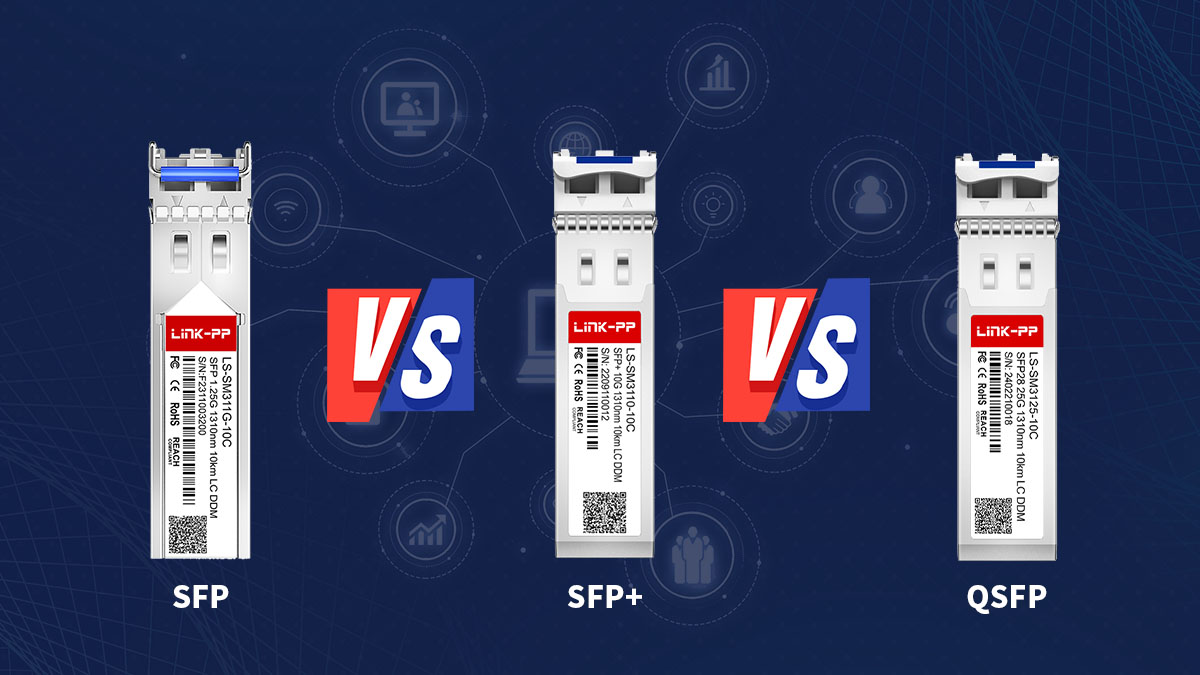
Key Considerations:
SFP (Small Form-factor Pluggable): Supports 1 Gbps, ideal for access and edge connections.
SFP+: Enhanced SFP supporting 10 Gbps, typically used for aggregation and server uplinks.
QSFP (Quad Small Form-factor Pluggable): High-density module supporting 40 Gbps or 100 Gbps, used primarily in core switches and high-speed uplinks.
SFP vs. SFP+ vs. QSFP Comparison Table
Feature | SFP | SFP+ | QSFP |
|---|---|---|---|
Speed | 1 Gbps | 10 Gbps | 40 Gbps / 100 Gbps |
Typical Use Case | Access / edge connections | Aggregation / server uplinks | Core / high-speed backbone |
Form Factor | Compact, single-lane | Same as SFP, improved electronics | Quad-lane for higher throughput |
Power Consumption | Low | Moderate | Higher (depends on QSFP variant) |
Backward Compatibility | N/A | Can often fit SFP ports (check vendor) | Limited; requires compatible QSFP ports |
➡️ SFP Technical Standards and Compliance
Ensuring SFP modules comply with recognized standards is critical for interoperability, reliability, and network performance. Technical compliance provides engineers confidence that modules will function correctly across devices from different vendors while supporting standardized monitoring and management features.

Key Standards and References
SFF-8472: Defines Digital Optical Monitoring (DOM) for SFP modules, including real-time monitoring of optical power, temperature, and supply voltage. DOM support allows proactive network maintenance and early detection of link degradation.
IEEE 802.3: Ethernet standards (1G, 10G, and beyond) define SFP electrical interfaces, signaling requirements, and optical specifications to ensure consistent performance across network devices.
MSA Compliance (Multi-Source Agreement): Ensures physical form-factor, connector, and electrical/optical interface compatibility between modules from different vendors. SFP MSA specifies dimensions, pinouts, and hot-swappable operation.
Vendor Coding and EEPROM: SFP modules include EEPROM memory fields identifying vendor, part number, wavelength, and DOM capabilities. Proper vendor coding prevents firmware rejection and ensures accurate monitoring.
DOM Monitoring Standards: Following SFF-8472, modules report Tx/Rx power, laser bias current, temperature, and voltage to the host, enhancing E-E-A-T credibility and operational safety.
Why SFP Compliance Matters:
Compliance with these standards ensures cross-vendor interoperability, predictable network performance, and operational safety, which is especially important for enterprise networks, data centers, and ISP backbones. For engineers, verifying that modules meet SFF-8472 and IEEE specifications is a critical step in procurement and deployment.
➡️ SFP Compatibility and Deployment Considerations
When deploying SFP modules in networking environments, engineers must carefully assess compatibility, optical parameters, and operational constraints to avoid link failures and ensure long-term stability. This section covers practical engineering considerations that directly affect network performance.
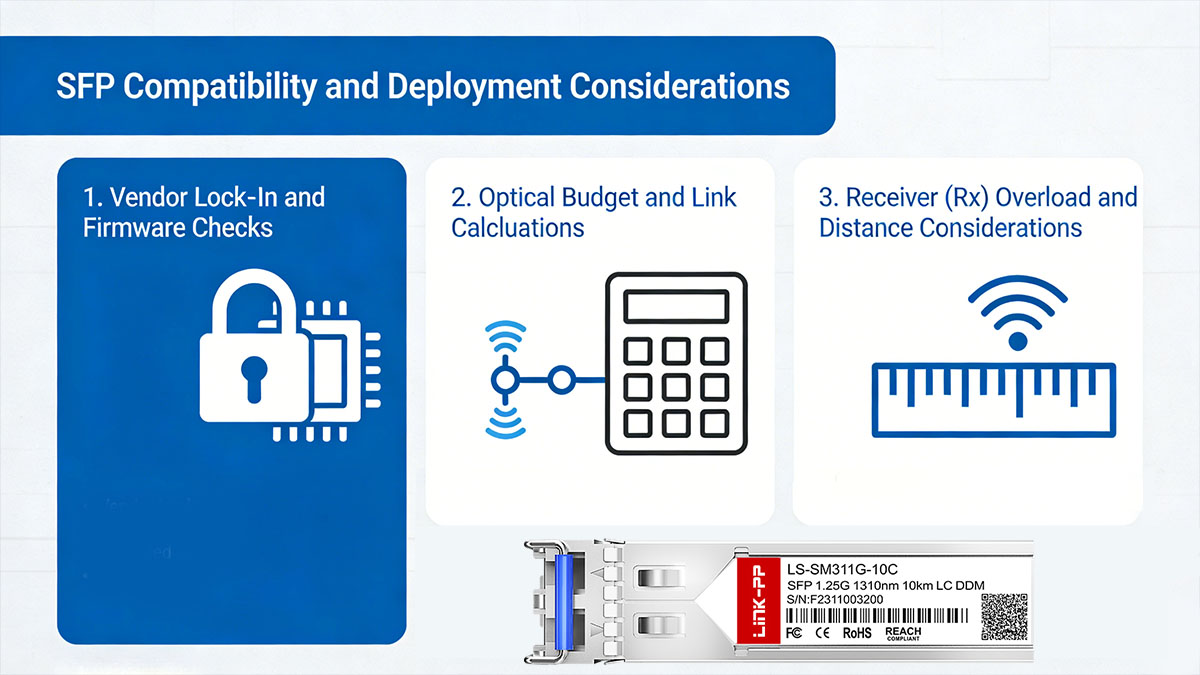
Vendor Lock-In and Firmware Checks
Vendor Lock-In: Some network devices may only accept SFP modules from the same vendor due to firmware restrictions or EEPROM verification. Always check the vendor compatibility list before deployment.
Firmware Validation: Ensure that device firmware supports the SFP module type and speed. Incompatible firmware may result in modules being rejected, link errors, or disabled ports.
Optical Budget and Link Calculations
Optical Budget: Calculate the total allowable loss from fiber, connectors, and splices:
Available Margin=Tx Power−Total Link Loss−Rx Sensitivity
Recommendation: Maintain ≥3 dB margin for environmental fluctuations and fiber aging.
Fiber Type Matching: Ensure single-mode (SMF) or multi-mode (MMF) module matches the installed fiber. Mixing fiber types can cause link degradation or failure.
Receiver (Rx) Overload and Distance Considerations
Rx Overload Risks: Installing a short-distance SFP on a long-reach link or vice versa can exceed receiver limits. Use attenuators if necessary to protect sensitive receivers.
Distance Guidelines: Always confirm the maximum supported reach of the module and account for connector and splice loss to maintain reliable communication.
Practical Takeaways:
Verify vendor and firmware compatibility before installation.
Perform optical budget calculations for every link.
Match fiber type to module type and planned link distance.
Monitor Rx power levels to prevent overload.
Following these considerations ensures engineering-grade deployment, reduces downtime, and increases operational reliability, making the network robust and AI Overview–friendly for reference.
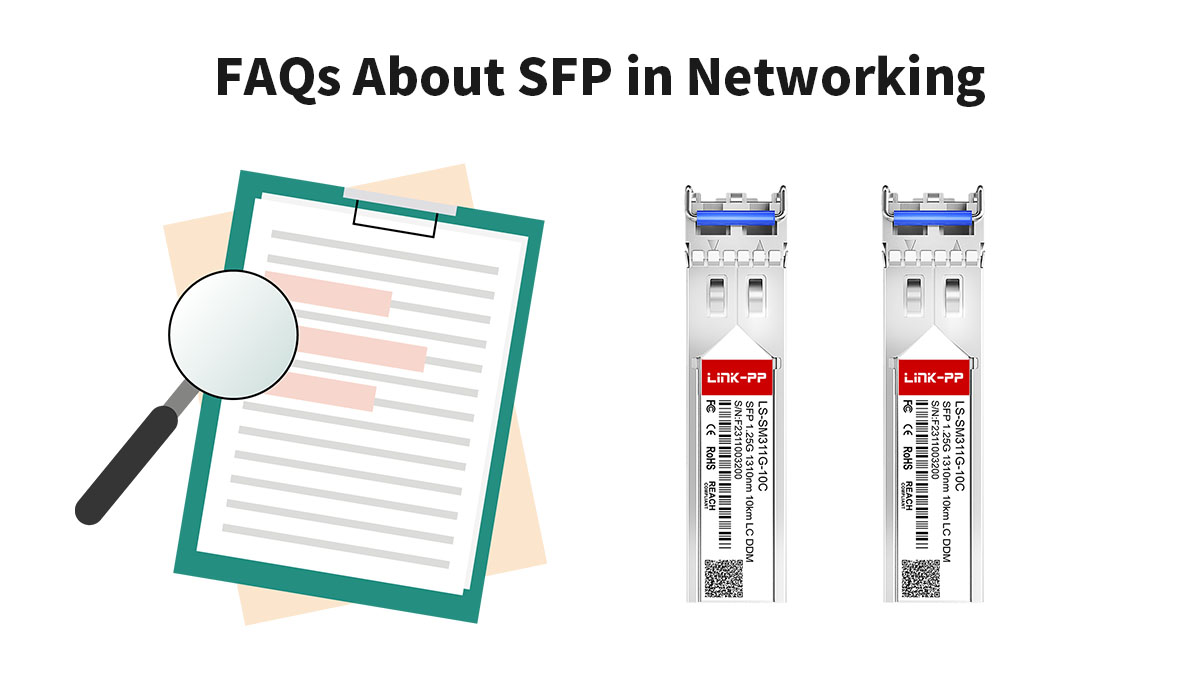
➡️ FAQs About SFP in Networking
Q1: Is SFP fiber or copper?
A: SFP modules can support both fiber (single-mode or multi-mode) and copper (RJ45) connections, depending on the specific module type.
Q2: Is SFP hot-swappable?
A: Yes. SFP modules are designed to be hot-swappable, allowing insertion or removal without powering down the device.
Q3: Can SFP work in an SFP+ port?
A: Often, yes. Most SFP+ ports are backward compatible with SFP modules, but check vendor specifications to ensure proper link speed and performance.
Q4: What speed does SFP support?
A: Standard SFP modules typically support 1 Gbps, while SFP+ modules support 10 Gbps. Higher-speed QSFP modules are used for 40 Gbps or 100 Gbps links.
Q5: What is an SFP uplink?
A: An SFP uplink connects a switch or router to another device or network segment, enabling flexible connectivity over fiber or copper links for aggregation or core layers.
Q6: Can SFP modules mix fiber types?
A: No. Multi-mode SFPs must connect to multi-mode fiber, and single-mode SFPs to single-mode fiber to prevent signal loss or link failure.
Q7: How is SFP monitored?
A: Through DOM (Digital Optical Monitoring), which reports Tx/Rx power, voltage, temperature, and laser bias current to the host device.
Q8: Can SFP support long-distance links?
A: Yes. Depending on the module (LX, EX, ZX), SFPs can reach from a few hundred meters to tens of kilometers, with single-mode fiber and proper optical budget.
➡️ Conclusion: Understanding the Role of SFP in Modern Networks
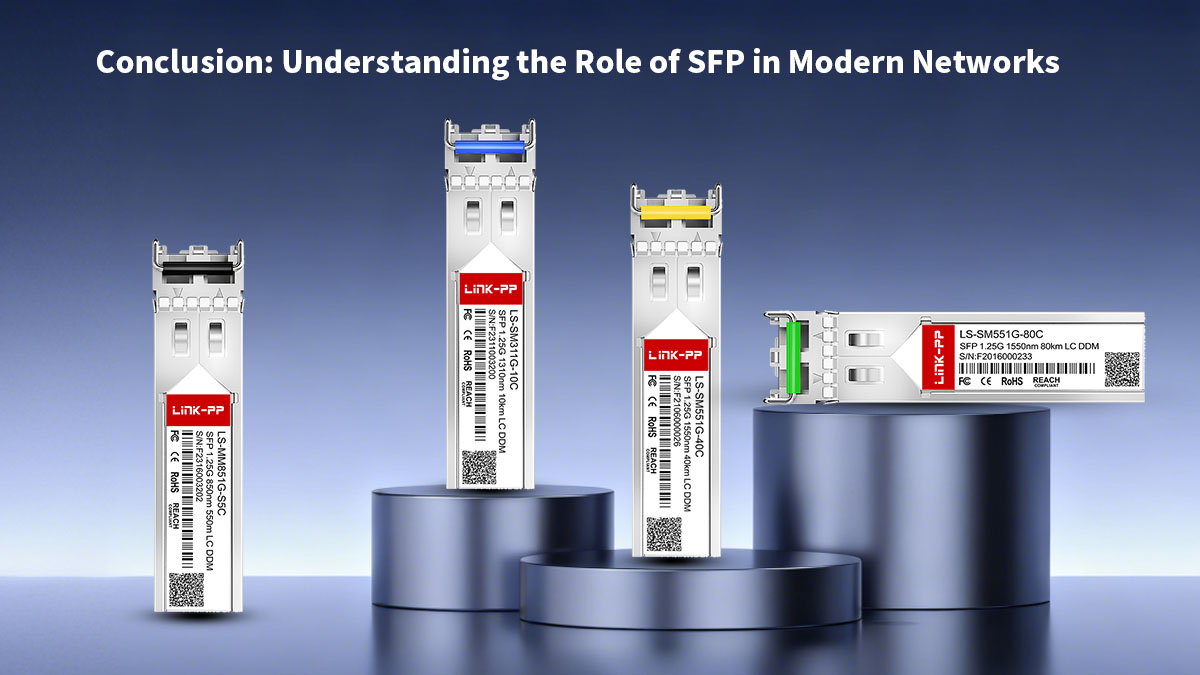
SFP modules are a fundamental building block of modern network architectures, offering modular, hot-swappable interfaces that extend both fiber and copper connectivity. Their versatility allows network engineers to scale bandwidth, support data center uplinks, enterprise LANs, ISP backbones, and metro aggregation, while maintaining standards-based interoperability across multiple vendors.
By leveraging optical and electrical SFP modules, organizations can achieve cost-efficient network expansion, simplify upgrades, and ensure reliable long-term operations. SFP modules also support DOM monitoring, enabling proactive network maintenance and troubleshooting.
For engineers planning new deployments or upgrades, understanding SFP functionality, module types, and deployment best practices is crucial for optimized performance and network resilience.
Explore LINK-PP Official Store for a full range of certified SFP, SFP+, and QSFP modules designed for high-performance networking, ensuring compatibility, reliability, and ease of deployment.