

Small and Medium-sized Businesses (SMBs) are rapidly transforming their digital infrastructure to keep pace with cloud computing, hybrid work, AI-driven operations, cybersecurity demands, and growing customer expectations. Reliable and scalable network connectivity is no longer optional for SMBs—it is a core business requirement that directly affects productivity, operational efficiency, and long-term competitiveness.
However, many SMBs face a common challenge: how to build a high-performance network without the high costs and complexity typically associated with enterprise-level IT infrastructure. As businesses expand offices, deploy IP surveillance systems, adopt cloud-based applications, or upgrade to faster Ethernet speeds, traditional copper networking solutions often become limited in flexibility, transmission distance, and scalability.
This is where SFP modules play a critical role.
SFP modules provide SMBs with a flexible, cost-effective, and future-ready approach to network expansion. By enabling high-speed fiber or copper connectivity through modular network interfaces, SFP transceivers help businesses improve bandwidth capacity, extend transmission distances, reduce latency, and simplify future upgrades without replacing entire networking systems.
Compared with fixed-port networking solutions, SFP-based infrastructure allows small and medium-sized businesses to scale more efficiently while maintaining better network reliability and lower long-term operational costs. This flexibility is especially important for growing companies that must balance performance, budget, and future expansion.
In this article, you will learn:
What Small and Medium-sized Businesses (SMBs) are
How SFP modules work in modern business networks
Why SMBs increasingly rely on fiber connectivity
The key benefits of SFP modules for SMB IT infrastructure
SFP vs RJ45 networking comparisons for SMB applications
How to choose the right SFP module for your business environment
Future SMB networking trends
Whether you operate a small office, a growing enterprise branch, a retail chain, or an industrial facility, understanding the role of SFP modules can help you build a more scalable, secure, and future-proof network infrastructure.
⏩ What Are Small and Medium-sized Businesses SMBs?
Small and Medium-sized Businesses (SMBs) are companies with smaller employee counts, revenue, or operational scale compared with large enterprises. Although definitions vary by country and industry, SMBs play a major role in global economic growth, innovation, and employment.
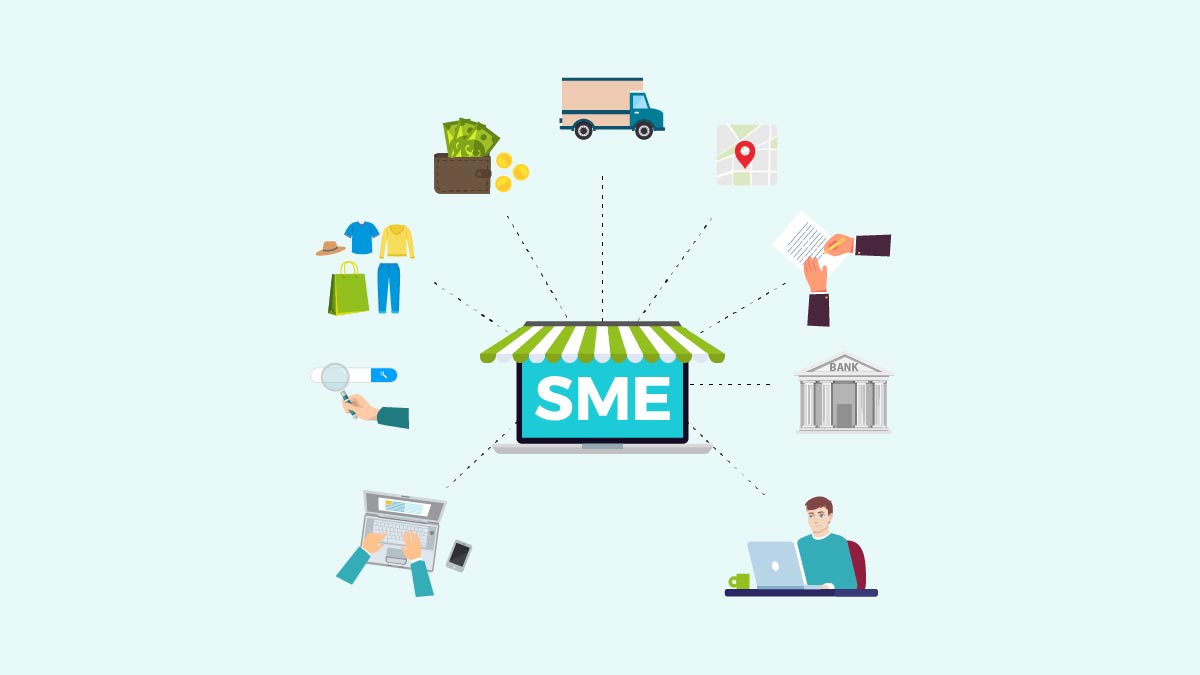
Modern SMBs include:
Retail businesses
Technology startups
Manufacturers
Healthcare providers
Logistics companies
E-commerce businesses
Professional service firms
As digital transformation accelerates, SMBs increasingly rely on stable, scalable, and cost-efficient IT infrastructure to support daily operations, cloud applications, cybersecurity, and business growth.
Global Definitions of SMBs and SMEs
The terms SMB (Small and Medium-sized Business) and SME (Small and Medium-sized Enterprise) are often used interchangeably. Definitions typically depend on employee count or annual revenue.
Region | Small Business | Medium Business |
|---|---|---|
United States | Under 100 employees | Under 500 employees |
European Union | Fewer than 50 employees | Fewer than 250 employees |
Asia-Pacific | Varies by industry | Often based on revenue and workforce size |
Despite regional differences, most SMBs share common characteristics:
Limited IT budgets
Small technical teams
Growing digital infrastructure needs
Demand for scalable and affordable networking solutions
Common Technology Challenges Faced by SMBs
As SMBs adopt cloud services, video conferencing, remote work, and AI-powered applications, network demands continue to grow. However, many businesses still rely on outdated infrastructure.
Common challenges include:
Limited IT resources
Network bottlenecks and bandwidth limitations
Scalability issues during business expansion
Increasing cybersecurity risks
Pressure to reduce operational costs
These challenges make flexible and scalable networking solutions increasingly important for SMB environments.
Why Digital Infrastructure Matters
Digital infrastructure is essential for business continuity, productivity, and competitiveness. SMBs rely on modern networks to support:
Cloud applications
Remote collaboration
Smart office systems
IP surveillance
E-commerce platforms
Multi-location operations
This is why many SMBs are upgrading to fiber-based networking and SFP modules, which offer:
Higher transmission speeds
Longer communication distances
Better network stability
Flexible scalability
Lower long-term upgrade costs
For growing SMBs, SFP technology provides a practical and future-ready networking solution.
⏩ What Is an SFP Module and How Does It Work in SMBs?
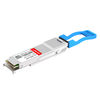
An SFP (Small Form-factor Pluggable) module is a compact, hot-swappable transceiver used in switches, routers, and servers to enable fiber or copper network connectivity.
For Small and Medium-sized Businesses (SMBs), SFP modules provide a flexible and cost-effective way to expand network infrastructure without replacing entire systems. Businesses can upgrade connectivity simply by changing the SFP module based on speed, distance, or application requirements.
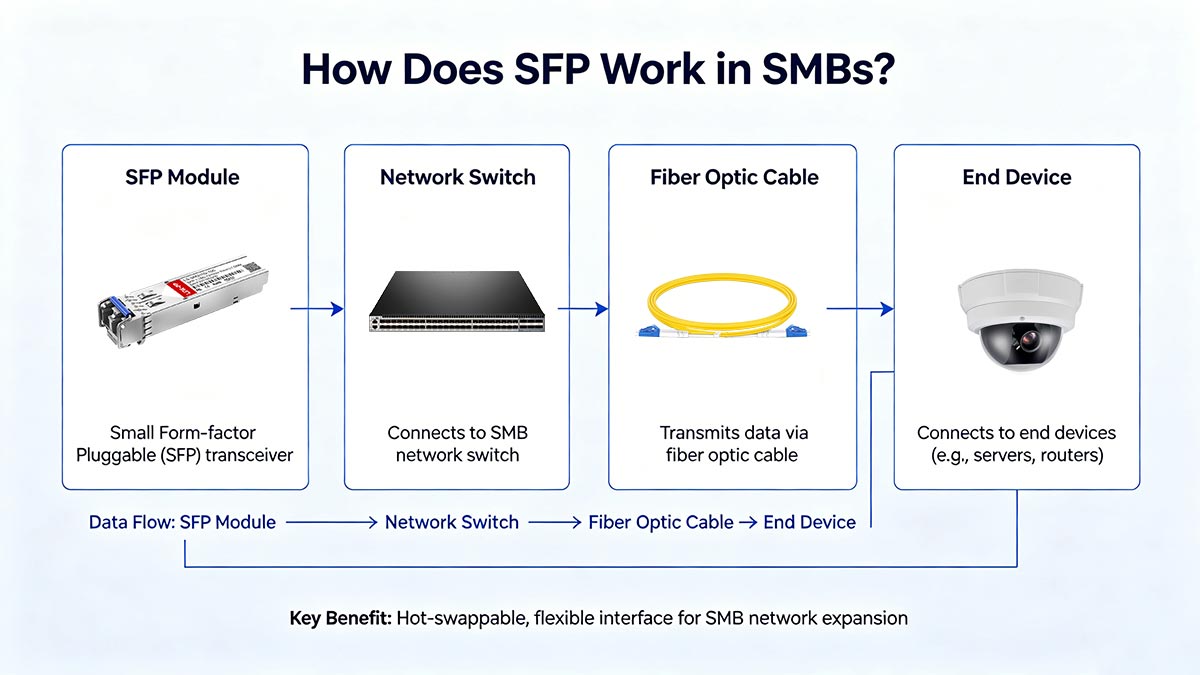
SFP modules are commonly used in:
Office networks
Server rooms
IP surveillance systems
Retail POS networks
Industrial Ethernet applications
Compared with fixed-port networking, SFP-based infrastructure offers better scalability, easier upgrades, and improved long-term flexibility.
Understanding SFP Transceivers
SFP transceivers convert electrical signals into optical or copper transmission signals. They plug directly into SFP ports on network equipment and support different transmission media and speeds.
Common SFP types include:
For most SMBs, 1G and 10G SFP modules provide the best balance between performance and cost.
Key benefits include:
Flexible network upgrades
Support for fiber and copper connections
Lower infrastructure replacement costs
Easy scalability for business growth
Fiber vs. Copper SFP Modules
SFP modules are available in both fiber optic and copper RJ45 versions.
Feature | ||
|---|---|---|
Cable Type | Fiber optic | Ethernet copper |
Distance | Long-distance | Up to 100m |
Stability | High | Moderate |
Best Use | Backbone and high-speed links | Office LAN connections |
Fiber SFP Modules
Fiber SFPs are ideal for SMBs requiring:
Longer transmission distances
Higher bandwidth
Better signal stability
Reduced electromagnetic interference
Copper RJ45 SFP Modules
Copper SFPs are commonly used for:
Short-distance office networking
Existing Ethernet infrastructure
Lower-cost deployments
Common SFP Standards Used by SMBs
1G SFP Modules: Widely used for standard Gigabit Ethernet applications such as office switches, routers, and IP cameras.
10G SFP+ Modules: Increasingly adopted by SMBs for cloud applications, NAS storage, virtualization, and high-speed data transfer.
Single-Mode vs. Multi-Mode Fiber
Type | Best For |
|---|---|
Multi-Mode Fiber | Short-range office networks |
Single-Mode Fiber | Long-distance connections |
By selecting the right SFP solution, SMBs can build scalable, reliable, and future-ready network infrastructure while controlling upgrade costs.
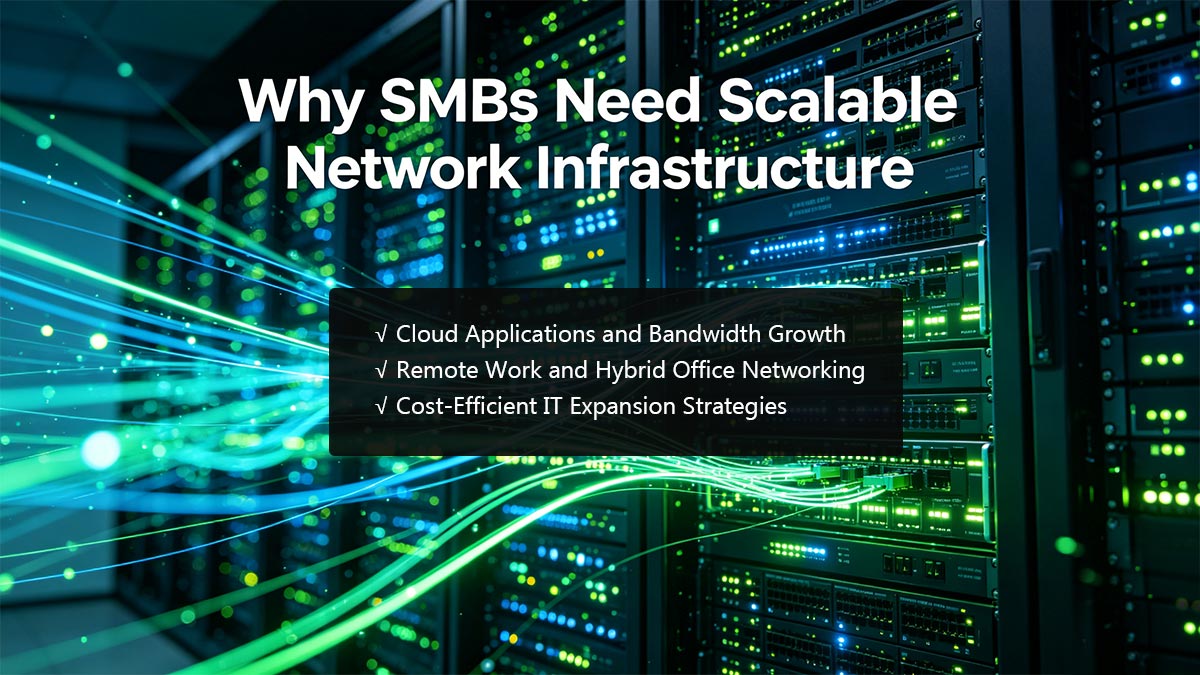
⏩ Why SMBs Need Scalable Network Infrastructure
Modern Small and Medium-sized Businesses (SMBs) rely heavily on digital operations, cloud services, and real-time communication. As data traffic continues to grow, traditional network infrastructure often struggles to support increasing bandwidth demands, remote connectivity, and future expansion.
Scalable network infrastructure allows SMBs to improve performance, reduce downtime, and expand operations without replacing entire systems. Technologies such as fiber networking and SFP modules help businesses build flexible and future-ready IT environments while controlling long-term costs.
Cloud Applications and Bandwidth Growth
Cloud computing has become essential for SMB operations. Businesses now depend on:
Cloud storage platforms
Video conferencing tools
SaaS applications
VoIP communication systems
AI-powered business software
These applications require stable, high-bandwidth connectivity to maintain productivity and user experience.
As network traffic increases, outdated copper infrastructure may create bottlenecks, latency issues, and reduced performance. Scalable networking solutions such as SFP-based fiber connections provide higher bandwidth, lower latency, and more reliable data transmission for growing SMB environments.
Remote Work and Hybrid Office Networking
Hybrid work models continue to reshape SMB network requirements in 2025–2026. Employees increasingly need secure access to company systems from multiple locations, creating higher demand for stable and secure network connectivity.
Modern SMB infrastructure must support:
Remote employee access
VPN connectivity
Cloud collaboration platforms
Multi-office communication
Real-time file synchronization
Scalable fiber infrastructure and SFP modules help SMBs maintain reliable connectivity while supporting flexible workplace environments and future workforce expansion.
Cost-Efficient IT Expansion Strategies
Many SMBs operate with limited IT budgets, making cost-efficient scalability a major priority. Replacing entire networking systems during business growth can be expensive and disruptive.
SFP-based infrastructure provides a more flexible upgrade path by allowing businesses to:
Upgrade speeds without replacing switches
Expand transmission distances easily
Support both fiber and copper connections
Scale networks gradually as business needs grow
This modular approach helps SMBs reduce long-term infrastructure costs while improving overall network performance and reliability.
For growing businesses, scalable network infrastructure is no longer optional—it is a critical foundation for digital transformation, cybersecurity, and long-term operational success.
⏩ The Role of SFP Modules in SMB Networks
SFP modules play an important role in helping Small and Medium-sized Businesses (SMBs) build scalable, reliable, and high-performance network infrastructure. As SMBs expand operations, adopt cloud services, and increase data traffic, flexible connectivity solutions become essential for maintaining stable business operations.
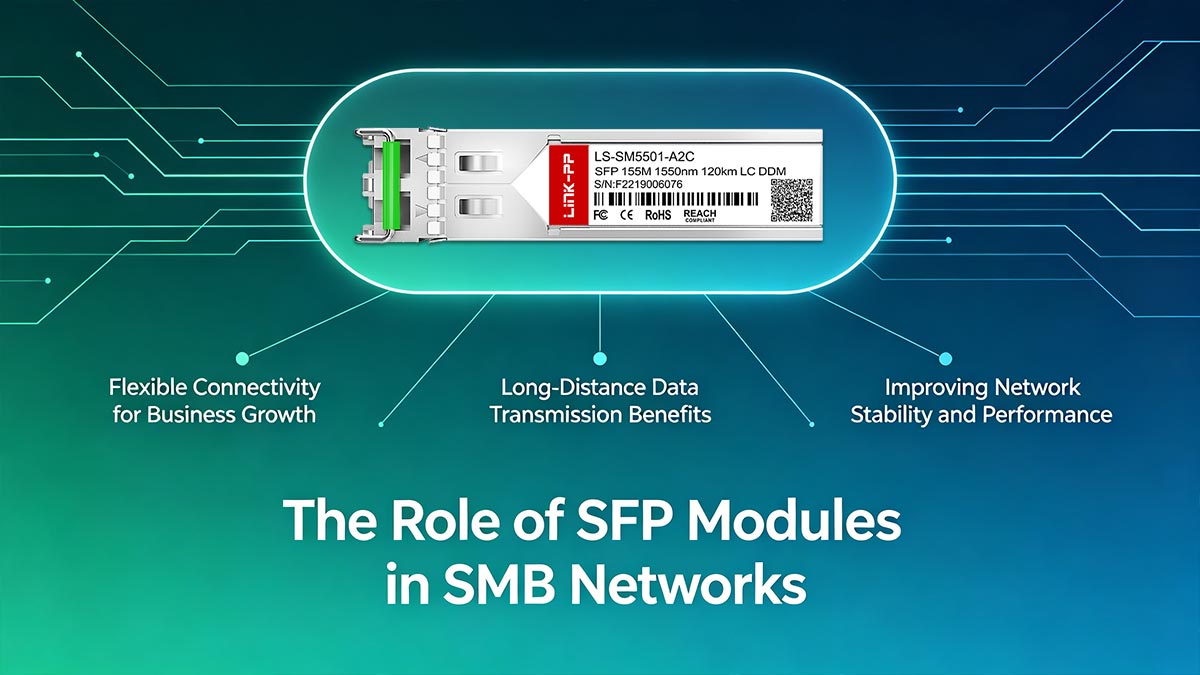
By supporting both fiber and copper connections, SFPs allow businesses to upgrade networks efficiently without replacing entire systems. This makes them a practical solution for SMBs seeking long-term scalability and cost-effective infrastructure growth.
Flexible Connectivity for Business Growth
One of the biggest advantages of SFP modules is their flexibility. Businesses can select different SFP types based on:
Transmission distance
Network speed
Fiber or copper media
Application requirements
This modular design allows SMBs to expand networks gradually as business needs evolve. Instead of replacing switches or routers, companies can simply upgrade the SFP module to support higher bandwidth or longer-distance connectivity.
SFP modules are commonly used for:
Office network expansion
Switch uplinks
Server connectivity
Multi-floor business networking
Retail and warehouse infrastructure
This flexibility helps SMBs reduce upgrade costs while improving network scalability.
Long-Distance Data Transmission Benefits
Many SMBs require reliable communication between offices, server rooms, warehouses, or production areas. Traditional copper Ethernet connections are typically limited to shorter distances, while fiber-based SFP modules support much longer transmission ranges.
Benefits of fiber SFP connectivity include:
Longer transmission distances
Higher bandwidth capacity
Lower signal loss
Reduced electromagnetic interference
More reliable data communication
Single-mode fiber SFP modules can support transmission over several kilometers, making them ideal for larger business facilities or multi-building environments.
Improving Network Stability and Performance
Stable network performance is critical for modern SMB operations, especially for businesses using cloud applications, VoIP systems, IP surveillance, and remote collaboration tools.
SFP modules help improve network reliability by providing:
Faster data transmission
Lower latency
Stable high-speed connections
Better resistance to electrical interference
Consistent network performance under heavy traffic loads
Fiber-based SFP solutions are especially valuable in environments with high electromagnetic interference, such as manufacturing facilities or industrial networks.
By improving network performance and scalability, SFP modules help SMBs build future-ready infrastructure capable of supporting business growth, digital transformation, and increasing connectivity demands.
⏩ How SMBs Use SFP Modules in Real Business Scenarios
SFP modules are widely used across modern SMB environments because they provide flexible, scalable, and reliable network connectivity. From retail stores to industrial facilities, businesses use SFP-based infrastructure to support growing bandwidth demands, improve stability, and simplify future upgrades.
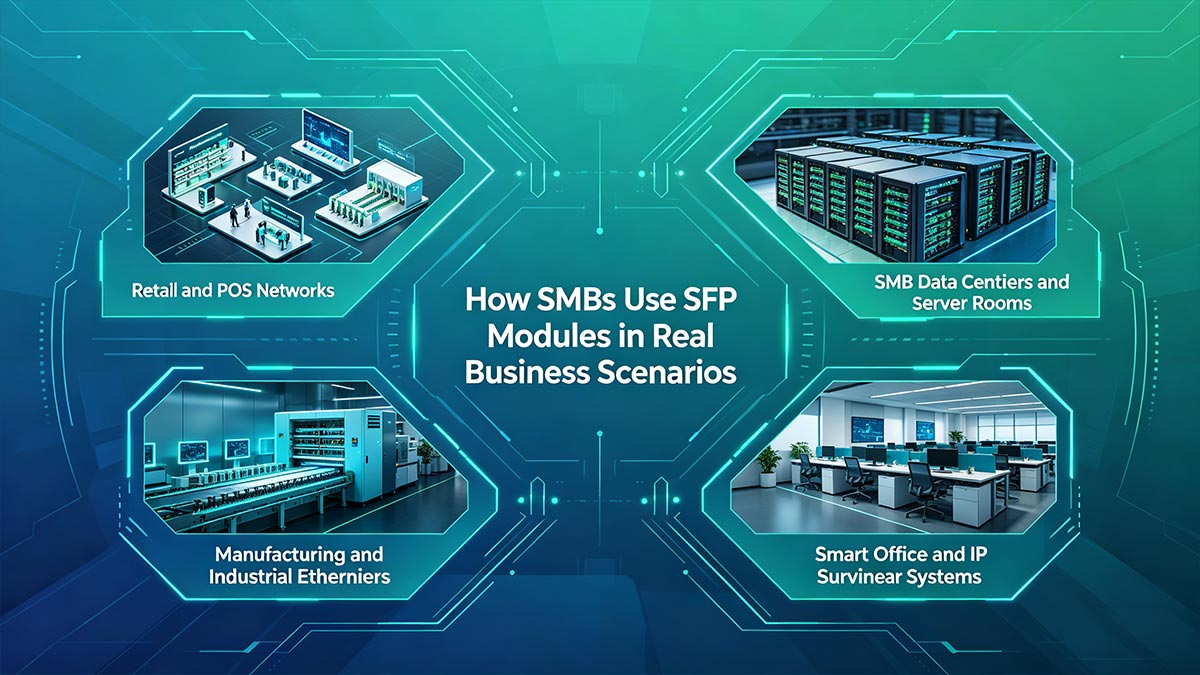
Retail and POS Networks
Retail businesses depend on stable network connectivity for:
POS systems
Inventory management
Digital payment processing
Wi-Fi access points
Security cameras
SFP modules help retailers build reliable backbone connections between switches, servers, and multiple store locations. Fiber-based SFP solutions also reduce signal interference in busy commercial environments while supporting high-speed data transmission.
SMB Data Centers and Server Rooms
Many SMBs operate small server rooms or mini data centers to support:
File storage
Cloud applications
Virtualization
Backup systems
Internal business applications
10G SFP+ modules are commonly used to improve bandwidth between servers, switches, and storage systems. Their modular design allows businesses to upgrade network speeds without replacing entire networking platforms.
Manufacturing and Industrial Ethernet
Industrial SMBs often require stable communication across factories, warehouses, and production lines. In these environments, network reliability is critical for operational efficiency and automation.
Fiber SFP modules are widely used because they offer:
Long-distance transmission
Resistance to electromagnetic interference
Stable industrial communication
Support for real-time monitoring systems
This makes SFP technology ideal for Industrial Ethernet and smart manufacturing applications.
Smart Office and IP Surveillance Systems
Modern SMB offices increasingly rely on connected devices such as:
Smart access control systems
Video conferencing platforms
SFP modules help support high-bandwidth traffic while maintaining stable connectivity across office networks. Fiber uplinks are especially useful for connecting multiple floors, large office spaces, or security monitoring systems requiring continuous data transmission.
By using scalable SFP infrastructure, SMBs can improve network performance, simplify expansion, and build future-ready business environments.
⏩ How to Choose the Right SFP Module for SMB Applications
Choosing the right SFP module is important for ensuring stable network performance, scalability, and long-term cost efficiency. SMBs should evaluate compatibility, transmission distance, speed requirements, and deployment environment before selecting an SFP solution.
The right module can improve network reliability while reducing future upgrade costs and maintenance complexity.

Compatibility Checklist
Before purchasing an SFP module, SMBs should verify compatibility with existing networking equipment.
Key factors include:
Switch or router compatibility
Supported transmission speed
SFP port type (SFP, SFP+, SFP28)
Fiber or copper interface support
Operating temperature requirements
Many SMBs prefer compatible third-party SFP modules because they provide lower costs while maintaining reliable performance.
Speed and Distance Requirements
Different business applications require different transmission speeds and communication distances.
Application | Recommended SFP Type |
|---|---|
Basic office networking | 1G SFP |
Cloud applications and NAS | 10G SFP+ |
High-density data traffic | 25G SFP28 |
Transmission distance is also important:
Copper RJ45 SFP: up to 100 meters
Multi-mode fiber SFP: short to medium distances
Single-mode fiber SFP: several kilometers or more
Choosing the correct specification helps SMBs avoid unnecessary infrastructure costs while maintaining stable performance.
Single-Mode vs. Multi-Mode Fiber
SMBs commonly choose between single-mode and multi-mode fiber SFP modules depending on deployment distance and budget.
Fiber Type | Best Use Case |
|---|---|
Multi-Mode Fiber | Office buildings and short-distance links |
Single-Mode Fiber | Long-distance and campus connections |
Multi-mode fiber is typically more affordable for internal office networking, while single-mode fiber is preferred for long-range communication and future scalability.
Power Consumption and Reliability
Energy efficiency and reliability are increasingly important for SMB network infrastructure, especially in environments operating 24/7.
High-quality SFP modules offer:
Lower power consumption
Stable thermal performance
Reduced failure rates
Longer operational lifespan
Reliable SFP solutions help SMBs reduce downtime, improve network stability, and lower long-term operational costs.
By selecting the right SFP module based on compatibility, speed, fiber type, and reliability, SMBs can build scalable and future-ready network infrastructure that supports long-term business growth.
⏩ Frequently Asked Questions About SMBs and SFP Modules
1. What is the best SFP for small business networking?
The best SFP module for an SMB depends on network size, bandwidth requirements, and transmission distance.
1G SFP modules are ideal for standard office networking and basic fiber uplinks.
10G SFP+ modules are better for cloud applications, NAS storage, virtualization, and high-speed business networks.
RJ45 copper SFPs are suitable for short-distance Ethernet connections using existing Cat5e/Cat6 cabling.
For most growing SMBs, 10G SFP+ solutions provide a good balance between performance, scalability, and long-term value.
2. Are SFP modules expensive for SMBs?
SFP modules are generally considered cost-effective for SMB network upgrades. Instead of replacing entire switches or routers, businesses can upgrade connectivity simply by changing the SFP module.
Factors affecting SFP pricing include:
Transmission speed
Fiber type
Distance support
Brand compatibility
Industrial or commercial grade design
Compatible third-party SFP modules are widely used by SMBs because they offer lower costs while maintaining stable performance.
3. Can SMBs use fiber networking without large IT teams?
Yes. Modern fiber networking solutions are increasingly simple to deploy and manage, even for SMBs with limited IT resources.
Many managed switches and SFP-based systems support:
Plug-and-play deployment
Easy network expansion
Remote management
Simplified troubleshooting
Fiber infrastructure also provides stable long-distance communication and improved reliability, making it practical for offices, retail stores, warehouses, and industrial environments.
4. How long do SFP modules typically last?
High-quality SFP modules are designed for long-term operation and can typically last between 5 to 10 years or more under normal conditions.
Module lifespan depends on factors such as:
Operating temperature
Network environment
Power stability
Hardware quality
Proper ventilation
Industrial-grade SFP modules are often designed for harsher environments and extended operating temperatures.
Choosing reliable SFP suppliers and properly maintaining networking equipment can help SMBs maximize network stability and reduce replacement costs over time.
⏩ Conclusion — Building Future-Ready SMB Networks
As digital transformation continues to accelerate, Small and Medium-sized Businesses (SMBs) must build network infrastructure that is scalable, reliable, and ready for future growth. From cloud applications and hybrid work environments to IP surveillance and industrial automation, modern SMB operations increasingly depend on stable, high-performance connectivity.
SFP modules have become an important part of SMB networking because they provide flexible deployment options, cost-efficient upgrades, and support for both fiber and copper connectivity. Compared with traditional fixed-port infrastructure, SFP-based solutions allow businesses to scale networks more efficiently while reducing long-term upgrade costs.
Key Takeaways for SMB Decision Makers
When planning network infrastructure upgrades, SMBs should focus on:
Scalability for future business growth
Stable high-speed connectivity
Long-distance transmission capability
Lower maintenance and upgrade costs
Reliable compatibility with existing equipment
Improved cybersecurity and network reliability
Fiber networking and SFP modules help businesses meet these requirements while supporting long-term digital transformation strategies.
How to Plan a Scalable SMB Network Upgrade
A successful SMB network upgrade typically starts with evaluating:
Current bandwidth usage
Future traffic growth
Office or facility expansion plans
Cloud application requirements
Security and surveillance systems
Budget and operational costs
Many SMBs begin with 1G SFP deployments and gradually upgrade to 10G SFP+ infrastructure as business demands increase. This modular approach allows companies to expand networks without replacing entire switching systems.
Choosing scalable hardware and compatible SFP modules early can significantly reduce future infrastructure costs and simplify long-term IT management.
Choosing a Reliable SFP Module Supplier
The quality and compatibility of SFP modules directly affect network stability and long-term reliability. SMBs should prioritize suppliers that offer:
Broad switch compatibility
Stable product quality
Industrial and commercial-grade options
Technical support and customization
Competitive pricing for growing deployments
For businesses seeking reliable and scalable networking solutions, the LINK-PP Official Store offers a wide range of SFP modules designed for modern SMB infrastructure.
By investing in scalable SFP-based networking today, SMBs can build future-ready infrastructure capable of supporting long-term business growth, cloud connectivity, and next-generation digital operations.