

In modern fiber networking, selecting the right SFP module is critical for ensuring stable connectivity, optimal signal performance, and long-term scalability. Among the various options available, the LX SFP module (1000BASE-LX) is widely used for medium- to long-distance transmission over single-mode fiber.
However, many engineers and buyers still have practical questions:
What exactly does “LX” mean in SFP modules?
How does it compare with LR, LH, or SX optics?
Can LX modules be used with multimode fiber or mixed with other SFP types?
These questions are not only common in technical documentation but also frequently discussed in real-world engineering communities, where deployment scenarios and compatibility challenges vary significantly.
This guide provides a clear and practical explanation of 1000BASE-LX SFP modules, including their core specifications, differences from LR/LH/SX modules, and real-world usage considerations such as interoperability and fiber compatibility.
By reading this article, you will:
Understand what LX SFP modules are and how they work
Learn the key differences between LX, LR, LH, and SX optics
Avoid common deployment mistakes (especially with multimode fiber)
Gain practical insights based on real user scenarios and field experience
Whether you are designing a network, troubleshooting a fiber link, or selecting compatible transceivers, this guide will help you make more informed and reliable decisions.
🔯 What Is 1000BASE-LX?
Before comparing LX with other SFP types such as LR, LH, or SX, it is important to first understand what 1000BASE-LX actually represents in terms of standards, optical characteristics, and real-world usage. This section explains the core definition of LX SFP modules, where they are typically deployed, and how they behave in both controlled enterprise environments and more flexible, real-world scenarios.
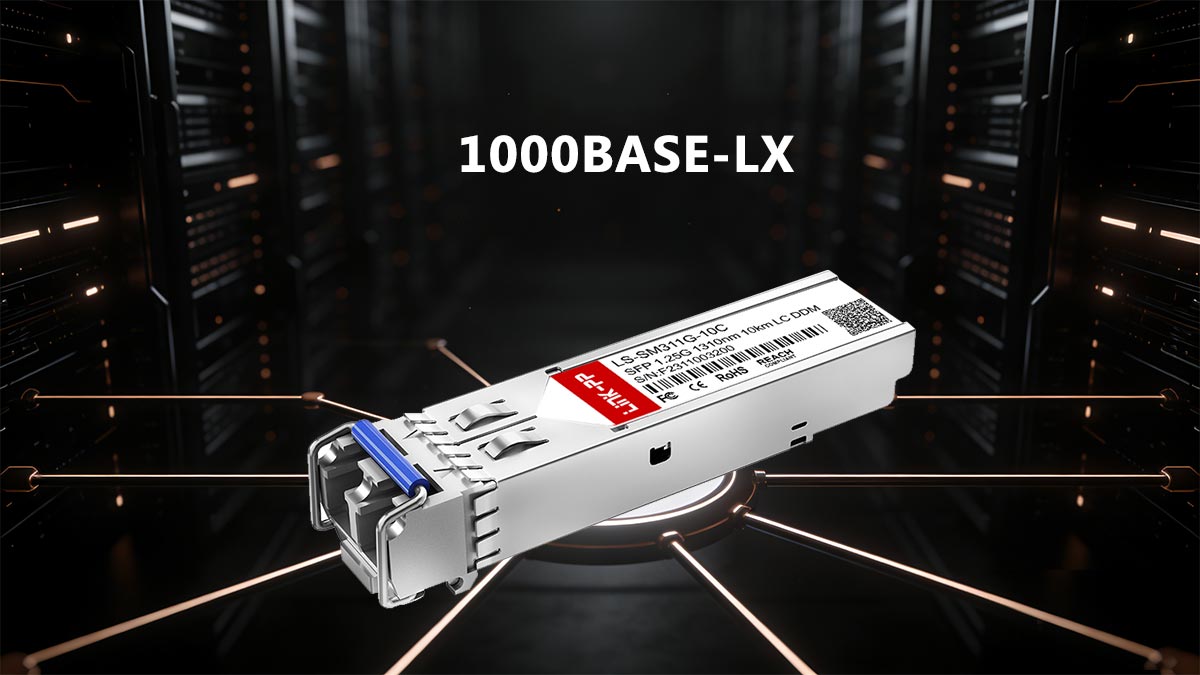
Definition of LX SFP Module (1310 nm, single-mode fiber, typical 10 km)
1000BASE-LX is a Gigabit Ethernet optical standard defined under IEEE 802.3, designed for long-wavelength transmission over fiber. The “LX” stands for Long wavelength, typically operating at 1310 nm, and is primarily intended for use with single-mode fiber (SMF).
In standard deployments, a 1000BASE-LX SFP module supports transmission distances of up to 10 kilometers over SMF, making it suitable for medium- to long-distance links. In addition, LX modules can also operate over multimode fiber (MMF), but with reduced distance (typically up to 550 meters) and often requiring a mode-conditioning patch cable to ensure signal stability.
Key characteristics of 1000BASE-LX:
Parameter | Specification |
|---|---|
Wavelength | 1310 nm (long wavelength) |
Fiber Type | Single-mode (SMF, primary), Multimode (MMF, limited support) |
Max Distance | Up to 10 km over SMF |
Data Rate | 1 Gbps (Gigabit Ethernet) |
Connector Type |
When and Why LX Modules Are Used (WAN, Campus Links, Uplinks)
LX SFP modules are widely used in scenarios where distance, stability, and compatibility with single-mode infrastructure are key requirements.
Typical use cases include:
Campus networks: Connecting buildings across several kilometers
WAN access links: Linking enterprise networks to ISP infrastructure
Switch uplinks: Providing stable long-distance aggregation between distribution and core layers
Industrial or outdoor deployments: Where single-mode fiber is preferred for its low attenuation and longer reach
Compared to short-range options like SX modules, LX modules offer:
Lower signal attenuation over distance
Better scalability for future network expansion
More consistent performance in complex environments
For many engineers, LX represents a cost-effective balance between short-range multimode solutions and higher-cost long-haul optics.
Real User Experience: LX in Home Labs vs Enterprise Networks
In real-world deployments, the usage of LX SFP modules varies significantly between home lab environments and enterprise networks.
In community discussions on platforms like Reddit, many home lab users report using LX modules in creative ways, such as:
Running LX over existing multimode fiber for short distances
Mixing LX modules with different vendor equipment for cost savings
Using refurbished or third-party modules to reduce budget
A typical takeaway from these discussions is that LX modules are often more flexible than expected, but require careful attention to compatibility and fiber type.
In contrast, enterprise deployments tend to be more standardized:
Strict adherence to single-mode fiber infrastructure
Verified compatibility with OEM equipment (e.g., Cisco, Juniper)
Careful validation of optical power budgets and link performance
The key difference is clear:
Home labs prioritize flexibility and cost-efficiency
Enterprise networks prioritize reliability, predictability, and support
Understanding both perspectives helps engineers make better decisions depending on their specific application scenario.
🔯 LX vs. LR vs. LH vs. SX SFP Modules
Understanding the differences between LX, LR, LH, and SX SFP modules is essential for selecting the right optic for your network. While these suffixes often indicate wavelength and transmission distance, real-world usage can vary depending on vendor naming conventions and specific module implementations.
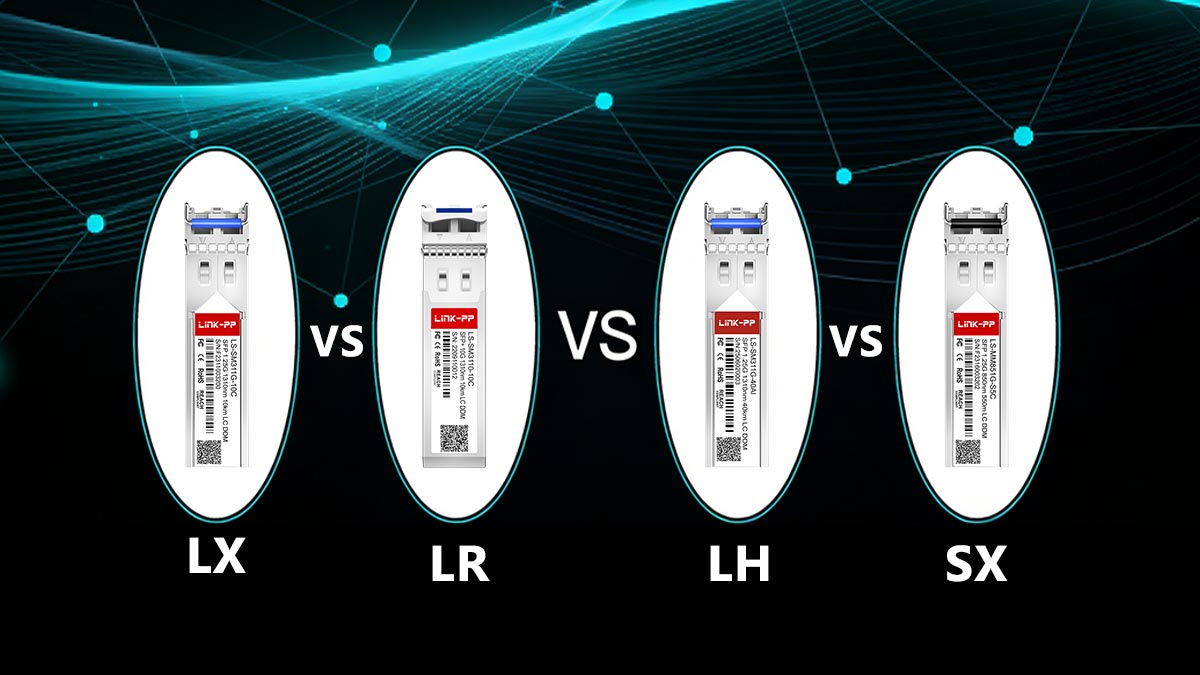
Comparison Table: Wavelength, Fiber Type, Max Distance, Typical Use
Type | Wavelength | Fiber Type | Typical Max Distance | Typical Use Cases |
|---|---|---|---|---|
850 nm | Multimode (MMF) | Up to 550 m | Short-range links within data centers | |
1310 nm | Single-mode (SMF), limited MMF | Up to 10 km (SMF) | Campus networks, building-to-building links | |
1310 nm | Single-mode (SMF) | Up to 10 km (10G standard) | 10G backbone, aggregation links | |
1310 nm / 1550 nm (varies) | Single-mode (SMF) | 20–40 km (or more) | Long-haul transmission, metro networks |
Key Differences Explained: LX vs. LR, LX vs. LH, LX vs. SX
LX vs. LR
Speed context: LX is typically associated with 1G (1000BASE-LX), while LR is more commonly used in 10G (10GBASE-LR) environments.
Wavelength: Both often operate at 1310 nm, which can cause confusion.
Key takeaway: The main difference is data rate and standard, not just wavelength.
LX vs. LH
Distance: LH (Long Haul) modules are designed for longer distances (20 km+), while LX is typically limited to ~10 km.
Wavelength variation: LH may use 1550 nm for extended reach.
Key takeaway: LH is essentially an extended-distance variant beyond LX.
LX vs. SX
Wavelength: LX = 1310 nm, SX = 850 nm
Fiber type: LX uses single-mode, SX uses multimode
Distance: LX supports kilometers, SX is limited to hundreds of meters
Key takeaway: LX is for longer distances; SX is optimized for short-range, low-cost deployments.
Community Notes: Overlapping Naming Conventions & Vendor Labeling
In real-world deployments, naming conventions are not always strictly standardized. Discussions on platforms like Reddit and engineer forums highlight several important observations:
Some vendors label modules as “LX/LH”, indicating compatibility across multiple distance ranges rather than a strict standard definition
Third-party manufacturers may use LH to describe extended LX modules (e.g., 20 km or 40 km variants)
The same label (e.g., “LR”) may imply different specifications depending on whether it refers to 1G or 10G optics
👉 Practical takeaway:
Always verify the SFP specifications (wavelength, Tx/Rx power, supported distance) instead of relying solely on the module name.
This is especially critical when mixing vendors or deploying in environments where compatibility and link stability are essential.
🔯 Can LX Modules Work on Multimode Fiber?
Although 1000BASE-LX SFP modules are primarily designed for single-mode fiber (SMF), many engineers ask whether they can also be used on multimode fiber (MMF)—especially in existing infrastructure or cost-sensitive deployments.
The short answer is: yes, but with limitations and precautions. Real-world discussions in communities like Reddit and technical forums such as Server Fault show that while LX-on-MMF deployments are common, improper setup can lead to signal instability or link failure.
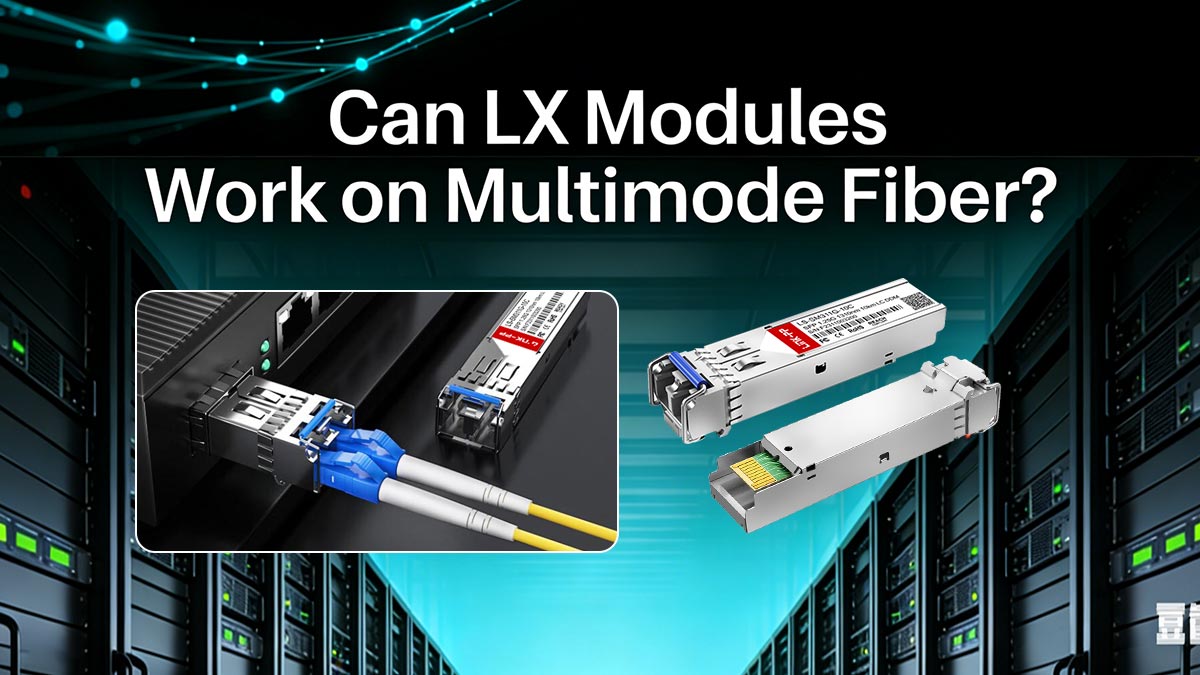
Mode-Conditioning Cable Explanation
When using LX modules on multimode fiber, a key challenge is modal dispersion, caused by the difference in how light propagates through MMF compared to SMF.
To address this, engineers often use a mode-conditioning patch cable (MCP):
It intentionally offsets the laser launch into the multimode fiber
This reduces differential mode delay (DMD)
Helps stabilize signal transmission over MMF
Without mode conditioning, the laser signal from a SMF 1310nm LX module may not distribute evenly across the multimode core, leading to increased bit error rates or intermittent link issues.
👉 In practice, MCP cables are most relevant when using legacy MMF (e.g., OM1/OM2).
Distance Limits on MMF (Real-World Cases)
While LX modules are rated for ~10 km over SMF, their performance on MMF is significantly reduced.
Typical real-world distances:
Up to ~550 meters on multimode fiber (with proper conditions)
Shorter distances may be required depending on fiber quality and environment
According to widely accepted engineering discussions on Server Fault:
LX can operate over MMF, but performance is not guaranteed without proper conditioning
Older fiber types are more prone to signal issues
In Reddit threads, users frequently report:
Successful short-distance links (tens to hundreds of meters)
Occasional instability when skipping MCP cables
Better results with modern MMF (OM3/OM4), though still not ideal
👉 Key takeaway: LX over MMF works best for short distances and controlled environments, not for mission-critical long links.
Tips to Avoid Common Deployment Mistakes
To ensure reliable performance when using LX modules on multimode fiber, consider the following best practices:
Use mode-conditioning cables when working with older MMF (OM1/OM2)
Keep distances conservative (well below theoretical limits)
Check optical power budget (Tx/Rx levels must match)
Avoid mixing unknown fiber types in the same link
Test the link under real traffic conditions, not just link-up status
Refer to module datasheets rather than relying on assumptions
👉 Most importantly:
If your application requires high reliability or longer distances, it is strongly recommended to use single-mode fiber with LX modules instead of relying on MMF compatibility.
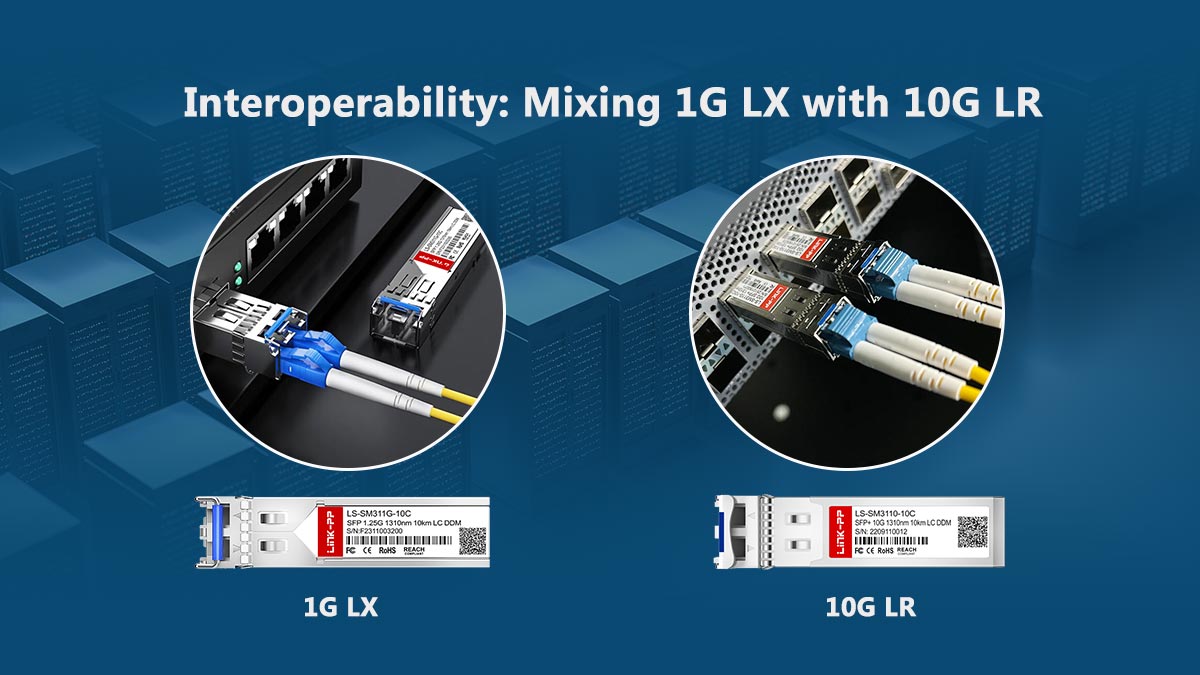
🔯 Interoperability: Mixing 1G LX with 10G LR
In real-world networks, engineers often try to interconnect different types of SFP modules—such as 1G 1000BASE-LX and 10GBASE-LR—especially when upgrading infrastructure or integrating with ISP equipment.
However, interoperability is not guaranteed, even if connectors and fiber types appear compatible. Successful links depend on three critical factors: data rate compatibility, wavelength alignment, and optical power budget.
Community discussions on platforms like Reddit consistently show that while some mixed setups may work under specific conditions, others fail due to overlooked technical constraints.
Rate Mismatch Considerations
The most important limitation is data rate mismatch:
1000BASE-LX = 1 Gbps
10GBASE-LR = 10 Gbps
These standards are not directly compatible at the physical layer. In most cases:
A 10G port cannot communicate with a 1G module unless it explicitly supports 1G fallback or dual-rate operation
Even if the optical signal is detected, the link will not establish due to protocol mismatch
👉 Practical takeaway:
Always verify whether the switch port supports multi-rate SFP/SFP+ operation (1G/10G) before attempting mixed connections.
Wavelength & Optical Power Budget Checks
Even when rate compatibility is resolved, optical characteristics must align:
1. Wavelength compatibility
Both LX and LR typically operate at 1310 nm, which may suggest compatibility
However, matching wavelength alone is not sufficient
2. Optical power budget
Each module has defined Tx (transmit power) and Rx (receiver sensitivity) ranges
If the received signal is:
Too weak → link fails
Too strong → receiver saturation and errors
3. Fiber type and attenuation
SMF vs. MMF differences can impact signal behavior
Connector loss and patch quality also matter
👉 Practical takeaway:
Always compare datasheet specifications (Tx/Rx values) to ensure the link budget is within acceptable range.
Successful and Failed Deployment Experiences
✔ Successful scenarios
Using a dual-rate (1G/10G) switch port that supports both LX and LR modules
Matching wavelength (1310 nm) and staying within safe optical power ranges
Short-distance links where signal attenuation naturally reduces power mismatch
✖ Failed scenarios
Directly connecting 1G LX to a 10G-only LR port (no link established)
Ignoring power budget differences, leading to unstable or flapping links
Mixing modules from different vendors without verifying compatibility
A commonly shared insight from these discussions:
“If both ends support the same speed and the optics are within spec, it might work—but never assume without checking the datasheet.”
✅ Key Takeaway
Interoperability between LX and LR (or other SFP types) is not just about plugging connectors together.
To ensure a stable link:
Confirm port speed compatibility (1G vs. 10G)
Verify wavelength alignment
Check optical power budget (Tx/Rx)
Test the link in real conditions
When in doubt, using matched modules on both ends remains the most reliable and predictable approach.
🔯 How to Choose the Right LX SFP (Checklist)
Selecting the right 1000BASE-LX SFP module is not just about matching “LX” labels—it requires careful evaluation of optical specifications, compatibility, and deployment conditions. This section provides a practical checklist used by engineers to ensure reliable performance and long-term stability.
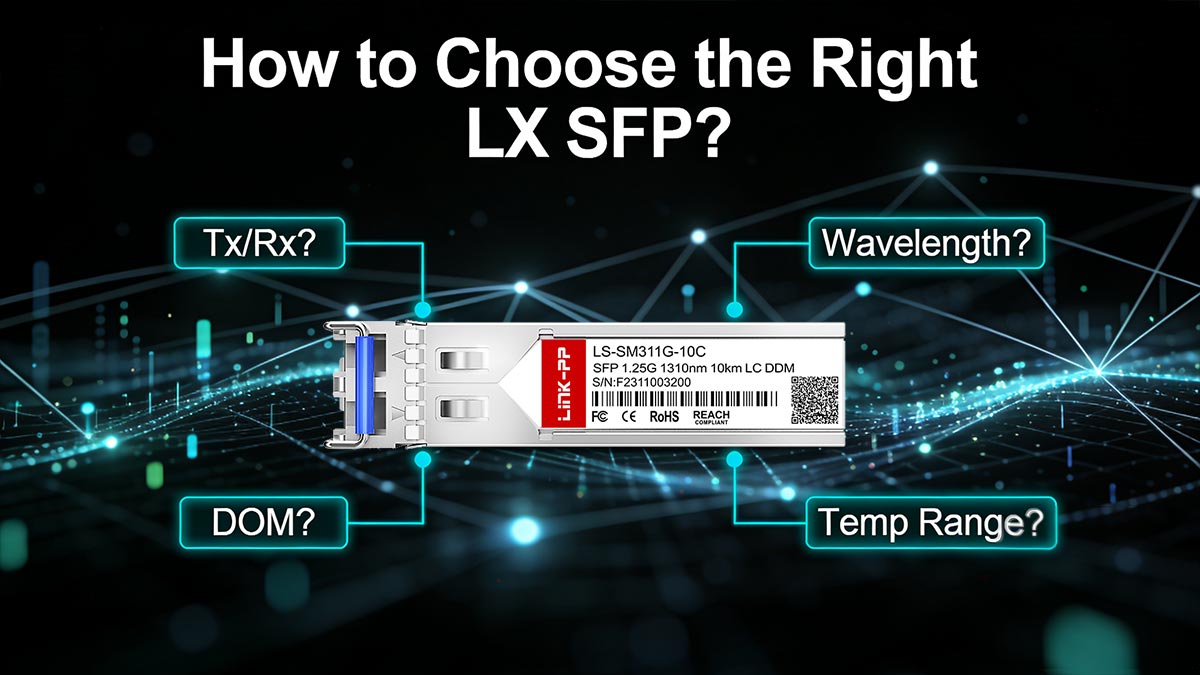
Datasheet Parameters to Check (Tx/Rx, Wavelength, DOM, Temp Range)
Before purchasing or deploying an LX SFP, always review the module’s datasheet for the following key parameters:
Wavelength (nm)
Ensure it is 1310 nm, which is standard for 1000BASE-LX.Transmit Power (Tx Power)
Defines how strong the optical signal is when leaving the module.
Must align with the link distance and avoid overpowering the receiver.Receiver Sensitivity (Rx Sensitivity)
The minimum optical power required for reliable signal detection.
Critical for ensuring the link budget is sufficient.Optical Power Budget
Calculated from Tx – Rx values.
Must exceed total link loss (fiber + connectors + splices).DOM / DDM (Digital Optical Monitoring)
Enables real-time monitoring of:Temperature
Voltage
Tx/Rx optical power
Useful for troubleshooting and predictive maintenance.
Commercial: 0°C to 70°C
Industrial: -40°C to 85°C
Choose based on deployment environment (indoor vs outdoor/harsh).
Fiber Compatibility
Confirm support for single-mode fiber (SMF) and any limitations on MMF usage.Vendor Compatibility List
Check whether the module is coded/tested for your switch brand (Cisco, Juniper, etc.).Warranty & Reliability
Look for warranty terms and MTBF (Mean Time Between Failures) where available.
OEM vs. Third-Party Compatibility & Warranty
A common decision point is whether to choose OEM (original vendor) modules or third-party compatible SFPs.
Guaranteed compatibility with branded equipment
Higher cost
Official vendor support
Lower cost (often significantly)
Broad compatibility (if properly coded/tested)
Widely used in real-world deployments
In discussions on platforms like Reddit, many engineers report successful use of third-party modules, but emphasize:
Always verify compatibility with your specific device model
Prefer vendors with proven testing and warranty support
👉 Practical takeaway:
Third-party SFPs can be reliable and cost-effective—but only when sourced from reputable manufacturers and validated for your equipment.
Quick LX SFP Module Checklist
Use the following checklist before selecting or deploying an LX SFP module:
Confirm 1310 nm wavelength (1000BASE-LX standard)
Verify SMF compatibility (and MMF limitations if applicable)
Check Tx power and Rx sensitivity against link distance
Ensure optical power budget is sufficient
Confirm port compatibility (1G support, vendor coding)
Decide between OEM vs third-party based on budget and support needs
Check DOM/DDM support for monitoring
Match temperature rating to environment
Review vendor compatibility list
Validate warranty and supplier reliability
Test link after installation (not just link-up, but stability under load)
This checklist helps reduce deployment risks and ensures that your LX SFP modules perform reliably across a wide range of network environments.
🔯 Common LX SFP Module Mistakes and Troubleshooting
Even though 1000BASE-LX SFP modules are widely used and relatively straightforward, many real-world link issues come from a few recurring mistakes. Understanding these pitfalls can help you avoid unstable links, intermittent failures, or complete connectivity loss.
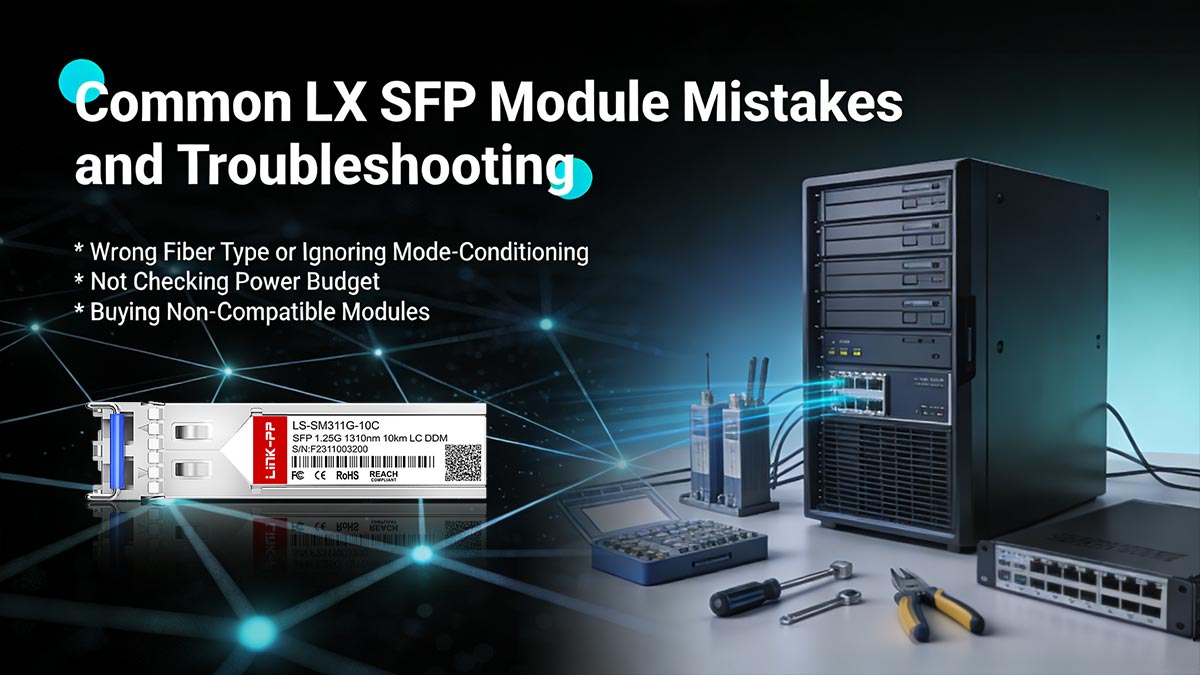
Wrong Fiber Type or Ignoring Mode-Conditioning
One of the most common mistakes is using multimode fiber (MMF) with LX modules without proper consideration.
LX is designed for single-mode fiber (SMF)
When used on MMF, modal dispersion can degrade signal quality
Without a mode-conditioning patch cable (MCP), links may:
Work intermittently
Show high error rates
Fail completely in some cases
👉 Troubleshooting tips:
Verify the actual fiber type (SMF vs MMF)
Use MCP cables when working with OM1/OM2 fiber
For critical links, switch to SMF + LX instead of relying on MMF compatibility
Not Checking Power Budget
Ignoring the optical power budget is another frequent cause of link failure.
Common issues include:
Signal too weak → receiver cannot detect data
Signal too strong → receiver saturation, causing errors
This often happens when:
Mixing different module types
Using very short fiber links without attenuation
Not reviewing Tx/Rx specifications
👉 Troubleshooting tips:
Compare Tx power (dBm) and Rx sensitivity (dBm) from datasheets
Calculate total link loss (fiber + connectors)
Use attenuators if signal is too strong on short links
Check DOM/DDM readings (if supported) for real-time diagnostics
Buying Non-Compatible Modules
Compatibility issues are especially common when using third-party SFP modules.
Potential problems:
Module not recognized by the switch
Link comes up but is unstable
Firmware restrictions or vendor lock-in
In community discussions on Reddit, engineers frequently report:
Some third-party modules work perfectly
Others fail due to improper coding or lack of testing
👉 Troubleshooting tips:
Verify module compatibility with your exact device model
Check vendor compatibility lists before purchase
Choose suppliers that offer tested compatibility and warranty
Update switch firmware if compatibility issues arise
✅ Key Takeaway
Most LX SFP issues are not caused by the module itself, but by mismatched assumptions about fiber type, signal levels, or compatibility.
By systematically checking:
Fiber type
Power budget
Module compatibility
you can quickly identify and resolve the majority of deployment problems.
🔯 FAQ About LX SFP
This section answers the most common questions engineers and buyers search for when selecting or troubleshooting LX SFP modules, combining standard definitions with practical insights from real-world deployments.
1. What Is LX in SFP?
LX refers to 1000BASE-LX (long-wavelength) SFP transceivers that typically operate at 1310 nm over single-mode fiber (SMF), with a typical transmission distance of up to 10 km (depending on implementation and vendor specifications).
In real-world discussions on Reddit, users often highlight that LX modules are widely used for:
Campus fiber links
ISP handoffs
Medium-distance uplinks
👉 Always confirm exact specifications using the module datasheet, as performance may vary slightly by manufacturer.
2. What Is the Difference Between LR and LX SFP?
LR and LX naming conventions can sometimes overlap, but they generally differ in context and data rate:
LX → Typically refers to 1G (1000BASE-LX) modules at 1310 nm
LR → Commonly used for 10G (10GBASE-LR) long-reach optics
Both may use similar wavelengths (1310 nm), which can cause confusion.
👉 Key takeaway:
The primary difference is speed and standard (1G vs 10G), not just wavelength. Always verify via datasheet rather than relying on naming alone.
3. What Is the Difference Between SFP LX and SFP LH?
The difference between LX and LH mainly comes down to transmission distance and optical design:
LX → ~10 km over SMF, typically 1310 nm
LH (Long Haul) → Extended distances (20–40 km or more), often using 1550 nm optics
In practice, some vendors label modules as “LX/LH”, which can indicate extended-reach LX variants.
👉 Practical tip:
Because naming is not strictly standardized, always check:
Supported distance
Wavelength
Tx/Rx optical specifications
4. What Is the Difference Between LX and SX SFP Module?
LX and SX modules differ significantly in wavelength, fiber type, and transmission distance:
SX (Short Wavelength)
850 nm
Multimode fiber (MMF)
Short distances (typically up to 550 m)
LX (Long Wavelength)
1310 nm
Single-mode fiber (SMF)
Longer distances (up to ~10 km)
👉 Key takeaway:
SX = short-range, lower-cost, data center use
LX = longer-range, backbone or campus links
🔯 Key Insights and LX SFP Module Deployment
After exploring the technical specifications, real-world usage, and common pitfalls of 1000BASE-LX SFP modules, it’s important to summarize the key points and provide actionable guidance for engineers and network planners.
Key Takeaways (Specs, Compatibility, Multimode Use)
Core Specifications Matter
LX modules operate at 1310 nm, primarily on single-mode fiber with typical distances up to 10 km.
Verify Tx/Rx power, optical power budget, and DOM support to ensure stable performance.
Compatibility Is Critical
LX may appear similar to LR or LH, but differences in speed (1G vs. 10G), wavelength, and reach require careful review.
Always confirm switch/vendor compatibility and check datasheets before deployment.
Multimode Fiber Requires Caution
LX modules can work on MMF with mode-conditioning cables for short distances (typically ≤550 m).
Avoid relying on MMF for critical or long-distance links—SMF is always more reliable.
Practical Deployment Lessons
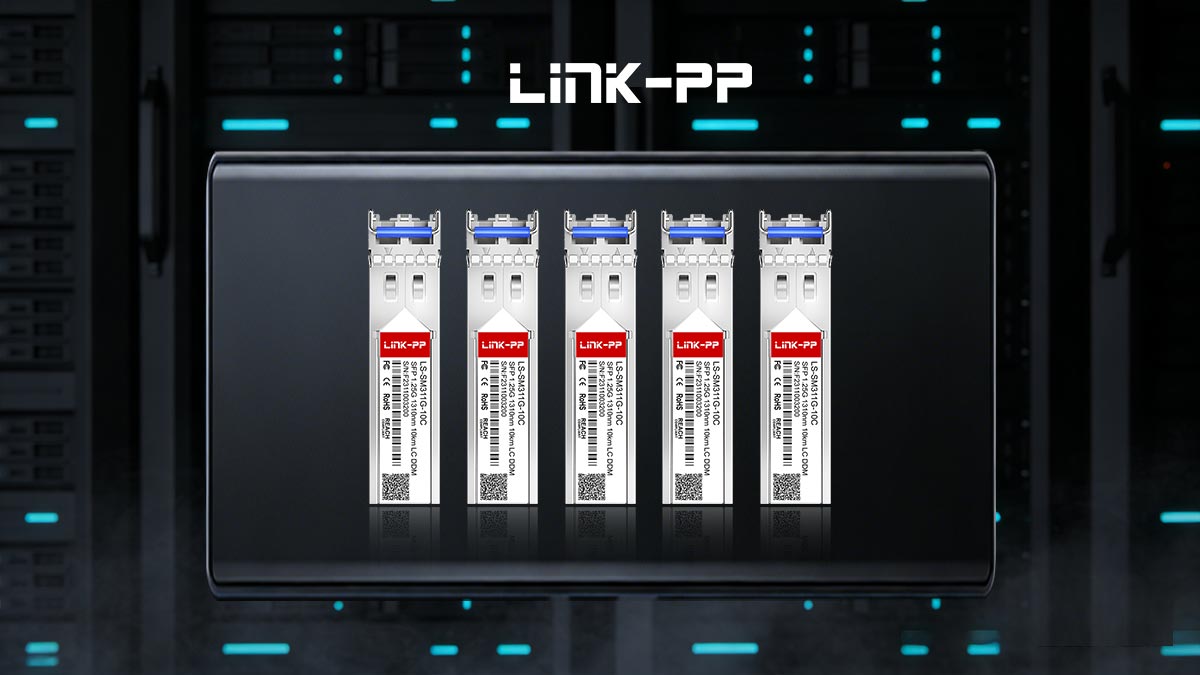
To streamline your deployment and ensure full reliability:
Check the official LX SFP compatibility matrix
Download datasheets for all supported LX modules → [Datasheet PDF]
Purchase compatible modules directly from LINK-PP to guarantee warranty and performance → [LINK-PP Official Store]
By following these insights and using verified resources, you can confidently plan, deploy, and maintain LX SFP links across campus, enterprise, and industrial networks.