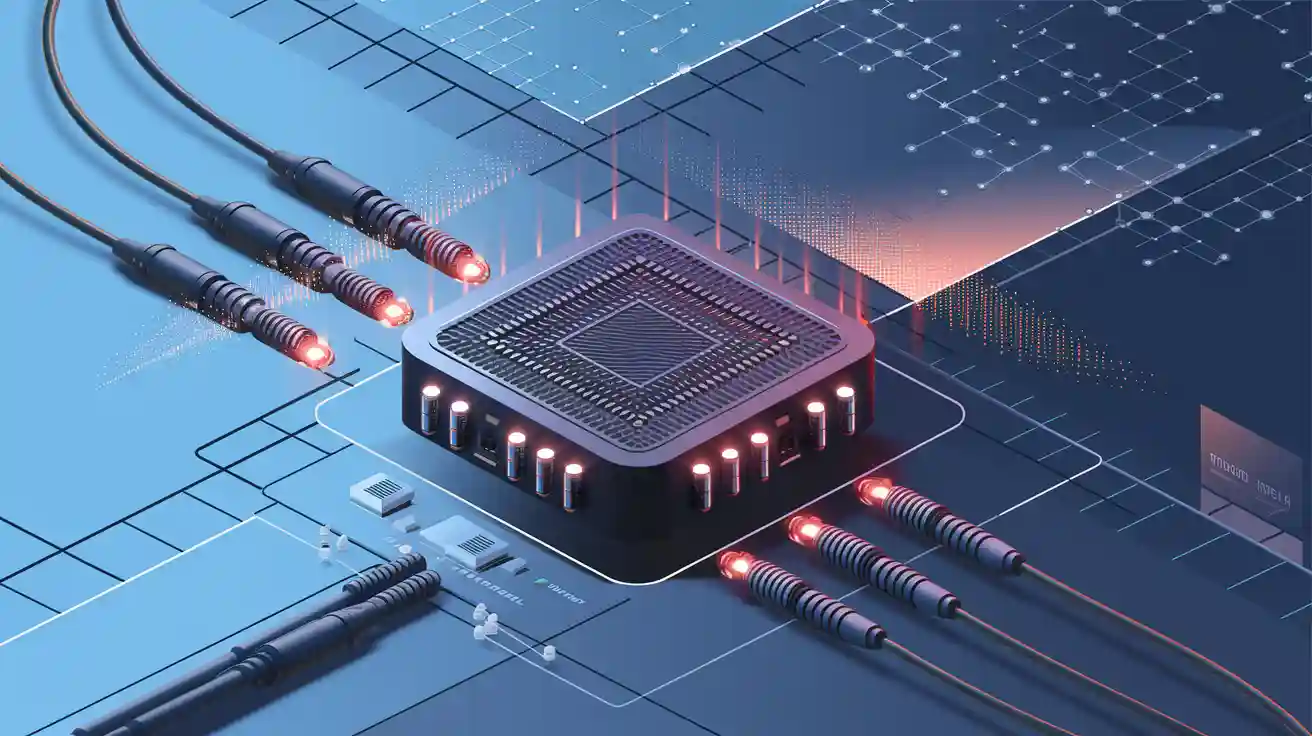


The Physical Medium Attachment (PMA) is a key sublayer within the Ethernet Physical Layer (PHY), operating between the Physical Coding Sublayer (PCS) and the Physical Medium Dependent (PMD) layer. As data rates scale to 10G, 25G, 100G, and beyond, the PMA has become essential for enabling high-speed serialization, precise timing, and stable communication over copper and optical media.
In the IEEE 802.3 Ethernet architecture, the PMA is the bridge that converts structured PCS blocks into high-speed serial bitstreams suitable for transmission through optical transceivers, electrical lanes, or backplane channels.
➡️ What Is the PMA Layer in Ethernet?
The PMA performs the electrical and timing-critical functions that allow high-speed data to travel across physical media. It includes SerDes (Serializer/Deserializer) logic, CDR (Clock and Data Recovery) circuits, and lane management mechanisms.
In short:
👉 PCS prepares data. PMA serializes it. PMD sends it into the fiber or copper.
The PMA ensures that the signal entering the medium is clean, synchronized, and consistent across multiple high-speed lanes.
➡️ Core Functions of the PMA
1. Serialization and Deserialization (SerDes)
One of the PMA’s primary roles is converting parallel PCS data into high-speed serial streams, and vice versa.
TX path: Multi-bit parallel → single serial bitstream
RX path: Serial bitstream → multi-bit parallel
This function enables high-rate Ethernet variants such as:
10GBASE-R (10.3125 Gb/s line rate)
25GBASE-R (25.78125 Gb/s)
100GBASE-R (4 × 25G lanes)
High-quality SerDes directly impacts bit error rate and link stability.
2. Clock Recovery & Bit-Level Synchronization
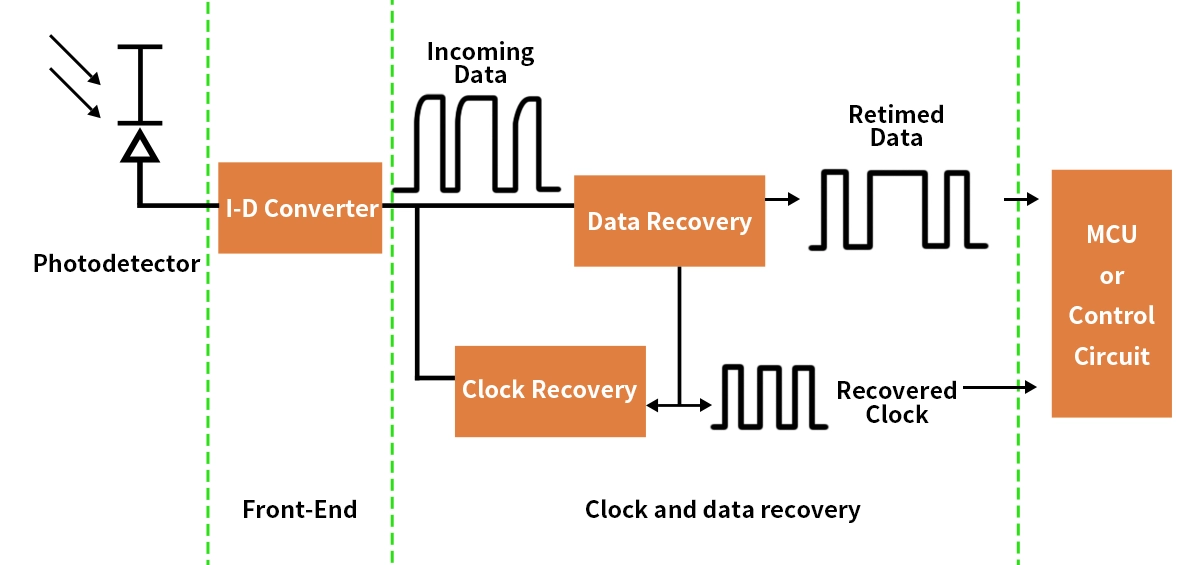
The PMA contains Clock and Data Recovery (CDR) capabilities that extract timing information from the incoming bitstream. CDR ensures:
Correct sampling of each bit
Compensation for link jitter
Stable synchronization even over long or noisy channels
In modern optical links, CDR performance is a major determinant of BER, latency, and signal integrity.
3. Scrambling and Descrambling
The PMA performs scrambling to:
Reduce EMI
Eliminate long repetitive bit sequences
Improve randomness for clock recovery
Ensure DC balance
Scrambling works alongside PCS encoding (e.g., 64B/66B) to maintain a robust transmission profile.
4. Lane Multiplexing and Demultiplexing
Multi-lane Ethernet interfaces (40GBASE-R, 100GBASE-R) require strict lane management:
Lane striping (TX)
Lane deskew (RX)
Marker-based alignment (PCS-defined but PMA-assisted)
The PMA keeps multi-lane parallel systems synchronized even when each lane experiences different latency over fiber or PCB traces.
➡️ PMA vs PCS vs PMD — Layer Differences
Comparative Overview
Layer | Function |
|---|---|
Coding (64B/66B), alignment, control blocks | |
PMA | Serialization, deserialization, clock recovery |
Laser/optics/electrical signaling and medium interface |
This can be visualized as:
MAC → PCS → PMA → PMD → Medium
Each layer processes data progressively closer to the actual physical medium.
➡️ PMA in High-Speed Ethernet Standards
▷ PMA in 10GBASE-R
High-performance SerDes at 10.3125 Gb/s
CDR for high-frequency jitter tolerance
▷ PMA in 25GBASE-R & 50G PAM4
25G SerDes per lane
Integration with FEC for PAM4 modulation
▷ PMA in 40G/100G Ethernet
4-lane or 10-lane architectures
Lane deskew and deterministic multichannel synchronization
▷ PMA in 200G/400G PAM4 Systems
While PCS handles encoding, the PMA manages:
26G or 53G SerDes lanes
Tight jitter requirements for PAM4 signaling
➡️ Why the PMA Layer Is Critical in Optical Transceivers
Modern optical transceivers rely heavily on PMA functionality because:
1. It Determines Signal Integrity
High-speed SerDes and CDR dictate how cleanly the signal enters the medium.
2. It Reduces Error Rates
Good PMA performance reduces the Bit Error Rate (BER) before Forward Error Correction (FEC) is applied.
3. It Supports Multi-Lane Fiber Modules
Modules like QSFP+, QSFP28, or QSFP56 depend on PMA lane multiplexing/demultiplexing.
4. It Enables High-Speed Interoperability
PMA logic ensures compatibility between switches, routers, NICs, and optical modules.
5. LINK-PP Optical Transceivers and PMA-Based Ethernet PHY
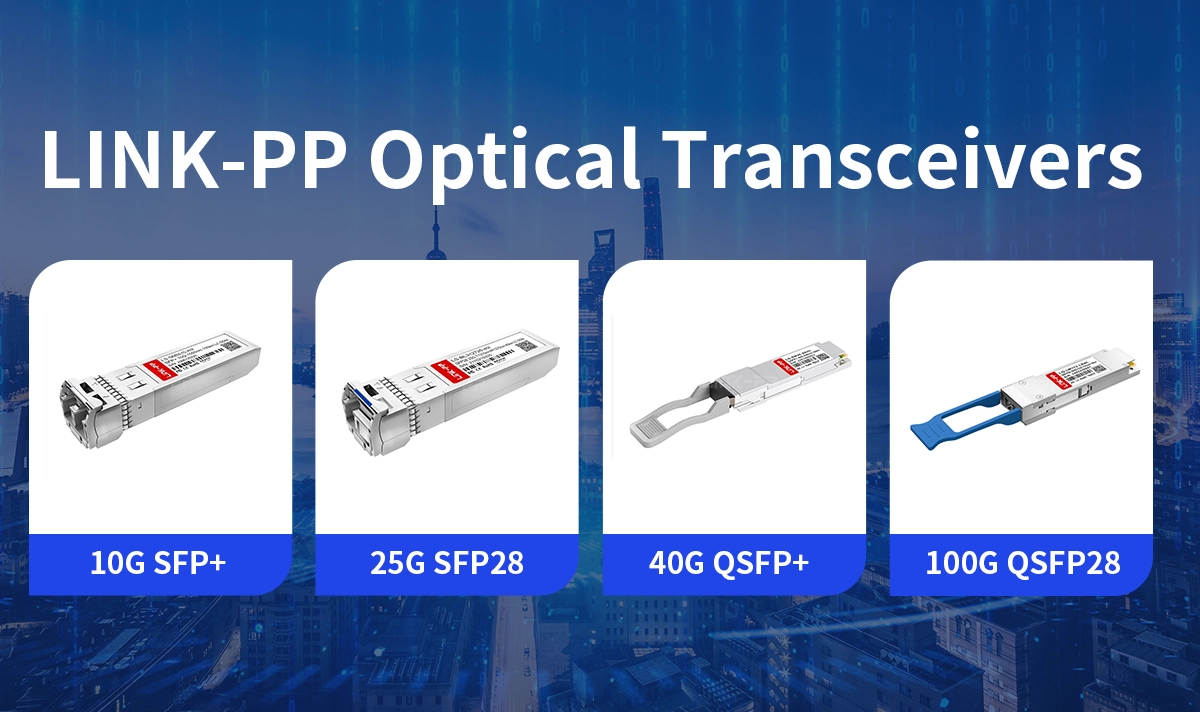
LINK-PP offers a complete portfolio of optical transceivers designed to operate with PMA and PCS-based high-speed Ethernet PHYs:
Industrial-temperature modules for harsh environments
These transceivers deliver low jitter, excellent signal integrity, and standards-compliant PMA interoperability.
➡️ Conclusion
The Physical Medium Attachment (PMA) is a foundational part of the Ethernet physical layer. By handling serialization, clock recovery, scrambling, and lane synchronization, it ensures that high-speed Ethernet data is transmitted cleanly and reliably across copper and optical media.
Understanding the PMA helps engineers design stable systems, select compatible transceivers, and maintain high link performance in data centers, telecom networks, and industrial Ethernet deployments.