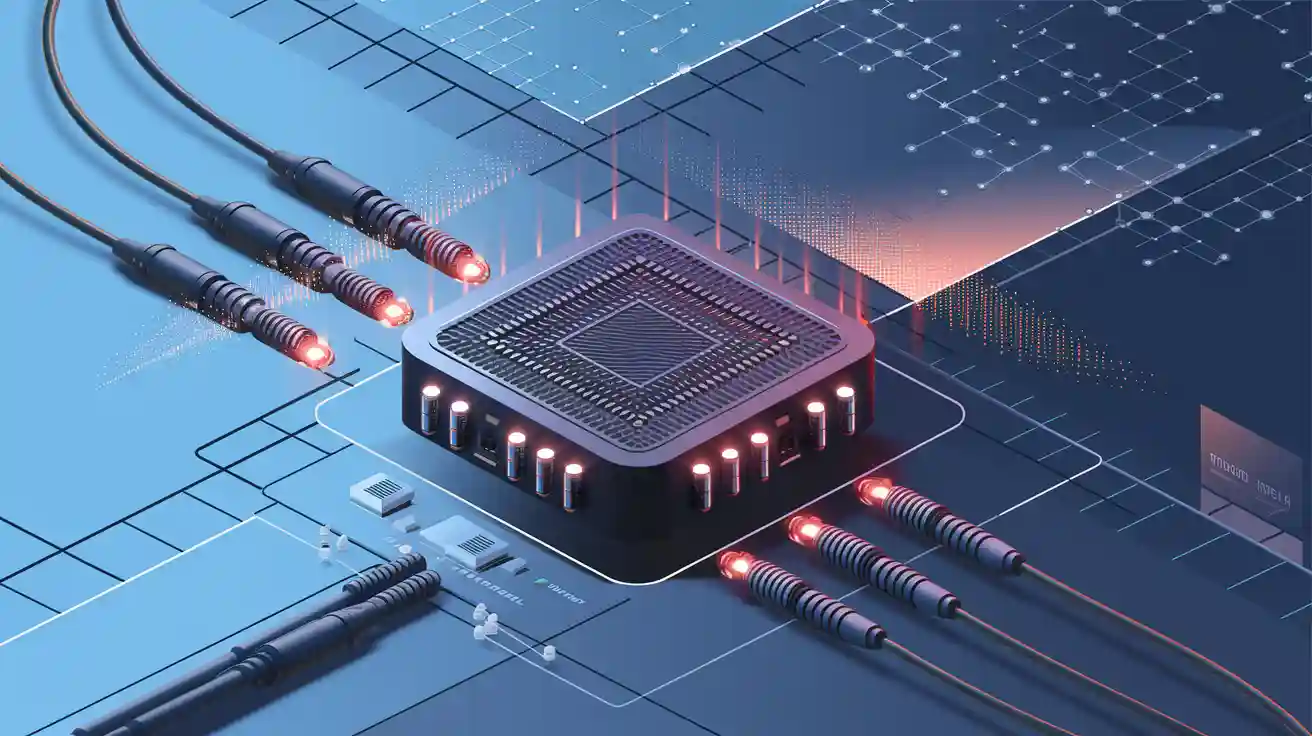


In modern fiber optic communication systems, maintaining stable and accurate optical power levels is essential for ensuring reliable data transmission. As network speeds continue to scale from 1G to 400G and beyond, even small variations in received optical power can significantly impact performance, leading to issues such as receiver overload, signal degradation, or increased bit error rates.
This is where the fixed optical attenuator becomes a critical passive component—especially in systems built around optical transceivers. By introducing a precise and constant amount of optical loss, it ensures that the incoming signal remains within the optimal operating range of the receiver.
A fixed optical attenuator is a passive device that reduces optical signal power by a predetermined, constant amount. Unlike a variable optical attenuator (VOA), it cannot be adjusted after installation. Instead, it provides a stable attenuation value such as 1 dB, 3 dB, 5 dB, 10 dB, or another specified level depending on the application. fixed optical attenuator is designed for predictability, simplicity, and long-term stability, making it widely used in both production networks and controlled testing environments.
What This Article Will Cover
In this glossary-style guide, you will learn:
What a fixed optical attenuator is and how it works
Why it is essential in optical module-based systems
How it helps maintain link budget stability and receiver safety
When and where to use it in real-world fiber optic deployments
This article is designed to provide both technical clarity and practical engineering insight, helping network designers, system integrators, and engineers better understand how fixed attenuation supports modern high-speed optical communication.
🟩 What Is a Fixed Optical Attenuator?
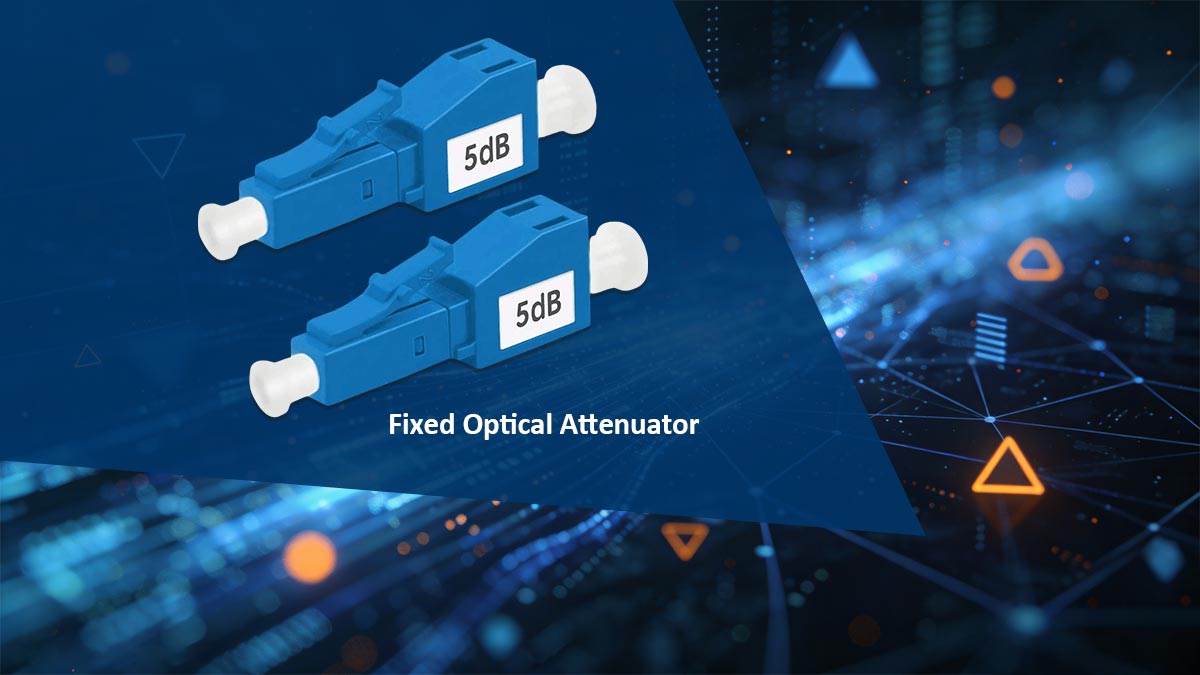
A fixed optical attenuator is a fiber optic component designed to reduce the intensity of an optical signal by a set amount. It is used when the required signal reduction is already known and does not need to change during operation.
You can think of it as a permanent “volume reducer” for light. Its purpose is not to improve the signal itself, but to lower optical power to a level that better matches the receiver, the link budget, or the test condition.
Core Function
Reduce optical power by a fixed amount
Prevent receiver overload in short links
Balance optical levels in fiber networks
Support repeatable test and measurement setups
🟩 How Does a Fixed Optical Attenuator Work?
A fixed optical attenuator works by introducing controlled loss into the optical path. The attenuation value is determined by the device design and remains constant during use.
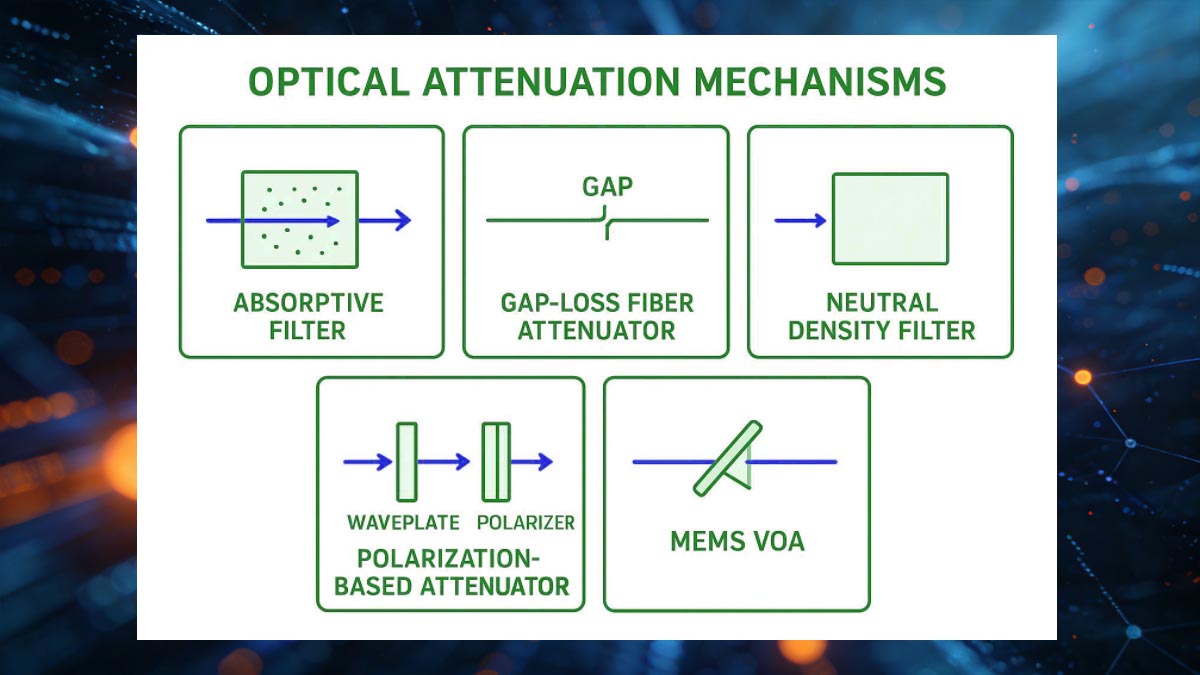
Common Operating Principles
Absorption
The device uses material that absorbs part of the optical energy and converts it into non-useful energy, reducing the transmitted power.
Reflection or scattering
Some designs reduce the light reaching the receiver by reflecting or scattering a portion of the signal.
Air-gap or gap-based design
In some inline attenuators, a physical structure slightly interrupts the optical path to create a precise and stable loss.
Key Characteristics
Fixed attenuation value
Passive operation
No external power required
Simple installation and high reliability
Typical Parameters
Attenuation value: specified in dB
Operating wavelength: often optimized for common fiber windows such as 1310 nm or 1550 nm
Connector type: LC, SC, FC, ST, and other interface options
Return loss and insertion loss: important for link quality and reflection control
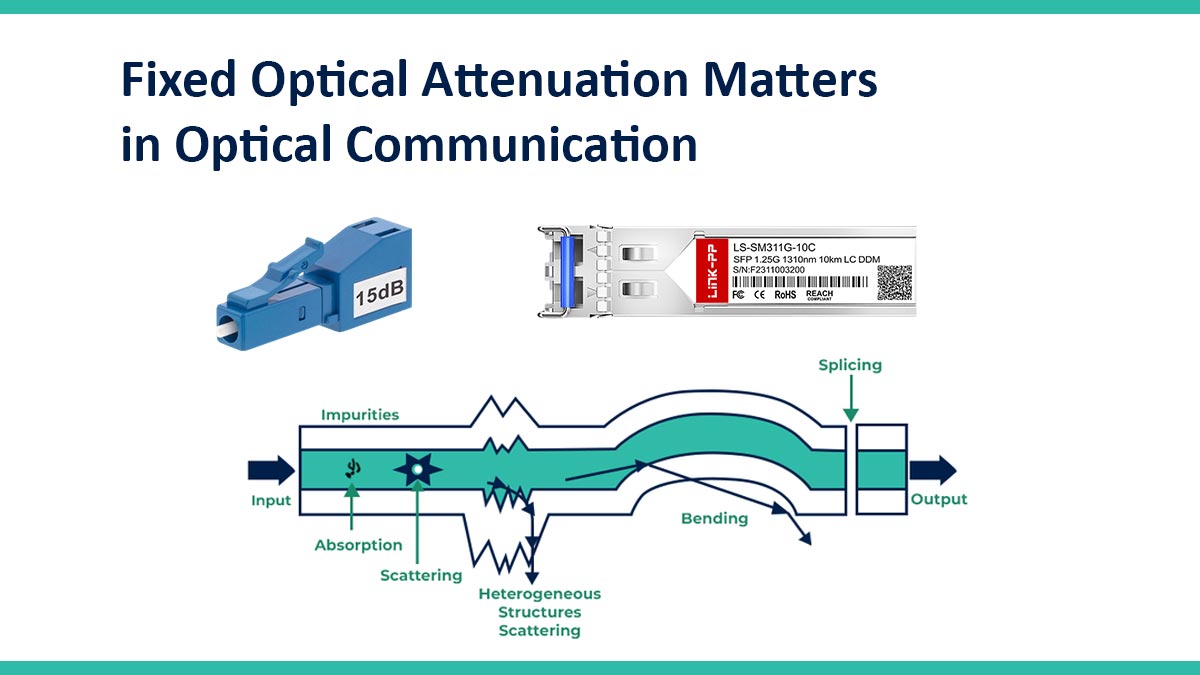
🟩 Why Fixed Optical Attenuation Matters in Optical Communication
Optical receivers are designed to operate within a defined input power range. If the signal is too strong, the receiver can become saturated and perform poorly. If the signal is too weak, the link may become unstable or fail.
A fixed optical attenuator helps maintain the signal within the proper range, improving overall system behavior.
Main Benefits
Receiver protection
It reduces excessive optical power that could overload or stress the receiver.
Better link stability
It helps keep the received power within the acceptable operating window.
Improved test accuracy
It allows engineers to create repeatable conditions in lab and field testing.
Power balancing
It can help equalize signal levels across different links or channels.
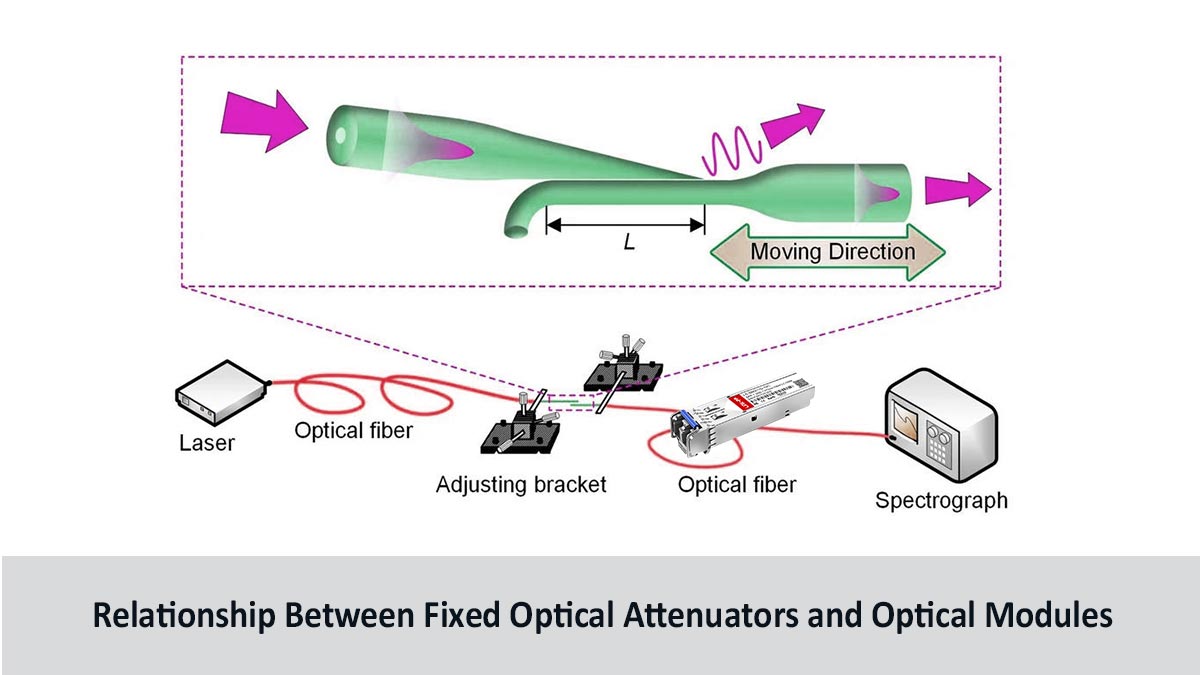
🟩 Relationship Between Fixed Optical Attenuators and Optical Modules
Fixed optical attenuators are often used with optical transceivers such as SFP, SFP+, QSFP, and other fiber optic modules. This is especially important in short-reach or high-power scenarios where the transmitter output is stronger than the receiver needs.
Why Optical Modules May Need Attenuation
Optical modules have two critical power-related limits:
Receiver sensitivity: the minimum optical power needed for reliable detection
Receiver overload threshold: the maximum power the receiver can safely accept
If the received power is too high, performance may degrade even though the link appears physically connected.
Common Module-related Use Cases
Short fiber runs between devices
High-power transceivers in low-loss links
Lab validation of module performance
Test environments where link distance is artificially short
Real-world example
A long-reach optical module used over a very short patch cable may deliver more optical power than the receiver can handle. In that case, a fixed optical attenuator is added to lower the input power to a safe and stable level.
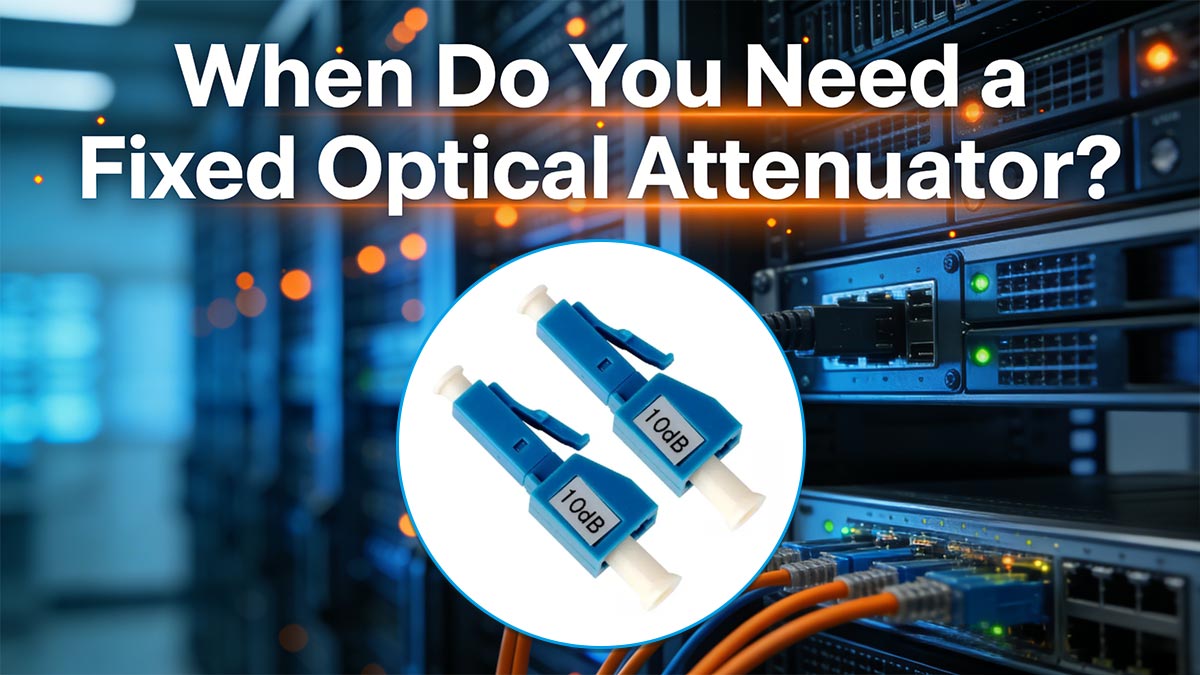
🟩 When Do You Need a Fixed Optical Attenuator?
A fixed optical attenuator is the right choice when the attenuation requirement is already known and unlikely to change.
Typical Scenarios
Short-distance high-power links
When a transmitter sends too much power into a nearby receiver, a fixed attenuator can bring the level back into range.
Lab testing and validation
Test engineers often use fixed attenuators to create repeatable conditions for measuring sensitivity, overload margin, and link behavior.
Stable production networks
If the optical path is well defined and the attenuation requirement is constant, a fixed device is simple and cost-effective.
Receiver protection in deployment
A fixed attenuator can serve as a permanent safeguard in links where overload risk is predictable.
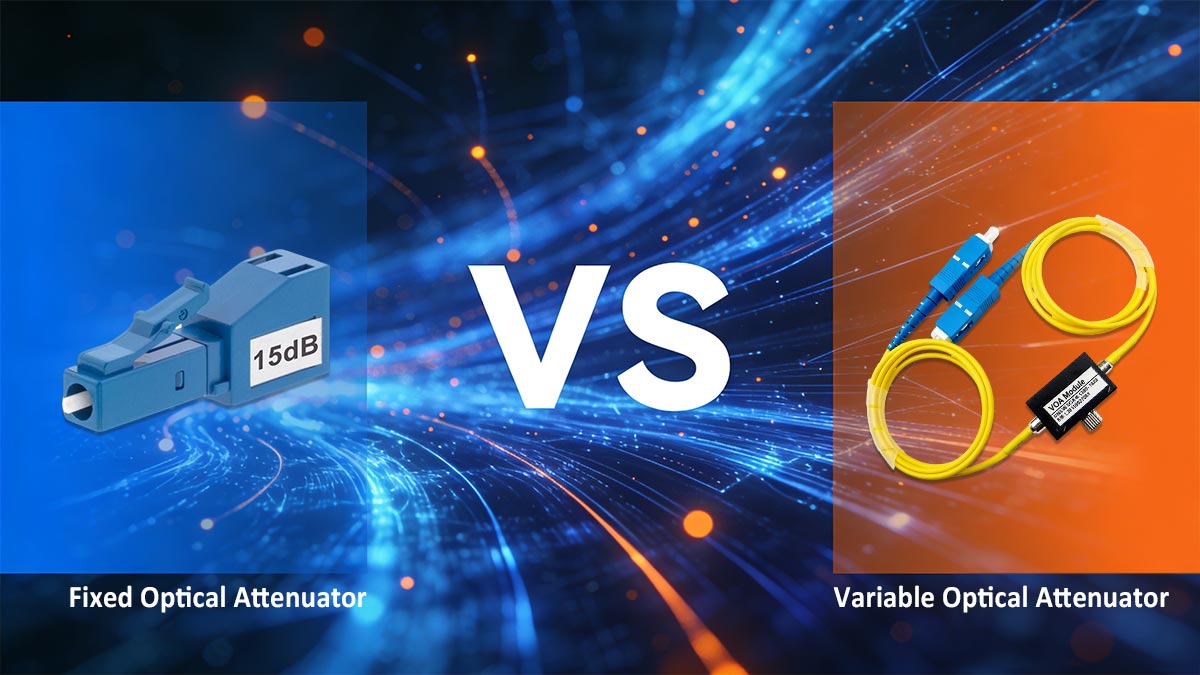
🟩 Fixed Optical Attenuator vs. Variable Optical Attenuator
Although both fixed optical attenuators and variable optical attenuators (VOA) are used to control optical signal power in fiber optic systems, they serve different engineering purposes and are selected based on how flexible the attenuation requirement is within the network design.
A fixed optical attenuator provides a constant, pre-defined level of signal reduction, making it ideal for stable and predictable environments. In contrast, a VOA offers adjustable attenuation, allowing dynamic control of optical power during operation or testing.
📊 Key Differences
Feature | Fixed Optical Attenuator | Variable Optical Attenuator |
|---|---|---|
Attenuation | Constant | Adjustable |
Complexity | Simple | More flexible |
Cost | Usually lower | Usually higher |
Best use case | Stable, predictable links | Dynamic or test environments |
Adjustment after installation | No | Yes |
Practical rule
Use a fixed optical attenuator when the required attenuation is known in advance. Use a VOA when the attenuation must be tuned during operation or testing.
🟩 Types of Fixed Optical Attenuators and How to Choose the Right One
Fixed optical attenuators are available in several physical formats and installation styles, each designed to support different fiber network environments. Understanding these types is essential not only for selecting the right component, but also for ensuring proper system performance, signal stability, and compatibility with optical modules such as SFP transceiver and QSFP module. At the same time, choosing the correct attenuator requires careful consideration of attenuation value, wavelength, and deployment conditions.
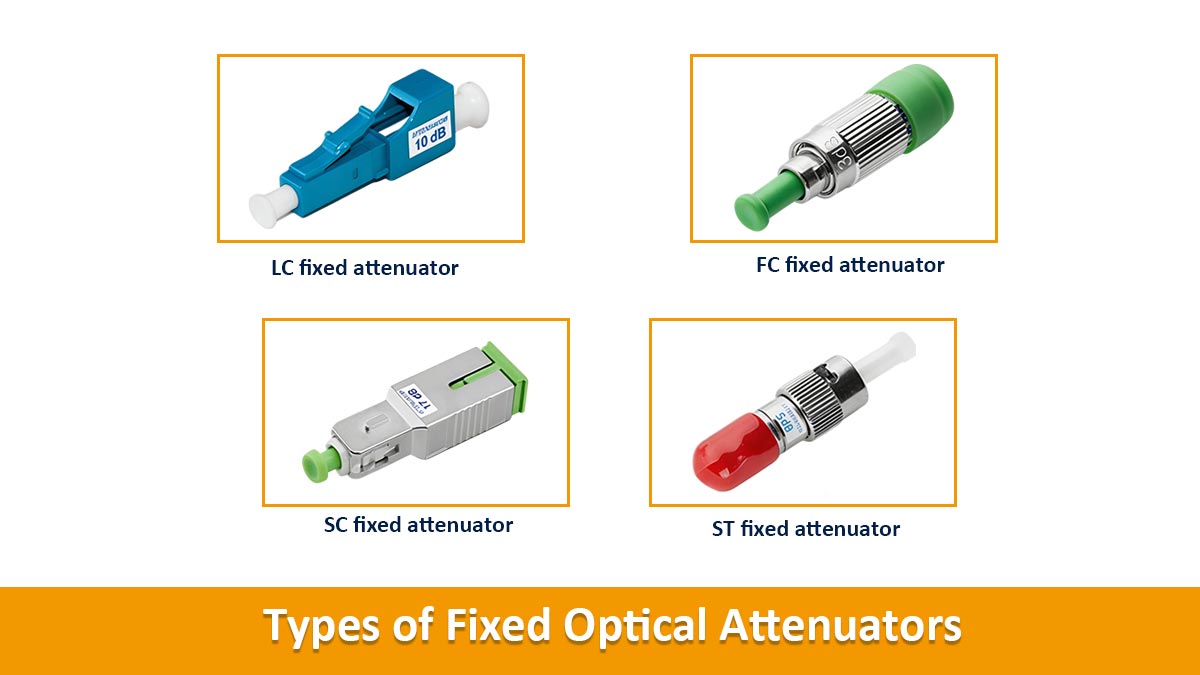
Common Types of Fixed Optical Attenuators
Inline Fixed Attenuator
Installed directly into the fiber link, typically between two connectorized fiber ends. This is one of the most widely used types in field deployments and telecom networks due to its simplicity and reliability.
Connector-Type Fixed Attenuator
Designed with standard fiber connectors (such as LC, SC, or FC), allowing it to be easily inserted into existing optical paths without additional modification.
Adapter-Style Fixed Attenuator
Integrated into a coupling adapter, making it compact and convenient for panel-mounted or space-constrained applications.
Plug-Type Fixed Attenuator
Optimized for high-density environments, offering quick installation and removal while maintaining stable attenuation performance.
Key Factors for Selecting the Right Fixed Optical Attenuator
1. Required Attenuation Value (dB)
Determine the exact optical power reduction needed based on link budget calculations and receiver input limits.
2. Wavelength Compatibility
Ensure the attenuator supports the operating wavelength of the system, typically around 1310 nm or 1550 nm for fiber optic networks.
3. Connector Type Matching
Verify compatibility with the system interface, such as LC, SC, FC, or other connector standards used in the deployment.
4. Application Environment
Consider whether the attenuator will be used in:
Telecom backbone networks
Lab testing environments
Field installations
5. Power Handling and Reliability Requirements
Select a device that can support the expected optical power levels while maintaining long-term stability and low insertion loss variation.
The best fixed optical attenuator is not only defined by its physical type, but also by how well it matches the optical module requirements, link budget conditions, and real-world deployment environment.
Practical Checklist
Verify receiver overload threshold
Measure actual received optical power
Confirm the required attenuation margin
Match connector and polish type
Select a reliable, standards-compatible component
🟩 Common Problems Solved by Fixed Optical Attenuators
Although a fixed optical attenuator is a passive and relatively simple component, it plays a crucial role in maintaining the stability and reliability of fiber optic communication systems. In optical networks using transceivers such as SFP transceiver and QSFP module, even small mismatches in optical power can lead to significant performance degradation. Fixed attenuators help engineers resolve several common and critical optical layer issues.
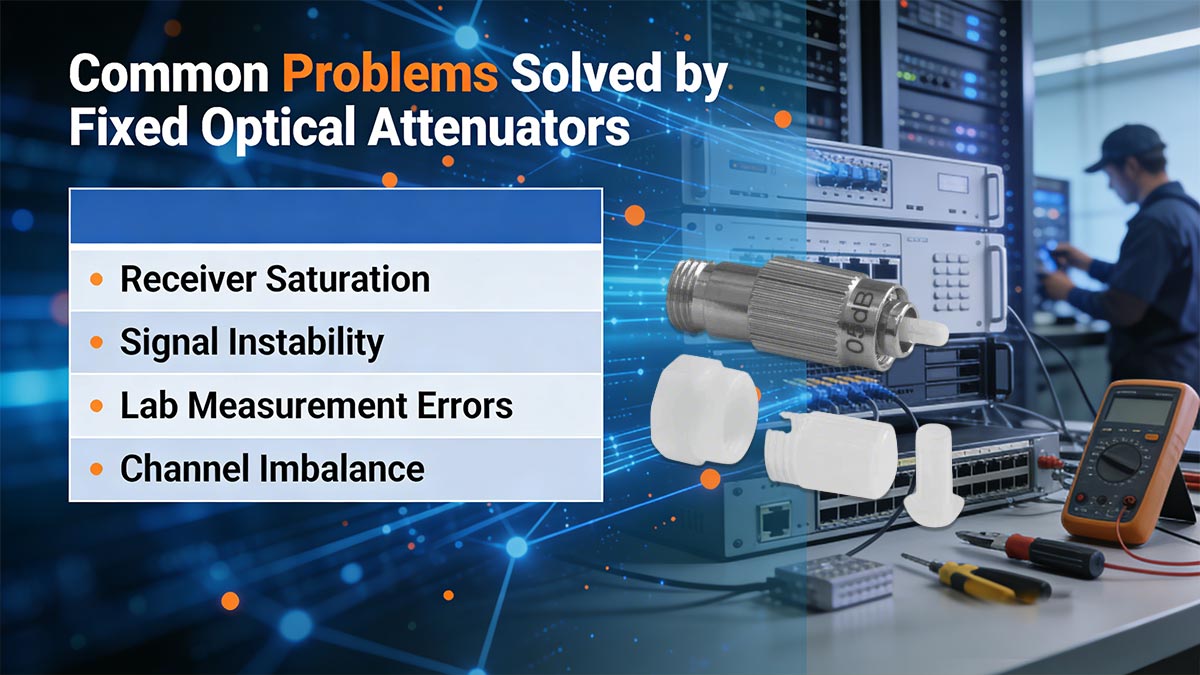
1. Receiver Saturation (Overpower Protection)
It reduces excessive power that could overwhelm the optical receiver.
Receiver saturation occurs when the optical power entering the photodetector exceeds its maximum operating threshold. In this condition, the receiver cannot properly interpret the incoming signal, leading to distorted waveforms, increased bit error rates (BER), or complete link instability.
Fixed optical attenuators solve this problem by introducing a controlled, permanent reduction in optical power, ensuring that the received signal remains within the safe operating range of the module. This is especially important in short-reach links where high-power transceivers are used over very short fiber distances or patch cords.
2. Signal Instability (Power Range Optimization)
It helps keep received power within the ideal operating range.
Fiber optic receivers are designed to operate within a specific dynamic power window, defined by sensitivity (minimum detectable power) and overload threshold (maximum tolerable power). When the received signal fluctuates outside this range, instability may occur.
A fixed optical attenuator helps maintain consistent received optical power, improving link stability and reducing intermittent errors. This ensures that the optical signal remains in the optimal detection range, which is critical for high-speed applications such as 10G, 25G, and 100G Ethernet.
3. Lab Measurement Errors (Test Environment Standardization)
It creates consistent and repeatable test conditions.
In optical testing environments, accurate and repeatable measurements are essential for validating system performance, including receiver sensitivity, transmitter power, and link margin.
Without controlled attenuation, test setups may produce inconsistent results due to excessive or insufficient optical power. A fixed optical attenuator provides a stable and predictable loss value, allowing engineers to create standardized test conditions. This improves measurement accuracy and ensures reliable comparison across different devices and test cycles.
4. Channel Imbalance (Multi-Channel Power Equalization)
It can help reduce power differences between optical paths in specific setups.
In wavelength division multiplexing (WDM) systems, multiple optical channels travel through the same fiber but may experience different power levels due to variations in transmitter output, fiber loss, or component differences.
This imbalance can lead to uneven channel performance, where stronger signals dominate and weaker channels degrade in quality. Fixed optical attenuators help correct this by balancing optical power levels across channels, improving overall system uniformity and reducing performance variation in multi-wavelength networks.
Engineering Insight
In real-world deployments, fixed optical attenuators are often used as a preventive design tool rather than a corrective one. By carefully planning attenuation values during the link budget design phase, engineers can:
Avoid receiver overload before deployment
Improve long-term signal consistency
Reduce troubleshooting complexity in the field
Enhance overall optical network reliability
Key Takeaway:
Even though it is a passive component, the fixed optical attenuator plays an essential role in ensuring that optical systems operate within safe, stable, and predictable parameters—especially in high-speed networks and precision testing environments.
A fixed optical attenuator is a simple device, but it solves several important problems in fiber optic systems.
🟩 Conclusion: Why Fixed Optical Attenuators Matter in Optical Networks
A fixed optical attenuator is a small but essential component in fiber optic communication. It provides a simple, reliable, and cost-effective way to control optical signal power, protect receivers, and improve testing accuracy. In environments where attenuation needs are stable and well understood, it is often the most practical solution.
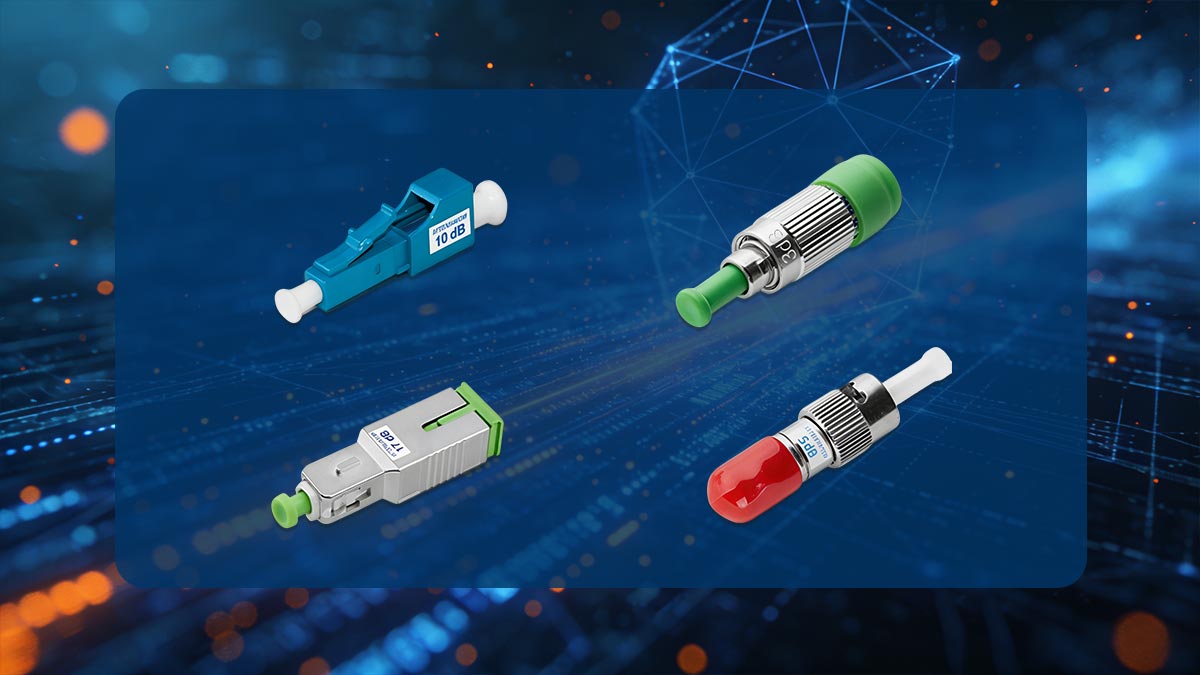
For optical module users, system integrators, and network engineers, the fixed optical attenuator is not just a passive accessory. It is a practical part of link design that helps keep optical performance within specification and supports long-term network reliability.
For optical module compatibility, stable signal control, and reliable deployment solutions, the LINK-PP Official Store can be a useful starting point when selecting fiber optic components for your network.