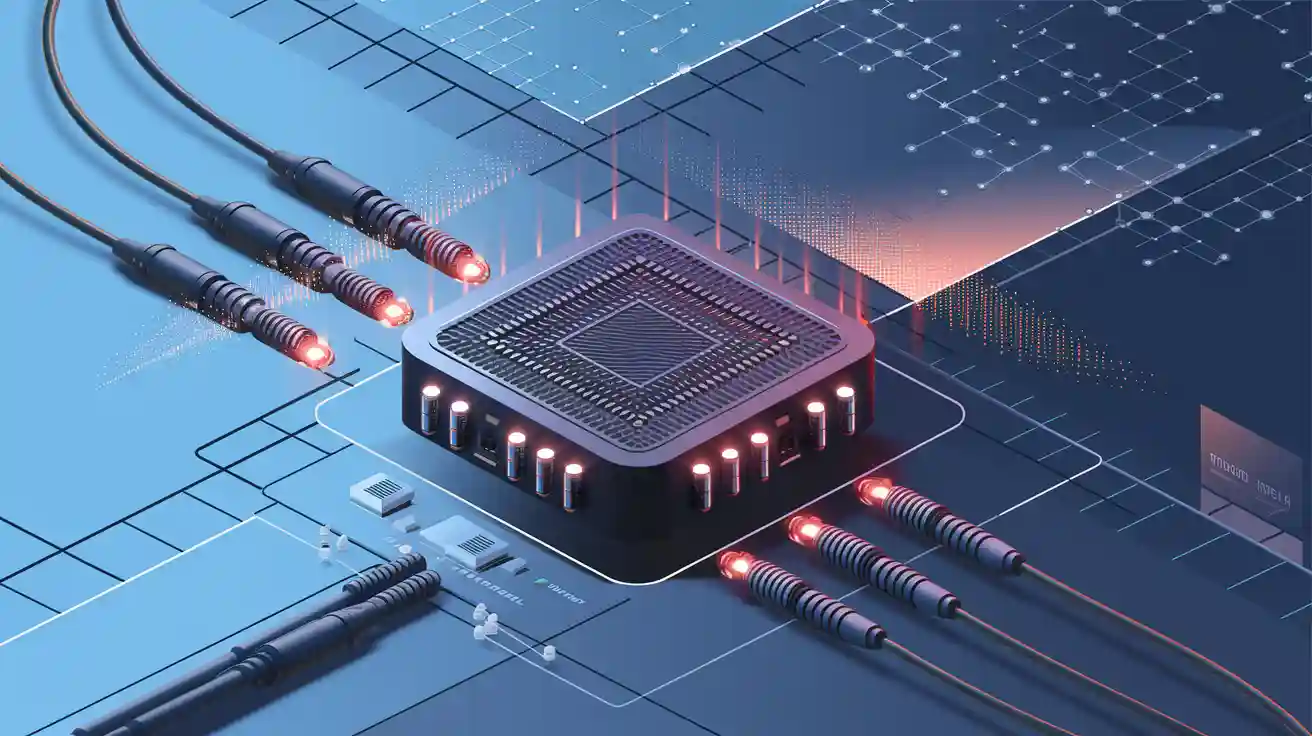


In modern fiber optic communication systems, maintaining precise control over signal strength is essential for ensuring stable and high-speed data transmission. As network speeds continue to scale from 10G to 100G and beyond, even small variations in optical power can significantly impact performance, leading to signal distortion, increased error rates, or receiver overload.
One critical component that enables this level of control is the Variable Optical Attenuator (VOA). Widely used alongside optical transceivers such as SFP transceiver and QSFP module, a VOA allows engineers to precisely adjust optical signal power to match system requirements.
Whether in data centers, telecom networks, or optical testing environments, VOAs play a key role in optimizing link performance, protecting sensitive components, and ensuring reliable communication across varying transmission distances.
What You’ll Learn in This Guide
By reading this article, you will gain a clear understanding of:
What a VOA Variable Optical Attenuator is and how it works
Why VOAs are essential in fiber optic systems
How VOAs interact with optical modules in real-world deployments
When and how to use a VOA for optimal network performance
This guide is designed to provide both foundational knowledge and practical engineering insights, making it useful for beginners, network engineers, and anyone working with fiber optic technologies.
🟦 What Is a VOA Variable Optical Attenuator?
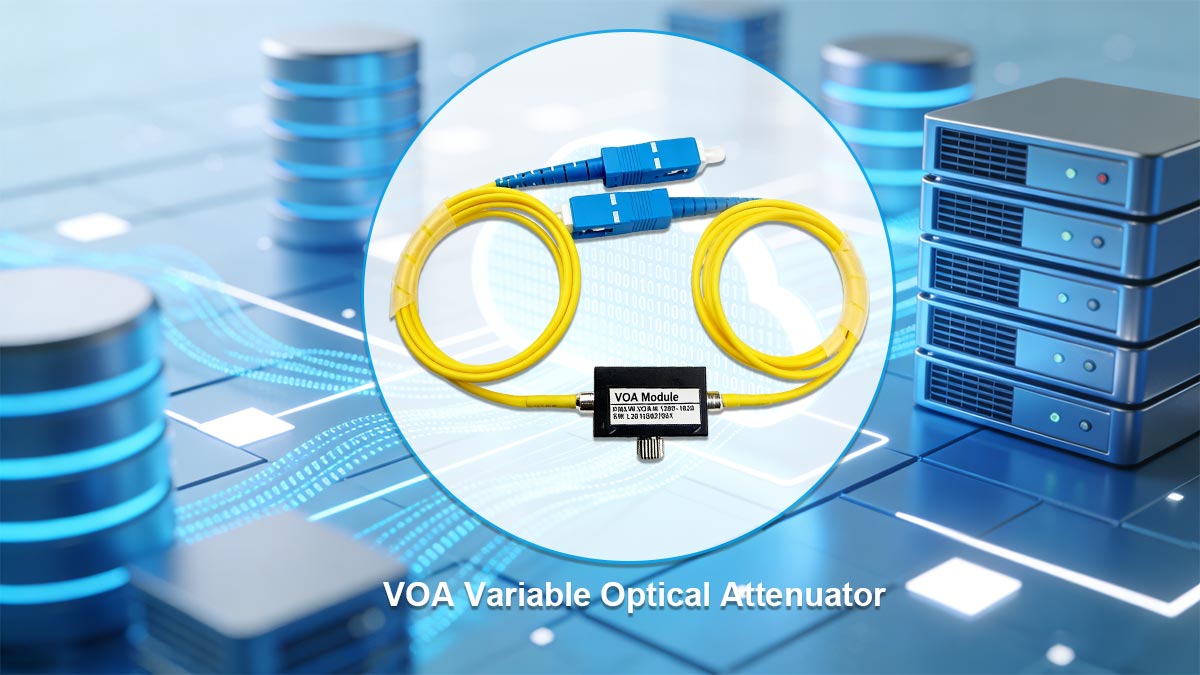
A VOA (Variable Optical Attenuator) is a fiber optic device that dynamically adjusts the power level of an optical signal by introducing controlled attenuation (loss). It is widely used in optical communication systems to ensure signals remain within the optimal operating range of receivers and components.
In simple terms, a VOA acts like a “volume control for light”—instead of amplifying a signal, it precisely reduces optical power without significantly distorting the signal waveform.
Core Function:
Fine-tune optical signal strength (measured in dB)
Prevent receiver overload
Optimize system performance and stability
🟦 How Does a Variable Optical Attenuator Work?
A VOA works by intentionally introducing optical loss into the transmission path. This attenuation can be controlled manually or automatically depending on the design.
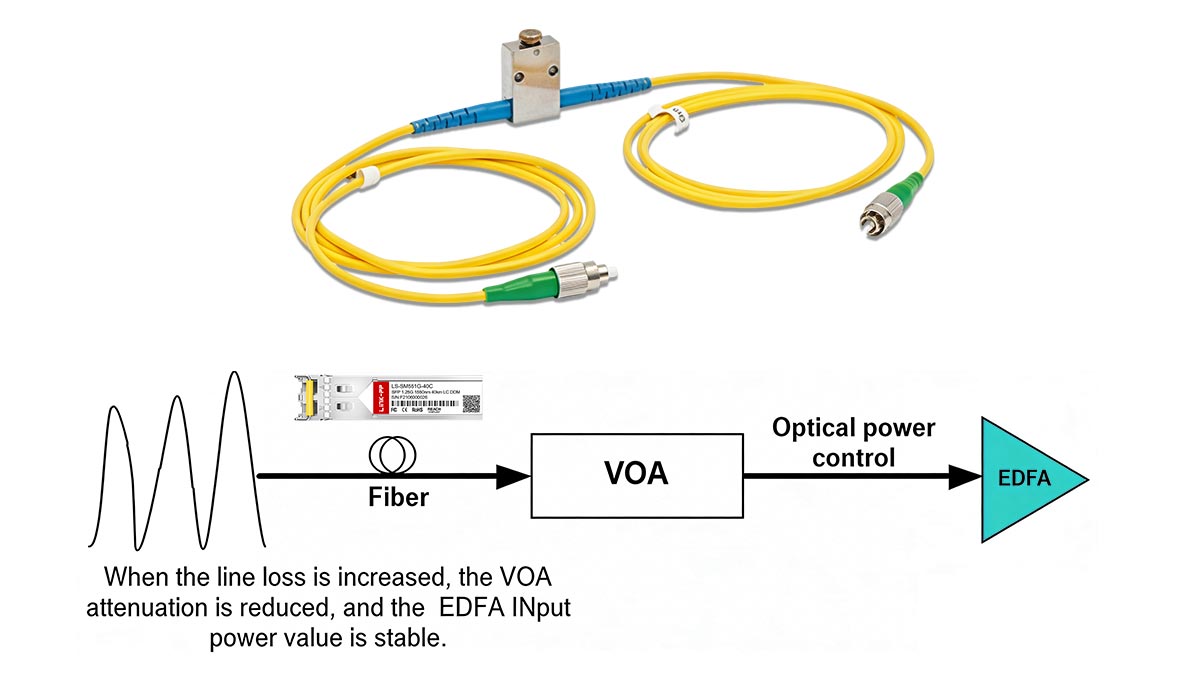
Variable Optical Attenuator Working Principles
1. Mechanical Attenuation
Adjusts fiber alignment or inserts a neutral density filter
Common in manual VOAs
Simple, cost-effective, but slower response
2. MEMS-Based Control
Uses micro-electro-mechanical mirrors to vary light coupling
High precision and fast response
Widely used in dynamic optical networks
3. Optical Absorption / Reflection
Alters material properties (thermal or electro-optic effects)
Controls how much light is absorbed or reflected
Key Parameters of Variable Fiber Attenuator
Attenuation Range: Typically 0–30 dB (some designs exceed 60 dB)
Operating Wavelength: Commonly 1310 nm and 1550 nm
Insertion Loss: Low baseline loss when attenuation is minimal
Return Loss: Important for minimizing signal reflections
Response Time: Critical for dynamic VOAs (milliseconds to microseconds)
Why VOA Is Important in Optical Communication Systems
VOAs are essential for maintaining signal integrity and system reliability in modern fiber networks.
Signal Stability
Ensures consistent optical power levels across varying link conditions.
Preventing Receiver Overload
High optical power can saturate photodetectors, causing:
Signal clipping
Increased error rates
Potential hardware damage
Improving BER Performance
Optimized signal levels reduce Bit Error Rate (BER), especially in high-speed links.
Supporting High-Speed Networks
Critical for:
10G / 25G / 100G / 400G systems
Dense wavelength division multiplexing (DWDM)
Data center and telecom infrastructure
🟦 Relationship Between VOA and Optical Modules
The interaction between VOAs and optical transceivers—such as SFP module and QSFP module—is fundamental to system performance.
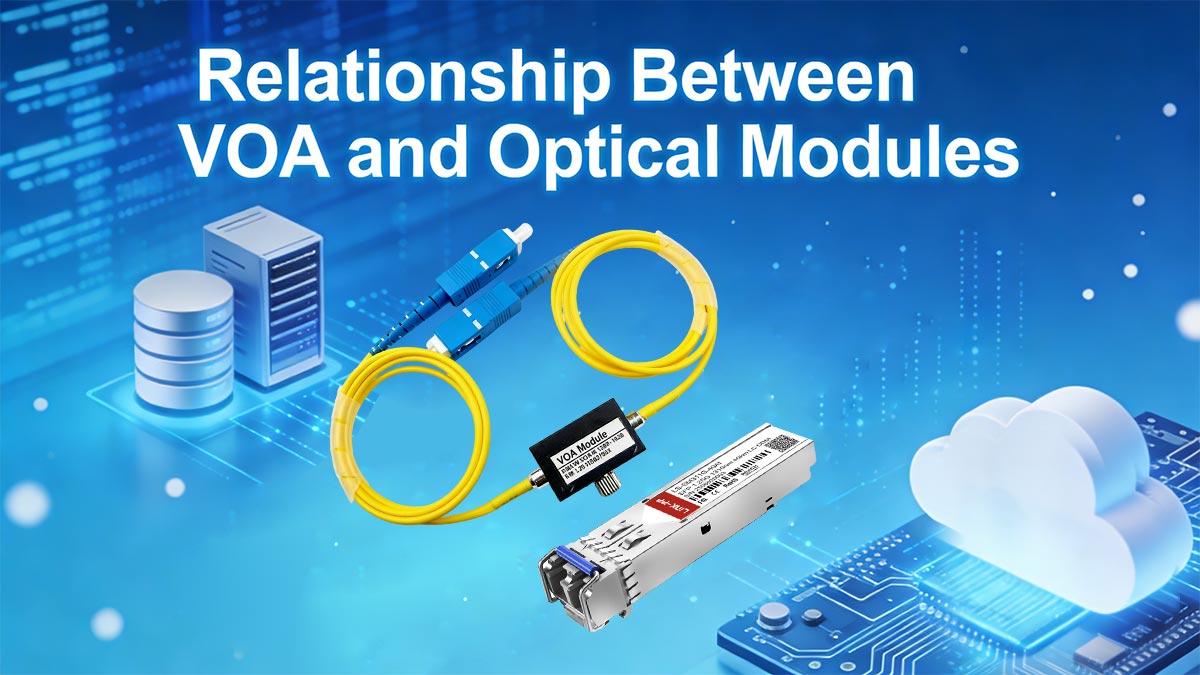
Receiver Sensitivity vs. Overload Threshold
Every optical module has:
Receiver sensitivity (minimum input power)
Overload threshold (maximum safe input power)
A VOA ensures the received signal stays within this safe operating window.
Real-World Mismatch Scenario
A 10 km optical module used over a short patch cable (e.g., 2–5 meters)
Result: Excessive received optical power
Impact without VOA:
Packet loss
CRC errors
Link instability
Solution:
Insert a VOA to reduce optical power to optimal levels
Impact on Module Performance
Extends module lifespan
Prevents thermal stress and receiver saturation
Ensures consistent throughput and low latency
When Do You Need a VOA with Optical Modules?
Here are decision-driven scenarios where a VOA is necessary:
Use a VOA if:
The link distance is much shorter than the module’s rated range
You observe high received optical power (e.g., > -3 dBm)
Performing lab testing or validation
Operating in DWDM systems with multiple channels
Deploying in data centers with short fiber runs
You may NOT need a VOA if:
The link is within designed distance and power budget
Using low-power short-reach modules (e.g., SR optics)
Power levels are already within receiver specifications
🟦 VOA vs. Fixed Optical Attenuator: Key Differences
In fiber optic networks, controlling optical signal power is essential for maintaining link stability and protecting sensitive components. Two commonly used solutions for this purpose are the Variable Optical Attenuator (VOA) and the fixed optical attenuator. While both devices serve the same fundamental role—reducing optical power—they differ significantly in terms of flexibility, precision, and application scenarios. Understanding the key differences between a VOA and a fixed attenuator is critical for engineers and network designers, as the right choice can directly impact system performance, cost efficiency, and long-term reliability.
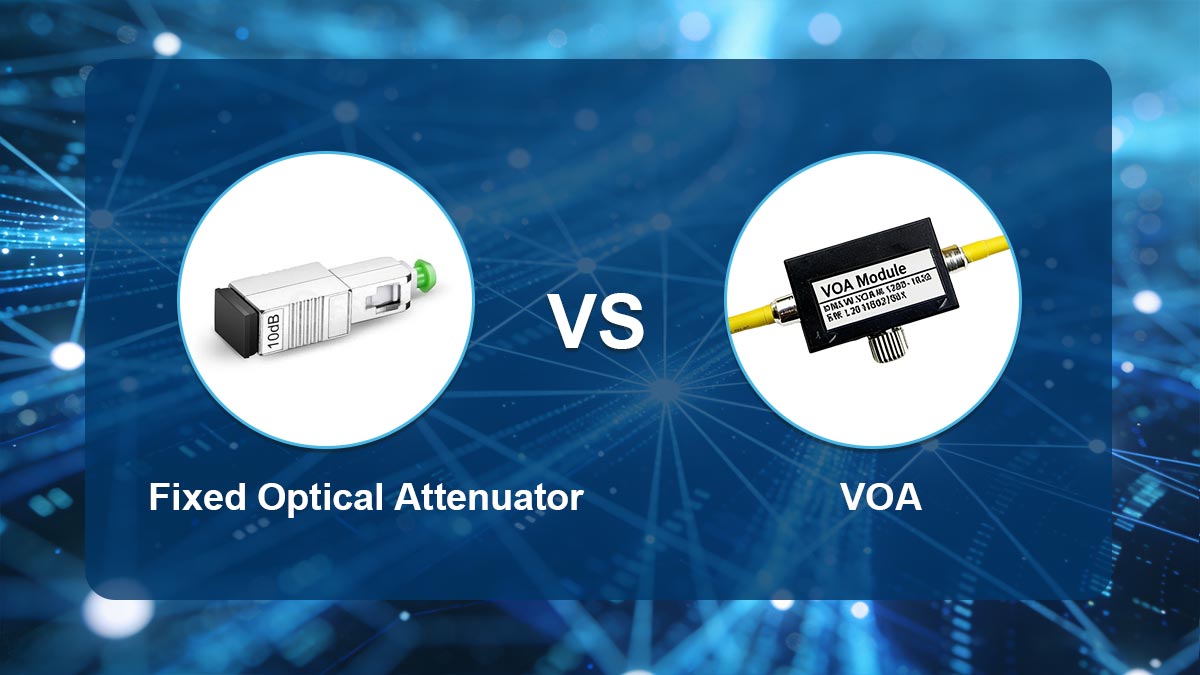
What Is a Fixed Optical Attenuator?
A fixed optical attenuator is a passive fiber optic device designed to reduce optical signal power by a predetermined, constant amount. Unlike a Variable Optical Attenuator (VOA), it provides a fixed attenuation value—commonly 1 dB, 3 dB, 5 dB, 10 dB, or higher—without the ability to adjust after installation.
Fixed attenuators are typically used in stable and predictable network environments where the required signal reduction is known in advance. They are widely applied to:
Prevent receiver overload in short-distance links
Match optical power levels between devices
Maintain consistent signal performance in long-term deployments
Because of their simple structure, low cost, and high reliability, fixed optical attenuators are a practical choice for many standard fiber optic applications where dynamic adjustment is not necessary.
Optical Attenuator solutions Comparison
Feature | Variable Optical Attenuator | Fixed Optical Attenuator |
|---|---|---|
Attenuation | Adjustable (e.g., 0–30 dB) | Fixed (e.g., 3 dB, 10 dB) |
Flexibility | High | Low |
Cost | Higher | Lower |
Use Case | Dynamic systems, testing | Stable, predictable links |
Precision | Fine-tuned control | Predefined |
Conclusion:
Use VOA for dynamic environments
Use fixed attenuator for simple deployments
🟦 Types of VOAs and How to Choose the Right One for Your Application
Selecting the appropriate Variable Optical Attenuator (VOA) requires both an understanding of the available types and a clear evaluation of your specific system requirements. Different VOA designs serve different operational scenarios—from manual testing to fully automated optical networks—so choosing the right type is essential for achieving optimal performance and reliability.
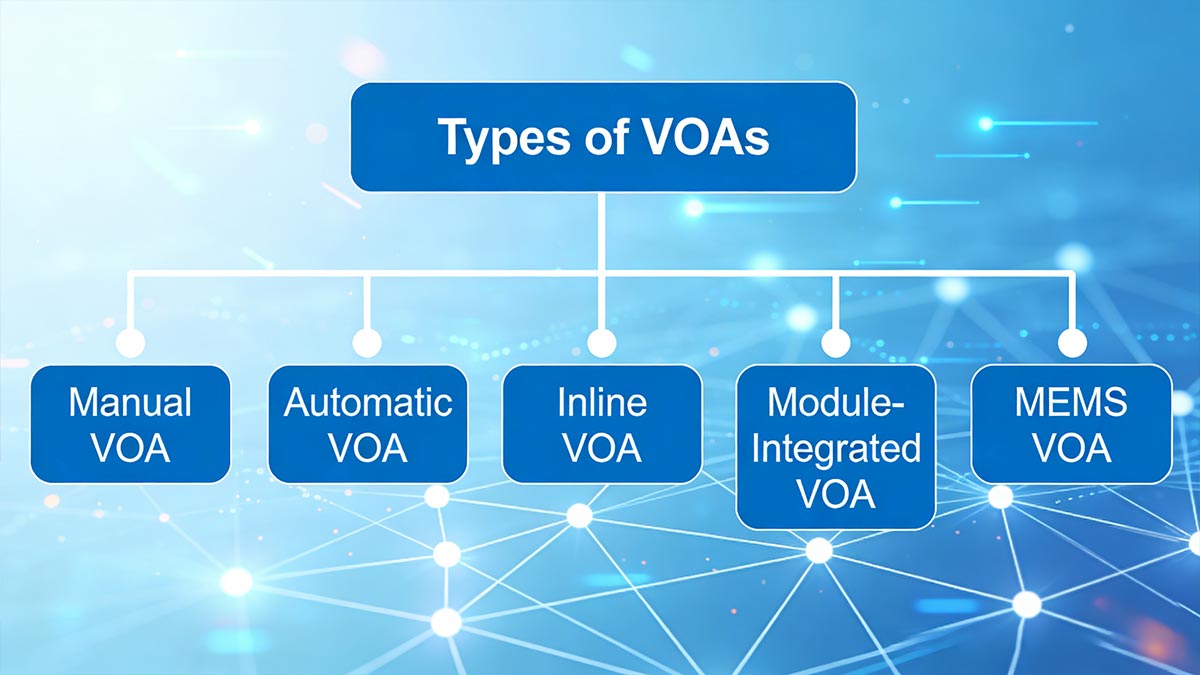
🔹 Common Types of VOAs in Fiber Optic Networks
Manual VOA
User-adjustable attenuation
Ideal for lab environments and field testing
Cost-effective but not suitable for dynamic systems
Automatic VOA (AVOA)
Dynamically adjusts attenuation in real time
Used in intelligent optical systems and adaptive networks
Ensures consistent signal levels under changing conditions
Inline VOA
Installed directly into the fiber link
Common in permanent field deployments
Provides stable, in-line attenuation
Module-Integrated VOA
Built into advanced transceivers or optical systems
Enables automatic power control without external components
Common in high-end DWDM and ROADM architectures
MEMS VOA
Based on micro-electro-mechanical systems technology
Offers high precision, fast response, and long-term reliability
Widely used in DWDM and reconfigurable optical networks
🔹 Key Considerations for Choosing the Right VOA
To select the most suitable VOA, consider the following engineering factors:
1. Optical Module Type
Identify whether you are using SFP, SFP+, QSFP, or DWDM optics
Verify transmitter output power and receiver sensitivity limits
2. Link Distance
Short-distance links often require attenuation due to excessive received power
Long-distance links may not need additional attenuation
3. Power Budget Analysis
Carefully calculate the total optical link budget, including:
Transmit (Tx) power
Fiber attenuation loss
Connector and splice losses
Best Practice: Always select a VOA with an attenuation range that provides sufficient margin (typically 3–5 dB) beyond your calculated requirement to ensure flexibility and future scalability.
✅ Practical Engineering Checklist
✔ Measure actual received optical power
✔ Compare with module specifications
✔ Select attenuation range with margin (e.g., +3 dB buffer)
✔ Ensure wavelength compatibility (1310 / 1550 nm)
✔ Choose appropriate response speed (static vs. dynamic use)
🟦 Common Problems Solved by VOA in Optical Links
In real-world fiber optic deployments, signal power is not always perfectly matched to the requirements of optical receivers and network conditions. Variations in link distance, transmitter output, and system design can introduce performance issues that degrade network reliability. A Variable Optical Attenuator (VOA) provides a precise and flexible way to manage these challenges by controlling optical power levels and stabilizing signal behavior across the link.
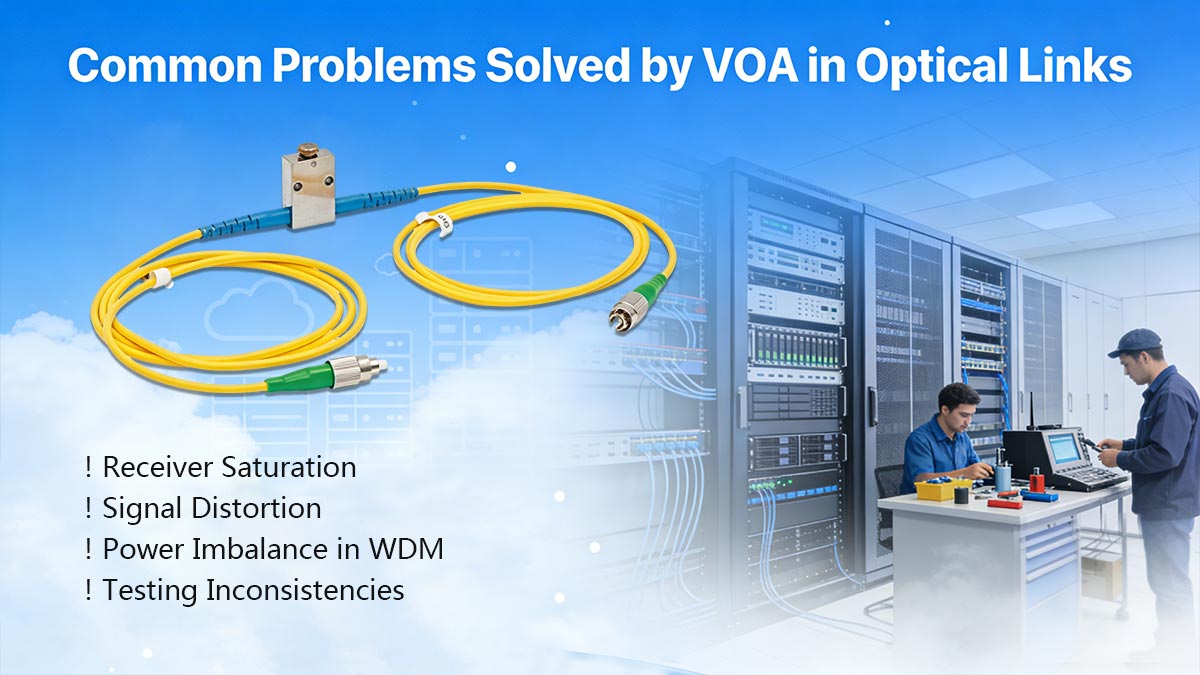
Receiver Saturation
Prevents excessive power from damaging receivers.
Excessive optical power at the receiver end can cause saturation of the photodetector, leading to signal clipping, increased bit error rates (BER), and potential long-term damage to the optical module. This issue is especially common in short-distance links where high-power transceivers are used. A VOA reduces the incoming optical power to a safe level, protecting the receiver and ensuring stable link performance.
Signal Distortion
Maintains linear signal behavior for accurate detection.
When optical signals operate outside their optimal power range, they may exhibit nonlinear behavior, resulting in waveform distortion and degraded signal integrity. This can negatively impact data accuracy and transmission quality, particularly in high-speed networks. By fine-tuning the optical power, a VOA helps maintain linear signal characteristics, enabling accurate signal detection and improved overall performance.
Power Imbalance in WDM
Balances multiple wavelength channels for uniform performance.
In wavelength division multiplexing (WDM) systems, multiple optical channels with different wavelengths are transmitted simultaneously. Due to variations in transmitter output or path loss, some channels may become stronger than others, creating power imbalance. This imbalance can degrade system performance and reduce channel reliability. A VOA is used to equalize channel power levels, ensuring consistent performance across all wavelengths.
Testing Inconsistencies
Enables repeatable and controlled lab measurements.
During laboratory testing and system validation, inconsistent optical power levels can lead to unreliable or non-repeatable results. Engineers require controlled conditions to accurately evaluate device performance, such as receiver sensitivity and system margins. A VOA enables precise adjustment of signal power, allowing for repeatable, standardized testing and more reliable performance analysis.
🟦 Conclusion: Why VOA Is Essential for Optical Module Performance
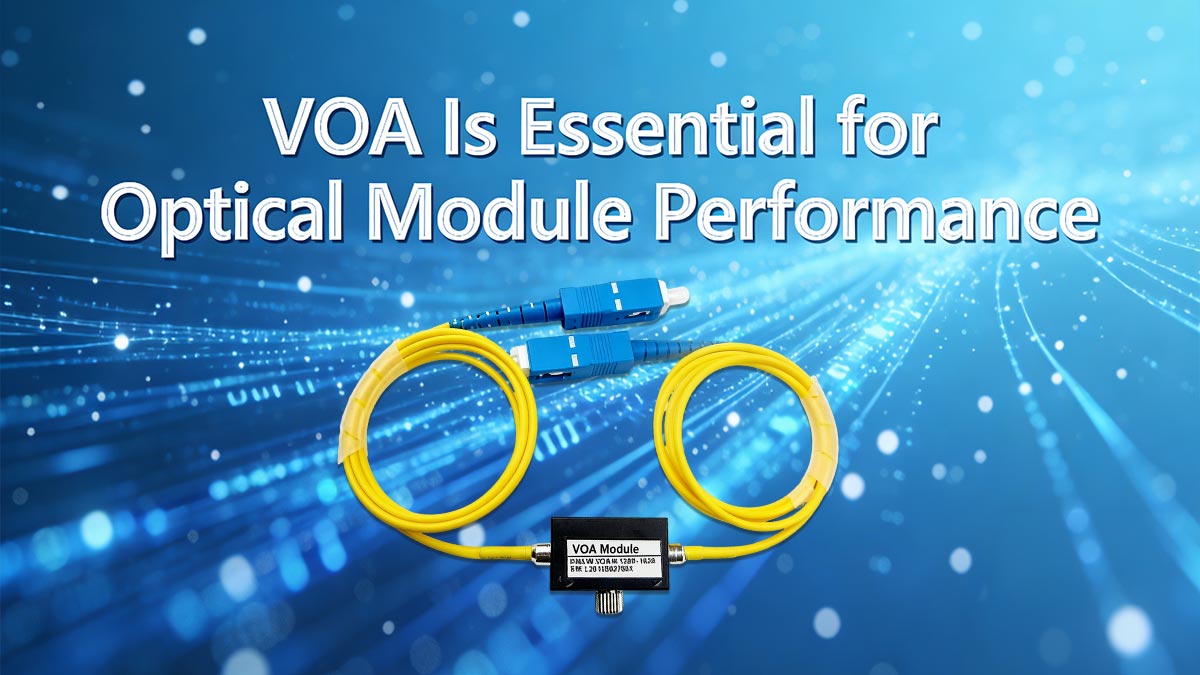
A Variable Optical Attenuator (VOA) is a critical component in modern fiber optic systems, providing:
Control – precise adjustment of optical power
Protection – prevents receiver overload and damage
Optimization – ensures stable, high-performance communication
In environments where optical modules must operate reliably—whether in data centers, telecom networks, or DWDM systems—VOAs are indispensable tools for maintaining signal integrity and maximizing efficiency.
Optimize Your Optical Network Deployment
To achieve the best performance, it is essential to align your VOA selection with your optical module specifications, link budget, and deployment scenario. Proper integration of VOAs can significantly improve system stability, reduce error rates, and extend the lifespan of your optical components.
👉 For high-quality, standards-compliant optical modules and reliable connectivity solutions, explore the LINK-PP Official Store to find products designed for compatibility, performance, and long-term reliability.
Choose high-quality, standards-compliant optical modules
Ensure proper link budget design
Integrate VOAs where necessary for stable operation
A well-balanced optical link is the foundation of a high-performance network.