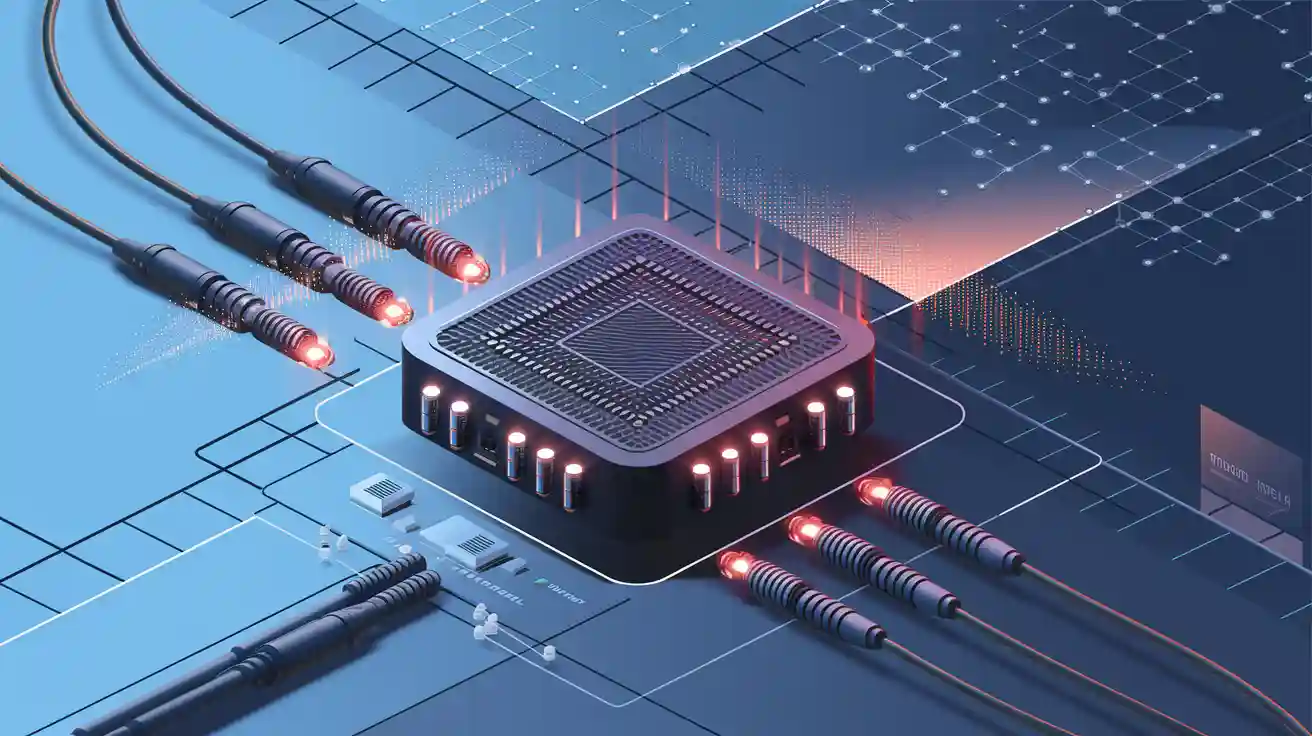

In modern fiber optic communication and testing environments, ensuring signal accuracy and network reliability is critical. One essential tool that makes this possible is the fiber optical light source.
Whether you are installing a new fiber network, troubleshooting signal loss, or performing certification testing, a stable and precise optical signal is required. This is where a fiber optic light source plays a key role.
It is commonly used together with optical power meters to measure insertion loss, verify link performance, and ensure compliance with industry standards across telecom networks, data centers, and FTTH deployments.
What you will learn from this guide:
What a fiber optical light source is
How it works in fiber optic systems
Different types of optical light sources
Key specifications and features
Real-world applications
How to choose the right device for your needs
🟨 What Is a Fiber Optical Light Source?
A fiber optic light source is a precision instrument designed to emit a stable and controlled optical signal into an optical fiber for testing, measurement, and system validation.
Unlike general-purpose light emitters, fiber optical light sources are engineered to provide consistent output power, defined wavelengths, and minimal signal fluctuation, ensuring accurate and repeatable test results.
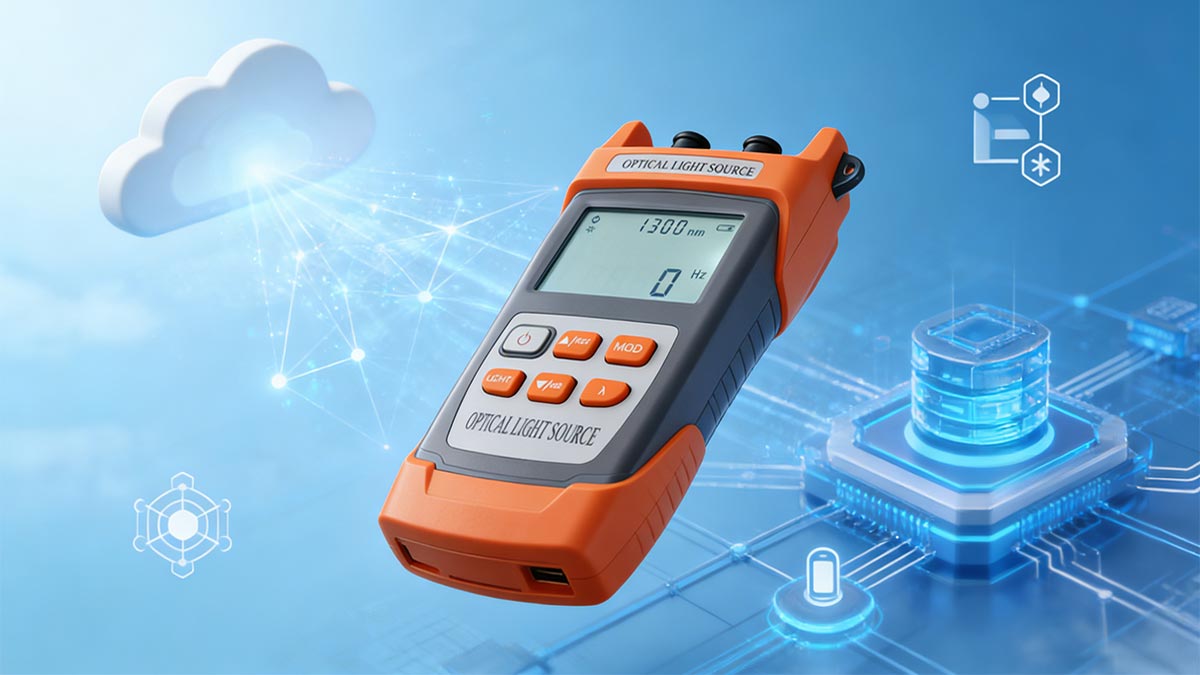
In simple terms:
A fiber optic light source injects light into a fiber, enabling accurate measurement of attenuation and link quality.
Extended Technical Definition
In professional fiber testing environments, a fiber optical light source must meet the following criteria:
Stable optical output (low drift over time)
Narrow spectral width (especially for laser sources)
Compatibility with standardized wavelengths
Interoperability with optical power meters
These characteristics make it a core component in optical loss testing (OLTS) systems.
Key Functions:
Generate stable optical signals
Support specific wavelengths (e.g., 1310 nm, 1550 nm)
Enable insertion loss testing
Work with optical power meters as part of an OLTS system
🟨 How Does a Fiber Optical Light Source Work?
Understanding how a fiber optic light source works helps clarify its importance in testing and communication systems.
Basic Working Principle
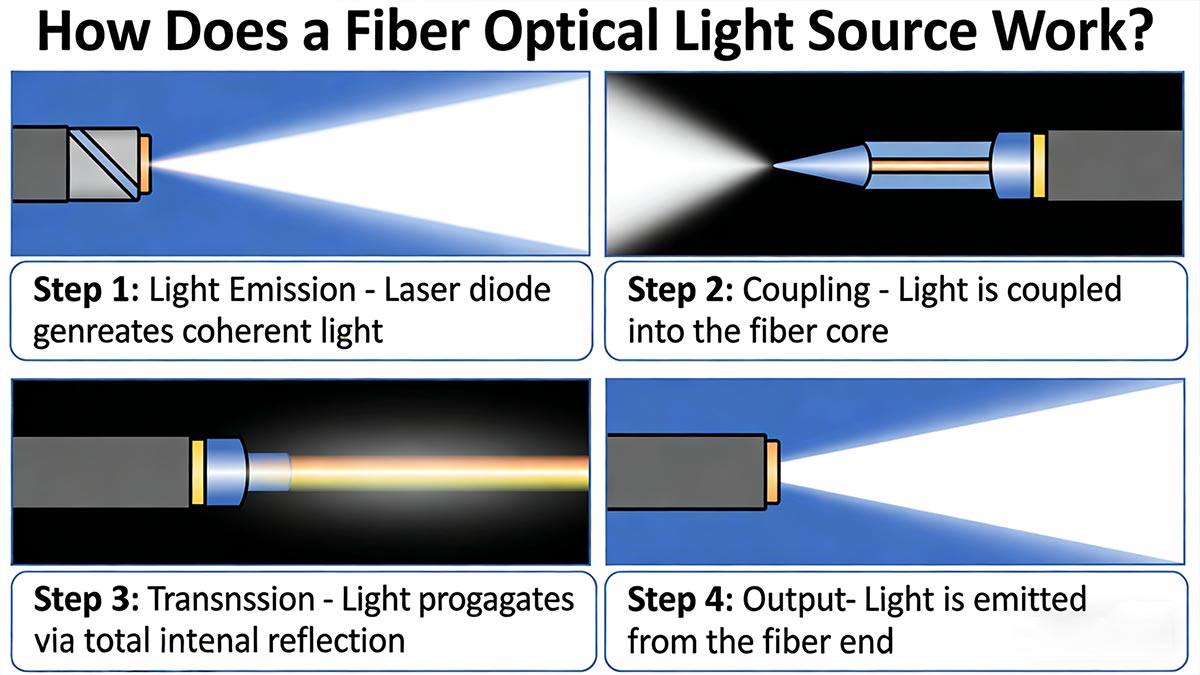
The device generates light using either an LED or a laser diode. This light is emitted at a specific wavelength and launched into the optical fiber via a connector interface.
Once inside the fiber, the light travels through the core and is affected by attenuation, reflection, and scattering. At the receiving end, a power meter measures the remaining signal strength.
The difference between transmitted and received power represents the optical loss.
Light Transmission in Fiber
There are two primary transmission modes:
Single-mode fiber (SMF): Uses laser sources, supports long-distance transmission
Multimode fiber (MMF): Uses LED sources, suitable for short distances
During transmission, light may experience:
Absorption loss
Scattering loss
Connector and splice loss
A stable light source ensures that measurements are accurate and repeatable.
🟨 Types of Fiber Optical Light Sources
Different applications require different types of light sources. Choosing the correct type is essential for accurate testing.
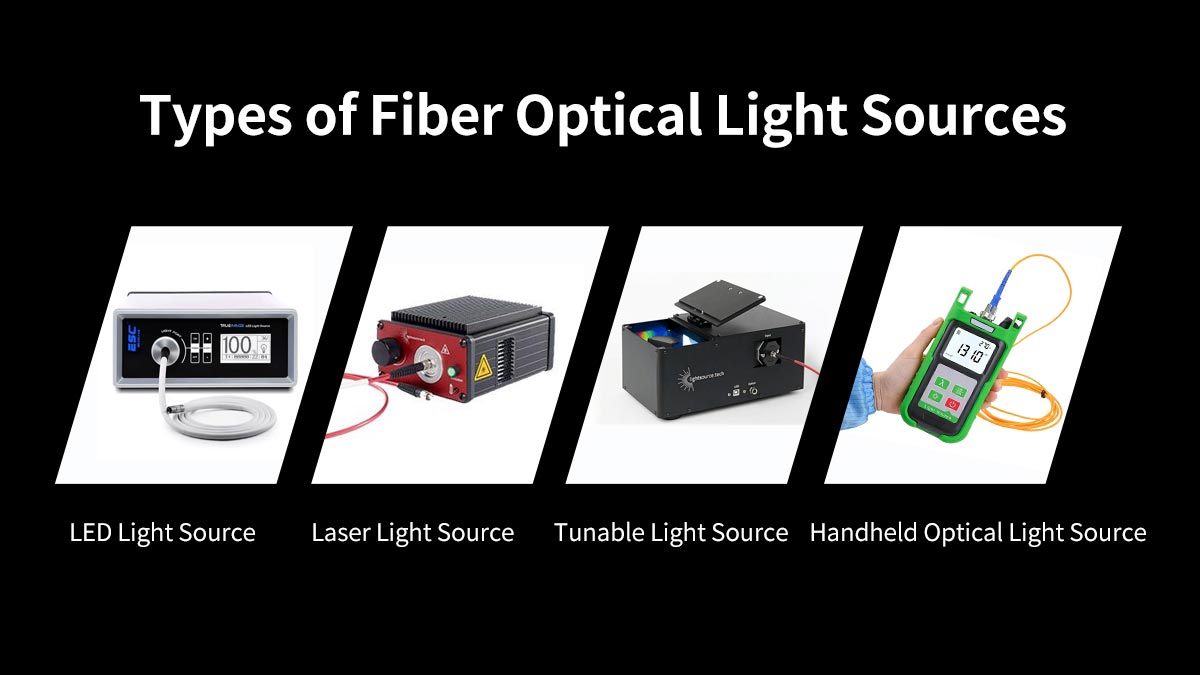
① LED Light Source
LED-based light sources are typically used for multimode fiber testing.
Advantages:
Lower cost
Longer lifespan
Suitable for short-distance applications
Common wavelengths:
850 nm
1300 nm
Typical use cases:
LAN networks
Data center cabling
② Laser Light Source
Laser light sources are used for single-mode fiber applications.
Advantages:
Higher precision
Narrow spectral width
Longer transmission distance
Common wavelengths:
1310 nm
1550 nm
Typical use cases:
Telecom networks
Long-haul fiber links
③ Tunable Light Source
A tunable light source can adjust its output wavelength dynamically.
Advantages:
High flexibility
Essential for WDM testing
Applications:
DWDM systems
Optical component testing
④ Handheld Optical Light Source
Portable devices designed for field use.
Advantages:
Compact and lightweight
Battery-powered
Easy to operate
Applications:
On-site fiber installation
Maintenance and troubleshooting
🟨 Key Features and Specifications
When selecting a fiber optical light source, several technical parameters must be considered.
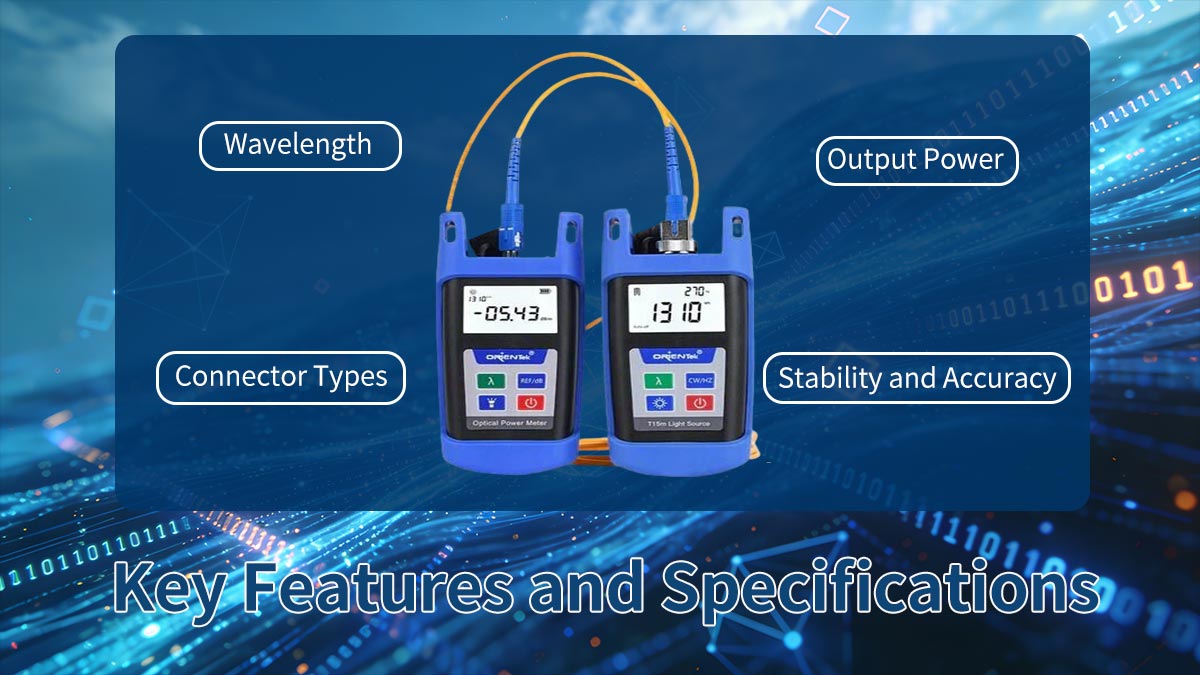
Wavelength
The wavelength determines compatibility with the fiber type and application.
Fiber Type | Wavelength |
|---|---|
Multimode | 850 / 1300 nm |
Single-mode | 1310 / 1550 nm |
Output Power
Measured in dBm, output power affects testing range and accuracy.
Higher power → longer distance testing
Lower power → suitable for short links
Stability and Accuracy
A good light source should provide:
Stable output over time
Minimal fluctuation
High repeatability
This ensures consistent measurement results.
Connector Types
Common optical interfaces include:
SC
FC
Compatibility with existing fiber infrastructure is essential.
🟨 Applications in Fiber Optic Testing
Fiber optical light sources are widely used across multiple industries and scenarios.
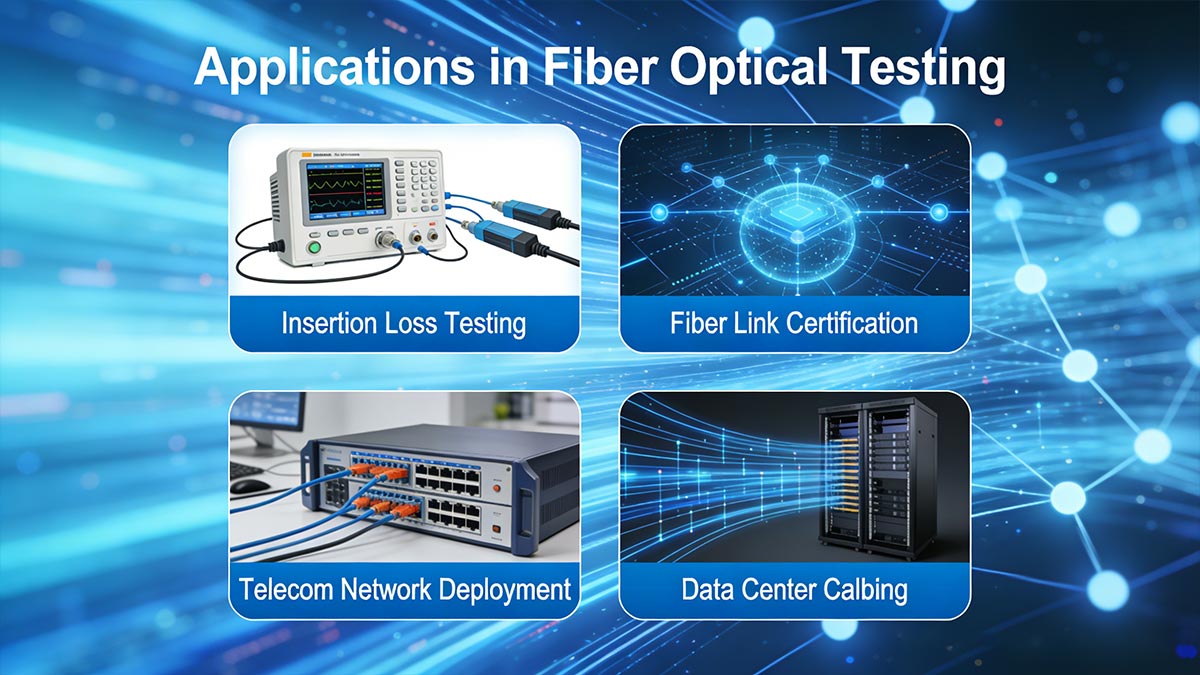
Insertion Loss Testing
One of the most common uses.
Measures signal loss in a fiber link
Ensures network performance meets standards
Fiber Link Certification
Used during installation to verify that fiber links meet required specifications.
Telecom Network Deployment
Backbone networks
FTTH installations
Long-distance communication systems
Data Center Cabling
High-density fiber connections
Short-distance high-speed links
🟨 Optical Light Source vs. Optical Power Meter
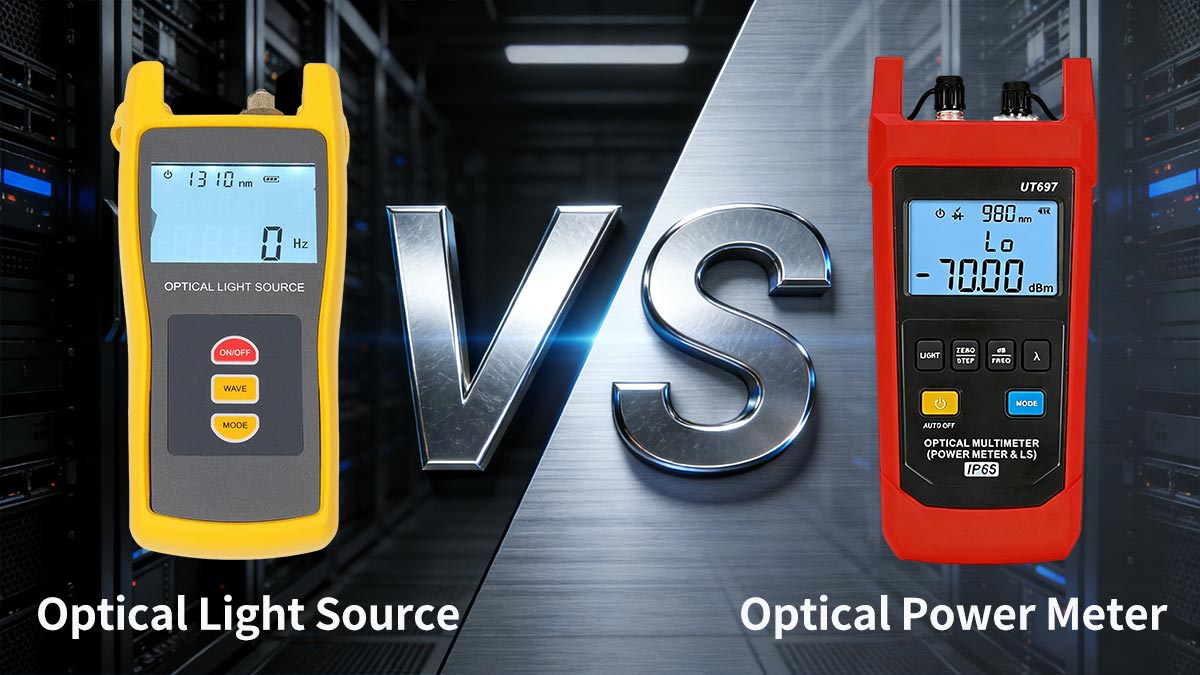
These two devices are often used together but serve different functions.
Device | Function |
|---|---|
Optical Light Source | Emits light into fiber |
Measures received light |
Combined Use: OLTS
When used together, they form an: Optical Loss Test Set (OLTS)
This setup allows technicians to measure total link loss accurately.
🟨 How to Choose the Right Optical Light Source
Selecting the right device depends on several factors.
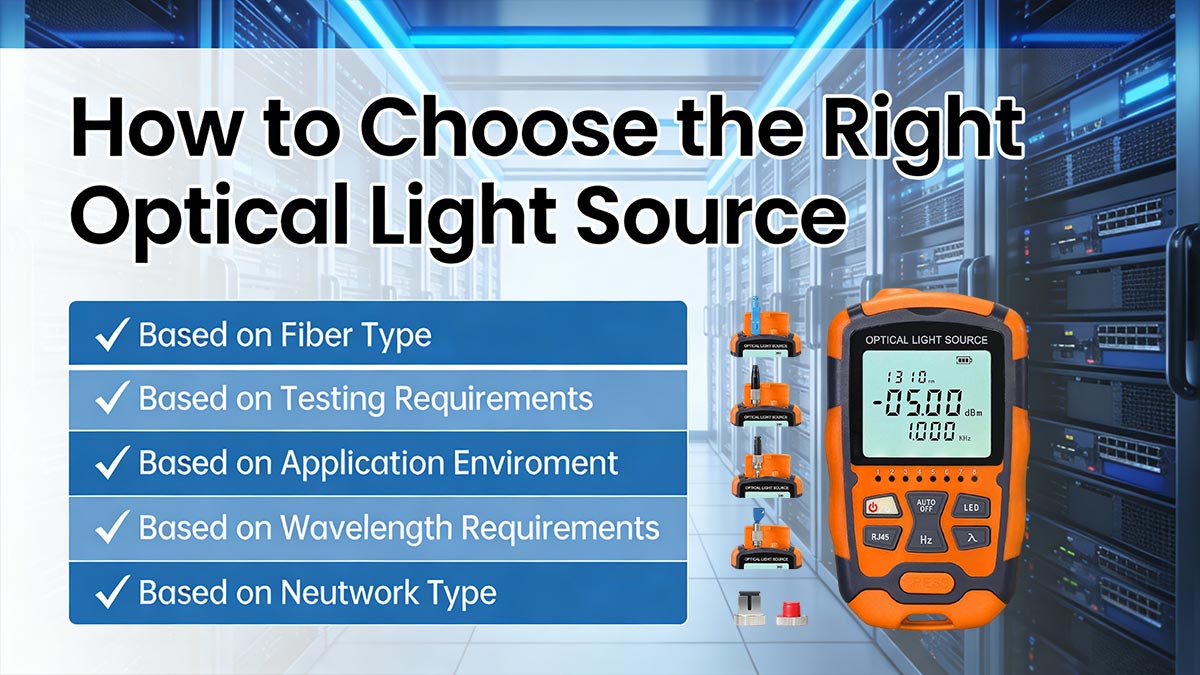
Based on Fiber Type
Use LED sources for multimode fiber
Use laser sources for single-mode fiber
Based on Testing Requirements
Basic testing → standard handheld device
Advanced testing → tunable or high-precision source
Based on Application Environment
Field work → portable and rugged design
Laboratory → high accuracy and tunability
Based on Wavelength Requirements
Ensure the device supports the wavelengths used in your network.
Based on Network Type
Network Type | Recommended Source |
|---|---|
FTTH | 1310/1550 nm laser |
850/1300 nm LED | |
Long-haul | High-power laser |
Common Mistakes When Using Optical Light Source
Mistake 1: Using Wrong Wavelength → Leads to inaccurate results
Mistake 2: Ignoring Connector Cleanliness → Causes signal loss
Mistake 3: Not Stabilizing Before Measurement → Output fluctuation
Mistake 4: Using Incompatible Fiber Type → Measurement errors
🟨 FAQs About Fiber Optical Light Sources
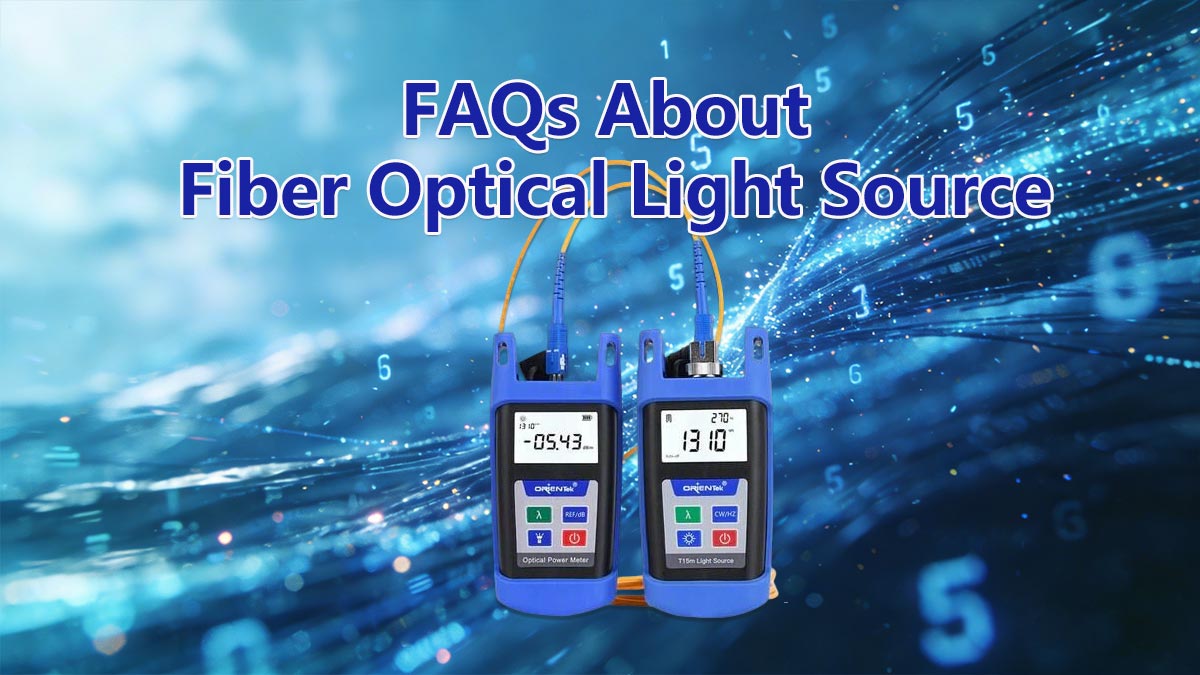
Q1: What is the difference between LED and laser light sources?
LED sources are used for short-distance multimode applications, while laser sources are used for long-distance single-mode transmission with higher precision.
Q2: What wavelengths are commonly used in fiber optics?
The most common wavelengths are:
850 nm / 1300 nm (multimode)
1310 nm / 1550 nm (single-mode)
Q3: Can a light source work without a power meter?
Yes, but it cannot measure loss independently. A power meter is required for accurate testing.
Q4: What is OLTS in fiber testing?
OLTS stands for Optical Loss Test Set, which combines a light source and a power meter to measure total link loss.
🟨 Key Takeaways on Fiber Optical Light Source
A fiber optic light source is a fundamental tool in fiber optic communication and testing. From installation and maintenance to troubleshooting and certification, it ensures that optical networks perform reliably and efficiently.
By understanding its working principles, types, and specifications, you can select the right device for your specific application and achieve accurate, consistent results.
As fiber networks continue to expand across telecom, data centers, and enterprise infrastructure, the importance of precise testing tools like fiber optical light sources will only grow.
Explore high-performance fiber optic solutions, including connectivity components and optical modules, at LINK-PP Official Store to support your network deployment and testing needs.