LINK-PP

100G Optical Transceivers

Topics
Direct Memory Access (DMA) lets hardware devices transfer data to or from memory without CPU involvement, boosting speed and system efficiency.
Access control lists define who can access or modify files and networks, improving security by setting clear permissions for users and devices.
Border Gateway Protocol (BGP) manages how data travels between networks, ensuring efficient, reliable routing across the global Internet.
Network Switch Troubleshooting: Fix connectivity, speed, and power issues fast with step-by-step solutions for common switch problems.
A power distribution unit ensures safe, efficient power delivery to data center equipment, preventing overloads and supporting reliable IT operations.
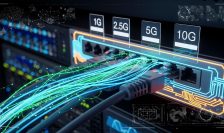
Multi-Gig Ethernet boosts network speeds to 2.5, 5, or 10Gbps using existing cables, making upgrades easy for faster streaming, gaming, and file transfers.
The role of SDN in data center interconnection enables automation, centralized control, scalability, and secure, efficient network management.
Wi-Fi technology enables wireless internet access for devices like phones, laptops, and tablets, using radio waves for fast, cable-free connectivity.
WLAN covers all wireless local area networks, while Wi-Fi is a specific WLAN type using set standards for fast, reliable connections.
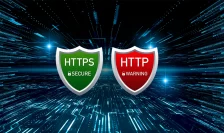
HTTP vs HTTPS: HTTPS encrypts data for secure transmission, while HTTP leaves information exposed. Choose HTTPS for privacy, trust, and compliance.
Compare 100G LR4, CWDM4, and PSM4 to find the best 100G transceiver for your network based on distance, cost, and cabling requirements.
Discover what a backplane is, how backplane channels support high-speed 40G/100G Ethernet, key standards, and design challenges. Learn how LINK-PP RJ45 connectors enhance backplane performance.
Discover the role of Gearbox in modern optical transceivers. Learn how it enables channel alignment, rate conversion, and breakout for 50G, 100G, and 200G networks.
Learn what IEEE 802.3cd defines for 50G, 100G and 200G Ethernet. Explore PAM4 technology, key PMDs, deployment use cases and suitable LINK-PP optical transceivers.
MUX and DEMUX streamline data transmission by combining and splitting signals, reducing cables, and enhancing network efficiency and reliability.
Learn how optical pulses transmit high-speed data in fiber networks. Explore principles, applications, and why LINK-PP optical transceivers deliver cleaner, more reliable pulses.
Unlock high-speed industrial automation with EtherCAT. Learn how EtherCAT achieves sub-microsecond synchronization, its principles, and why it is critical for modern motion control and smart factories.
Learn how PCS, PMA, and PMD work together inside the Ethernet PHY, enabling reliable high-speed data transmission across fiber and copper networks.
Data center virtualization uses software to create virtual servers, storage, and networks, improving efficiency, reducing costs, and boosting flexibility.
Compare Fiber Optic Splitter and coupler functions, signal loss, and best uses to choose the right device for efficient modern network distribution.
Mean Time Between Failure (MTBF) shows how long equipment runs before failing, helping you plan maintenance and boost reliability.
A power budget shows how much energy your system needs, helping you plan, avoid overloads, and keep devices running reliably and efficiently.
Receiver overload occurs when signals are too strong, causing distortion, shutdowns, or equipment damage. Learn causes, symptoms, and prevention tips.
Receiver sensitivity shows the lowest signal a device can detect. Learn how it impacts connection quality and what values mean for your device’s performance.
Discover what Big Data is, its 5V characteristics, real-world applications, technologies, and future trends. Learn how optical transceivers support Big Data networks.
Extinction ratio measures signal clarity in optical systems, impacting data reliability and error rates. High extinction ratio ensures accurate transmission.
Explore the WAN Interface Sublayer (WIS) in 10 Gigabit Ethernet. Learn its role in SONET/SDH integration, data encapsulation, and how LINK-PP 10G optical modules support WAN PHY applications.
Space Division Multiplexing increases fiber network capacity by sending multiple data streams through separate paths in a single cable.
PCBA stands for Printed Circuit Board Assembly. It's essentially a bare PCB that has had all the necessary electronic components soldered onto it.
Discover the LQ‑SW40‑SR4C 40GBASE‑SR module: high-speed, low-power, QSFP+ optics for multimode fibre networks. Perfect for data centres and network upgrades.
Learn how compatible transceivers work and how to ensure switch compatibility. Avoid SFP errors, vendor locks, and choose the right module confidently.
A technical guide to SFP+ 100km optics, explaining 10GBASE-ZR modules, optical link budgets, DWDM solutions, and real-world deployment tips for long-distance fiber networks.
Complete guide to long distance transceivers covering 10km to 120km optics, 1310nm vs 1550nm, ER/ZR modules, link budget calculation, and deployment best practices.
Unlock flexible, high-density 100G/112G connectivity. The LQ-LW112-LR4C is a dual-rate QSFP28 10km transceiver supporting both 100GBASE-LR4 and 112GBASE-OTU4 over SMF.
Spine-Leaf Architecture in optical networks enables scalable, non-blocking connectivity and high performance for modern data centers.
LPJ26204ADNL 1x2 RJ45 Magjack delivers reliable 10/100 Ethernet, compact dual-port design, robust EMI shielding, and broad industry certifications.
Industrial RJ45 Magjack LPJ4014CNL offers robust EMI shielding, gold contacts, and certifications, ensuring reliable IoT device connectivity in any environment.
Explore how LINK-PP’s LS-DW4010-40I SFP+ DWDM transceiver enhances LTE fronthaul and backhaul with 10G speed, 40 km reach and industrial temperature performance.

SFP28 transceiver delivers 25G speed, low power use, broad compatibility, and reliable performance for efficient, future-ready data center networks.

Add Your Heading Text Here