Explain what a 100km SFP transceiver is, how ER and ZR differ, required wavelength, optical budget calculation, and whether amplification is needed for long-haul fiber links.
Complete guide to long distance transceivers covering 10km to 120km optics, 1310nm vs 1550nm, ER/ZR modules, link budget calculation, and deployment best practices.
Authoritative guide to LR SFP modules (10GBASE-LR): technical specs, typical 10 km reach, fiber requirements, vendor compatibility, procurement checklist and deployment best practices.
This guide explains SR SFP modules, including wavelength, fiber requirements, typical reach, compatibility issues, and selection tips for short-range optical networking.
Professional guide to 10GbE SFP+ modules covering types, pricing, compatibility, power, and supplier selection for reliable enterprise and data center deployments.
Discover the differences between P2P, P2MP, MP2P, and MP2MP network architectures. Learn how LINK-PP optical transceivers enable efficient, high-speed connectivity.
Time-Sensitive Networking ensures reliable, on-time data delivery, while PTP focuses on clock synchronization. Compare TSN vs PTP for your network needs.
A disaster recovery solution for optical networks ensures rapid recovery, minimizes downtime, and protects critical data center operations from unexpected failures.
OSI vs TCP/IP: OSI is ideal for learning network concepts, while TCP/IP is used for real-world networking. Compare their layers, uses, and main differences.
Learn what RJ45 connectors are, their pinout, wiring types, and how they support Ethernet, PoE, and Gigabit networks. Discover LINK-PP’s RJ45 solutions for reliable connectivity.
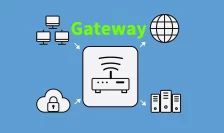
Learn what a network gateway is, how it works, and why it’s essential for connecting different networks. Understand gateway functions, types, and real-world applications in modern communication systems.
Learn what the EtherCAT Slave Controller (ESC) is and how it processes real-time frames, manages FMMU mapping, and enables high-speed industrial automation.
Physical Medium Dependent (PMD) defines the optical and electrical rules of a PHY—wavelength, power, reach, and test points. Understand PMD specs and how they guide transceiver selection.
A clear, professional guide to IIoT (Industrial Internet of Things), covering architecture, protocols, security best practices, and suitable networking components for industrial deployments.
Learn PROFINET fundamentals, architecture, device classes, and real-time communication requirements. Includes hardware insights and LINK-PP integrated RJ45 solutions.
Learn what a Network Operating System (NOS) is, how it runs switches and routers, and why it is essential for routing, automation, telemetry, and modern data center networks.
Learn what QoS (Quality of Service) means, how it works, and why it is essential for real-time IP networks. Includes practical applications and hardware considerations.
Central Management Server streamlines server management, enabling secure, centralized control, updates, and monitoring for multiple systems in one place.
Explore the fundamentals of Point-to-Point (P2P) network architecture, its working principles, and how LINK-PP RJ45 connectors and optical transceivers enable reliable high-speed communication.
Understand SFP+ 40km (10GBASE-ER) modules, including specs, SMF compatibility, and how to choose the right extended-reach optical transceiver for your network.